How to Choose the Right Tension Roll for Your Machine
Choosing the correct tension roll is one of those choices that silently decide whether a conversion line functions well or spends its life battling tension difficulties. The component is tiny in relation to the rest of the machine, yet it impacts practically every quality result that the operator cares about. A proper tension roll for one machine might be inappropriate for another, even in the same facility, as web material, line speed, and control philosophy affect the needs. This guide leads the buyer through the practical considerations encountered in purchasing a tension roll, based on the concerns that most often occur in actual machine design and refit projects.
What Type of Tension Roll Fits Your Machine Configuration?
Dead Bar, Driven, or Brake-Loaded Tension Rolls
A tension roll can be inactive, powered, or brake-loaded, depending on where it is in the machine. In unwind parts, the tension roll is usually kept going by a stop that gives off heat as tension energy. In winder sections, the tension roll is usually powered by a motor that controls the torque and sends power to the web. In process sections, the tension roll might be a dead bar that only changes the direction of the web. Buyers should first choose the type of machine they want to buy. This will help them decide whether the tension roll should be a driven assembly, a brake-mounted assembly, or a simple idler-style roll.
Dancer-Based Versus Load-Cell-Based Systems
Two or more dancers control the force on some machines. The tension roll moves along a carriage, and the drive system knows what to do based on where the roll is. Some people use a load cell on the tension roll trunnion to directly measure the web force. You can make changes to dancer systems without much trouble. Speed and accuracy are good with load cell devices. Which one to use relies on what the user wants, how quickly the process needs to respond, and how much room there is for either a moving cart or a set load cell trunnion.
Inline, Lay-On, and Pivot-Mounted Tension Rolls
It is also important that the tension roll is put in place mechanically. Inline tension rollers are put right in the path of the web and are held on both ends. Lay-on rolls are used to create tension in tight spaces by pressing against the web from the side. Tension wheels on a hinge can swing into place, which is helpful for machines that change web paths often. People who are buying should pick the mounting style that works best with their machine. Picking the wrong style could lead to alignment issues or make roll changes more difficult than they need to be.
How Does Web Material Affect Tension Roll Selection?
Films, Foils, and Metallized Webs
Sticky rollers for thin films and foils need to be firm and smooth, so they don't damage the web. Chrome-plated steel and polished aluminum are the norm because they are smooth, don't scratch, and last a long time. Also, static electricity can build up on the films, so anti-static coats or covers that dissipate electricity should be considered. Film lines need a tension roll that can handle setpoints with very low tension without signal noise or stick-slip. If the tension control doesn't work right, flaws in the film will show up quickly.
Paper, Board, and Laminates
Webs made of paper and board can handle a rougher tension roll surface and can usually handle higher pressures than films. When moving quickly, the tension roll should grip and not slide. Most of the time, elastomer covers are used, but in high-temperature dryer parts, a strong chromium or ceramic-coated surface may be needed to stop heat aging. Paper lines need tension rollers that can handle changes in web width because the active web width changes during the trimming and calendaring process.
Nonwovens, Textiles, and Specialty Materials
For webs that can be squished, like nonwovens and fabrics, controlled compliance tension rolling works well. Strong elastomer covers with a moderate Shore A hardness give the web grip and keep it from crushing or marking. Also, these webs should have wide wrap angles so that tension rolls can keep rubbing against them. People who buy these webs usually work with providers that can change the surface properties. This is because unique materials like carbon fiber webs or prepregs may need tension rolls with very specific surface properties.
Corrosive or Hygroscopic Webs
Over time, moisture, acids, or chemicals in webs may change the surface of tension rolls. For these uses, buyers should ask for materials or coatings that don't rust. Strong chrome-plated steel, stainless steel, or specially coated rollers make the tension roll last longer and keep it going smoothly. A tension roll made of corrosion-resistant steel that is used on lines with alternating wet and dry webs needs less upkeep than a regular carbon steel roll.
Which Tension Roll Specifications Matter for Web Width and Line Speed?
Roll Diameter, Length, and Web Width
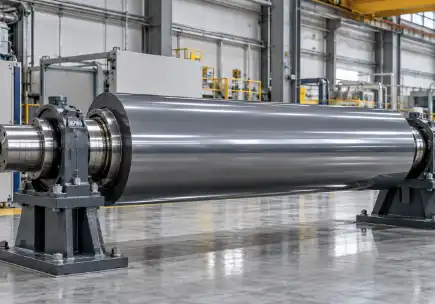
The width of the tension roll needs to match the form of the wrap and the tension range of the process. Larger diameters make the contact arc bigger and the friction higher, which is good for webs that are sticky or under a lot of tension. Roll length needs to be long enough to cover the widest web width plus some extra room for roam. People who are buying tension rolls need to know the widest possible web plus an extra inch or two for the edges to move. Then, they need to make sure that the tension roll maker can make it with the required runout tolerance over that whole span.
Maximum Line Speed and Balance Quality
Even a small imbalance in the tension rolls can cause vibrations at high line speeds, which hurts both the quality of the web and the measurement of tension. Make sure the balance grade, which is generally given as an ISO 1940 G-class, is right for the top speed. You might also want to check the critical speed limits. Running a tension roll close to its critical speed can cause web flaws and bearing failures that you can't explain.
Tension Range and Load Cell Sensitivity
The application stress range determines which load cell to use. For a tension roll on a low-tension film line, the load cell needs to be clear and have little noise. A load cell that can handle much higher forces without overloading is needed for a tension roll on a big paper line. It is important for buyers to get information about how accurate the measurements are and make sure that the load cell, signal conditioner, and processor are all rated for the same performance class. Standards for quality control of such equipment are consistent with the requirements documented under ISO 9001:2015 certifications, which set the baseline for traceable manufacturing processes.
Tension Roll Design: Matching Roll Surface, Diameter, and Bearing Structure
Surface Specification
It is important that the tension roll's surface works well with the web material and has the right amount of contact. Paper and fabrics like rougher surfaces or elastic covers, while films and foils like smooth, shiny surfaces. Buyers should say what kind of finish they want in Ra units and make sure it's the same all the way along the roll. Some companies have special coats that help with static, release, or resistance to contamination. You should talk about these before you buy.
Diameter and Wall Construction
The width and wall thickness of the tension roll determine how strong it is and how it responds to web load. If you increase the diameter and decrease the wall thickness, you may meet the friction requirement, but the stiffness will go down. On the other hand, if you decrease the diameter and increase the wall thickness, you may meet the friction requirement, but the stiffness will go up. When it comes to wide-web tension rollers, deflection in the middle of the roll has a direct effect on measuring tension and the quality of the web. The buyer should ask the source to do some math on the deflection.
Bearing Structure and Sealing
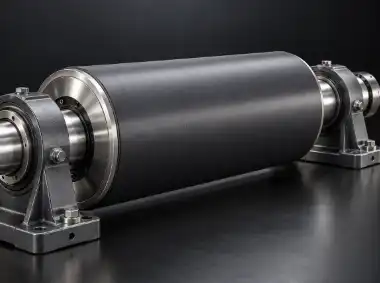
The tension roller is steady for the full lifetime due to high quality bearings. The buyer should pick the brand, inner clearance, lubrication technique and the sealing method of the bearing. Sealed or life-coated bearings need less maintenance. Bearings that can be re-greased can carry greater loads and higher speeds. Any play or irregularity is immediately obvious as tension noise in bearing seats and journals therefore they are machined to extremely tight tolerances. The design of proper bearing helps tension rollers to perform effectively for a long time.
How Can You Verify Tension Roll Performance During Machine Operation?
Initial Run-In and Verification
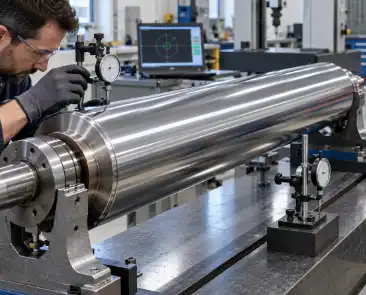
The tension roll needs to be checked when it is installed, after a planned run-in process. This includes checking the dynamic balance, keeping an eye on the bearing temperature, and measuring stress at different set points. The best way to make sure the tension roll is working as it should is to get a commissioning report from the supplier that includes measurements of vibration and signal noise.
Long-Term Monitoring and Maintenance
A tension roll that performs well when it is initially placed into service should continue to perform well throughout its service life, provided that it is routinely inspected and repaired. The steady long term program includes vibration analysis, frequent cleaning of bearings, and testing of load cells. Buyers should collaborate with the supplier to develop a preventive maintenance plan and to monitor the condition of the bearings, the proof of balance and the load cell output over time. These sort of records allow you to catch little alterations before they damage the quality of the product.
Feedback Loop Performance and Process Capability
The final criteria is that the tension roll should provide the closed-loop driver with a continuous signal. Buyers may test how well the loop works by putting the machine through a succession of tension setpoints and noting the actual tension achieved, the response time and the inaccuracy when disturbances occur. Over the whole working range from a low noise, high resolution input from a tension roll the tension may be tightened or loosened by the driver. In this scenario the best confirmation that the tension roll is the proper option for the machine is an objective test.
Conclusion
One set of machine specs, web material, line speed, and feedback needs tells you how to choose the right tension roll. Instead of copying an old design or going with the defaults, buyers who think about each of these areas make choices that lead to more tension stability, fewer web defects, and longer service life. As far as tension rolls go, the best ones back up the whole control system, not just the web connection.
FAQ
1. How do I know which type of tension roll my machine needs?
The first step is to determine if the tension roll is in an unwind, process or winder portion, and whether the machine has dancer or load cell feedback. The answers to these questions will decide whether the tension roll should be dead, brake-loaded, driven or placed on a moving carriage, and if an integrated load cell is required or not.
2. Should I choose a smooth or elastomer-covered tension roll?
For films, foils and metallized webs where marking and slip resistance are the focus, a smooth, firm surface is the right choice. Select an elastomer-covered tension roll for paper, nonwoven, textile and other webs where traction and damping are more important than surface smoothness.
3. How can I confirm that a tension roll is performing correctly after installation?
Do an organised proof process on the line that includes checking the bearing temperatures, measuring the vibrations, making sure the tension setpoint is correct, and trying the line's reaction to disturbances. By comparing the installation's real performance to the supplier's specs, you can be sure that it is meeting the original purpose.
Source the Right Tension Roll With WELONG
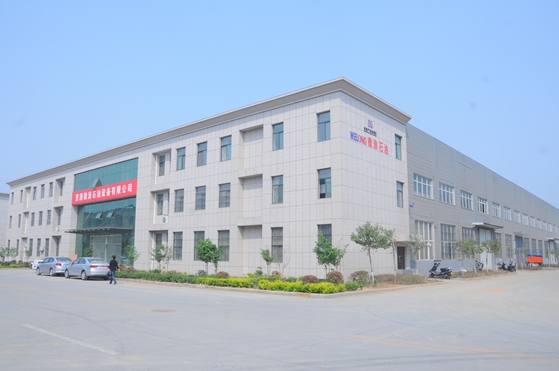
When your machine needs a tension roll designed for stable, repeatable performance, WELONG is ready to support you. Founded in 2001 and certified to ISO 9001:2015 and API 7-1, WELONG is an international integrated supply chain service provider specializing in oilfield products and customized industrial components. The company supplies engineered tension rolls with strict quality control covering chemical composition inspection, dimensional inspection, dynamic balance testing, ultrasonic testing, and visual inspection. With flexible transport options including sea, air, and rail, and terms such as FOB, CIF, DDP, and DDU, WELONG makes procurement straightforward for machine builders and converters worldwide. Reach the team today at [email protected] to discuss your tension roll requirements.
References
1. ISO 1940-1:2003, Mechanical vibration — Balance quality requirements for rotors in a constant (rigid) state — Part 1: Specification and verification of balance tolerances. International Organization for Standardization, Geneva.
2. ISO 4287:1997, Geometrical Product Specifications (GPS) — Surface texture: Profile method — Terms, definitions and surface texture parameters. International Organization for Standardization, Geneva.
3. ISO 9001:2015, Quality management systems — Requirements. International Organization for Standardization, Geneva.
4. ASTM D4060-19, Standard Test Method for Abrasion Resistance of Organic Coatings by the Taber Abraser. ASTM International, West Conshohocken.
5. Bolton, W., Industrial Automation: Hands-On Tutorials for Engineers and Technicians. Newnes, Oxford.
6. Roisum, D. R., The Mechanics of Winding. TAPPI Press, Atlanta.
Share your inquiry, get the quotation accordingly!
CHINA WELONG - 20+ years manufactuer in oilfield tools