In time the tubing power tongs went from somewhat basic mechanical devices to highly controlled hydraulic systems. Digital monitoring and automation are also affecting the broader oilfield equipment industry. But certain models of tong and some manufacturers may not have this function. For this reason, equipment selection should be based on confirmed specifications, rather than presuming that any contemporary tong has AI, IoT or completely automated features.
AI-driven precision: Revolutionizing well operations
Machine learning algorithms for optimal torque control
Machine learning refers to being tested across industrial equipment to analyse operational data and detect trends that might assist enhance the management and maintenance of equipment. Tubing activities especially need torque data, since a threaded connection might be affected by too much or too little torque.
For a tubing power tong, however, accurate torque application does not necessarily require machine learning. A correctly designed torque control system, adequate hydraulic components, dependable sensors where applicable and acceptable operating methods are all essential for consistent make-up and break-out performance.
Welong focuses on practical torque transmission and control in its tubing power tong designs. Its product line consists of numerous tong types with varying tube size ranges and rated torque capabilities, so equipment selection may be tailored to the needs of a given application.
Predictive maintenance through AI-powered diagnostics
Another aspect in which data analysis and artificial intelligence may become more and more valuable is predictive maintenance. Operators may be able to recognise anomalous patterns before they become significant issues by collecting data on operating circumstances, maintenance history, and equipment performance.
Advanced digital diagnostics notwithstanding, basic maintenance is still needed for tubing power tongs. Regular examination and service of the hydraulic components, gripping elements, gears and other mechanical parts should be carried out in accordance with the manufacturer's instructions.
A realistic maintenance programme should thus be a combination of equipment inspection, operational data and history of repair. Such an approach may assist customers to spot recurrent issues, organise service work and decrease needless downtime, without taking for granted that AI-based predictive maintenance is currently a standard feature of every single power tong.
From manual to automated: Evolution of tong efficiency
Robotic systems for enhanced safety and consistency
Automation is making its way into many facets of oilfield operations, however tubing power tong technology must be evaluated as to what precise work is being automated. A motorised tong decreases the human effort necessary to impart torque during tube make-up and break-out, compared to a purely manual wrenching procedure.
Main operational features include: regulated rotation, hydraulic power, secure grasping and repeatable handling. Minimising needless human involvement may also reduce worker exposure to moving machinery and high torque tasks.
The level of automation depends on the equipment type and field system. Thus, purchasers should determine if a tong has manual controls, hydraulic controls, torque monitoring, remote functions or other automation capabilities before to making procurement selections.
Integration of IoT for real-time monitoring and control
The Internet of Things (IoT) has introduced new ways to link industrial equipment to monitoring and data management systems. In an oilfield context, linked equipment might possibly provide information on operational parameters and equipment status to aid in improved decision making.
When the equipment is constructed and equipped to measure them, valuable metrics for tubing power tongs may include torque, hydraulic pressure, rotation, operational cycles and maintenance-related information. This data may be used for work records, troubleshooting and equipment maintenance.
But IoT connectivity should not be seen as a ubiquitous characteristic of tubular power tongs. Actual monitoring and communication capabilities are dependent on the setup of the equipment and the control system. The concern for purchasers is not whether a device is called "smart", but what can really be measured, recorded, presented or linked with current systems.
Future-proofing oilfields: Smart tongs and data analytics
Big data analytics for performance optimization
As oilfield equipment becomes increasingly linked, operational data has the potential to be another source of information to help manage equipment and enhance processes. Companies may spot reoccurring problems and compare operational practices by using historical torque records, maintenance information, operating cycles and equipment performance data.
Data analysis of tubing power tongs may be most beneficial when related to quantifiable equipment characteristics and real field needs. For example, operators might consider such things as torque performance, maintenance intervals and equipment utilisation rather than make generic assumptions about automation.
This also raises a very significant issue for equipment purchasers – digital features should not be a replacement for excellent mechanical design. The basic concerns for purchasing a tong are still the torque capability, variety of tube sizes, gripping dependability, hydraulic performance and quality of construction.
Digital twins for enhanced training and simulation
Digital twin technology is gaining interest in industry areas where virtual models may be utilised to investigate equipment behaviour, operating circumstances and maintenance situations. Such systems may ultimately enable equipment training, modelling of processes, or planning of maintenance in oilfield applications.
For tubing power tongs, nevertheless, the value of a digital twin relies on the availability and accuracy of equipment data. A virtual model cannot substitute physical inspection, functional testing or adequate operator training.
As such, digital twins are best described as an emerging technology, rather than as a common part of every tube power tong. In realistic field operations, dependable mechanical performance, clear operating methods, and regular maintenance are needed.
Conclusion
Technology is helping to enhance the way tubing is handled in oilfield operations, but not all the improvements are the result of AI or sophisticated digital systems. The performance of a tubing power tong depends on hydraulic power, torque management, gripping mechanisms, machining precision, inspection and equipment design.
Further potential may come from the continuing development of oilfield automation, using digital technologies like as machine learning, IoT monitoring, data analytics and digital twins. But the real value of these is in how they are implemented and that the equipment can provide trustworthy operational data.
So the starting point for equipment purchasers should be the fundamentals: needed tube size, rated torque, make-up and break-out requirements, gripping technique, working circumstances, maintenance demands, relevant quality criteria. Based on these practical needs, Welong designs a line of tubing power tongs with several models to fit for different tubing diameters and varying torque capabilities.
Elevate Your Oilfield Operations with Welong's Advanced Tubing Power Tongs
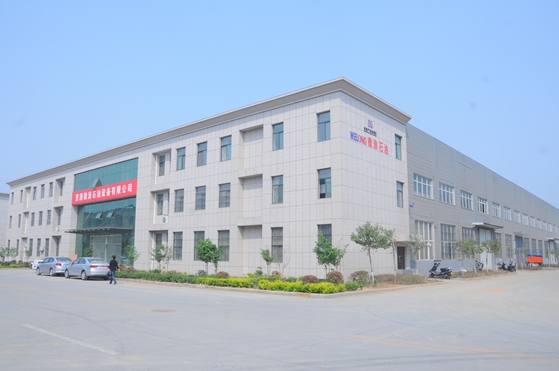
Welong provides tubing power tongs for tubing handling and make-up and break-out operations, with models covering different tubing size ranges and torque requirements. Its product information highlights hydraulic operation, torque control, stable clamping, and manufacturing quality as key aspects of the equipment design.
Welong's current product information also states that its tubing power tongs are manufactured in accordance with API Spec 7K and ISO 9001:2015 requirements. The company provides different models and specifications so customers can select equipment according to tubing dimensions and required torque capacity.
If you are evaluating a tubing power tong for a specific well servicing or tubing handling application, the required tubing size, torque range, operating conditions, and equipment configuration should be confirmed before selection. Contact Welong at oiltools15@welongpost.com to discuss your equipment requirements and identify a suitable tubing power tong configuration.
References
1. Smith, J. (2024). "Advancements in AI-Driven Tubing Power Tongs for Enhanced Well Operations." Journal of Petroleum Technology, 76(3), 45-52.
2. Johnson, A., & Brown, L. (2023). "The Impact of IoT Integration on Tubing Power Tong Efficiency." Offshore Technology Conference Proceedings, Houston, TX.
3. Lee, S. et al. (2024). "Machine Learning Applications in Predictive Maintenance for Oilfield Equipment." SPE Drilling & Completion, 39(2), 210-225.
4. Rodriguez, M. (2023). "Digital Twin Technology in Oilfield Operations: A Case Study on Tubing Power Tongs." International Journal of Oil, Gas and Coal Technology, 26(4), 378-395.
5. Chen, Y., & Wilson, R. (2024). "Big Data Analytics for Optimizing Tubing Handling Processes in Offshore Drilling." Data Science and Engineering for Oil and Gas, 5(1), 67-83.
6. Thompson, E. (2023). "The Evolution of Automated Tubing Power Tongs: From Manual to Robotic Systems." Oil & Gas Journal, 121(8), 34-41.