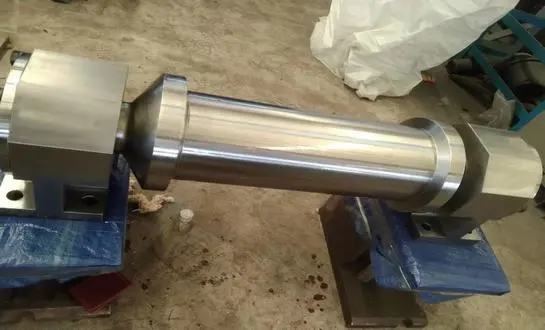
The objective of precision machining is not to have the tightest tolerance or the cleanest surface, but to produce the final roll that is the most appropriate for the purpose. The proper diameter, profile, roughness and dimensional precision are affected by the mill, the kind of roll, the material to be processed and the quality of product needed.
Enhancing Steel Quality: The Role of Precision Rolls
Roll geometry and surface condition are major factors to strip quality but they act in conjunction with the entire rolling process. Rolling force, strip tension, temperature, lubrication, mill setup and material qualities all may impact the final product.
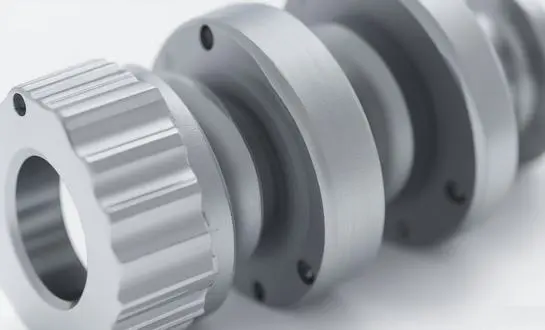
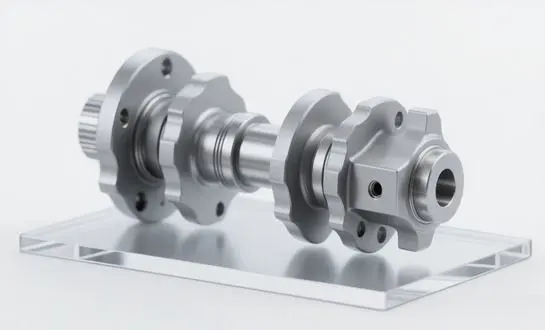
The rolling operation is performed on a precision-machined Steel Mill Roll that offers a regulated working surface and specified shape. The roll is machined accurately to match the stringent specifications of profile and surface qualities required in many applications.
The strong association between roll condition and product quality is also shown in modern rolling systems. For example, ANDRITZ specifies work rolls as those that influence the required surface quality of the rolled products such as the specified roughness and surface qualities for skin-pass and temper-mill applications.
Achieving Dimensional Accuracy
Custom rolls generally have application-specific criteria for outer diameter, barrel length, neck dimensions, profile, taper, and cylindricity. Precision machining means manufacturers can regulate these dimensions to the engineering design and the mill application for which they are intended.
This is especially true if a roll has to fit into an existing mill assembly or interact with other rolls and mechanical components. Dimensional variations may have an impact on installation, alignment, contact conditions and the desired rolling geometry.
The aim should not be framed as becoming “micron-level” accurate in all applications. The roll should instead be machined and tested to the tolerances for the specific rolling procedure.
This method is also essential during roll maintenance. Industrial study on steel mill roll maintenance indicates that rolls must be regularly redressed to restore the required surface quality and cylindricity.
Improving Surface Quality
The surface of a Steel Mill Roll is more than just contact with the strip. The roughness and texture may impact the friction and the surface properties conveyed in the rolling process.
So, the finish needed depends on the application. Some applications demand a very smooth surface while other rolling operations require a regulated texture or roughness. The coefficient of friction between the roll and strip may be influenced by the roll roughness and it has been shown by research and practical experience that the work-roll roughness varies throughout service as the roll wears.
Precision grinding enables the maker to aim toward a specified surface condition rather than to assume that “smoother” equals “better.” Depending on the mill’s process requirements for certain applications, the specification may contain a desired Ra value, texture pattern or other surface properties.
Cost-Efficiency: Long-Term Benefits of Custom Machining
Custom Steel Mill Rolls, expertly machined, may have more demanding production requirements than conventional components, especially if the application needs custom dimensions, profiles, materials or surface conditions.
Thus the economic worth should be assessed on the basis of the planned service duration of the roll and not only the purchase price. When the roll is designed for the real application, with dimensional consistency, proper surface condition and regulated manufacture, predictable roll performance and simplified future maintenance may be achieved.
Reduced Downtime and Maintenance
Roll wear and surface damage are typical issues in rolling operations. Nippon Steel Rolls comments that rolling mill rolls are subjected to surface degradation and roughening in service and frequent grinding is necessary to restore the surface quality.
While precise machining cannot eliminate wear, precise manufacture and controlled finishing may make it much simpler to keep the roll in the appropriate shape and surface condition.
In mills where roll changes and grinding effect production schedule, consistent manufacturing and maintenance needs might assist in making maintenance planning more predictable.
Energy Efficiency and Material Savings
We should not offer a precision-machined roll as a simple energy-saving gadget. The energy used in steel rolling relies on numerous variables such as deformation, temperature, equipment setup, and process conditions. The DOE statistics on steel manufacturing reveal that rolling itself is a quantifiable proportion of process energy usage.
The advantage of a well-designed roll is more indirect. If the roll provides steady rolling conditions, consistent product shape and less quality related interruptions, the mill might cut down on rework, wasteful processing or material losses.
These advantages should be considered on the basis of real production data and not just on the basis of the machining precision of the roll.
Achieving Optimal Surface Finish: Precision Techniques Explored
One of the most application sensitive properties of a Steel Mill Roll is surface finish. The rolling process and the qualities desired in the end product define the optimum surface.
Therefore, the aim of roll machining should be to achieve controlled surface characteristics, not only the minimum roughness.
Advanced CNC Grinding
Grinding is used often for reconditioning or making the working surfaces of mill rollers. Depending on the material of the roll, the application, the abrasive and the grinding process, various surface finishes may be attained.
It has been shown that precision grinding can regulate both the roll profile and the surface quality for industrial roll-grinding applications. For example, work published by AIST on CBN grinding of mill rolls deals with the ability to create acceptable roll profiles and surface quality, while reducing roll-stock removal.
Some grinding and polishing processes may provide extremely fine surface finishes, as fine as around Ra 0.1 μm in appropriate applications. But, this is not a standard to be used universally for Steel Mill Rolls. Depending on the rolling process, various surface conditions are required. Some work rolls are purposely provided with regulated roughness or texture.
Texturing and Patterning
Precision machining and finishing may also provide controlled surface textures rather of a consistently smooth finish.
This is important when the roll surface has to produce a certain friction condition or has to impart a specific surface feature to the strip. In operations such as skin-pass and temper rolling the surface characteristics of the work rolls are tuned to provide the desired attributes and look of the strip.
The right texture should consequently be determined for the product and the rolling procedure. Not all steel products need to be mirror finished.
In-Process Measurement and Correction
Precision machining is most beneficial when the machining output can be validated against predetermined dimensions and surface criteria.
Depending on the production process inspection may include measurements of:
- Diameter of roll
- Roundness, circularity
- Contour or taper
- Surface roughness
- Critical dimensions of neck and bearing
- Other features related to drawing
Then the measurement data may be utilized to find deviations before the final roll is issued.
This is especially useful for bespoke rolls, since the maker must match the completed product to application-specific designs – not just a standard size. Precision measurement also aids in roll maintenance by providing the confirmation of when the roll surface has been brought to the necessary condition.
Conclusion
Precision machining is important for customized Steel Mill Rolls because it allows us to manage the dimensions, geometry and surface qualities that are necessary for a specific rolling process.
Precise machining alone can not guarantee higher steel quality, cheaper energy usage and longer roll life. Those outcomes are dependent on the whole rolling system including the roll material, heat treatment, mill layout, operating conditions, lubrication, maintenance and product requirements.
More beneficial is to specify the roll properties needed, and then build and check the roll against those specifications. Decisions on diameter, profile, cylindricity, surface roughness, texture and essential mounting parameters should be driven by the intended use.
This technique also makes supplier assessment more feasible for consumers comparing bespoke Steel Mill Rolls. Instead of only comparing pricing, they can examine how effectively each manufacturer can convert the technical requirements into a regulated final roll.
For support with customized Steel Mill Rolls and precision machining requirements, contact Welong at oiltools15@welongpost.com.
Providing application details such as roll dimensions, material, hardness requirements, surface finish, profile requirements, and existing drawings can help the manufacturer better understand the project before preparing a quotation.