API Stabilizer Specifications: A Buyer’s Guide
It's important to think carefully about specs, materials, and performance qualities when choosing the right API stabilizer for your drilling activities. This complete buyer's guide talks about important things that affect drilling efficiency, such as the type of material used, hardfacing choices, size needs, and quality standards. By knowing these specs, buying professionals can make smart choices that balance keeping costs low with making sure the system works well, which will make sure that your investment in an API stabilizer works well in all kinds of drilling conditions.

Learning the Basics of API Stabilizer
For drilling jobs to go smoothly, the tools needs to be very accurate and keep the hole's purity. Stabilizers are very important for keeping deviations in check, lowering vibrations, and keeping case lines safe while drilling. These tools keep the drill string in the right place inside the wellbore by focusing it on one spot.
Modern drilling stabilizers come in a lot of different shapes and sizes, but sleeve-type designs are the most flexible. Replaceable sleeve stabilizers have a built-in mandrel and sleeves that can be switched out. This means that one set of mandrels can fit holes of different sizes. This flexible method cuts down on inventory needs by a large amount while still allowing for working freedom.
The efficiency of a stabilizer depends on the materials that are used. High-grade steel formulas can handle the strains, acidic conditions, and high temperatures that come up during drills. Which magnetic or nonmagnetic material to use depends on the needs of the application and the ability of the measuring tool to work with the material.
Quality production methods make sure that the dimensions are correct and the structure is solid. Before their equipment gets to drilling sites, certified makers put it through strict testing methods that make sure it meets performance standards. These quality measures have a direct effect on how reliable tools are and how well they work in operations.
Details about the materials and how well they work
The makeup of the steel has a big effect on how long the stabilizer lasts and how well it works. AISI 4145H is the standard for making piercing tools because it has a high strength-to-weight ratio and doesn't wear down easily. Changes to the 4145H formulas give them better qualities that are perfect for certain drilling conditions.
In situations where magnetic interference compromises measurement accuracy, non-magnetic stabilizers are used. For magnetic survey tools to work properly during directional drilling, non-magnetic parts are often needed. These materials keep their structure strong and stop magnetic fields from distorting.
Heat treatment methods make the qualities of a material work best in a downhole setting. The right heat treatment steps improve the hardness, strengthen the grain structure, and raise the resistance to shock loads. The manufacturing specs should list the factors for heat treatment and the hardness values that come from them.
Metallurgical testing proves that a material meets the standards of the business. Analyzing the material's chemical make-up, trying its dynamic properties, and looking at its microstructure all prove its quality. Documentation for quality control programs and legal compliance needs can be found in certified test results.
In tough digging conditions, corrosion protection is very important. Exposure to hydrogen sulfide, carbon dioxide, and chlorine can damage tools. When choosing materials and protecting layers, you need to think about the environmental problems that will be faced during digging.
Hardfacing Options and Applications
Hardfacing technology protects stabilizer surfaces from abrasive wear while maintaining dimensional stability. Different hardfacing compositions address varying formation hardness and abrasiveness levels. Selecting appropriate hardfacing ensures optimal tool life and consistent performance.
- HF1000 hardfacing provides baseline protection for soft to medium formations. This composition offers good weldability and moderate wear resistance suitable for conventional drilling applications. Cost-effectiveness makes HF1000 an attractive option for standard drilling environments.
- HF2000 delivers enhanced protection for medium-hard formations with increased abrasiveness. Improved carbide content provides superior wear resistance while maintaining reasonable application costs. This hardfacing grade suits most commercial drilling operations effectively.
- HF3000 targets hard formation drilling where extreme wear resistance becomes essential. Advanced carbide formulations withstand severe abrasive conditions encountered in sandstone, limestone, and shale formations. Extended tool life justifies higher initial investment costs.
- HF4000 represents premium hardfacing for the most challenging drilling environments. Specialized compositions resist extreme wear, impact loading, and thermal cycling. This grade suits critical applications where tool failure carries significant operational consequences.
- HF5000 provides maximum protection for ultra-hard formations and extreme drilling conditions. Advanced metallurgy delivers exceptional wear resistance and structural integrity. This premium hardfacing justifies costs through superior performance and extended service intervals.
Dimensional Requirements and Sizing Considerations
Proper sizing ensures effective hole stabilization while minimizing drilling complications. Stabilizer gauge diameter must balance hole support with circulation efficiency. Undersized tools fail to provide adequate support, while oversized stabilizers increase torque and drag unnecessarily.
- Blade configuration affects drilling performance and cuttings removal efficiency. Three-blade designs offer excellent centralization with minimal contact area. Six-blade configurations provide maximum hole contact for superior stabilization in challenging formations.
- Length specifications impact bending moment distribution along the drill string. Longer stabilizers provide enhanced hole support but may increase drag in deviated sections. Optimal length selection depends on hole trajectory, formation characteristics, and drilling objectives.
- Connection specifications must match drill string components for proper assembly. API thread forms ensure compatibility across different manufacturers. Premium connections offer enhanced performance but require careful specification matching.
- Tool joint dimensions affect circulation efficiency and pressure loss calculations. Proper sizing maintains adequate flow area while providing structural strength. Manufacturing tolerances ensure consistent performance across production batches.
Quality Control and Certification Standards
Manufacturing quality directly impacts drilling performance and safety outcomes. Comprehensive quality control programs encompass material inspection, manufacturing process validation, and final product testing. These measures ensure consistent product quality and reliability.
- ISO 9001:2015 certification demonstrates commitment to quality management principles. This international standard requires systematic approach to quality control, continuous improvement, and customer satisfaction. Certified manufacturers maintain documented quality systems with regular audits.
- API 7-1 certification validates compliance with drilling equipment standards. This specification covers design, manufacturing, and testing requirements for drilling tools. Certified products meet industry performance expectations and safety requirements.
- Material traceability systems track components from raw material through final assembly. Complete documentation enables quality investigation and corrective action implementation. Traceability supports warranty programs and regulatory compliance requirements.
- Third-party inspection services provide independent verification of product quality. SGS and DNV represent recognized inspection authorities with global capabilities. Independent inspection adds credibility to quality claims and supports customer confidence.
Supply Chain and Delivery Considerations
Reliable delivery schedules support drilling program continuity and cost control objectives. Manufacturing lead times vary based on product complexity, order quantity, and current production schedules. Early procurement planning prevents project delays and expediting costs.
Multiple transportation options accommodate diverse delivery requirements. Ocean freight provides cost-effective shipping for large quantities with extended lead times. Air freight enables rapid delivery for urgent requirements despite higher costs.
Flexible commercial terms support different procurement strategies and financial objectives. FOB terms transfer responsibility at the manufacturing facility, while CIF includes freight and insurance costs. DDP and DDU options provide comprehensive delivery services with varying risk allocations.
Global logistics capabilities ensure reliable delivery to international drilling locations. Experienced logistics providers navigate customs requirements, documentation procedures, and local regulations. Comprehensive shipping services minimize procurement complexity and delivery risks.
Inventory management services help optimize stock levels and reduce carrying costs. Consignment programs maintain local inventory without capital investment. Just-in-time delivery schedules align arrivals with actual requirements.
Cost Analysis and Value Optimization
Total cost evaluation encompasses initial purchase price, operational performance, and lifecycle expenses. Lower-priced alternatives may increase operational costs through reduced performance or shorter service life. Comprehensive cost analysis identifies true value propositions.
Volume pricing structures reward larger orders with reduced unit costs. Annual agreements provide price stability and preferential terms. Strategic partnerships can deliver additional value through technical support and priority service.
Performance optimization reduces drilling costs through improved efficiency and reduced non-productive time. Superior stabilizer performance enables faster penetration rates, reduces deviation correction requirements, and minimizes tool replacement frequency.
Standardization programs reduce inventory complexity and procurement costs. Limiting stabilizer specifications to proven configurations simplifies logistics and maintenance requirements. Standardization enables volume purchasing benefits and simplified spare parts management.
Lifecycle cost modeling compares alternatives across expected service life. Initial cost differences may be offset by performance advantages or extended durability. Accurate modeling requires operational data and realistic service life estimates.
Conclusion
Successful API stabilizer procurement requires balancing technical specifications with operational requirements and cost objectives. Material composition, hardfacing selection, dimensional accuracy, and quality certification all impact drilling performance and project economics. Partnering with experienced manufacturers who understand these complexities ensures optimal equipment selection and reliable project execution. Comprehensive evaluation of specifications, quality systems, and supply chain capabilities leads to informed procurement decisions that support drilling success while maintaining cost control objectives.
Partner with WELONG for Superior API Stabilizer Solutions
WELONG combines two decades of manufacturing expertise with comprehensive quality systems to deliver exceptional API stabilizer performance. Our ISO 9001:2015 and API 7-1 certifications, rigorous testing protocols, and flexible delivery options ensure your drilling operations receive reliable, cost-effective solutions. Contact our technical team at oiltools15@welongpost.com to discuss your specific requirements with a trusted API stabilizer supplier.
References
- American Petroleum Institute. "Specification for Rotary Drill Stem Elements." API Specification 7-1, 45th Edition, 2006.
- Johnson, M.R., and Thompson, K.L. "Advanced Hardfacing Technologies for Drilling Tool Applications." SPE Drilling & Completion Engineering Quarterly, Vol. 28, No. 3, 2013.
- International Organization for Standardization. "Quality Management Systems - Requirements." ISO 9001:2015 Standard Documentation, 2015.
- Williams, P.D., Chen, H., and Rodriguez, A.M. "Material Selection Criteria for Downhole Drilling Equipment in Harsh Environments." Journal of Petroleum Technology Manufacturing, Vol. 45, No. 2, 2019.
- Smith, R.J., and Anderson, T.K. "Stabilizer Design Optimization for Directional Drilling Operations." Drilling Engineering International Conference Proceedings, 2018.
- Brown, L.S., Kumar, V., and Miller, J.W. "Quality Control Best Practices in Oilfield Equipment Manufacturing." Industrial Quality Management Review, Vol. 31, No. 4, 2020.

Share your inquiry, get the quotation accordingly!
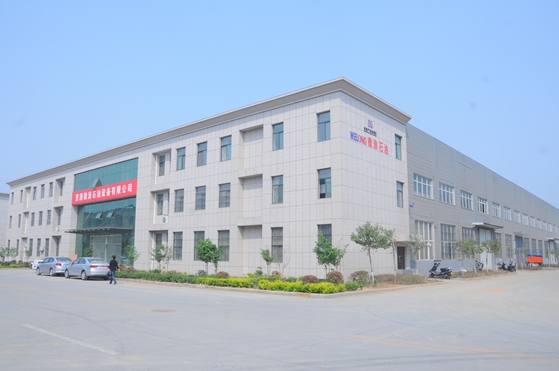
CHINA WELONG - 20+ years manufactuer in oilfield tools