How Does a Square Kelly Improve Oilfield Drilling?
When operators ask how surface horsepower actually becomes downhole progress, the answer often starts at the rotary table. How Does a Square Kelly Improve Oilfield Drilling? It does so by acting as the central link that converts rotation into reliable torque, steady downward feed, and continuous fluid delivery. From shallow development wells to deep exploration projects, this simple yet rugged component keeps operations efficient, stable, and productive.
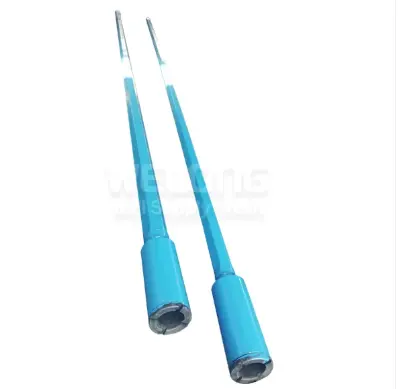
How Does a Square Kelly Transfer Rotary Torque During Drilling?
Four-Sided Grip That Prevents Rotational Slip
Unlike round pipe that would spin freely inside the bushing, each flat face of a square kelly creates positive mechanical engagement with the kelly bushings. As the rotary table turns, those four driving surfaces share torque evenly and prevent slipping even under high resistance. This locked geometry helps rigs hold steady RPM at the bit, which improves rate of penetration and reduces chatter in hard formations.
Direct Power Path From Surface to Bit
Every revolution made on the rig floor must travel thousands of feet downhole without major loss, and a quality square kelly makes that transfer remarkably direct. Seated inside the master bushing, it receives torque from the rotary table and passes it immediately to the drill string below. Because there are no intermediate gears or clutches, energy efficiency stays high and directional response remains predictable in vertical and deviated wells.
Torsional Strength Built for Modern Bits
Modern wells demand higher torque for PDC bits and longer strings, so torsional capacity really matters. A forged square kelly machined from AISI 4145H modified alloy provides excellent yield and fatigue resistance under cyclic twisting loads. WELONG fully heat-treats each bar to Brinell hardness 285-341, then inspects it ultrasonically over the full length to eliminate hidden flaws and prevent twisting deformation.
Square Kelly Drive Section and Direct Torque Transmission
Machined Flats Engineered for Full Bushing Contact
The heart of torque delivery lies in the drive section, where tolerance controls load sharing. Each square kelly from China WELONG features accurately milled flats that seat tightly in the drive bushings, spreading contact stress across a larger area rather than concentrating it on edges. This even distribution minimizes galling, extends bushing life, and converts surface horsepower into smooth, continuous rotation instead of damaging impact loading.
Extended Drive Length for Stable Power Delivery
With overall length of up to 54 ft, a long square kelly provides a generous stroke that keeps the drive section engaged while drilling ahead. Crews can drill deeper per connection before adding a single, which cuts non-productive time on the rig floor. Built under strict ISO 9001:2015 certifications and API 7-1 systems, WELONG ensures dimensional consistency end to end for stable torque transmission.
Wear Resistance That Protects Long-Term Performance
Abrasive steel-on-steel contact can quickly degrade cheaper drive tools, but a properly hardened square kelly resists that cycle. The 4145H modified chemistry plus full heat treatment creates a tough outer layer that withstands sliding friction against bushings while retaining a ductile core. Full-length ultrasonic inspection further guarantees internal soundness, allowing contractors to run the same kelly across multiple wells with minimal dressing or repair.
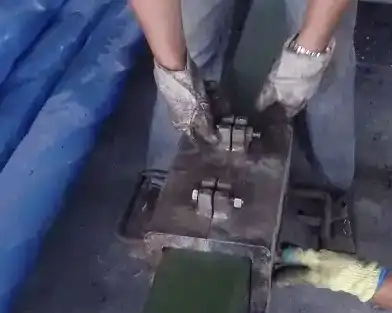
How Does Square Kelly Movement Support Continuous Drilling?
Free Vertical Slide While Rotating Under Load
One of the most valuable traits of kelly drilling is the ability to rotate and move vertically at the same time. A well-finished square kelly slides smoothly through the kelly bushing as weight is applied, so drillers can maintain constant rotation while feeding the bit forward. This synchronized motion prevents sticking, keeps bottomhole cleaning consistent, and allows quick response when formation hardness changes suddenly downhole.
Precise Control of Weight on Bit
Rate of penetration depends heavily on stable weight transfer, and vertical freedom makes control intuitive. Because the square kelly hangs from the swivel yet remains free to descend, the driller can use the drawworks to fine-tune hook load second by second. This precise management keeps weight on bit in the optimal window, protecting PDC cutters from overload while avoiding bouncing and vibration that waste energy.
Faster Connections for Uninterrupted Workflow
When the kelly has drilled down fully, crews must add the next joint quickly to resume progress. The robust square kelly design with standard API connections simplifies stabbing and make-up, reducing tong time and risk of cross-threading. Available in sizes from 2 1/2” to 6” in square and hexagonal types, WELONG kellys fit diverse rig classes and help maintain a rhythmic cycle of drill, connect, and drill again.
Square Kelly Bore for Drilling Fluid Circulation
Internal Channel That Delivers Mud Without Interruption
Rotation alone cannot drill; cuttings must be lifted continuously to keep the hole clean. The hollow bore of a square kelly serves as the primary conduit for drilling mud pumped from the swivel down through the entire string. Even while rotating and moving downward, this internal passage maintains uninterrupted flow to the bit nozzles, ensuring efficient cooling, lubrication, and transport of rock fragments to surface shakers.
Pressure Capacity Engineered for Deep Wells
As wells go deeper, standpipe pressure rises, and any weak point becomes a safety risk. A thick-walled square kelly forged from high-strength alloy withstands internal surges during pump start-up, plugged nozzles, or managed pressure drilling. Strict in-process and final inspections, with optional third-party verification by SGS or DNV, confirm wall integrity and sealing, giving operators confidence to circulate at high rates without leaks.
Smooth Bore Finish That Protects Flow Efficiency
Turbulence inside the string wastes pump horsepower and accelerates erosion, especially with weighted muds. Each square kelly produced by WELONG is bored and finished to promote stable flow and minimize pressure drop from top to bottom. This clean hydraulic path helps maintain equivalent circulating density, improves measurement-while-drilling signal quality, and reduces fuel consumption on mud pumps over long intervals.
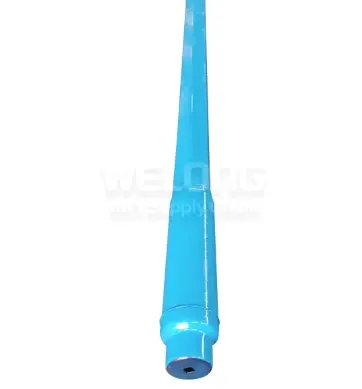
How Does Square Kelly Keep the Drillstring Connected to the Rotary System?
Top Connection That Links Power and Fluid Together
At the surface, everything converges at the kelly: rotation, hoisting, and circulation. The upper tool joint of a square kelly threads directly to the kelly saver sub and swivel, creating a single assembly that both rotates and allows mud to enter from the standpipe. This integrated connection simplifies the pressure path and lets the traveling block raise or lower the entire string smoothly without extra hoses downhole.
Lower Joint That Anchors the Full String Weight
Below the rotary table hangs thousands of pounds of drill pipe, collars, and the bottomhole assembly. The lower pin of the square kelly must support that entire hanging load while transmitting full torque without fatigue. Thanks to API-standard threads, precise shouldering, and high-strength steel, the connection stays tight under vibration and cyclic bending, preventing back-off that could leave fish in the hole.
Centralized Alignment for Safe, Stable Operations
Misalignment at the rotary creates side loads, uneven wear, and hazards for floor hands. Because a square kelly is centralized by the four-sided bushing and supported from above by the derrick, it naturally stays vertical and concentric with the wellbore. This stable alignment reduces wobble during high-RPM drilling, protects rotary table bearings, and creates a safer working zone around the slips during connections.
Conclusion
In short, the square kelly improves drilling by unifying torque delivery, vertical feed, fluid circulation, and string connection in one rugged tool. Its square drive, strong 4145H body, and smooth bore keep wells advancing faster with fewer interruptions. Founded in 2001, WELONG delivers API 7-1 certified kellys from 2 1/2” to 6” up to 54ft long, fully heat-treated and ultrasonically inspected for lasting performance and on-time delivery.
FAQ
Q1: What sizes and materials does WELONG offer for square kelly?
A1: WELONG supplies square kelly in 2 1/2” to 6” sizes, in both square and hexagonal types up to 54ft long. Each joint is made from AISI 4145H modified alloy, fully heat-treated to Brinell hardness 285-341 and ultrasonically inspected per API standards.
Q2: How does a square kelly improve drilling efficiency?
A2: A square kelly locks into the rotary bushing to transmit torque directly, slides vertically for precise weight on bit, and circulates mud through its bore while rotating. This combined action increases penetration rate, reduces connection time, and keeps hole cleaning continuous.
Q3: What quality and delivery assurance does WELONG provide?
A3: Founded in 2001, WELONG is ISO 9001:2015 and API 7-1 certified with strict in-process and final inspection, plus optional SGS or DNV third-party inspection. Skilled teams ensure on-time manufacturing and global shipping by sea, air, or railway under FOB, CIF, DDP, or DDU terms.
Upgrade Your Rig Efficiency — Get a Custom Square Kelly Quote From WELONG Today
Ready to drill faster with less downtime? As a professional international integrated supply chain service provider since 2001, WELONG specializes in oilfield products and customized solutions with strict quality control and reliable service. We offer high-strength square kelly with multiple transport options and flexible trade terms to suit your warehouse schedule. Contact our team today for sizing, pricing, and fast delivery: [email protected].
References
1. Bourgoyne, A. T., & Chenevert, M. E. Applied Drilling Engineering.
2. Mitchell, R. F., & Miska, S. Z. Fundamentals of Drilling Engineering.
3. Rabia, H. Oilwell Drilling Engineering: Principles and Practice.
4. Azar, J. J., & Samuel, G. R. Drilling Engineering.
5. Lyons, W. C., Plisga, G. J., & Lorenz, M. D. Standard Handbook of Petroleum and Natural Gas Engineering.
6. Moore, P. L. Drilling Practices Manual.
Share your inquiry, get the quotation accordingly!

CHINA WELONG - 20+ years manufactuer in oilfield tools