How to Choose the Best Choke Manifold for Oilfield Operations
The choice of the correct pressure control equipment is a decision that will directly affect the safety, efficiency, and success of a drilling operation. A choke manifold is a critical component for controlling well kicks, conducting balanced pressure drilling, and efficiently averting catastrophic blowouts. Armed with an understanding of how to choose the best choke manifold for oilfield operations, drilling engineers and procurement teams can make educated purchase selections. In this thorough guide, we’ll cover the key features, advantages of pressure control, technical specs, selection criteria, and advanced design considerations you need to consider when sourcing dependable, high-performing equipment to meet your demanding wellsite demands.
What Features Should Buyers Consider When Selecting a Choke Manifold?
Actuator Options and Remote Operation
Modern drilling requires operators to be flexible in the way they operate pressure equipment safely and effectively. When purchasing a choke manifold, it is important to determine whether it has manual, hydraulic, or combination actuator choices. Remote operation of hydraulically operated components enables choke valve openings to be controlled from a safe distance in critical well control conditions, substantially improving operational safety and reaction time.
Compact and Transportable Design
In today’s oilfield operations, efficiency in logistics and site preparation is of great importance. A well-engineered choke manifold is lighter and more compact in footprint, enabling conventional freight alternatives and simpler deployment. Its small form reduces transportation and shipping costs and allows for speedier rig-up on site, making the choke manifold a practical and cost-effective option for various and distant drilling situations.
Integrated Control Panel Testing
Operators feel confident since the equipment has been proven reliable before delivery. For high-quality systems, a universal function of a local control panel (LCP) is evaluated and provided simultaneously with the manifold. This integrated method guarantees that the choke manifold is delivered completely validated and ready for deployment, reducing the on-site commissioning time and the danger of unanticipated functional problems during important drilling operations.
How Does a Choke Manifold Improve Pressure Control During Drilling Activities?
Managing Well Kicks Effectively
The key to avoiding catastrophic well control accidents is the management of unanticipated pressure spikes. The choke valve opening is controlled by the choke manifold when the blowout preventer shuts, managing the limited pressure from the casing. This particular regulation enables the choke manifold to effectively regulate well kicks, maintaining wellbore equilibrium and avoiding hazardous circumstances from growing into uncontrolled blowouts during active drilling.
Enabling Balanced Pressure Drilling
Current drilling technologies depend on a perfect balance of pressure while drilling. The gadget carries out a balanced-pressure drilling technique, which makes it possible to do operations under minimal pressure-difference circumstances. Use of the choke manifold helps prevent contamination of the oil-bearing layer, preserves reservoir integrity, and allows operators to retain the best conditions downhole to safely and productively build the well.
Improving Drilling Speed and Efficiency
Besides the safety aspect, successful pressure control has a direct impact on the total drilling productivity and profitability. The device assists workers in optimising their rate of penetration by enabling balanced pressure procedures. The correctly working choke manifold enables the increased speed of drilling and, at the same time, controls blowout risks. This is the double advantage of increased efficiency and higher safety in rigorous oilfield drilling programs and hard formations.
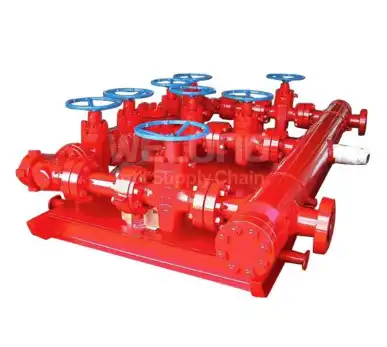
Key Technical Specifications of High-Performance Choke Manifold Systems
Compliance with Industry Standards
Adherence to recognized standards guarantees equipment reliability and global acceptance. Premium systems are engineered to meet API Spec 6A, API Spec 16C, and NACE MR-0175 requirements for sour service environments. Choosing a choke manifold that complies with these rigorous standards, supported by the National Science Data Center for Corrosion and Protection of Materials, ensures durability, corrosion resistance, and dependable performance under extreme conditions.
Essential Component Configuration
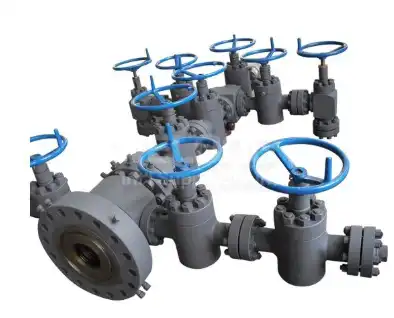
Internal composition gives purchasers a sense of overall quality and usefulness. A full assembly comprises choke valves, gate valves, line pipes, fittings, pressure gauges, and other key components operating in unison. When properly designed and assembled, the choke manifold provides accurate pressure control, dependable sealing and repeatable performance in the most demanding drilling and well control applications.
Mounting and Base Configurations
Flexible installation to meet different rig configurations and operating needs. High-performance systems may be fitted with a fixed base or a lifting base, depending on the site demands. This adaptability enables the choke manifold to be placed securely and moved readily as needed, giving operators realistic deployment choices that may effectively adapt to varied wellsite designs and logistical restrictions.
How to Select the Right Choke Manifold Based on Well Conditions and Operational Needs?
Matching Pressure Ratings to Well Requirements
Selecting equipment rated for anticipated pressures is fundamental to safe operations. Buyers must carefully evaluate their expected wellhead and casing pressures before making a purchase decision. Choosing a choke manifold with an appropriate working pressure rating ensures the equipment can safely handle the maximum anticipated loads, preventing failure and maintaining reliable pressure control throughout the entire drilling program under demanding conditions.
Considering Sour Service Environments
Many reservoirs contain corrosive elements that demand specialized material resistance. When wells produce hydrogen sulfide or carbon dioxide, equipment must withstand aggressive chemical attack. Selecting a choke manifold that meets NACE MR-0175 standards, backed by resources like <a href="https://www.astm.org/">ASTM International standards</a>, guarantees the materials resist sulfide stress cracking, ensuring long-term reliability and safety in harsh sour service applications.
Evaluating Operational Control Preferences
The way crews interact with the equipment influences both safety and efficiency on site. Operators must decide whether manual, hydraulic, or combined control best suits their workflow. A choke manifold offering hydraulically actuated components enables remote operation, allowing crews to manage pressure safely from a distance, which is particularly valuable during high-risk well control scenarios requiring rapid and precise response.
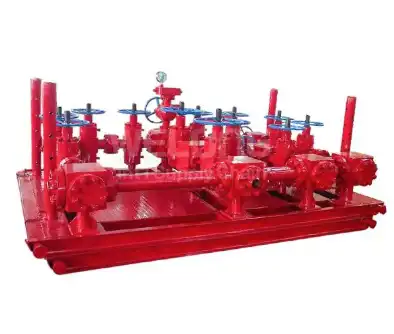
Advanced Design Factors That Enhance Choke Manifold Reliability in Oilfield Applications
Robust Material Selection and Quality Control
Premium materials and strict production procedures are the foundation of long-term reliability. Reputable manufacturers maintain stringent quality control, guaranteeing that every component meets precise requirements. A trustworthy choke manifold produced under <a href="https://www.iso.org/standard/62085.html">ISO 9001:2015 certifications</a> will undergo consistent quality management, guaranteeing durable equipment capable of enduring extreme pressures, corrosive fluids, and continuous operation in demanding oilfield environments.
Precision Engineering for Sealing Integrity
Safe well control requires leakproof performance under changing pressures. More sophisticated designs include finely machined valves and fittings that make a tight seal even when under heavy use. A properly designed choke manifold maintains uniform seal integrity during fast pressure fluctuations, significantly minimising the chance of leakage or failure, thereby improving the overall safety and dependability of key drilling and well control operations.
Comprehensive Inspection and Verification
Independent verification is the key to providing confidence in equipment quality prior to deployment. Trusted vendors provide in-process and final checks with third-party verification, if required. Buyers looking for a choke manifold would benefit from manufacturers that have expertise with organisations such as SGS and DNV, who prepare quick and extensive inspection programs to ensure that each product matches the claimed specifications and performance criteria before shipping.
Conclusion
When selecting the correct choke manifold for oilfield operations, you must carefully consider actuator alternatives, technical requirements, compliance standards, and well-specific circumstances. Operators may choose equipment that fulfils API Spec 6A, API Spec 16C, and NACE MR-0175 criteria with flexible control and rugged construction to provide improved pressure control, effective well kick management, and dependable blowout protection. Partnering with a seasoned and quality-certified manufacturer allows you to ultimately secure your drilling operation, boost efficiency, and conserve important reservoirs, ensuring your projects go forward safely and successfully in challenging oilfield settings throughout the globe.
FAQ
Q1: What industry standards should a quality choke manifold meet?
A1: A high-quality choke manifold should comply with API Spec 6A, API Spec 16C, and NACE MR-0175 standards. These certifications ensure the equipment offers reliable pressure control, corrosion resistance for sour service, and dependable performance under extreme drilling conditions.
Q2: What is the primary function of a choke manifold during drilling?
A2: Its primary function is to control well kicks and execute pressure control technology. When the BOP closes, the choke manifold regulates casing pressure by adjusting the choke valve opening, enabling balanced pressure drilling, protecting the oil layer, and effectively preventing dangerous blowouts.
Q3: Can a choke manifold be operated remotely?
A3: Yes, systems equipped with hydraulically actuated components allow for remote operation. This enables crews to adjust choke valve openings from a safe distance during critical well control situations, significantly enhancing operational safety and improving response time.
Ready to Secure Reliable Pressure Control Equipment? Contact Us Today
Choosing the right well control equipment is critical for safe and efficient drilling operations. Founded in 2001, CHINA WELONG is a professional international integrated supply chain service provider concentrating on premium oilfield products and customized solutions. Certified by ISO 9001:2015 & API 7-1, our stringent quality control—including comprehensive in-process, final, and optional third-party inspections via SGS and DNV—ensures every choke manifold we supply is durable and highly reliable. With flexible global transport options (sea, air, railway) under various terms like FOB, CIF, DDP, and DDU, we empower your projects with China's finest supply chain. Welcome to contact us at [email protected].
References
1. American Petroleum Institute (API). "Specification for Choke and Kill Systems." API Specification 16C.
2. American Petroleum Institute (API). "Specification for Wellhead and Christmas Tree Equipment." API Specification 6A.
3. Grace, Robert D. "Blowout and Well Control Handbook." Gulf Professional Publishing.
4. Watson, Derek, Terry Brittenham, and Preston L. Moore. "Advanced Well Control." Society of Petroleum Engineers.
5. Rehm, Bill, et al. "Managed Pressure Drilling." Gulf Publishing Company.
6. Bourgoyne, Adam T., et al. "Applied Drilling Engineering." Society of Petroleum Engineers.
Share your inquiry, get the quotation accordingly!

CHINA WELONG - 20+ years manufactuer in oilfield tools