The Essentials About a Manual Tong
A manual tong is an indispensable, powerful, and dependable piece of equipment used on every drilling rig to properly grip and handle drill pipes, casings & tubing. As the need for wellbore operations to work effectively and safely is rising, it is important for procurement managers and rig operators to know the basics of a manual tong. In this thorough guide, we will walk you through its key components, functioning processes in detail, unique oilfield types, selection criteria, and maintenance procedures to help you optimise pipe connection activities and increase overall rig performance.
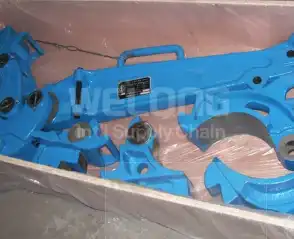
What Are the Main Components of a Manual Tong and Their Functions?
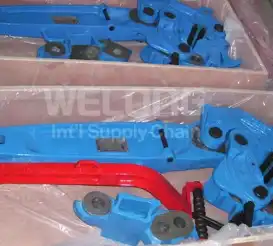
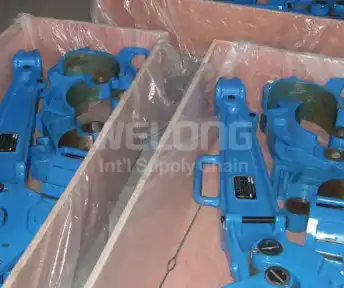
The Jaw and Latch Mechanism
The basis of each manual tong is a complex jaw and latch mechanism, designed to wrap firmly around cylindrical pipes. The tool has a pair of hinged jaws that can be adjusted to a specified diameter, so it provides a tight, wrap-around fit. The latching ability prevents the manual tong from slipping during high torque operations, safeguarding rig workers and the mechanical integrity of the drill string.
High-Strength Tong Dies
The real gripping power in the jaws is produced by tiny, interchangeable inserts known as tong dies. These hardened steel components have sharp teeth that are designed to bite into the tubulars' surface. When the operator pulls on the manual tong, the dies bite into the metal. The dies do not crush the pipe, but provide efficient torque by translating rotational power. Manual tongs are a vital element for heavy-duty connections.
The Lever Arm Structure
The long handle or lever arm gives you the mechanical edge you need to create huge amounts of torque by hand. Rig personnel connect a pull line or wire rope to the end of this arm, and then it is pulled mechanically by a cathead or winch. The strong design of the lever arm on a manual tong guarantees that the maximum stresses exerted during makeup or breakout of tight threaded connections are securely absorbed without bending or structural collapse.
Manual Tong Working Mechanism: How Does It Handle Pipe Connection Tasks?
Securing the Grip and Applying Torque
The rig team begins manipulating a pipe junction by fastening the manual tong tightly around the body of the tubular. When the latch is completely seated, any draw on the lever arm causes the hinged jaws to close, driving the internal dies into the steel surface. This self-tightening grip allows the manual tong to provide maximum rotational torque to the pipe in a smooth manner without harmful or wasteful slippage.
Executing Make-Up Operations
The threads are sensitive and need the correct amount of force when assembling a pipe junction to get a leak-proof seal without destroying the threads. During this phase, the crew places the manual tong in the forward or make-up position. The tool twists the top pipe firmly into the lower stationary pipe while the rig’s cathead pulls the tong line. A dependable manual tong applies the precise needed torque for a proper and standardised connection.
Performing Break-Out Procedures
Because of the extreme pressure and inherent thread locking that happens downhole, drill strings frequently need even more tension to pull out or detach. To do this, the manual tong is rotated or reset to change the orientation of the grip. When the lever is exposed to a large pulling force, the manual tong provides the breaking torque required to release tight joints, enabling the drill team to quickly deconstruct the string during tripping operations.
Different Types of Manual Tong for Various Oilfield Applications
Heavy-Duty Type SDD, DB, and SB Models
The size of the rig activities varies, and so do the tool classes they are designed to meet the various tubular weights and torque ranges. The Type SDD, Type DB, and Type SB models are particularly designed for heavy-duty drilling settings where large torque capabilities are essential. Using the suitable heavy-duty manual tong, operators may safely handle huge drill pipes and hefty collars, providing a secure way to apply powerful mechanical force for deep-well drilling and challenging geological conditions.
Versatile Type B and Type C Varieties
Type B and Type C tools are used in the industry for standard and intermediate tubular diameters. These versions provide the ultimate blend of weight, manoeuvrability and dependable gripping force. Type B or Type C manual tongs may readily be adapted with differing lug jaws for differing pipe diameters, making them very adaptable tools for crews that need to quickly swap between various parts of the drill string during active shifts.
Dedicated 13 3/8" to 36" Casing Tongs
Running casing needs sophisticated equipment that can handle huge diameters without crushing the comparatively thin-walled pipes. The 13 3/8-36” Casing Tong and standard 13 3/8” Casing Tong have been engineered with larger jaw profiles for the uniform distribution of physical pressure. The proper threading of these important structural pipes together is performed by a specialised casing manual tong, which maintains wellbore integrity from surface to production zones.
Specialized Well Service Tools
Workover and well intervention operations frequently have tighter areas and smaller diameter tubing. The Well Service Tong is meant to be lighter and more nimble than its heavier drilling cousins. A specialised well service manual tong enables maintenance teams to build up and break out completion tubing quickly, saving critical rig time while maintaining the high safety requirements necessary for complicated live-well servicing and repair operations.
How to Select the Right Manual Tong Based on Operational Requirements?
Assessing Maximum Torque Capacity Needs
The most important factor in picking rig equipment is the maximum torque you anticipate needing to make up your particular tubular connections. Serious safety concerns and significant operational delays might result from using a tool that is under-rated for the task. Buyers should know the composition and breakout torque specs of their drill strings to make sure the manual tong they choose can provide the appropriate rotating force comfortably and safely, without ever exceeding its structural engineering constraints.
Matching Pipe Diameter Dimensions
Oilfield activities need a wide variety of pipe diameters, from small-diameter workover tubing to huge surface casings. The right hinge jaws and latch steps are essential and must be fitted to the chosen instrument. Investing in a highly adjustable manual tong that encompasses your unique tubular diameter range allows for smooth transitions on the rig floor, thereby removing the need to buy and store many redundant instruments for a single wellsite.
Evaluating Material Quality and Certification Standards
The tools undergo tremendous physical abuse; thus, metallurgical integrity must not be compromised. Buyers should seek equipment constructed from premium alloy steels, which should meet stringent international standards, such as those described in ASTM International standards. By making sure your manual tong complies with tough quality control and accepted API manufacturing certifications, you are assuring durability, considerably cutting down the possibility of a catastrophic breakdown and giving you confidence in its dependable operation in hard, corrosive oilfield conditions.
Maintenance Practices to Extend Manual Tong Performance and Service Life
Executing Regular Cleaning and Inspection
The harsh drilling environment exposes tools to abrasive mud, heavy grease, and corrosive fluids daily. After every shift, rig crews must thoroughly clean the equipment to prevent debris buildup in the hinge pins and latch mechanisms. Conducting a routine visual inspection of the manual tong helps operators identify hairline fractures, bent components, or missing safety pins early, ensuring the tool remains completely safe for heavy-duty torque applications during the next operational shift.
Timely Replacement of Worn Tong Dies
The gripping teeth are the primary point of physical contact and naturally experience the highest rate of wear and tear. If the dies become excessively dull, the tool will slip, which can severely damage the pipe surface and endanger personnel. Frequently checking and promptly replacing the steel inserts in your manual tong is a simple yet crucial maintenance practice that restores optimal gripping power and meticulously maintains peak operational efficiency on the rig.
Consistent Lubrication of Moving Parts
To function correctly under immense pulling pressure, the hinge pins, latch jaws, and springs must articulate smoothly without binding. Exposing these joints to heavy mechanical loads without proper lubrication leads to rapid metal-on-metal wear and potential jamming. Applying industrial-grade grease systematically to all pivot points of the manual tong minimizes friction, protects against rust, and ensures that the crew can easily latch, adjust, and operate the tool without unnecessary physical strain.
Conclusion
The dependable manual tong is still a basic tool in oil and gas drilling, casing runs, and well service operations. A thorough knowledge of the basic elements of the coupling, such as the latching jaws and gripping dies, and the way it works to deliver appropriate makeup and breakout torque will give operators a reliable tubular connection. The choice of suitable tongs, from the robust Type SDD to the specialised Casing Tongs, and rigorous maintenance procedures provide increased safety and efficiency, allowing complicated oilfield projects to be successful.
FAQ
Q1: What is a manual tong primarily used for in oil and gas operations?
A1: It is a heavy-duty, large-scale wrench used by rig crews to grip drill pipes, casings, and tubing securely. It provides the mechanical advantage required to apply the necessary torque to either tighten (make up) or loosen (break out) threaded pipe connections.
Q2: How do you prevent a manual tong from slipping during high-torque applications?
A2: Slipping is primarily prevented by installing high-quality, sharp tong dies (steel inserts) inside the jaws. Additionally, operators must ensure they are using the correct jaw size for the specific pipe diameter and verify that the latch mechanism is fully engaged to create a self-tightening grip.
Q3: Are there different types of manual tongs available for specific pipe sizes?
A3: Yes, multiple types are manufactured for specific applications. For example, Type SDD, DB, SB, B, and C tongs are designed to handle various drill pipe dimensions, while specialized tools like the 13 3/8" to 36" Casing Tongs are built to handle larger, thinner-walled structural casing pipes safely.
Ready to Elevate Your Rig Capabilities? Contact Us Today
Sourcing dependable tubular connection equipment is crucial for secure and efficient drilling operations. Founded in 2001, CHINA WELONG is a professional international integrated supply chain service provider concentrating on premium oilfield products. Certified by ISO 9001:2015 & API 7-1, our strict quality control—including comprehensive in-process, final, and optional third-party inspections via SGS and DNV—ensures every manual tong we supply is durable and highly reliable. We specialize in tailored solutions with flexible global transport options (sea, air, railway) under various terms like FOB, CIF, DDP, and DDU. Ready to empower your projects with China's premier supply chain capabilities? Contact us: oiltools@welongpost.com.
References
1. American Petroleum Institute (API). "Specification for Drilling and Well Servicing Equipment." API Specification 7K.
2. Devereux, Steve. "Drilling Technology in Nontechnical Language." PennWell Books.
3. Mitchell, Robert F., and Stefan Z. Miska. "Fundamentals of Drilling Engineering." Society of Petroleum Engineers.
4. Grace, Robert D. "Drilling Operations and Well Design." Gulf Publishing Company.
5. International Association of Drilling Contractors (IADC). "IADC Drilling Manual." IADC Publications.
6. Azar, Jamal J., and G. Robello Samuel. "Drilling Engineering." PennWell Corporation.
Share your inquiry, get the quotation accordingly!

CHINA WELONG - 20+ years manufactuer in oilfield tools