How to Choose the Perfect Rolling Mill Roll for Your Manufacturing Needs
In the steel, aluminum, copper, pipe, automotive, construction, and electrical industries, the selection of the proper milling roll is critical for obtaining precise dimensions, consistent surface quality, and steady output. The optimal roll is dependent on the rolling process, material being processed, mill setup, roll shape, hardness, operating temperature, speed, and cooling technique. A well-matched milling roll may increase support, minimize vibration, maintain profile accuracy, and aid in more efficient long-term production.
How Does the Rolling Process Determine the Right Milling Roll Type?
Identify the Mill Stand and Rolling Route
The initial stage in the process is to determine where the milling roll will work. The load and surface requirements are varied for roughing stands, finishing stands, reversing mills, tandem mills, foil mills, and tube mills. Heavy reduction rolls must have a high load-bearing capacity, while finishing rolls must provide accurate geometry and a regulated surface finish. The choice of milling roll to match the mill stand gives a more confident basis for production.
Hot Rolling, Cold Rolling, or Foil Production
During hot rolling, a milling roll is subjected to high temperatures, thermal cycling, scale, and high reduction forces. With cold rolling, the focus is usually more on dimensional precision, surface quality, and resistance to repetitive contact fatigue. Especially in foil manufacturing, the geometry of the roll and the control of the surface are important. Small differences may change the thickness and the look . Therefore, the material of the milling roll, heat treatment, cooling design, and finish should be adapted to the unique rolling route.
Work Rolls, Backup Rolls, and Support Rolls
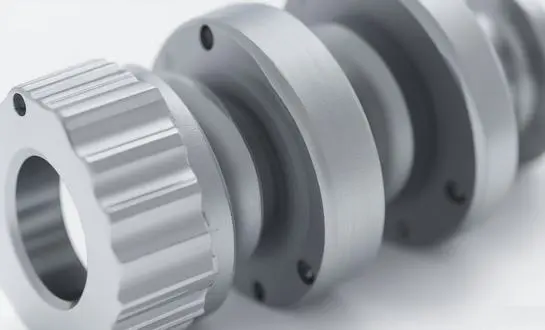
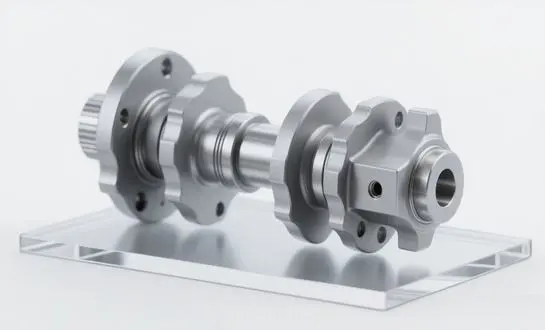
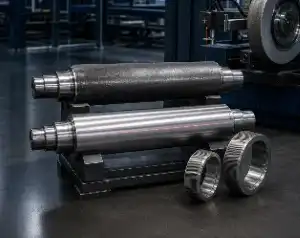
The work rolls are in direct contact with the strip or profile of metal. Backup and support rolls offer stability and assist in minimizing deflection. The assembled support milling roll distributes the pressure on the workpiece and contributes to the reduction of vibration during the operation. Available with adjustable diameter, face length, bearing arrangement, and mill type. This support allows greater control of thickness, flatness, profile, and surface quality and is especially beneficial in tough continuous rolling applications.
Milling Roll Material Selection for Hot Rolling and Cold Rolling Applications
Carbon Steel and Structural Steel Foundations
Selection of material starts with the necessary mix of strength, toughness, machinability, and service stability. For many milling roll and support-roll applications, carbon steel and structural steel offer a realistic basis when the grade is matched to the load and operating conditions imposed. The ultimate performance is influenced by chemical composition, section size, heat treatment, and manufacturing technique. The material selection should always be made in conjunction with the mill load and the temperature conditions.
Forged, Machined, Welded, or Assembled Construction
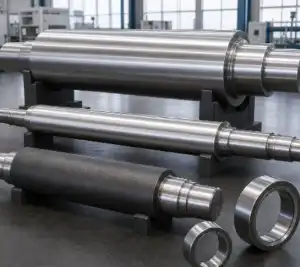
A milling roll may be made by forging, machining, welding, or assembly, depending on the size, structure, and the use of the milling roll. Welded or assembled construction may be used for customized configurations and quicker replacement of chosen components, while forging gives a high-strength, consistent structure for heavily loaded rollers. Next, precision machining provides the needed journals, barrel diameters, mounting interfaces, and surface profile for proper installation and operation.
Standards and Material Verification
Reliable material documentation supports consistent milling roll performance from one order to the next. Applicable standards may include ANSI, ASTM, ASME, DIN, and GB, depending on the customer’s location and technical specification. WELONG can organize chemical composition inspection, tensile testing, metallographic examination, impact testing, ultrasonic testing, and visual inspection. Engineers can also consult relevant ASTM International standards when defining material and testing requirements.
How Do Roll Diameter, Length, and Pass Profile Affect Milling Roll Performance?
Diameter and Contact Pressure
The diameter of the roll affects the length of contact, how it bends, the torque required, and the pressure distribution between the roll and the work item. Increasing the diameter of the milling roll increases the stiffness and load-carrying area, while decreasing the diameter allows a tighter bend and more flexible process setups. The right diameter must be estimated in relation to the reduction, material strength, mill housing, bearing capacity, and the intended production rate.
Face Length and Edge Coverage
The roll face must cover the working width and be well aligned and controlled at the edges. If the face length is too short, the strip or profile may not be uniformly supported. The longer it is than it needs to be, the heavier the design and the more handling it requires. A bespoke milling roll may be made to the customer's strip width, profile dimensions, bearing spacing and installation limits.
Pass Profile and Surface Geometry
The pass profile in the manufacture of profiles, bars and tubes regulates the guiding and shaping of the metal during each reduction step. In flat rolling, crown, flatness and surface roughness are of equal importance. The milling roll is accurately contoured, and its surface shape is controlled by precision CNC machining. WELONG has CNC vertical lathes, horizontal lathes, grinding machines, and gantry milling machines to assist in accurate roll manufacturing.
Milling Roll Hardness and Wear Resistance for Different Operating Conditions
Hardness Through the Working Layer
The hardness should be determined based on the contact pressure, abrasiveness of the material, temperature, speed, and the estimated service life. A milling roll should have sufficient surface hardness to withstand wear, but not so high that it becomes brittle and susceptible to impact and repetitive loading. The hardness may be different for the working barrel, the journals, and support components. A stable working surface is achieved by correct heat treatment and careful machining.
Wear Resistance Depends on the Load
A roll used in high-reduction steel manufacturing will have a distinct wear pattern from a roll used for aluminum sheet or copper foil. The working surface may be influenced by scale, hard inclusions, sliding contact, and thermal cycling. A wear-resistant milling roll retains its profile and surface quality for extended production periods. This provides reliable product dimensions and helps decrease the number of roll changes and corrections.
Surface Finish, Balance, and Inspection
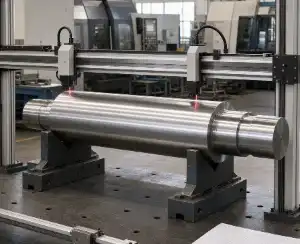
The reliability of milling rolls operation is dependent on the surface roughness, dynamic balancing, dimensional precision, and internal soundness. WELONG’s inspection choices include dimensional inspections, dynamic balance testing, ultrasonic testing, visual examination, roughness measurement, and balancing-machine verification. These controls serve to verify the roll is adequate for high-speed rotation and accurate contact. A well-checked surface also contributes to a consistent product appearance and reproducible rolling outcomes.
How Do Rolling Speed, Temperature, and Cooling Requirements Shape Milling Roll Selection?
Speed Changes Dynamic Requirements
As rolling speed increases, dynamic balance, journal accuracy, bearing alignment, and surface uniformity become increasingly important. A milling roll must rotate smoothly without creating unnecessary vibration or uneven contact. The roll body, shaft, mounting interface, and balance condition should be assessed as one system. Precision machining and dynamic balance testing help prepare the roll for stable operation in high-speed cold rolling and finishing applications.
Temperature Determines Roll Structure
Hot rolling subjects the milling roll to rapid temperature changes, thermal expansion, and contact with heated steel or other metals. The roll must maintain its shape while transferring heat and resisting thermal fatigue. Cold rolling operates at lower temperatures but demands excellent dimensional and surface accuracy. Selecting the correct material, body design, hardness, and cooling arrangement allows the milling roll to remain dependable under its intended thermal conditions.
Cooling, Lubrication, and Thermal Stability
Cooling fluid helps control roll temperature, protect the working surface, and stabilize the rolling gap. Its flow pattern and coverage should correspond with roll speed, strip width, reduction, and heat generation. Lubrication may also influence friction and surface quality, especially in cold rolling. A properly specified milling roll works with the cooling and lubrication system to maintain profile accuracy, improve process stability, and support longer service intervals.
Conclusion
Selecting the perfect milling roll requires a complete view of the production process. Mill type, material, construction method, diameter, face length, pass profile, hardness, speed, temperature, cooling, and inspection standards all influence performance. WELONG provides customized roll solutions for steel, aluminum, copper, automotive, construction, electrical, and pipe manufacturing applications. With more than two decades of supply-chain experience, precision machining capability, structured quality control, and flexible delivery options, WELONG can help customers obtain a milling roll designed for accuracy, stability, durability, and efficient operation.
FAQ
1. What information is needed to select a milling roll?
Key information includes the mill type, roll position, material being processed, strip or profile width, roll diameter, face length, working speed, temperature, reduction, bearing arrangement, cooling method, and required surface finish. Providing these details enables WELONG to recommend a milling roll with suitable material, geometry, hardness, manufacturing route, and inspection requirements.
2. Can WELONG manufacture customized milling rolls?
Yes. WELONG supports customized milling roll designs for hot rolling mills, cold rolling mills, foil mills, profile lines, and tube manufacturing. Customers can specify dimensions, pass profiles, shaft and bearing interfaces, material standards, surface roughness, balance requirements, and inspection procedures. Manufacturing may include forging, machining, welding, assembly, and precision finishing.
3. How does WELONG inspect milling roll quality?
WELONG can arrange chemical composition inspection, dimensional inspection, ultrasonic testing, visual examination, tensile testing, metallographic analysis, impact testing, surface roughness measurement, and dynamic balance testing. The company also supports third-party inspection through experienced organizations such as SGS and DNV. Inspection plans can be customized according to the customer’s technical standards and application.
Get Your Custom Milling Roll Quote Today
WELONG can help you select and manufacture a milling roll based on your rolling process, material, dimensions, pass profile, hardness, operating speed, temperature, and cooling requirements. Our team provides customized production, precision machining, quality inspection, third-party inspection coordination, and flexible transportation by sea, air, or railway. With more than 20 years of international supply-chain experience, WELONG supports customers from technical specification to final delivery. Contact us at [email protected] to request a quotation or discuss your next milling roll project.
References
1. Wusatowski, Z. Fundamentals of Rolling. Pergamon Press, 1969.
2. Roberts, A. Cold Rolling of Steel. Marcel Dekker, 1978.
3. Lenard, J. G. Primer on Flat Rolling. Elsevier, 2007.
4. ASM International. ASM Handbook, Volume 14A: Metalworking: Bulk Forming. ASM International, 2005.
5. ASTM International. ASTM A388/A388M: Standard Practice for Ultrasonic Examination of Heavy Steel Forgings.
6. ASTM International. ASTM E18: Standard Test Methods for Rockwell Hardness of Metallic Materials.
Share your inquiry, get the quotation accordingly!
CHINA WELONG - 20+ years manufactuer in oilfield tools