Best Lifting Bail Materials for Strength and Durability
Selecting the optimum material for a lifting bail entails going beyond the steel grade stamped on a part. Performance is a function of alloy chemistry, section size, processing route, heat treatment, inspection and service environment. 4140 and modified 4145 are commonly used steels however neither one is necessarily the best for all applications. This article describes how to evaluate them and what material, manufacturing and quality records to check when specifying a lifting bail for oilfield equipment.
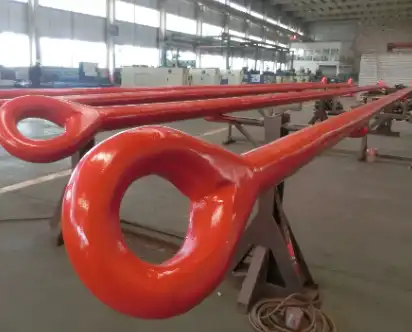
Why Is Alloy Steel Commonly Used for Lifting Bail Construction?
Strength Without Unnecessary Bulk
Alloy steel is often used since it can be heat treated to provide both high strength and functional toughness giving a lifting bail the ability to bear its designed load in a practical section size. The benefit is not decreased density (steel grades have roughly equal density) but the ability to achieve a defined strength level via controlled chemistry and processing. The safe working capacity is still determined by the whole design, production, testing and permitted rigging arrangement.
Hardenability in Larger Sections
In popular Cr-Mo grades like as 4140, chromium and molybdenum increase hardenability and heat-treatment response when processing is correctly managed. Hardenability is a measure of the depth of a steel section that may acquire the necessary qualities after quenching and is distinct from the ultimate hardness measurement. Those who purchase lifting bails with a thick eye or changing section should ask for heat treatment records and mechanical results typical of the completed component.
Consistent Fabrication and Quality Control
Manufacturers may use standard processes for making and testing common grades of alloy steel to regulate chemistry, dimensions and mechanical qualities. A lifting bail may have an eye, neck, shoulders and curved transitions, all of which must match the design criteria. Clear material requirements and controlled fabrication assist to guarantee that important characteristics are consistently produced and can be validated against the component’s documentation.
4140 vs. 4145M Steel: Which Material Properties Matter for Lifting Bail Performance?
Start with the Exact Grade Definition
Exact Grade Definition 4140 and 4145M are both chromium-molybdenum steels, although 4145M is a modified version of the 4145 grade and the exact chemistry will depend on the standard or supplier definition which applies. A lifting bail requires a full purchase of a grade moniker. Specify the controlling material specification and requisite heat-treated state, then compare verified chemical analysis and mechanical qualities, rather than assume that all “M” modifications have the same composition.
Compare Certified Mechanical Properties
Verify the tensile strength, yield strength, elongation, hardness and impact parameters of the finished heat treated batch as needed. 4140 lifting bail is good for a lot of technical applications. The 4145M may be used if a variety of chemical or mechanical properties is sought. Neither word guarantees supremacy. ASTM Standard Test Methods and Specifications. Search for relevant publications in the ASTM International standards library. Get the purchase spec and acceptance criteria signed off by engineering.
Match the Grade to Geometry and Duty
Material options: Consider the form, section thickness, operating temperature, number of expected handling cycles and the loading of the lifting bail when selecting the material options. You want a high tensile strength , but you also want toughness and ductility in critical areas like the eye and the neck . The specification should state what properties are required, and how they are to be checked. Do not assume that only changing 4140 to 4145M (or vice versa) will not affect the original component rated capacity without engineering analysis.
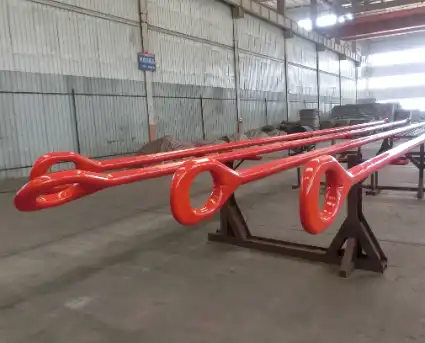
Forged or Cast Steel Lifting Bail: How Does Manufacturing Affect Material Strength?
Forging Can Follow the Load Path
When preform, dies, reduction and finishing are regulated, forging is able to shape grain flow around significant features of a lifting bail and provide a consistent load bearing section. This may be advantageous for components with curved or heavily loaded areas. Dimensional inspections, mechanical property verification, and any required nondestructive testing of the final product are still mandatory. The forging route should be backed by production records and product specific acceptability requirements.
Casting Offers Design Flexibility
Cast steel may be made into intricate forms and can be tailored for severe demanding usage. It is a function of alloy chemistry, solidification control, section design, heat treatment and quality verification. Castings lifted by bail should have documented material identity, manufacturing controls, mechanical test data and inspection records as suitable to the governing specification. Judge fitness not by the look of the actual component, but by the evidence.
Qualification Matters More Than the Process Label
Lifting components may be made from forged or cast steel as long as the design and manufacturing process are qualified for the purpose required. When you’re examining a lifting bail, you should enquire what standard applies, how the material is traced to its identification, and what inspections or testing are necessary. Examine any design validation or proof testing documents necessary for the product. How it is manufactured is significant but has to be assessed against the traceability, ratings and inspection results.
Heat Treatment and Toughness: Improving Lifting Bail Resistance to Impact and Fatigue
Quench-and-Temper for a Balanced Condition
Quenching and tempering are the usual heat-treatment procedures for Cr-Mo steels such as 4140. The cycle is chosen to provide the desired strength, while providing useful toughness and ductility. A lifting bail provider should have methods specific to the actual section size and regulate austenitizing, quenching and tempering conditions. Ask for the hardness and mechanical test data on the issued lot, not just a generic statement that the item was heat-treated.
Specify Toughness at Service Temperature
Impact toughness is a measure of a material's response to abrupt loading, and the outcome might vary on temperature and test circumstances. as impact performance is crucial to the application, describe the necessary test method and temperature, e.g. Charpy V-notch testing as required by the product specification. The usage of a lifting bail for cold circumstances should be checked against the conditions and test results recorded for the material and heat treatment condition stated.
Treat Fatigue as a Whole-Component Issue
Fatigue performance is not just decided by the steel quality, since a lifting bail might be handled several times. Service life is dependent on stress range, shape, surface polish, transitions, manufacturing quality, and inspection. Material and heat treat as part of the designed component. Follow rated capacity and inspection recommendations. Where fatigue qualification is necessary, ensure that accompanying design or test documentation is applicable to the actual product.
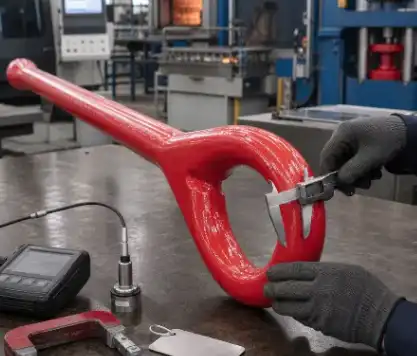
Corrosion and Wear Resistance in Lifting Bail Materials for Harsh Drilling Environments
Protect Against Water, Salt, and Drilling Fluids
Moisture, salt air, water muck, and chemical residues may all take their toll on a lifting bail via corrosion. Set the environment of usage and storage. Select a protective finish and maintenance method that is suited for the environment. Protect threads and contact surfaces as required by manufacturer but keep identifying and inspection areas accessible. excellent cleaning and storing practices help to maintain the component in excellent condition between uses.
Account for Contact Wear
Frequent contact with hooks, slings, adapters or storage racks may wear off protective coatings and damage local surfaces. Therefore the selection of materials has to be considered in terms of bearing geometry, appropriate contact components and inspection criteria. Routine inspections should include checking of the lifting bail threads and high contact areas, and maintenance of its corrosion protection in accordance with permitted methods. Early intervention on wear preserves the state and identification of the component for future evaluation.
Review Sour-Service Requirements
Alloy grade alone does not determine compatibility if there is a chance of exposure to hydrogen sulphide (H 2 S). When required, have a competent engineer review the environment, material hardness, stress conditions and applicable sour service norms such as ISO 15156/NACE MR0175. A lifting bail should be shown to be appropriate for sour service. Surface coatings may provide protection against external corrosion but they cannot be a replacement for metallurgical qualification or inspection.
Conclusion
The best lifting bail material is a specification choice, not a competition between grade designations. Performance is affected by alloy steel chemistry, section size, validated heat treatment, manufacturing path, impact toughness, fatigue duty, and environmental exposure.Forged or cast parts should have traceable material and inspection records, as well as a rated capacity suitable for the application. When comparing 4140 and 4145M, certified material properties and the applicable purchasing specification should guide the final selection.WELONG has experience in the oilfield supply chain, offering customized services, quality-control processes, and support in coordinating technical requirements. Buyers can request product-specific drawings and certificates for review before approval.
FAQ
1.Which material is best for a lifting bail?
There is not one winner. 4140 may be picked for a variety of designs, while 4145M can be chosen if an engineering specification requires its changed chemistry or a certain mechanical property range. Compare impact criteria, component geometry, service conditions and heat treatment for certified characteristics The grade name alone should never be used to choose a lifting bail.
2.Is forged steel always stronger than cast steel?
Not by default. Forging, when managed, may provide good grain flow. Cast steel, if correctly designed, can be made to accommodate complicated geometries. Compare for a lifting bail design qualification, material certification, heat treatment, inspection, and load validation documentation. The manufacturing route must be capable of meeting the regulatory specification and stated performance criteria for the intended application.
3.What material records should I request?
Request traceability of heat or lot identification, chemical analysis, mechanical test findings, heat treatment records, hardness results and impact data as necessary. Request appropriate non-destructive and dimensional inspection reports, rated capacity, connection information and maintenance recommendations for a lifting bail. • Ensure the paperwork is relevant to the part being delivered.
Request a Lifting Bail Material Review from WELONG
Need a lifting bail for drill-string equipment or for a unique oilfield application? Since 2001, WELONG has been involved in supporting worldwide oilfield supply chains by providing customised service and product coordination with quality-control methods. The business has ISO 9001:2015 and API 7-1 certifications, ask for the relevant product-level paperwork and check the rating and specification of the bail chosen. For a material selection, include equipment design, connection information, load and duty cycle, operating temperature, and corrosion or sour-service conditions. Please contact the WELONG team at [email protected] for more information, to discuss your needs, traceability records and to get a price.
References
1. ASTM International. ASTM A322: Standard Specification for Steel Bars, Alloy, Standard Grades.
2. ASTM International. ASTM A370: Standard Test Methods and Definitions for Mechanical Testing of Steel Products.
3. ASTM International. ASTM E23: Standard Test Methods for Notched Bar Impact Testing of Metallic Materials.
4. ASTM International. ASTM E18: Standard Test Methods for Rockwell Hardness of Metallic Materials.
5. ASTM International. ASTM A751: Standard Test Methods, Practices, and Terminology for Chemical Analysis of Steel Products.
6. ASME. B30.20: Below-the-Hook Lifting Devices.
Share your inquiry, get the quotation accordingly!
CHINA WELONG - 20+ years manufactuer in oilfield tools