Maximize Drilling Efficiency with Tricone Drill Bits
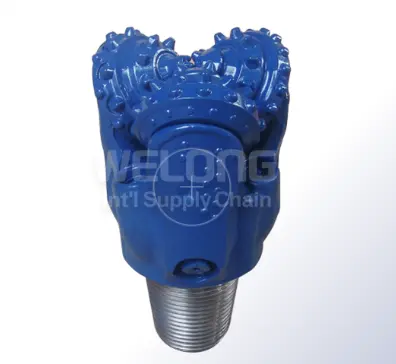
The combination of three revolving cones, properly matched cutting structures, reliable bearings, and good hydraulic cleaning may increase the drilling efficiency of a tricone drill bit. The bit size alone doesn’t dictate its performance. The shape of the tooth or insert, weight on bit (WOB), rotational speed, fluid flow, gage protection, and formation qualities must be compatible. When these characteristics are appropriately matched, a tricone drill bit may provide a greater rate of penetration, longer operational life, better hole cleaning, and more predictable drilling outcomes.
How Does Tricone Drill Bit Design Affect Rate of Penetration?
Geometry That Converts Weight into Rock-Breaking Work
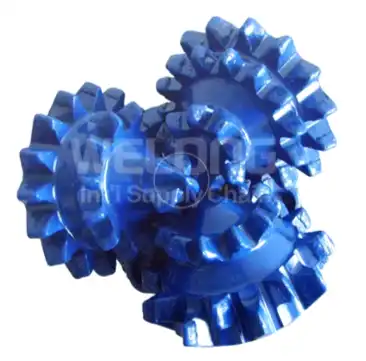
A tricone drill bit is not reliant on one cutting point to fracture the formation. It has three cones that roll on the bottom of the hole. The weight on the bit is shared between many rows of teeth or inserts. This rolling movement provides crushing, chipping, and scratching effects at the various contact locations. A good cone shape helps to turn the applied weight and rotating torque into beneficial work of rock breaking and not unwanted friction.
Cone Offset and Bottomhole Contact
The cone offset impacts the aggressiveness of the interaction between a tricone drill bit and the formation. Higher offset often leads to more scraping and gouging in softer rock, whilst lower offset is usually better suited for controlled crushing in tougher formations. The contact pattern is also affected by the cone angle, journal angle, and row spacing. By balancing these properties, the bit may remain engaged in the bottomhole and remove formation material at a steady pace.
Load Paths from Cone to Bearing
The drilling load is transmitted from the cutting structure to the cone, bearing, leg, and bit body. A tricone bit with a robust, well-aligned load route may handle WOB more effectively while still rotating the cones smoothly. WELONG applies high-precision roller-bearing constructions with two thrust sides. The roller arrangement may give a bigger bearing surface, ideal for greater loading and demanding rotating speeds.
Tricone Drill Bit Cutting Structure for Efficient Rock Breaking
Milled Teeth for Controlled Aggression
For soft to medium formations, a milled-tooth tricone drill bit is commonly utilized. Scraping and gouging are effective in producing efficient penetration. The steel teeth are made of the cone’s own material and may be created with various lengths, spacing, and profiles. The tooth surfaces are provided with a premium tungsten carbide hardfacing to increase wear resistance, wherein the cutting structure can maintain a functional tooth height during prolonged contact with abrasive formation materials.
Carbide Inserts for Harder Intervals
A tungsten carbide insert tricone drill bit is used for formations requiring higher impact strength and wear resistance. Shape, exposure, spacing, and carbide grade all influence the way the bit smashes and fractures rock. Conical, chisel, and button style inserts may be employed to achieve various types of drilling goals. For harsh or abrasive periods, better formulations and manufacturing procedures may assist in retaining cutting performance.
Hardfacing and Cutter Exposure
The cutter exposure should be set to the formation and drilling parameters. Too much exposure may encourage aggressive penetration in favorable rock, while a more sheltered profile can enhance stability in hard formations. Tungsten carbide hardfacing on a tricone drill bit preserves the surfaces of the steel teeth and specified wear regions. This combination provides a compromise between cutting ferocity and durability on extended drilling operations.
How Do WOB and RPM Optimize Tricone Drill Bit Performance?
Finding the Productive WOB Window
The weight on the bit has to be sufficient to produce effective rock failure yet regulated to allow the cone to rotate and the bearing to be stable. A tricone drill bit often operates best in a formation-specific WOB range, not at the maximum load. Drillers may fine-tune WOB by monitoring rate of penetration, torque, vibration, pump pressure, and bit reaction to achieve a more efficient balance of footage and component protection.
RPM That Complements the Formation
Changing the rotary speed influences how often the cutter hits the rock and the length of time each tooth or insert is in contact with the formation. A tricone drill bit used in soft rock may react better to a different RPM range than a bit used in hard, abrasive rock. RPM should be examined with WOB, bit design, bearing capacity, hydraulics, and forming behavior to prevent inefficient energy distribution.
Reading Drilling Response in Real Time
The effects of torque, rate of penetration, standpipe pressure, and vibration are important in understanding the performance of a tricone drill bit. Cutter wear, poor cleaning, or operation outside the optimum operating window might result in a rapid decrease in penetration. By monitoring these indicators as the run proceeds, the drilling crew may make timely modifications to WOB, RPM, and flow rate, enabling the bit to stay productive for a longer period of time.
Tricone Drill Bit Hydraulics for Faster Cuttings Removal and Bit Cleaning
Jet Placement at the Cutting Face
Nozzle placement determines how effectively drilling fluid reaches the bottomhole cutting zone. A tricone drill bit with a well-planned hydraulic layout can direct fluid between the cones and toward the formation, lifting loose cuttings before they are recut. Good jet coverage also helps keep the teeth or inserts exposed to fresh rock. This improves cutting efficiency and supports a cleaner, more stable bottomhole environment.
Hydraulic Energy and Pump Capacity
Flow rate and pressure must be matched to the nozzle arrangement, mud properties, hole size, and available pump capacity. A tricone drill bit can benefit from sufficient hydraulic energy, but the complete circulation system must remain within practical operating limits. Engineers typically consider fluid density, viscosity, solids content, nozzle diameter, expected penetration rate, and annular velocity when developing the hydraulic program.
Cooling, Cleaning, and Stable Progress
Drilling fluid removes cuttings and carries heat away from the cutting structure, cone surfaces, and nearby bearing areas. For a tricone drill bit, effective circulation reduces the buildup of formation debris around the cones and helps maintain consistent contact with the rock. Stable cooling and cleaning can support smoother torque behavior, more reliable penetration, and better use of the bit’s tooth or insert design.

How Does Formation-Matched Tricone Drill Bit Selection Improve Drilling Efficiency?
Start with Rock Strength and Abrasiveness
Formation compressive strength, abrasiveness, plasticity, fracture pattern, and interbedding should guide tricone drill bit selection. Softer formations may benefit from longer milled teeth and a more aggressive cutting profile. Hard or abrasive formations generally require robust tungsten carbide inserts, stronger bearing support, and additional wear protection. Reviewing geological data before selection helps prevent a mismatch between the bit structure and the actual drilling environment.
Match Bit Size and Construction
WELONG supplies tricone drill bit sizes from 4 3/4 inches to 36 inches, including milled-tooth and tungsten carbide insert designs. Size selection should correspond with the planned hole diameter, casing program, rotary system, hydraulic capacity, and desired drilling speed. Gauge inserts, heel trimmers, tungsten carbide hardfacing, and shirttail protection help the bit preserve hole size while supporting bearing and body durability.
Specification, Inspection, and Supply
CHINA WELONG has specialized in oilfield products and customized solutions since 2001. Its quality program includes in-process and final inspection, with third-party services available through experienced organizations such as SGS and DNV. WELONG maintains ISO 9001:2015 and API 7-1 certifications in its relevant quality systems. For broader material-performance information, engineers may also consult the National Science Data Center for Corrosion and Protection of Materials. Sea, air, and railway delivery can be arranged under FOB, CIF, DDP, or DDU terms.
Conclusion
Getting the most drilling performance from a tricone drill bit comes from a series of coordinated choices, not one design characteristic. Penetration and operational life are impacted by cone geometry, tooth or insert choice, WOB, RPM, hydraulics, bearings, and gage protection. WELONG’s milled-tooth and tungsten carbide insert bits range from 4 3/4 inches to 36 inches, backed by regulated production and inspection services, customizable requirements, and worldwide logistical support. When formation data and operational conditions are carefully examined, contractors may pick a dependable bit for productive, steady, and efficient drilling.
FAQ
1. What is the difference between a milled-tooth and insert tricone drill bit?
A milled-tooth tricone drill bit uses steel teeth formed directly in the cone and is commonly suited to soft or medium formations. A tungsten carbide insert bit uses replaceable-style carbide cutting elements positioned in the cones for stronger wear and impact resistance. The best option depends on rock strength, abrasiveness, WOB, RPM, and expected drilling conditions.
2. What sizes of tricone drill bit does WELONG supply?
WELONG supplies tricone drill bit sizes from 4 3/4 inches up to 36 inches. Customers can choose between milled-tooth and tungsten carbide insert types according to formation conditions and hole requirements. WELONG can also discuss customized specifications involving cutting structure, gauge protection, bearing configuration, hydraulic design, inspection, and delivery.
3. How does WELONG control tricone drill bit quality?
WELONG applies in-process and final inspection procedures during production. Its experienced team can also coordinate third-party inspections with SGS or DNV when requested. The company has more than 20 years of oilfield manufacturing and supply-chain experience, and its relevant quality systems are supported by ISO 9001:2015 and API 7-1 certifications.
Request Your Tricone Drill Bit Quote Today
Improve your drilling program with a tricone drill bit matched to your formation, hole size, operating parameters, and hydraulic system. WELONG can support selection of milled-tooth or tungsten carbide insert designs, cutting structures, bearing arrangements, gauge protection, inspection plans, and delivery terms. With more than two decades of oilfield experience and customized supply-chain services, our team can help from specification through shipment. Contact WELONG at [email protected] to request technical information, a tailored quotation, or a dependable tricone drill bit solution for your next project.
References
1. American Petroleum Institute. API Specification 7-1: Rotary Drill Stem Elements.
2. Bourgoyne, Adam T., et al. Applied Drilling Engineering. Society of Petroleum Engineers, 1986.
3. Mitchell, Robert F., and Stefan Miska. Fundamentals of Drilling Engineering. Society of Petroleum Engineers, 2011.
4. Rabia, H. Oilwell Drilling Engineering: Principles and Practice. Graham & Trotman, 1985.
5. Azar, J. J., and G. Robello Samuel. Drilling Engineering. PennWell Corporation, 2007.
6. International Association of Drilling Contractors. IADC Drilling Manual.
Share your inquiry, get the quotation accordingly!

CHINA WELONG - 20+ years manufactuer in oilfield tools