Milling Rolls vs Mill Liners: What’s the Difference?
The terms milling roll and mill liner define components that seem the same from a distance but have quite different functions. A milling roll is the exact tool that rolls metal into shape in a rolling mill. A mill liner is the protective lining that protects ore, media, and grinding energy within a grinding mill such as a SAG mill, ball mill, or rod mill. Engineers and purchasing teams might acquire the wrong component for a given method by mixing up the two. In this study, the different characteristics of milling rolls and mill liners are pointed out in function, form, materials, and selection logic.
What Is a Milling Roll and How Does It Shape Metal in a Rolling Mill?
Definition and Operating Environment
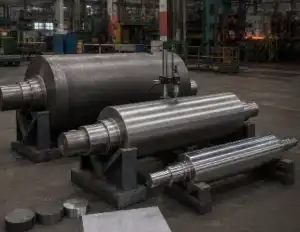
A milling roll is a heavy roller installed on a rolling mill platform and rotated under force to decrease the thickness of steel, aluminum, copper, or other metal into a sheet, plate, or profile. The milling roll is to operate on the metal workpiece and not on a shell, with controlled pressure in the roll gap so that the strip comes out with the appropriate thickness, profile, and surface polish. Rolling mills are continuous manufacturing lines; hence,, a rolling mill roll must be dimensionally stable for thousands of hours of operation.
Force Transmission and Shape Control
The immense rolling force from the mill housing is transmitted via the roll necks and bearings to the strip by the milling roll. The milling roll barrel is ground with crown and profile and surface roughness so that it may get the required flatness, gage distribution, and finish of the strip exiting the mill. All three methods use the roll of the mill stand as the actuator. Modern rolling mills are equipped with automated gage control, roll bending, and roll shifting to control strip shape during rolling. Strict shape and thickness tolerances can only be accomplished with an exact milling roll.
Typical Applications
Milling rollers are utilized in hot-rolled coil, plate, and long products steel mills and car sheet, appliance steel, and tin plate cold rolling mills. They are also utilized in aluminum rolling, copper foil mills, and pipe forming mills. The design of the milling roll varies according to use, but the core purpose is the same: to bend metal by controlled compression. The product is the strip, the equipment is the milling roll, and the product's suitability for sale is a question for the equipment.
Milling Roll Contact with Steel vs. Mill Liner Protection of the Grinding Mill Shell
Milling Roll Contact Behavior
A milling roll engages the workpiece across a short arc of the space between the rolls. The contact area is tiny compared with the overall surface of the roll, and hence the local pressure in the bite may be rather significant. The strip moves at a certain speed along the surface of the barrel, giving heat and friction to the milling wheel. The contact zone is regulated by cooling water, lubricant, and strip tension. The output is the
, which has to apply force without damaging the surface it is producing.
Mill liners are the material that lines the interior of a grinding mill shell and is regularly hit by the grinding media, such as steel balls, rods, or autogenous rock. The liner is not a product. Instead, it shields the mill shell from impact and abrasion. The lifter profile elevates the charge to give grinding energy to the ore effectively. Mill liners are subject to high-energy impacts, slurry abrasion, and chemical assault. It's not like the regulated rolling contact of a mill roll on a strip of steel.
Why the Two Roles Should Never Be Confused
A milling roll is a shaping instrument; a mill liner is a wear-protection part. The forces, the velocities, the temperatures, the wear processes are all of a much different order of magnitude. One could not be replaced by the other. A mill liner would not withstand the impact environment in a grinding mill and a mill could not attain the accuracy and polish of a rolling mill. Always verify the application, operating environment, and drawing number before receiving a quote on any of these parts.
How Do Milling Roll Geometry and Mill Liner Profiles Serve Different Process Functions?
Milling Roll Geometry
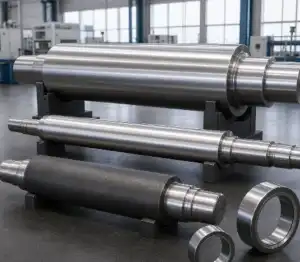
A milling roll is a smooth cylindrical barrel with a well-regulated diameter, length, and surface polish. Usually, the barrel is slightly topped or twisted to provide elastic flex under load. The ends of the necks and drive are machined for the spindles and bearings of the mill. Some milling wheels contain tubes for cooling water inside and spray heads on the exterior. Geometry is designed for stiffness and fatigue life, and predictable metal flow in the roll gap.
Mill Liner Profiles
And the mill liners are intentionally made rough. Lifter bars, plates, or grid profiles engage the charge in the mill, lifting grinding media and ore to a certain height and cascading down. The mill has many liner profiles in various zones, and the shape of the profile has a direct impact on grinding efficiency, throughput, and wear rate. Because the profile varies with wear of liners, mill operators evaluate liner wear routinely to determine when to flip or replace liners.
Functional Comparison
The milling roll has a smooth barrel so that a uniform, reproducible surface on the strip is obtained. The mill liner has an intentionally ragged profile to agitate and lift the charge in the mill. One is for accuracy, the other for energy management and defense.” This basic distinction explains why liner profiles tend to be customized for a given mill design and certain ore type, yet the profiles of milling rollers follow common geometry and surface polish norms used in the rolling industry.
Milling Roll Materials for Metal Deformation vs. Mill Liner Materials for Impact and Abrasion
Milling Roll Materials
The milling roll is produced from forged steel or alloyed cast iron with outstanding strength, fatigue, and surface hardness. In cold mills, the work rollers are usually made from high-chromium tool steel, thoroughly hardened to a uniform hardness to facilitate a number of re-grinding cycles. Hot mill work rollers are built from high-chromium cast iron, indefinite chill iron or high-speed steel to withstand thermal fatigue and abrasive wear at high temperature. Careful control of the composition, heat treatment, and machining of the milling roll material is required to preserve this form under constant load.
Mill Liner Materials
Mill liners are not precision parts. They are built to bear abuse and be durable. Common liner materials include martensitic steel alloys, high chromium white iron, rubber compounds, and polyurethane depending on mill size, ore type, and grinding environment. Liner materials are intended to resist the specific wear processes related to the application, for example, impact-dominated wear in primary autogenous mills and abrasion-dominated wear in secondary ball mills. It’s less about how shiny the surface is, and more about how much energy the liner can take before it wears out.
Manufacturing and Quality Control
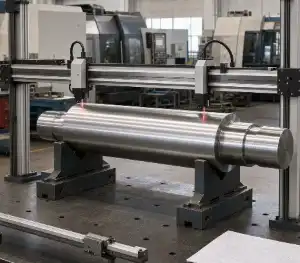
The milling roll is created by forging, heat treating, grinding, and balancing to precise tolerances with full inspection at each step. Mill liners are cast, forged, or molded, depending on the material, and examined for hardness, dimensions, and absence of critical flaws. Both are based on known manufacturing practices. Inspection needs are application-dependent.
Buyers of milling rolls should always request chemical and dimensional reports, dynamic balance results, ultrasonic testing, and visual inspection records before accepting delivery, which aligns with the discipline expected under ISO 9001:2015 certifications.
How Does Milling Roll Selection Differ from Mill Liner Selection Across Rolling and Grinding Applications?
Selecting a Milling Roll for a Rolling Mill
The choice of the milling rollers relies on the kind of mill, the stand position, and the quality of steel being produced. Engineers determine barrel diameter, barrel length, neck diameter, hardness, surface finish and crown shape from the predicted rolling schedule and product mix. A work roll for a cold tandem mill is a very different purchase from a backup roll for a hot strip mill. The selection also takes into account the grinding and regrinding method. The total cost of a milling roll is the sum of the cost of all the campaigns on which it is used to reach the minimum diameter.
Selecting a Mill Liner for a Grinding Mill
The selection of the mill liner begins with the mill diameter and length, the size of the grinding medium, and the ore properties. The liner design is suited to the duty zone, i.e., feed end, grinding zone, or discharge end. The choice of material depends on the prevalent wear mechanism. The choice of profile depends on the desired grinding action. The selection of liners is more studied than the rolls since the liner wear rate is quicker. The grinding conditions change with the hardness of the ore and the feed rate. Operators are constantly rotating, flipping, or replacing liners to keep the flow going and protect the mill shell.
Why the Selection Logic Cannot Be Interchanged
The choice of milling roll depends upon the accuracy, surface quality, and fatigue life. Selection of mill liners depends on wear life, grinding efficiency, and shell protection. The two methodologies value significantly different grades of material and design factors. If they are interchangeable parts as the customer thinks, the rolling mill will have quality difficulties and the grinding mill quick liner will be broken. The first and most crucial step in any selection process is the precise definition of the application, and an expert supplier will always check the application before providing a given product.
Conclusion
A mill liner and a milling roll are for distinct sectors, different procedures, and very different purposes. The geometry of a milling roll needs to be precise since it will be used to form metal under regulated pressure for thousands of hours. The mill liner is the part of the grinding mill that is designed to absorb the impact and abrasion, protecting the shell and improving the grinding process. Understanding the distinctions may help procurement teams and engineers avoid expensive replacement mistakes and choose the right item for the task.
FAQ
1. Can a milling roll be used as a mill liner?
No. A milling roll is engineered for precision deformation of metal strip and is not designed to withstand the impact and abrasion environment inside a grinding mill. Similarly, a mill liner cannot deliver the surface finish and dimensional accuracy required in a rolling mill.
2. How do I know whether I need a milling roll or a mill liner?
The application defines the answer. If the equipment is a rolling mill that shapes steel, aluminum, or copper into strip or profiles, you need a milling roll. If the equipment is a SAG mill, ball mill, or rod mill grinding ore, you need a mill liner. Confirm the equipment type and drawing number before ordering.
3. Who can supply both milling rolls and mill liners?
Some industrial supply companies, including WELONG, support multiple mill types with custom-engineered components. It is important to work with a supplier that clearly documents the application and provides the right material and manufacturing process for each component rather than treating milling rolls and mill liners as interchangeable products.
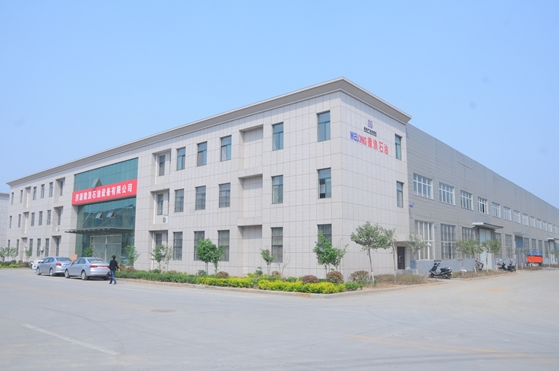
Source Reliable Milling Rolls and Mill Components with WELONG
When your mill requires precision-engineered components built to international standards, WELONG is ready to help. Founded in 2001 and certified to ISO 9001:2015 and API 7-1, WELONG is an international integrated supply chain service provider specializing in oilfield products and customized industrial components. The company manufactures milling rolls using forging, machining, welding, and assembly processes, with materials conforming to ANSI, ASTM, ASME, DIN, and GB standards. Full quality control covers chemical composition inspection, dimensional inspection, dynamic balance testing, ultrasonic testing, and visual inspection. With flexible transport options including sea, air, and rail, and terms such as FOB, CIF, DDP, and DDU, WELONG streamlines procurement for mills worldwide. Contact the team today at [email protected] to discuss your milling roll or mill component requirements.
References
1. ASTM A681, Standard Specification for Tool Steels Alloy. ASTM International, West Conshohocken.
2. ISO 9001:2015, Quality management systems — Requirements. International Organization for Standardization, Geneva.
3. ASME B46.1, Surface Texture (Surface Roughness, Waviness, and Lay). American Society of Mechanical Engineers, New York.
4. Roberts, W. L., Hot Rolling of Steel. Marcel Dekker, New York.
5. Ginzburg, V. B., Steel-Rolling Technology: Theory and Practice. Marcel Dekker, New York.
6. Wills, B. A., and Finch, J. A., Wills’ Mineral Processing Technology: An Introduction to the Practical Aspects of Ore Treatment and Mineral Recovery. Butterworth-Heinemann, Oxford.
Share your inquiry, get the quotation accordingly!
CHINA WELONG - 20+ years manufactuer in oilfield tools