Why Square Kelly Matters in Rotary Drilling Systems
Few components on a traditional rotary drilling rig are as operationally responsible as the square kelly. It’s the mechanical connection from the rotary table rotating on the rig floor to the drill bit chewing up rock thousands of feet below. The square kelly transmits every rotation the bit makes. And every foot of hole the rig drills relies on the kelly transmitting torque, weight, and circulation at the same time. But the square kelly is typically seen as background hardware. This article discusses why the square kelly is truly crucial to rotary drilling performance and how design choices affect the overall drilling system.
Why Does the Rotary Table Depend on a Square Kelly for Drive?
The Rotary Table as a Torque Source
The rotary table takes the power from the drawworks and motors on the rig and turns it into a slow, high-torque rotation that has to be sent into the drill string. The only way to make this rotation work on a standard rig is with a square drive, and that is what the square kelly provides. The rotary table has no means of gripping and turning the drill string without the square kelly in the kelly bushing, and at the same time enabling the string to travel freely vertically while the hole is drilled.
Translating Rotary Motion into Drilling Progress
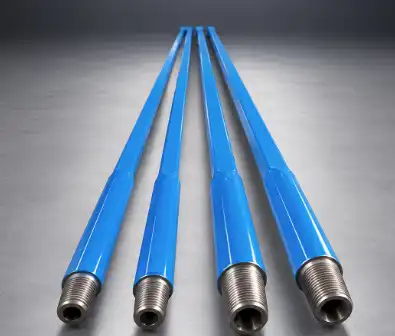
The square kelly is rotated by the kelly bushing and delivers rotational motion straight down the drill string to the bit. As the rotary table revolves, the kelly bushing turns, and the square kelly turns with it because the driving rollers of the bushing seat tightly on the four flat sides of the kelly. The square kelly then becomes the mechanical highway for torque from the rig floor to the bottom of the hole. When this transmission channel is correctly aligned and maintained, drilling teams enjoy smooth, constant rotation at the bit.
Why Square Drives Are Still Preferred on Many Rigs
While top drives are now prevalent, square kelly drives are still extensively used due to their mechanical simplicity, robustness, and ease of inspection. A driller can see the square kelly spinning on the rig floor, and can tell right away whether the rotation is consistent or irregular. This direct vision is something that a top drive system just doesn't provide you. For many operators, particularly in workover and conventional drilling, the square kelly is still the most straightforward and trusted driving interface available.
Square Kelly and Kelly Bushing: The Core Drive Interface
How the Kelly Bushing Engages the Square Kelly
The kelly bushing is the component that surrounds the square kelly inside the rotary table. It contains drive rollers that contact all four faces of the square kelly simultaneously. When the rotary table turns, the rollers push against these faces, and the square kelly rotates with the bushing. Because the contact is distributed across four faces rather than at a single point, the square kelly can transmit very high torque without slipping. The fit between the kelly bushing and the square kelly must be within precise tolerances to ensure this torque transfer remains effective throughout each drilling interval.
Wear Patterns and Their Operational Meaning
With repeated use, both the kelly bushing rollers and the square kelly drive faces experience wear. Operators learn to read these wear patterns because they tell a story about how the rig has been operated. Even wear across all four faces suggests balanced drilling practices, while uneven wear often indicates side-loading, bent drill pipe, or aggressive deviation control. Inspecting the square kelly and kelly bushing together gives crews an early warning of mechanical issues in the drill string, which is one of the underrated advantages of keeping a well-maintained square kelly in service.
Replacing and Matching Components as a System
The square kelly and the kelly bushing should always be considered a matched system rather than independent parts. When the kelly bushing is replaced, the square kelly drive faces should be inspected and measured to confirm they still fall within the manufacturer’s tolerance. When the square kelly is replaced, the kelly bushing rollers should be checked for flat spots or brinelling. This paired approach to maintenance protects both components and keeps torque transmission efficient. Additional reference material on standardized surface and dimensional testing for such components is available through ASTM International standards, which are widely used to verify mechanical properties and material behavior in drilling equipment.
How Does Square Kelly Geometry Control Torque Transmission?
The Role of Drive Section Dimensions
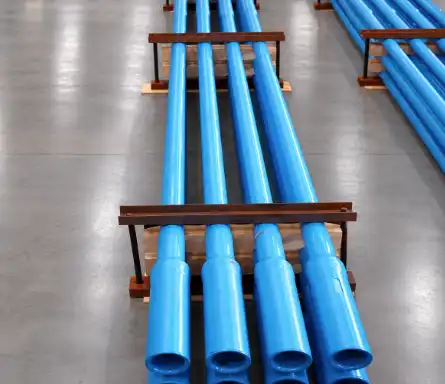
The square kelly shape, width across flats, and width across corners regulate the amount of force the drive faces can take before they deform. A larger square kelly has a greater cross-sectional area and can absorb more torque, and that is why deeper rigs employ bigger kellys. The Drive Section dimensions also affect how the load is transferred to the kelly bushing rollers. If the dimensions are not within tolerance, the pressure of contact is unequal, and the rollers wear out prematurely.
Length and Its Effect on Torsional Stiffness
The longer the square kelly, the more torsional twist between the kelly bushing and the top drill pipe connector. A particularly long square kelly may induce detectable twist under high torque, and that impairs the repeatability of the bit's response to surface instructions. The manufacturer will balance length vs. torsional stiffness by choosing the proper diameters of bars and heat-treating the body to a regulated hardness window. This information enables the customer to choose a square Kelly length that will accommodate their intended stand-handling procedures without adding any unnecessary flexibility to the drill string.
Heat Treatment and Material Selection
The square kelly is usually produced from AISI 4145H modified alloy steel and heat treated to a defined range of Brinell hardness. The square kelly is made sturdy enough to take the shock loads in bit trips, and yet is hard enough to stand up to wear on the drive faces. Heat treatment, done well, means the square kelly will perform as expected over thousands of drilling hours. Always check that heat treatment records are available for square kellys; the consistency of this step is the key factor in how long the square kelly will stay in dimensional tolerance in the field.
Square Kelly, Drillstring Rotation, and Bit Performance
Steady Rotation and Rate of Penetration
Penetration rate is very much dependent on the cleanliness of energy delivery to the bit. The square kelly performs a small but vital function in this energy transmission, ensuring that rotation from the surface is supplied without slippage or stutter. If the square kelly and kelly bushing interface are in excellent condition, the bit will rotate at the speed the driller instructs, allowing weight on bit to be minimized and the bit’s cutting structure to perform effectively. Any loss of torque at the square kelly is energy that never gets to the formation; therefore, the condition of this component directly impacts drilling economics.
Minimizing Vibration and Stick-Slip
Stick-slip is a harmful torsional vibration pattern that happens when the bit stops unexpectedly while the drill string continues to wind up and then releases quickly. The square Kelly adds to stick-slip behavior because it is a long, moderately stiff spinning part at or near the surface. When the square kelly is correctly aligned, suitably torqued at its connections, and free of excessive wear, the drill string can better dampen these vibrations. A badly maintained square kelly, in contrast, may increase stick-slip, speed up the wear of the bit, and decrease control over the direction.
Impact on Directional and Deviation Control
In directional drilling, the rotary table is used in conjunction with downhole motors to guide the wellbore. In this context, the square kelly must provide smooth, predictable rotation. Any stick-slip or uneven movement at the surface translates immediately into trouble regulating toolface and constructing angle. Because the square kelly is a reflection of the quality of the hole route, crews drilling directional wells are frequently more diligent about the condition of the square kelly.
Where Does Square Kelly Fit in the Complete Rotary Drilling System?
Position in the Drill String Train
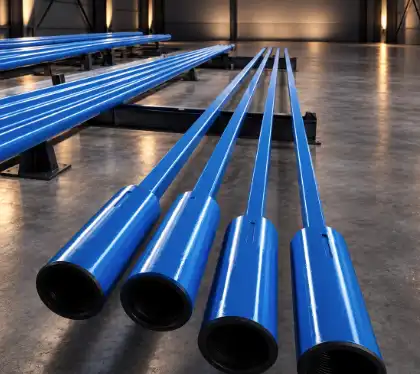
The square kelly is at a very particular place, between the swivel above and the drill pipe below. The square kelly transfers torque from the rotary table, and the drill pipe takes that torque down to the drill collars and the bit. The swivel facilitates vertical movement as the kelly revolves. The square kelly in this location is the visible, accessible heart of the rotary drive mechanism. All connections made on the rig floor are at the top or bottom of the square kelly. The square kelly is also a focus of crew safety and handling discipline.
Integration with Hoisting and Circulation Systems
The square kelly is mostly used for torque transfer, but also takes part in lifting and circulation. Its bulk helps to bear weight on the bit at the commencement of a connection. Its bore lets drilling fluid flow into the drill pipe from the swivel and down to the bit. The square kelly’s bore size influences the circulation pressure and the rig’s capacity to lift cuttings effectively. So, the right bore diameter square kelly helps not only drilling mechanics but also hole-cleaning performance.
Role in Rig Standardization and Spare Planning
The square kelly is a fundamental aspect of the standardization efforts of operators with various rigs. Operators save spare parts inventory, cut down training complexity, and expedite procurement by choosing a few square Kelly sizes and connection configurations for the whole fleet. Standardization also allows for rotation of square Kellys across rigs, depending on inspection intervals and drilling plans. Buyers who properly plan standardization find significant savings in logistics and inventory over the life of their business.
Conclusion
The square kelly is significantly more than a piece of shaped steel spinning on the rig floor. It is the mechanical bridge between surface power and downhole performance, and its design dictates the efficiency with which the torque, weight, and circulation reach the bit. Every drilling choice that is based on consistent, predictable rotation, in turn, is based on a square kelly that is appropriately sized, well heat-treated, and thoroughly inspected. Operators incorporating the square kelly into their work develop more dependable and efficient drilling operations.
FAQ
1. Why is the square kelly still used when top drives are available?
The square kelly remains popular because it is mechanically simple, rugged, easy to inspect, and visible on every drilling connection. For many workover and conventional drilling programs, the square kelly delivers the right balance of reliability and cost.
2. How does the square kelly affect bit performance?
The square kelly transmits rotation directly to the drill string, so any slippage, stick-slip, or torsional loss at the kelly reduces bit efficiency. A well-maintained square kelly supports steady rotation, which in turn supports higher rate of penetration and better bit life.
3. Can the square kelly be used with directional drilling tools?
Yes. Many directional and horizontal wells are still drilled with a rotary table and square kelly, often in combination with a mud motor. The square kelly simply must be in good mechanical condition to deliver the smooth rotation required for accurate directional control.
Partner with WELONG for Your Square Kelly Needs
When your drilling program depends on a square kelly you can rely on, WELONG is ready to support you. Founded in 2001 and certified to ISO 9001:2015 and API 7-1, WELONG is an international integrated supply chain service provider with more than 20 years of experience in oilfield products. The company manufactures square Kellys in sizes from 2 1/2” to 6” using AISI 4145H modified alloy steel, fully heat-treated to controlled hardness, and inspected to API standards. With strict quality control, flexible transport options, and terms including FOB, CIF, DDP, and DDU, WELONG makes procurement efficient for operators worldwide. Reach the team today at [email protected] to discuss your square kelly requirements.
References
1. API Spec 7, Rotary Drill Stem Elements. American Petroleum Institute, Washington, D.C.
2. API Spec 7-1, Specification for Rotary Drill Stem Elements. American Petroleum Institute, Washington, D.C.
3. ISO 9001:2015, Quality management systems — Requirements. International Organization for Standardization, Geneva.
4. ASTM A370, Standard Test Methods and Definitions for Mechanical Testing of Steel Products. ASTM International, West Conshohocken.
5. ASME B46.1, Surface Texture (Surface Roughness, Waviness, and Lay). American Society of Mechanical Engineers, New York.
6. Rabia, H., Oilwell Drilling Engineering: Principles and Practice. Graham & Trotman, London.
Share your inquiry, get the quotation accordingly!

CHINA WELONG - 20+ years manufactuer in oilfield tools