Oil Christmas Tree vs Wellhead: Key Differences for Buyers
The crucial thing for purchasers considering an oil Christmas tree vs a wellhead is not which product is “better,” but where each one fits into the life of a well. The oil Christmas tree regulates production flow, pressure, shut-in, testing, injection, and intervention access. The wellhead provides the structural and sealing basis at the surface. This distinction allows procurement teams to define the proper pressure rating, materials, connections, scope of inspection, and delivery strategy.
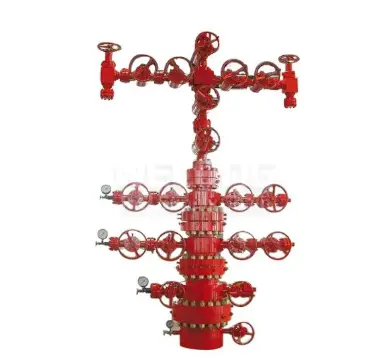
What Is the Difference Between an Oil Christmas Tree and a Wellhead System?
Boundary: Pressure Control Above the Tubing Hanger
A wellhead system is primarily the pressure-containing and load-bearing foundation erected on top of the casing strings, while an oil Christmas tree is mounted above the tubing head or tubing hanger to control the well flow. The practical boundary is clear for the buyer. The wellhead is for casing and sealing annuli. The oil Christmas tree is for valves, chokes, outlets, and shut-in capability for production or servicing activities.
Timing: Installation After Drilling and Completion
The wellhead is installed early in the drilling process since each casing string has to be suspended, sealed, and pressure contained. An oil Christmas tree generally becomes crucial when it is completed, and the well is ready for flow control, testing, production, water injection, or stimulation assistance. Timing is important here for procurement timelines, as wellhead equipment may be bought with drilling plans, while the tree arrangement is more dependent on completion design and operating circumstances.
Buyer View: One System Supports the Other
Also, from the buyer’s standpoint, the wellhead and oil Christmas tree should be seen as integrated solutions, not standalone goods. The wellhead provides the tree with a reliable sealed interface, and the tree converts that interface into a controlled production system. Matching flange diameters, pressure classes, material grades, PSL level, PR level, and service media helps to eliminate field-fit difficulties and enables easier installation.
Oil Christmas Tree and Wellhead: Understanding Their Different Roles in Oil Wells
Wellhead Role: Structural Support and Annular Sealing
The wellhead supports casing loads and closes the annulus between casing strings and provides a pressure-rated foundation for subsequent completion equipment. An oil Christmas tree, however, is not picked mainly for casing suspension; rather, it is used to regulate what gets in or out of the well. The mechanical load, casing program compatibility, sealing dependability, and connection correctness of the wellhead should consequently be evaluated by the buyer.
Tree Role: Flow Regulation and Safe Shut-In
An oil Christmas tree controls the pressure and flow from the wellbore to the exit pipeline with master valves, wing valves, swab valves, chokes, and monitoring links. It enables operators to change flow rate, to shut in the well as required, and to assist in production management. The tree should be specified with the proper materials and pressure ratings for oil, natural gas, mud, and sour media including H2S or CO2.
Shared Interface: Casing Head, Tubing Head, and Connections
Many surface completion packages comprise casing heads, tubing programs, connection forms, and associated sealing components, so the oil Christmas tree and wellhead must have a perfect mechanical interaction. The installation may be delayed if the tubing hanger, tubing head, flange and outlet configuration are not aligned. Buyers must validate drawings, dimensions, pressure class, and service conditions prior to production, particularly for specialised oilfield packages.
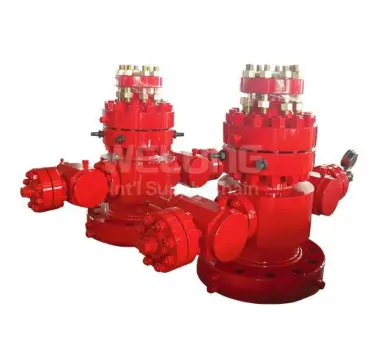
How Do Oil Christmas Tree Components Work Compared With Wellhead Equipment?
Valves and Chokes Control Production Flow
The visible difference is that an oil Christmas tree contains the valve arrangement used to control well production. Master valves open or close vertical flow, wing valves direct flow to the production line, and adjustable or positive chokes regulate flow rate. Wellhead equipment, by comparison, focuses less on day-to-day flow adjustment and more on maintaining casing support, annular sealing, and a stable pressure boundary.
Hangers and Heads Carry Mechanical Loads
Wellhead equipment includes casing heads, casing spools, tubing heads, and hangers that carry the weight of casing and tubing strings. An oil Christmas tree works above this foundation and relies on the integrity of these load-bearing components. Buyers should not judge the tree only by valve layout; they should also verify that the underlying hanger and head design can handle expected mechanical loads and pressure.
Safety Valves and Actuation Add Remote Response
An oil Christmas tree can be equipped with pneumatic or hydraulic safety valves to support fast shut-in and safer well control during production or service work. This is different from the passive structural role of many wellhead components. For remote fields, high-pressure wells, or wells requiring frequent control actions, buyers often prioritize actuation, response reliability, maintenance access, and compatibility with site control systems.
Materials, Pressure Classes, and Service Conditions
A qualified oil Christmas tree may cover working pressures from 2,000 PSI to 20,000 PSI, temperatures from -46°C to 121°C, and service classes such as AA through HH. Buyers should also consider PSL1 to PSL4 and PR1 to PR2 requirements. Material selection should reflect oil, gas, mud, H2S, CO2, and corrosion exposure, with reference to recognized frameworks such as ASTM International standards.
Which Well Operations Require an Oil Christmas Tree Instead of a Wellhead?
Production Start-Up and Routine Flow Adjustment
When a completed well starts producing, an oil Christmas tree becomes the main surface control package. It directs oil or gas into the outlet pipeline, adjusts the flow rate, and provides access for pressure readings. The wellhead remains essential underneath, but it does not replace the tree’s production-control function. Buyers planning long-term production should therefore focus on valve reliability, choke selection, and maintainability.
Shut-In, Testing, and Pressure Monitoring
An oil Christmas tree is required when operators need to shut off the well, conduct pressure tests, monitor production behavior, or isolate flow paths during planned operations. The tree’s valve arrangement gives operators flexible control points, while the wellhead provides the pressure-rated base. Buyers should specify pressure gauges, test ports, valve type, and sealing performance according to the field’s operating and inspection procedures.
Stimulation, Water Injection, and Sour-Service Work
Operations such as acid fracturing, water injection, and certain test services often require an oil Christmas tree because fluids must be controlled at the surface under defined pressure and flow conditions. For sour-service wells containing H2S or CO2, buyers should pay special attention to material class, sealing system, working temperature, and quality documentation. A fit-for-purpose tree helps maintain control during demanding oilfield operations.
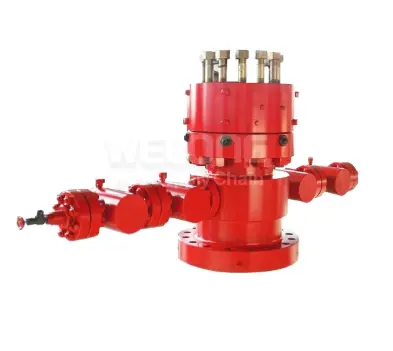
Key Selection Considerations Between Oil Christmas Tree and Wellhead Solutions
Match Pressure, Temperature, and Medium
The initial choice in purchase is whether the needed equipment has to be mostly supportive of casing and sealing or actively controlling flow. Once that is obvious, the oil Christmas tree should be matched to operating pressure, temperature range, medium, and service class. A good example is a high-pressure gas well exposed to CO2, which will need different materials and sealing concerns than a moderate-pressure oil well with conventional production circumstances.
Verify Standards, Certificates, and Inspection Plans
Buyers should ask for quality certifications, dimensions reports, pressure test records, and material traceability prior to authorising shipping. For oil Christmas trees, the API-related regulations, ISO quality systems, and recorded inspections are particularly significant. WELONG is ISO 9001:2015 and API 7-1 certified. Founded in 2001, we provide oilfield purchasers with thorough in-process and final inspections and third-party inspections with organisations like SGS and DNV, if desired.
Plan Logistics, Delivery Terms, and Customization
Oil Christmas trees are generally built to order by pressure rating, connection form, valve type, actuation choice, and service medium; thus, logistics should be planned early. WELONG can support numerous transport options, including sea, air, and rail, and can collaborate under FOB, CIF, DDP, DDU, and other conditions. This flexibility allows the buyer to match supply timing to drilling, completion, or production start-up timelines.
Choose a Supplier With Integrated Support
A good provider knows the oil Christmas tree and the wellhead interface, since tiny discrepancies might impair installation efficiency. WELONG specialises in oilfield goods and customised supply chain services. We combine production coordination, inspection planning, documentation, and shipping assistance. This integrated method closes communication gaps for purchasers outside of the United States and helps ensure that the proper equipment arrives with the right records at the right time.
Conclusion
Wellhead: The structural and sealing base for an oil well. The oil Christmas tree: The active surface control system for production, shut-in, testing, injection, and stimulation support. Buyers should compare them by function, installation time, pressure rating, service medium, material class, scope of inspection, and supplier competency. Operators benefit from a safer, more efficient wellsite setup that is simpler to maintain when the two systems are properly linked. Partnering with an experienced supplier helps convert technical specs to dependable field performance.
FAQ
Q1: Is an oil Christmas tree the same as a wellhead?
No. A wellhead supports casing and seals annular spaces, while an oil Christmas tree controls flow, pressure, shut-in, testing, and production access above the tubing head.
Q2: What pressure ratings are available for an oil Christmas tree?
An oil Christmas tree can commonly be supplied for working pressures from 2,000 PSI to 20,000 PSI, depending on well conditions, service medium, and project specifications.
Q3: Can an oil Christmas tree be customized for sour-service wells?
Yes. An oil Christmas tree can be configured for media containing H2S or CO2, with suitable materials, sealing systems, working classes, inspection requirements, and documentation.
Choose WELONG for Your Oil Christmas Tree and Wellhead Supply
If you are comparing wellhead equipment with an oil Christmas tree for a new project, WELONG can help you review specifications, pressure ratings, connection forms, inspection plans, and delivery options before purchase. Since 2001, WELONG has supported international oilfield buyers with customized products, strict quality control, and integrated supply chain services. For drawings, quotations, inspection support, or technical discussions, contact our team today at [email protected] and let us help you build a reliable procurement plan.
References
1. American Petroleum Institute. API Specification 6A: Specification for Wellhead and Tree Equipment.
2. International Organization for Standardization. ISO 10423: Petroleum and Natural Gas Industries—Drilling and Production Equipment—Wellhead and Tree Equipment.
3. American Petroleum Institute. API Specification 17D: Design and Operation of Subsea Production Systems—Subsea Wellhead and Tree Equipment.
4. NORSOK Standard D-010. Well Integrity in Drilling and Well Operations.
5. Society of Petroleum Engineers. Petroleum Engineering Handbook.
6. Economides, M. J., Hill, A. D., Ehlig-Economides, C., and Zhu, D. Petroleum Production Systems.
Share your inquiry, get the quotation accordingly!

CHINA WELONG - 20+ years manufactuer in oilfield tools