2026 Best Drilling Hole Opener for Your Projects?
The finest drilling hole opener in 2026 relies on fit, not on any specific brand or model. The proper hole opener is the one that is suited for your formation, target diameter, cutting structure, drilling process and bottom-hole assembly (BHA). Good options here speed up the expansion, keep the hole in gauge and prolong the life of the cutters. This buyer’s guide shows how to pick a hole opener for oil and gas wells, water wells, geothermal projects and horizontal directional drilling (HDD) crossings, so you can specify the instrument with confidence before your next project begins.
What Hole Opener Type Fits Your Drilling Formation?
Soft to Medium Formations
Aggressive cutting structures drill quickest in clay, shale, sand and soft limestone. Long widely spread teeth are characteristic of soft-to-medium formation cutters on a hole opener. They penetrate deep into the rock and release sticky cuttings readily. These cutters may be used at greater rotary speeds with modest weight on bit (WOB), which allows for good penetration rates in top-hole sections and several shallow HDD crossings.
Medium to Hard Formations
Many wells intersect mixed zones of hard shale, sandstone and dolomite. Medium to hard cutters in a hole opener are frequently the best all-round option for these parts. The inserts are shorter and more tightly spaced than the soft-formation teeth, so they balance cutting efficiency and durability. This adaptability helps drilling crews avoid unnecessary trips when the formation changes mid-interval.
Hard and Abrasive Formations
Granite, quartzite and hard sandstone are quite hard on standard cutters. The hard-formation hole opener is able to crush rock without chipping due to tungsten carbide inserts, blunt, robust profiles and well-protected bearings. Generally requires more WOB and lesser RPM. In return it gives lengthy, reliable runs where softer cutters might fail early.
Hole Opener Diameter and Pilot Hole Size for Accurate Bore Enlargement
Defining the Final Diameter
Start with the hole size you want to end with. Casing plans often ask for a hole that will provide sufficient annular space for cementing. HDD crossings generally need a bore around 1.3 to 1.5 times the diameter of the product pipe. A hole opener slightly larger than the product pipe makes it easier to run and draw back casing, with no wasted time or fluid spent on drilling.
Choosing the Pilot Hole Size
The pilot hole determines how much rock each cutter needs to remove and directs the tool. If the pilot is too tiny for the goal diameter, it overloads the cutters and increases torque. Most drilling programs retain the step from pilot size to final size within the ratio suggested by the manufacturer. This allows the hole opener to cut uniformly, producing a round precise bore.
Planning Multi-Stage Enlargement
Rarely is one tool the ideal option for really big holes. Engineers often design a series of passes with increasing diameters, for example, 12 1/4 in. to 17 1/2 in. to 26 in. The hole openers in the sequence take a little bit of rock each time so the rig remains within its torque and pump restrictions. The last hole also comes out cleaner and closer to gauge.
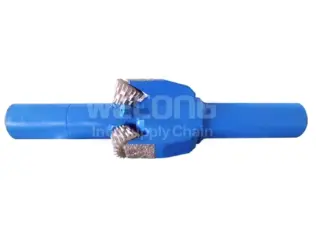
Roller Cone, PDC, or Fixed-Cutter Hole Opener: Which Cutting Structure Matches the Job?
Roller Cone Cutters
The roller cone cutter is still the most used design for massive hole expansion. Each cone revolves on its own bearing and breaks or gouges rock. A roller cone hole opener is best for interbedded formations, boulders and hard rock. Its cutters may also be field-replaceable, which reduces operational expenses on extended projects.
PDC Cutters
Polycrystalline diamond compact (PDC) cutters cut rock instead of crushing it and have no moving parts. PDC hole openers drill fast and stable in soft to medium-hard, homogenous rocks such as shale and claystone. It is also suitable for lengthy periods of rotation, given it has no bearings, as long as the formation is not rich in hard stringers that would chip the diamond layer.
Other Fixed-Cutter Designs
Other fixed-cutter choices include tungsten carbide blades and impregnated diamond structures. These designs are robust, simple and affordable for soft ground, reaming and back-reaming in HDD operations. A fixed cutter hole opener has no revolving cutters so it can take high flow rates and sticky soils. Common selection for shallow utility crossings.
Hole Opener Design Features for Directional, HDD, and Large-Diameter Drilling
Features for Directional Wells
In deviated wells the tool must follow the current borehole without creating a new well. Directional hole openers are generally short with a guided pilot or bull nose and gauge protection to prevent sidetracking. The balanced cutter configuration also helps to keep side forces low as the BHA goes through build and turn sections.
Features for HDD Crossings
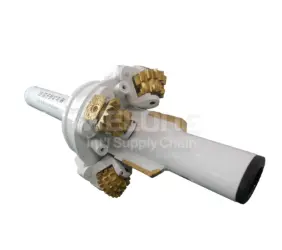
HDD reaming is performed horizontally, generally in pullback mode. The HDD hole opener includes threaded ends, a body that resists balling and big nozzles to assist in moving cuttings down the bore. Many contractors use barrel or flute designs that support the drill string and maintain the reamer centred during lengthy crossings.
Features for Large-Diameter Holes
Over 36″ diameter may be obtained in conductor and surface sections. The big diameter hole opener requires a sturdy body, proper location of cutter arms, and adequate hydraulic energy to cool each cutter. The material of the body is quite important. Tools constructed of heat-treated AISI 4145H/4145H MOD or AISI 4330V are characterised by excellent strength and impact toughness. The materials testing according to the ASTM International standards helps to prove their mechanical characteristics.
Replaceable Cutters and Nozzles
Time and money are saved with modular designs. The same hole opening body may be repowered with various cutter types as the formation changes, including replaceable cutter arms and jet nozzles. Nozzle diameters may be matched to the rig pump capability too. This adaptability means that a tool may be beneficial in different tasks.
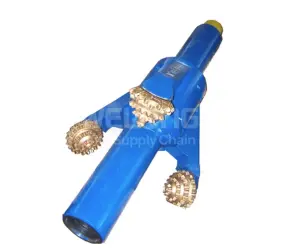
How Do You Match a Hole Opener to the BHA and Drilling Conditions?
Connections and Stabilization
Check that the connection to the tool is the same as the drill collars or subs above it whether the connection is API REG, NC or other. Place a stabiliser just above the hole opener and one or two collars above to maintain it concentric and prevent lateral vibration. The good stabilisation protects the cutters and the threaded connections.
Rig Capacity and Hydraulics
The rig must be capable of providing enough torque, hook load and pump production for the proposed diameter. The larger the hole the more cuts are produced . Flow rate and mud characteristics must be sufficient to maintain annular velocity . Matching the hole opening size to the actual capacity of the rig prevents stalling the rotation, poor hole cleaning and premature cutter wear.
Well Environment and Supplier Support
You will be influenced by downhole temperature, corrosive fluids and length of interval. Ask supplier for material certifications, inspection reports, and suggested operating settings. A reputable hole opener provider will also offer bespoke sizes, timely delivery, and third-party inspection, which all lower the risk of the project from design to drilling.
Conclusion
The finest drilling hole opener 2026 is the one that’s created around your project. Choose the kind of cutter suitable for the formation. Size the tool to the pilot hole and the final bore. Select roller cone, PDC or fixed-cutter designs to fit your drilling application and search for features particular to directional, HDD or large-diameter operations. Lastly, ensure the tool is compatible with your BHA, rig capacity and well environment. A properly defined hole opener drills quicker, maintains the hole in gauge and keeps projects on budget.With experience in oilfield tool supply, WELONG supports customized hole opener solutions with suitable material options, connection specifications, and quality inspection to meet different drilling requirements.
FAQ
Q1: Is a PDC hole opener better than a roller cone design?
It’s formation-dependent. A PDC hole opener is best suited to homogenous soft to medium rock. Roller cone designs are more effective on hard, interbedded or bouldery terrain.
Q2: How large should the pilot hole be?
Stick to the manufacturer's suggested ratio when going from pilot size to final size. Use multi-stage reaming for exceptionally big holes.
Q3: Can one hole opener be used for different formations?
Yes if it has interchangeable cutters. One body may manage numerous projects by swapping out the soft, medium-to-hard and hard formation cutters.
Find Your Ideal Hole Opener with WELONG – Request a Quote Now
Since 2001 China Welong has been supplying oilfield tools internationally. We manufacture our hole openers from AISI 4145H/4145H MOD and AISI 4330V, and have cutter kinds for hard, medium-to-hard, and soft-to-medium formation. We are certified to ISO 9001:2015 and API 7-1 and we do in process and final inspection and can also arrange third party inspection with SGS or DNV. We can provide bespoke sizes and connections. We ship by sea, air or rail under FOB, CIF, DDP or DDU conditions. Get in touch with [email protected] now about your 2026 projects.
References
1. American Petroleum Institute. API Specification 7-1: Specification for Rotary Drill Stem Elements. Washington, DC: API.
2. Bourgoyne, A. T., Millheim, K. K., Chenevert, M. E., & Young, F. S. Applied Drilling Engineering. SPE Textbook Series, Vol. 2. Richardson, TX: Society of Petroleum Engineers, 1986.
3. Mitchell, R. F., & Miska, S. Z. (Eds.). Fundamentals of Drilling Engineering. SPE Textbook Series, Vol. 12. Richardson, TX: Society of Petroleum Engineers, 2011.
4. Bennett, D., & Ariaratnam, S. T. Horizontal Directional Drilling Good Practices Guidelines, 4th ed. HDD Consortium, 2017.
5. Willoughby, D. A. Horizontal Directional Drilling: Utility and Pipeline Applications. New York: McGraw-Hill, 2005.
6. Lyons, W. C., & Plisga, G. J. (Eds.). Standard Handbook of Petroleum and Natural Gas Engineering, 2nd ed. Burlington, MA: Gulf Professional Publishing, 2005.
Share your inquiry, get the quotation accordingly!
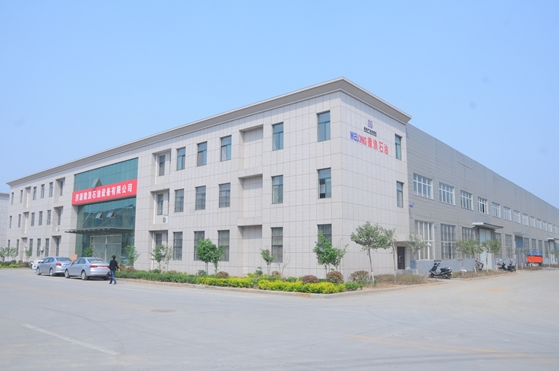
CHINA WELONG - 20+ years manufactuer in oilfield tools