How Does a Sleeve Stabilizer Improve Drilling Performance?
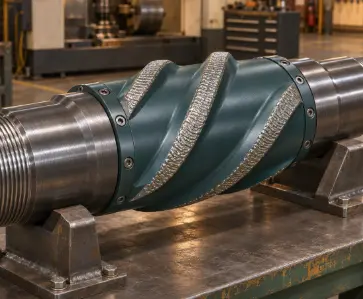
Every bottom-hole assembly (BHA) requires some kind of a stabiliser to keep it centred, stable and on course and the sleeve stabilizer is one of the best instruments for the task. A sleeve stabiliser is formed of a robust integrated mandrel, and a changeable outer sleeve which bears the stabilising blades. This design enhances drilling performance in several ways. It regulates drill string movement, it ensures the well is drilled on its intended path, it minimises destructive vibration, it accommodates varying hole diameters and it is wear-resistant via hardfacing. This essay walks through each of these advantages so drilling engineers and consumers may understand why the sleeve stabiliser has a permanent position in current BHA design.
How Does a Sleeve Stabilizer Control Drill String Movement in the Wellbore?
Centering the BHA in the Hole
Drill collars are smaller than the holes they rotate in, leaving them space to lean, bend and scrape against the borehole wall. Most of that space is taken up by a sleeve stabiliser. Its blades touch the wall at a diameter close to gauge size, so the collars remain at the middle of the hole. This ensures that loads are spread uniformly and that the BHA does not sit on the low side of the hole.
Limiting Drill Collar Bending
When a load is applied to the bit, the drill collars above the bit are compressed and tend to bow. A sleeve stabiliser fitted at certain spots along the BHA reduces the unsupported length between contact sites. Shorter spans deflect less for the same load. This keeps the collars straighter, places more weight directly on the bit and reduces fatigue stress at the connections.
Keeping the Bit Pointed Correctly
The bit drills optimally when the axis of the bit is aligned with the desired hole direction. A near-bit sleeve stabiliser keeps the bit face square to the hole bottom so the cutters contact the rock uniformly. This even engagement increases the rate of penetration, extends bit life and helps to create a round, full-gauge hole rather than an oversize or spiralled hole.
Sleeve Stabilizer and Borehole Trajectory: Improving Directional Drilling Control
Building the Fulcrum, Packed, and Pendulum Assemblies
Directional engineers regulate the well bore angle by modifying the position of the stabilisers in the bottom hole assembly. Close to the bit, a sleeve stabilizer with flexible collars above forms a fulcrum assembly that provides angle. A tightly packed family of stabilisers closely spaced to maintain angle. The removal of the near-bit stabiliser generates a pendulum assembly that lowers angle. All three configurations use the same tool.
Holding Tangent Sections Steady
Long tangent sections need a consistent inclination and azimuth for hundreds or thousands of feet. A full BHA with two or three sleeve stabilisers combats undesirable deviation due to formation dip and hardness fluctuations. The stabiliser in each sleeve maintains the collars tight and centred, which keeps the well closer to plan and requiring fewer correction runs with steerable tools.
Supporting Steerable and Rotary Systems
Good stabilisation is particularly important for rotary steerable systems and mud motors Sleeve stabilisers may be fitted on or above these tools to reduce side forces and enhance steering responsiveness. Stable placement allows measurement-while-drilling sensors to capture reliable survey data. That data allows directional drillers to make smaller, more accurate modifications and reduces dogleg severity.
How Can a Sleeve Stabilizer Reduce Drill String Vibration and Lateral Motion?
Controlling Whirl
Backward whirl BHA rotates around the borehole wall in the opposite direction of rotation. It may easily destroy cutters, MWD equipment and connectors. A sleeve stabiliser with near-gauge blades reduces the clearance that the BHA has to orbit. Keeping the string centred disrupts the pattern of contact driving whirl and allows the assembly to revolve smoothly.
Damping Lateral Shocks
In interbedded formations, the bit and collars suffer rapid impacts on the side-walls as they pass from hard to soft strata. Properly placed sleeve stabilisers distribute these impacts across a number of contact points rather than one. This dampening effect provides protection for delicate downhole electronics. A properly positioned sleeve stabiliser also lowers the spikes in bending stress that produce fatigue fractures in collar threads.
Supporting Steady Torque and Penetration
Less vibration = more uniform rate of penetration and steadier torque at the surface. The sleeve stabiliser maintains the BHA steady so that drillers may place appropriate weight on bit and rotary speed without harsh shocks. This leads to longer bit runs, fewer visits for failed tools and a more consistent drilling schedule.
Replaceable Sleeve Design: Adapting Sleeve Stabilizers to Different Hole Sizes and Formations
Integral Mandrel and Sleeve Structure
The replacement sleeve stabiliser consists of two primary elements, an internal mandrel that bears the connections and string loads, and an outer sleeve that supports the blades. The mandrel is made from a one piece of AISI 4145H/4145H MOD steel for higher strength. The sleeve stabilizer slides / is threaded over the mandrel. Only the sleeve meets the borehole wall.
One Mandrel for Several Hole Sizes
The main benefit of the design is its versatility. Because a mandrel series may be fitted with sleeves of varying diameters, one sleeve stabiliser body can cover numerous hole sizes. Operators may change sleeves to go from one part to another, instead of ordering and shipping full new tools. It saves inventory space and simplifies rig logistics.
Fast Sleeve Change on Location
If the blades wear below gauge, the sleeve may be replaced by workers at the rig site or nearby workshop. “The mandrel remains in service, reducing repair costs and downtime. A worn sleeve stabiliser may be returned to the rack in no time, ready for the next run with full-gauge blades.
Non-Magnetic Options for MWD Accuracy
Magnetic survey equipment require a clean magnetic environment to point in the right direction. The sleeve stabiliser may be non-magnetic and positioned close to MWD equipment without affecting compass readings. This helps engineers add stabilisation near sensors and yet get good survey data in directed and horizontal wells.
Sleeve Stabilizer Wear Surfaces and Hardfacing for Consistent Drilling Performance
Why Blade Wear Matters
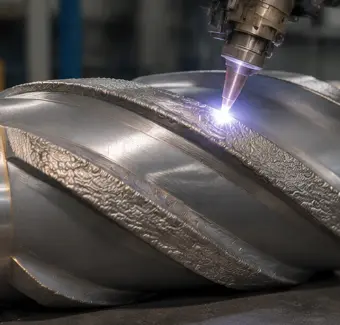
The blades scrape against rock with each pass, and their diameter slowly wears down via abrasion. When a sleeve stabiliser is below gauge, it no longer regulates the BHA as designed, and angle building or holding behaviour is affected. Thus, protecting the blade surfaces maintains the directional performance from the start of a run to the finish.
Hardfacing Options HF1000 to HF5000
Hardfacing is the application of wear resistant material on the blade contact regions. Options include tungsten carbide overlays, brazed inlays and other strong surfaces to match varying degrees of abrasion from HF1000 to HF5000. By matching the hardfacing grade to the geology, a sleeve stabiliser may hold gauge longer, whether drilling soft shale or abrasive sandstone.
Testing and Verifying Wear Resistance
Don’t just assume the quality of hardfacing—check it. Manufacturers commonly test for abrasion resistance and hardness using test techniques defined by ASTM International such as dry sand and rubber wheel abrasion testing. Consistent testing also instills confidence in purchasers that every sleeve stabiliser will provide predictable wear life and blade gauge retention in the field.
Conclusion
A sleeve stabilizer enhances drilling performance by keeping the BHA centred, reducing bending of the collar and maintaining the bit square to the hole. It provides dependable control for directional drillers, using fulcrum, packing and pendulum assemblies, and eliminates spin and lateral shocks that harm tools. The changeable sleeve design means one mandrel may fit several hole sizes and non-magnetic versions ensure survey accuracy. With the appropriate hardfacing the blades stay in gauge longer. These characteristics allow operators to drill straighter, quicker and more inexpensively.To find a sleeve stabilizer suited to your BHA configuration and drilling conditions, discuss your requirements with WELONG’s technical team.
FAQ
Q1: What is the main advantage of a replaceable sleeve stabilizer?
One mandrel can accommodate sleeves of varied sizes, therefore one sleeve stabiliser body will fit numerous hole sizes and sleeves may be changed fast while worn.
Q2: When should I use a non-magnetic sleeve stabilizer?
Use near MWD or other magnetic survey equipment where steel stabiliser may interfere with directional readings.
Q3: How do I choose the right hardfacing?
Select hardfacing to match formation abrasiveness. Higher grades like as HF4000 or HF5000 are appropriate for abrasive rock, while lighter grades perform well in softer formations.
Boost Your BHA Performance with WELONG Sleeve Stabilizers – Get a Quote Today
To Improve Your BHA Performance With Sleeve Stabilisers,China Welong has more than 20 years of expertise in oilfield manufacturing. The integrated mandrel of our replacement sleeve stabilizer has interchangeable sleeves in AISI 4145H/4145H MOD and non-magnetic materials with HF1000 to HF5000 hardfacing. We are certified ISO 9001:2015 and API 7-1 for in-process and final inspection, we can also conduct third party inspection with SGS or DNV. We ship on time on FOB, CIF, DDP or DDU terms by sea, air or train and accept customised sizes. Email [email protected] now for price and technical help.
References
1. American Petroleum Institute. API Specification 7-1: Specification for Rotary Drill Stem Elements. Washington, DC: API.
2. American Petroleum Institute. API Recommended Practice 7G: Recommended Practice for Drill Stem Design and Operating Limits. Washington, DC: API.
3. Bourgoyne, A. T., Millheim, K. K., Chenevert, M. E., & Young, F. S. Applied Drilling Engineering. SPE Textbook Series, Vol. 2. Richardson, TX: Society of Petroleum Engineers, 1986.
4. Inglis, T. A. Directional Drilling. Petroleum Engineering and Development Studies, Vol. 2. London: Graham & Trotman, 1987.
5. Mitchell, R. F., & Miska, S. Z. (Eds.). Fundamentals of Drilling Engineering. SPE Textbook Series, Vol. 12. Richardson, TX: Society of Petroleum Engineers, 2011.
6. ASTM International. ASTM G65: Standard Test Method for Measuring Abrasion Using the Dry Sand/Rubber Wheel Apparatus. West Conshohocken, PA: ASTM International.
Share your inquiry, get the quotation accordingly!

CHINA WELONG - 20+ years manufactuer in oilfield tools