Drill Collar + Stabilizer: Can Better BHA Control Increase Drill-String Drag?
Precision in a directional drilling program may be a fine line between keeping the trajectory straight and controlling downhole friction. The Bottom Hole Assembly (BHA) is the heart of this mechanical puzzle, and engineers are always looking at how a hefty Drill Collar and a strategically positioned Stabiliser interact with the wellbore. Although these components are crucial for bit steering and structural integrity, their physical existence inherently changes the frictional dynamics of the drill string. In this article, we will look more closely at the complicated link between directional control and possible increases in axial drag, and how the combined pressures of a Drill Collar and a Stabiliser affect the overall efficiency of drilling.
How Do Drill Collar and Stabilizer Placement Control BHA Direction?
The Pendulum Effect in Vertical Drilling
Engineers use a BHA that is carefully designed to generate a pendulum effect that reduces the angle and brings the wellbore back to vertical. If the Stabiliser is positioned higher in the string and the bottom portion is not supported, the heavy Drill Collar will be forced by gravity to push down on the lower side of the hole. The Stabiliser provides a pivot point for the sheer weight of the Drill Collar to set the bit over on a vertical swing path effectively and reliably without overshooting with too much guiding.
The Fulcrum Principle for Building Angle
In a directed well, the fulcrum principle is used to provide aggressive side pressures at the bit to build inclination. In this configuration, the Stabiliser is placed immediately above the drill bit and serves as a hard pivot point against the wall of the formation. At the surface, when weight is added, the flexible but hefty Drill Collar does bend a little, causing the bit to push up and out, raising the angle of the wellbore flawlessly as the drilling process works its way into deeper zones.
Packed Hole Assemblies for Holding Trajectory
Once the ideal wellbore inclination and azimuth are reached, it is vital to keep that same course to prevent expensive deviations and severe doglegs. This is achieved via a packed hole assembly which incorporates both exceptional stiffness and a minimum of wellbore clearance by using many big diameter parts. The assembly prevents lateral movement by placing a stiff, heavy-walled Drill Collar between more than one closely gauged Stabiliser, ensuring that the bit drills straight forward and does not stray from the prescribed directional track.
Drill Collar Stiffness, Stabilizer Position, and BHA Side Forces
Mechanical Stiffness of the Lower Assembly
The inherent mechanical stiffness of the lower BHA dictates how effectively directional forces are transmitted from the surface down to the rock face. A thick-walled Drill Collar manufactured from premium steel provides the necessary backbone to resist buckling under massive compressive loads. When a precisely machined Stabilizer is integrated into this incredibly stiff section, it dictates exactly where the entire assembly will bend, concentrating the directional side forces exactly where the directional driller intends.
Generating Predictable Side Forces at the Bit
Predictable directional drilling relies entirely on generating calculated side forces at the drill bit rather than dealing with random, erratic lateral vibrations. The combination of the applied weight from the Drill Collar and the specific standoff provided by the Stabilizer creates a geometric triangle of forces against the rock wall. By adjusting the precise distance between the primary Stabilizer and the lowest Drill Collar, engineers can dynamically fine-tune these side forces to match the required build or drop rates.
Balancing Weight on Bit with Directional Needs
Applying sufficient Weight on Bit (WOB) is vital for achieving optimal penetration rates, but this applied weight must never compromise the directional integrity of the well. The massive physical mass of a Drill Collar is primarily responsible for delivering this crushing downward weight, but if left uncontrolled, it can cause severe bit walk. A carefully positioned Stabilizer ensures that the Drill Collar transfers its weight axially directly to the bit while preventing unwanted lateral shifting during high-speed rotation.
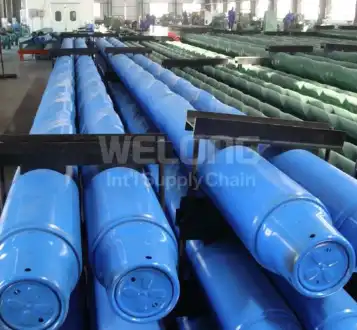
Can Drill Collar and Stabilizer Contact Increase Wellbore Friction?
Surface Area Contact Along the Wellbore Wall
Introducing thick, rigid tools into a confined cylindrical hole inherently increases the physical contact area between the metal string and the rock formation. Because a standard Drill Collar has a massive outer diameter, it tends to lie heavily against the wellbore, especially in deviated sections. When you add a full-gauge Stabilizer into this complex equation, the protruding blades create additional, continuous scraping contact with the wall, which naturally contributes to a significant overall increase in mechanical drag.
The Mechanics of Differential Sticking
Differential sticking is a major operational concern when drilling through highly permeable formations with significant overbalance mud pressure. A smooth, slick-walled Drill Collar offers a massive continuous surface area that can easily become suctioned against the mud cake if the drill string remains stationary for too long. While a Stabilizer normally helps to keep the string centralized and away from the wall, the combined geometry of a poorly matched Drill Collar and Stabilizer can trap cuttings and elevate sticking risks.
Mud Cake Disruption and Frictional Drag Spikes
As the drilling operation advances smoothly, a protective mud cake forms along the wellbore wall to seal permeable zones and provide minor downhole lubrication. However, as the heavy Drill Collar slides downward, it can aggressively plow into this delicate sealing layer, increasing resistance. The hard blades of an accompanying Stabilizer often act like scrapers, carving through the mud cake and exposing raw rock, which leads to sudden, unpredictable spikes in frictional drag as the assembly is hoisted.
Drill-String Drag in Deviated and Horizontal Wells With Stabilized BHAs
Gravitational Forces in High-Angle Sections
In highly deviated and horizontal wellbores, the force of gravity dramatically alters the behavioral dynamics of the bottom hole assembly. Instead of hanging vertically, the incredibly heavy Drill Collar rests entirely on the low side of the horizontal hole, generating immense normal forces against the rock. Every Stabilizer installed along this horizontal section must bear a large portion of this massive weight, embedding its blades into the formation and creating a high-friction environment that hinders forward movement.
Overcoming Axial Friction During Sliding Operations
In directional drilling, the string is typically "slid" (not rotated) to align a steerable mud motor appropriately. The drag in the well bore works against this operation to a great extent. Between the drill collar, which is against the rock, and the surface that is pressing on the drill collar, there is an intense static friction that must be overcome. Because the Stabiliser does not rotate to make a path, the blades function like permanent anchors in the cuttings bed, greatly increasing the axial drag and making smooth weight transfer to the bit very difficult.
Torque Challenges During Rotary Drilling
When transitioning from a sliding phase back to rotary drilling, the driller must overcome both initial static drag and continuous rotational torque. As the massive Drill Collar spins, it creates a sweeping friction along the low side of the long horizontal section. Simultaneously, the hard blades of the Stabilizer rotate and chew into the formation wall, creating torsional resistance that travels all the way back up to the surface, demanding significantly more top drive power.
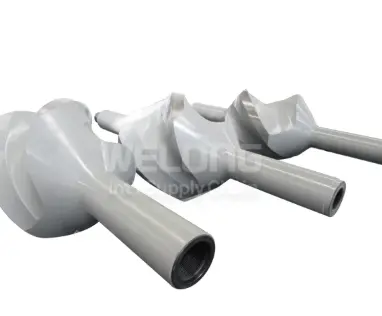
How to Optimize Drill Collar and Stabilizer Design for BHA Control and Lower Drag
Selecting Spiral Profiles Over Slick Designs
Modern drilling engineers are inclined to use complex geometric tool modifications to solve the double problems of directional control and excessive wellbore drag. By substituting a conventional slick Drill Collar with a spiral grooved one, the area of contact with the wall is reduced substantially. This, in effect, prevents the problems of differential sticking without losing the necessary weight downhole. This spiral Drill Collar combines with a hydrodynamically optimised Stabiliser to enable drilling fluid and cuttings to flow smoothly past the BHA, decreasing drag.
Adhering to Stringent Material and Manufacturing Standards
High-performance downhole tools must be meticulously forged from premium steel alloys to withstand immense frictional heat and severe mechanical stress. Manufacturing components like an AISI 4145H modified Drill Collar compliant with strict ASTM International standards guarantees superior yield strength and metallurgical consistency. Coupling such a robust, stress-relieved Drill Collar with an equally durable Stabilizer ensures the entire assembly maintains its precise gauge and structural integrity, completely preventing excessive drag caused by warped tools.
Leveraging Supply Chain Quality for Optimal Performance
When sourcing high-quality oilfield equipment, a trusted, qualified partner devoted to rigorous quality assurance and superior mechanical engineering is an absolute must. Then drilling operators may get perfect directional control by putting a rigorously examined Drill Collar together with specific stress relief grooves and a well-machined Stabiliser. Our Drill Collars and Stabilisers are subjected to intensive in-process and third-party final tests so you can be certain your tools will reach right to spec, ready to minimise drag downhole.
Conclusion
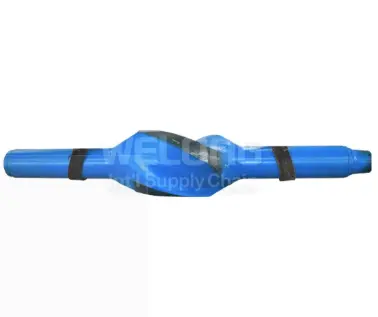
In modern directional drilling, optimizing the bottom hole assembly is crucial for balancing trajectory control with manageable wellbore friction. While deploying a heavy Drill Collar and a precisely placed Stabilizer provides the necessary stiffness, weight, and fulcrum points for steering the bit, this combination inevitably increases the physical contact with the formation. By understanding the mechanical dynamics of side forces, gravitational impact in horizontal wells, and the mechanics of wellbore drag, engineers can make informed tool decisions. Selecting advanced designs, such as spiral profiles and premium materials, ensures that your Drill Collar and Stabilizer work harmoniously to successfully control the well path.
FAQ
Q1: How does a Stabilizer and Drill Collar combination help build angle in a well?
A1: By placing a Stabilizer immediately above the drill bit, it acts as a rigid fulcrum against the wellbore wall. As downward weight from the heavy Drill Collar is applied, the collar flexes, creating a continuous side force that pushes the bit upward and outward, effectively building the angle of the well trajectory.
Q2: Why does a Drill Collar increase the risk of differential sticking?
A2: A standard slick Drill Collar has a large, smooth outer diameter. In highly deviated wells, this massive surface area rests directly against the formation wall. Under overbalanced fluid conditions, it can become firmly suctioned to the mud cake—a risk that is often mitigated by using a grooved or spiral Drill Collar alongside a centralizing Stabilizer.
Q3: Can poor Stabilizer placement increase wellbore drag?
A3: Yes. If a Stabilizer is placed incorrectly alongside a very stiff Drill Collar, it can force the BHA to wedge tightly against the natural curves of the wellbore. The blades of the Stabilizer will aggressively scrape the formation, creating significant friction, increasing rotational torque, and causing severe drag during axial movement.
Enhance Your Drilling Efficiency with Premium Downhole Tools
Minimizing drill-string drag while maintaining precise BHA control requires high-quality, perfectly engineered downhole equipment. Founded in 2001, CHINA WELONG is a professional international integrated supply chain service provider specializing in top-tier customized oilfield products. We supply premium AISI 4145H modified, spiral, and slick Drill Collar options alongside robust Stabilizer solutions designed to meet the most stringent API standards. Certified by ISO 9001:2015 and API 7-1, our stringent quality control and comprehensive SGS/DNV third-party inspection processes guarantee ultimate durability and performance. Ready to optimize your next directional drilling project? Contact us today at [email protected] to secure reliable, customized oilfield solutions delivered worldwide.
References
1. Mitchell, R. F., & Miska, S. Z. (2011). Fundamentals of Drilling Engineering. Society of Petroleum Engineers.
2. Bourgoyne Jr, A. T., Millheim, K. K., Chenevert, M. E., & Young Jr, F. S. (1986). Applied Drilling Engineering. Society of Petroleum Engineers.
3. Rabia, H. (1985). Oilwell Drilling Engineering: Principles and Practice. Graham & Trotman.
4. Johancsik, C. A., Friesen, D. B., & Dawson, R. (1984). Torque and Drag in Directional Wells - Prediction and Measurement. Journal of Petroleum Technology.
5. Aadnoy, B. S., & Andersen, M. E. (2001). Design of Oil Wells Using Analytical Friction Models. Journal of Petroleum Science and Engineering.
6. Lubinski, A., & Woods, H. B. (1953). Factors Affecting the Angle of Inclination and Dog-Legging in Rotary Boreholes. Drilling and Production Practice, American Petroleum Institute.
Share your inquiry, get the quotation accordingly!
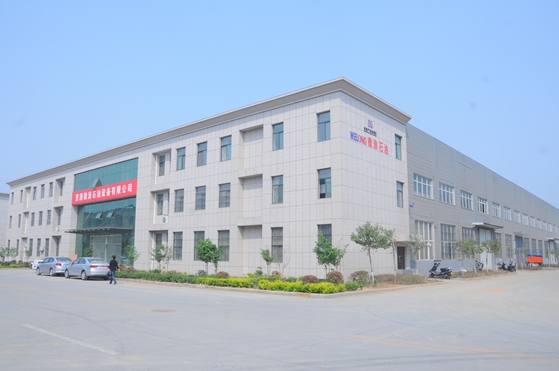
CHINA WELONG - 20+ years manufactuer in oilfield tools