PDC Drill Bit vs Tricone Drill Bit: Same Interval, Different Failure Risks
Completely diverse downhole results might be seen while drilling the same interval with various tools. Both PDC Drill Bit and Tricone Drill Bit are intended to shatter rock effectively; however, their failure mechanisms, wear patterns, and risk factors are drastically different under the same formation circumstances. Grasping these variations is crucial in decreasing non-productive time, regulating drilling costs, and increasing rate of penetration. In this blog, we compare how each piece works, why it fails, and how to choose the best solution while expecting formation changes.
How Do PDC Drill Bits and Tricone Drill Bits Break Rock Differently?
Although both tools aim to advance the wellbore, the rock destruction mechanism of a PDC Drill Bit and a Tricone Drill Bit is fundamentally opposite, which directly defines their failure risks in the same interval.
Shearing Action of PDC Drill Bit Versus Crushing Mechanism of Tricone Drill Bit
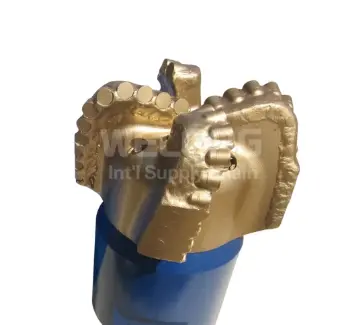
The PDC Drill Bit destroys rock through continuous shearing action where fixed polycrystalline diamond cutters scrape the formation, while the Tricone Drill Bit relies on crushing and gouging as rotating cones with teeth impact the bottom. In the same soft to medium formation, the PDC Drill Bit delivers higher ROP, but the Tricone Drill Bit may handle heterogeneous stringers better because its impact loading is distributed across three cones.
Energy Transfer Efficiency and ROP Implications
Energy transfer is more efficient with a PDC Drill Bit because there are no moving bearing parts consuming weight on bit, whereas a Tricone Drill Bit loses part of the energy to cone rotation and bearing friction. When drilling the same interval, a PDC Drill Bit typically shows lower mechanical specific energy, but if formation hardness increases suddenly, the Tricone Drill Bit can maintain progress while the PDC Drill Bit may suffer cutter chipping.
Vibration and Stability Profiles in the Same Interval
In the same interval, a PDC Drill Bit is more sensitive to stick-slip and bit whirl due to its continuous engagement, while a Tricone Drill Bit tends to generate higher axial vibration. An unbalanced PDC Drill Bit can experience severe lateral vibrations that damage cutters, whereas an unstable Tricone Drill Bit risks bearing overload. Understanding these profiles helps predict which failure will dominate.
PDC Drill Bit Cutting Structure vs. Tricone Drill Bit Cone Design
Cutting structure design determines durability, hydraulics, and gauge holding, and the contrast between a PDC Drill Bit and a Tricone Drill Bit is most visible here.
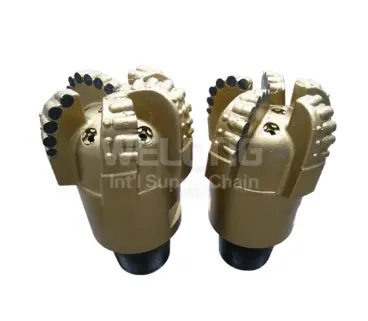
Blade Layout, Cutter Density, and Hydraulic Cleaning in PDC Drill Bit
A modern PDC Drill Bit uses a parabolic crown, asymmetric blade placement, and maximized chip area to improve cleaning and balance, features that a Tricone Drill Bit cannot replicate with cones. The PDC Drill Bit places nozzles at a reasonable locating angle to fully cool cutters and evacuate cuttings, while the Tricone Drill Bit depends on jet flow between cones. Poor cleaning accelerates failure for both, but in different ways.
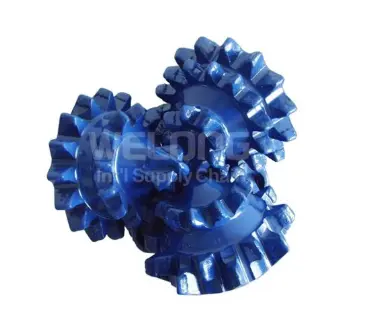
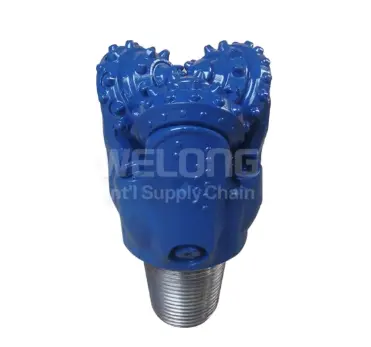
Cone Offset, Tooth Arrangement, and Gauge Protection in Tricone Drill Bit
The Tricone Drill Bit design emphasises cone offset to provide a scraping motion, employs tungsten carbide inserts for longevity, and includes gauge trimmers and shirttail hardfacing for multiple gauge protection. Conversely, a PDC Drill Bit gets its gauge protection from diamond-reinforced gauge pads and low-carbon alloy steel body stability. Both designs are supposed to extend bearing life and gauge holding, but they’re not the same.
Material Science: Matrix Body vs. Steel Body and Tungsten Carbide Inserts
The PDC Drill Bit comes in a Matrix Body PDC Bit with strong abrasion resistance and a Steel Body PDC Bit with better impact resistance, while the Tricone Drill Bit has superior tungsten carbide hardfacing on milled teeth and novel formulae for insert bits. The PDC Drill Bit matrix body is more resistant to erosion than the Tricone Drill Bit steel leg, but the Tricone Drill Bit insert may be designed to be changed to target abrasive zones where PDC Drill Bit diamonds wear fast.
Nozzle Placement and Cuttings Evacuation Comparison
Hydraulic optimization is crucial for both. A PDC Drill Bit relies on ideal flow distribution at the shaft bottom to prevent bit balling, while a Tricone Drill Bit needs jets to clean cone cavities and prevent packing. If cuttings evacuation fails, a PDC Drill Bit will overheat and delaminate, whereas a Tricone Drill Bit will experience cone balling and accelerated seal wear.
Even a premium PDC Drill Bit can fail prematurely when formation characteristics exceed its design envelope, while a Tricone Drill Bit might survive the same conditions with different damage.
Hard, Abrasive, and Interbedded Formations
Highly abrasive sandstone and chert interbeds dramatically increase wear on a PDC Drill Bit because diamond cutters are continuously exposed, while a Tricone Drill Bit distributes wear across tungsten carbide inserts. In the same interval with quartz content above 10%, a PDC Drill Bit may suffer rapid flank wear, whereas a Tricone Drill Bit shows slower but progressive insert dulling, requiring different ROP management.
Impact Loading and Transition Zones
Transition zones from soft shale to hard limestone create severe impact loading for a PDC Drill Bit, leading to cutter breakage and blade cracking, while a Tricone Drill Bit absorbs impacts through its roller bearings. A PDC Drill Bit designed for steady shearing struggles when WOB fluctuates at interfaces, but a Tricone Drill Bit with high-precision roller bearings and two thrust faces can better tolerate those shocks.
Thermal Degradation and Cutter Wear Mechanisms
Prolonged drilling without adequate cooling causes thermal degradation of diamond tables in a PDC Drill Bit, a failure mode that does not exist in a Tricone Drill Bit. Conversely, a Tricone Drill Bit may suffer heat-induced grease breakdown. When bottom hole temperature rises, a PDC Drill Bit risks graphitization of cutters, while a Tricone Drill Bit maintains functionality longer if its metal seals hold, highlighting different thermal limits.
Why Can Tricone Drill Bit Bearings, Seals, and Inserts Fail Downhole?
The moving parts that give a Tricone Drill Bit its versatility are also its primary vulnerability, unlike the fixed-cutter nature of a PDC Drill Bit.
Bearing Overload and High RPM Limitations
A Tricone Drill Bit uses high-precision roller bearings with ball locks and thrust faces hardfaced with wear-resistant alloy to receive more WOB, yet high RPM can still cause bearing seizure. A PDC Drill Bit has no bearings, so it can run at higher RPM without this risk, while a Tricone Drill Bit in the same interval may fail if rotary speed exceeds the bearing design, leading to cone lock-up.
Seal Failure and Lubrication Loss in Harsh Environments
Elastomer or metal seal failure is the most common downhole failure for a Tricone Drill Bit, allowing mud invasion and rapid bearing destruction, whereas a PDC Drill Bit does not require sealed lubrication. In high-temperature or lost-circulation intervals, a Tricone Drill Bit seal degrades faster, while a PDC Drill Bit continues drilling as long as cutters remain intact, making seal integrity a unique risk factor.
Insert Breakage and Gauge Wear in Abrasive Rock
Tungsten carbide inserts in a Tricone Drill Bit can chip or lose retention when encountering hard nodules, causing gauge loss and an undergauge hole, while a PDC Drill Bit experiences cutter spalling in the same rock. The Tricone Drill Bit gauge structure with tungsten carbide inserts on the gauge surface helps, but if inserts break, the PDC Drill Bit alternative with diamond gauge protection often holds gauge better.
Shirttail Erosion and Leg Damage Under High WOB
High WOB and abrasive flow cause shirttail erosion on a Tricone Drill Bit leg, exposing bearings, a problem never seen on a PDC Drill Bit steel body. A PDC Drill Bit made with low-carbon alloy steel improves stability, while a Tricone Drill Bit needs additional hardfacing on the shirttail to increase bearing life. In the same high-energy interval, this erosion dictates when to pull the Tricone Drill Bit.
Choosing Between PDC Drill Bit and Tricone Drill Bit for Formation Changes and Failure Control
Selecting between a PDC Drill Bit and a Tricone Drill Bit for an interval with expected lithology changes requires balancing ROP goals with failure control and supply chain reliability.
Matching Bit Type to Formation Drillability and UCS
For soft to medium formations with consistent UCS, a PDC Drill Bit offers superior ROP and longer run, while for hard, fractured, or highly interbedded formations with frequent UCS spikes, a Tricone Drill Bit provides more forgiving failure behavior. Evaluating offset logs helps determine whether a PDC Drill Bit will maintain shearing efficiency or a Tricone Drill Bit will better manage crushing requirements.
Risk Mitigation Through Customized Cutting Structure
Customization reduces failure risk for both. A PDC Drill Bit can be tailored with a matrix or steel body, parabolic crown, and cutter density to match abrasiveness, while a Tricone Drill Bit can be configured as milled tooth or tungsten carbide insert with optimized bearing structure. At WELONG, our 20+ years of manufacturing experience ensures both PDC Drill Bit and Tricone Drill Bit designs are optimized for your specific interval to prolong bit life.
Supply Chain Reliability and Quality Control from WELONG
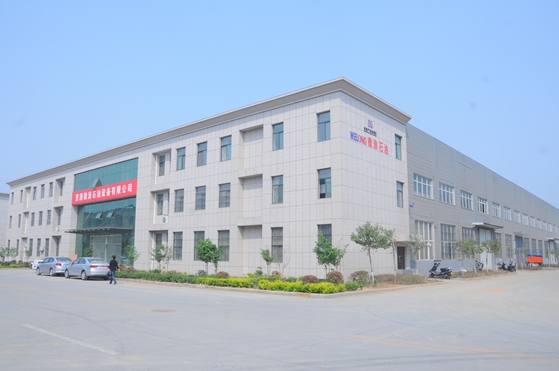
Failure control starts before the bit goes downhole. Founded in 2001, China Welong is a professional international integrated supply chain service provider concentrating on oilfield products, certified by ISO 9001:2015 & API 7-1. Our strict quality control includes in-process and final inspection, with third-party options like SGS and DNV. We ensure every PDC Drill Bit and Tricone Drill Bit meets durability standards and arrives on time via sea, air, or railway under flexible terms. Our commitment to quality is backed by ISO 9001:2015 certifications that guarantee reliable manufacturing.
Conclusion
Drilling the same interval does not mean the same risk. A PDC Drill Bit fails mainly through cutter wear, impact chipping, and thermal damage due to its shearing mechanism, while a Tricone Drill Bit fails via bearings, seals, and inserts because of its rotating cones. Choosing correctly based on formation changes, customizing cutting structure, and partnering with a certified supplier like WELONG minimizes failure and maximizes drilling efficiency.
FAQ
Q1: Can I run a PDC Drill Bit and Tricone Drill Bit in the same well?
Yes, many wells use a Tricone Drill Bit for hard surface or interbedded sections and then switch to a PDC Drill Bit for longer, faster runs in more homogeneous intervals to balance ROP and failure risk.
Q2: How do I know if formation will cause PDC Drill Bit failure?
If offset data shows high abrasiveness, hard stringers, or severe transition zones, a PDC Drill Bit may experience cutter breakage, and a more impact-resistant Tricone Drill Bit or a customized PDC Drill Bit with enhanced diamond volume is recommended.
Q3: What makes WELONG’s Tricone Drill Bit more reliable?
Our Tricone Drill Bit uses high-precision roller bearings with two thrust faces hardfaced with wear-resistant alloy and larger leg bearing capacity, while our PDC Drill Bit uses low-carbon alloy steel and a parabolic crown for stability, all under strict ISO and API quality control.
Partner with WELONG for High-Performance Drill Bits That Control Failure Risk
Don't let unpredictable failure in the same interval cost you time and budget. Whether you need a durable PDC Drill Bit with optimized hydraulic cleaning or a robust Tricone Drill Bit with superior bearing and gauge protection, WELONG delivers customized, certified solutions with on-time global logistics. Contact our oilfield team today at [email protected] to discuss your formation challenges and get a tailored bit recommendation with reliable inspection support.
References
1. Gerbaud, L., Menand, S., & Sellami, H. PDC Bits: All Comes From the Cutter Rock Interaction. IADC/SPE Drilling Conference, 2006.
2. Warren, T. M., & Sinor, A. Drag Bit Performance Modeling. SPE Annual Technical Conference and Exhibition, 1989.
3. Black, A. D., Szarka, D. D., & Evans, H. J. Roller Cone Bit Design and Performance. SPE Drilling Engineering, 1985.
4. Glowka, D. A. Use of Single-Cutter Data in the Analysis of PDC Bit Designs. Journal of Petroleum Technology, 1989.
5. Winters, W. J., Warren, T. M., & Onyia, E. C. Roller Bit Performance and Failure Analysis in Hard Formations. SPE/IADC Drilling Conference, 1987.
6. Sinor, L. A., Warren, T. M., & Behr, S. M. Development of Enhanced PDC Cutting Structure for Hard and Abrasive Formations. SPE Annual Technical Conference and Exhibition, 1998.
Share your inquiry, get the quotation accordingly!
CHINA WELONG - 20+ years manufactuer in oilfield tools