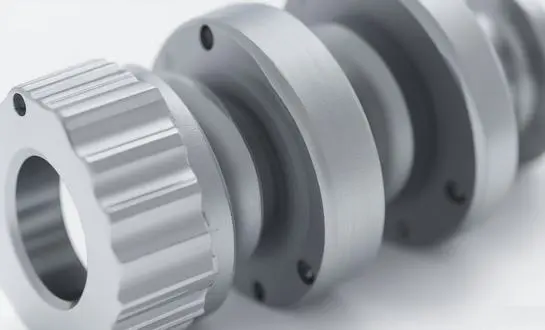
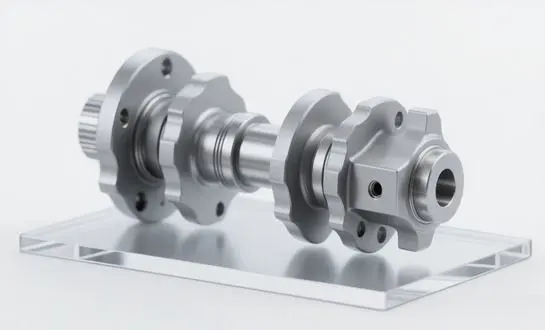
Drill Collar vs HWDP:Why Does Their Transition Matter in a Drill String?
Drill strings are always a study contrasted. Heavy, stiff bottomhole components, light, flexible pipe above. The drill collar provides the weight and rigidity that pushes the bit into the formation. Heavy-weight drill pipe — HWDP — connects those enormous collars to the skinny drill pipe above them. But this transition is more than just a link; it is a well-designed buffer zone that controls how weight is transferred to the bit, where fatigue is concentrated, and whether the string will survive thousands of hours of rotation. This tutorial breaks down the drill collar and HWDP differences, their different functions, and why getting the transition correct is important for every well you drill.
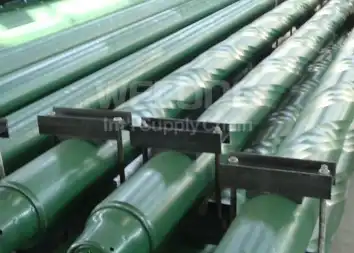
What Is the Difference Between Drill Collar and HWDP in a Drill String?
Wall Thickness and Weight Per Foot
The most obvious difference lies in construction. A drill collar is essentially a solid steel bar with a small bore, available in outer diameters from 3-1/8" to 11", delivering maximum weight per foot to load the bit. HWDP features a much larger bore and thinner wall, weighing roughly a third as much per foot as a comparable collar. This intermediate weight is precisely its purpose—it softens the abrupt step between the heaviest and lightest members of the string.
Stiffness and Flexibility Comparison
Stiffness follows weight. A drill collar resists bending almost completely, keeping the bottom of the string aligned with the wellbore and stabilizing the bit's cutting action. HWDP bends more readily, flexing through doglegs and directional sections without transmitting damaging stress concentrations to the drill pipe above. Its center wear pad and integral tool joints also provide additional durability where contact with the wellbore wall is unavoidable during rotation.
Position in the Bottom Hole Assembly
Placement defines function in the drill string. The drill collar stack sits directly above the bit and stabilizers, forming the heart of the bottom hole assembly. HWDP occupies the zone between the collars and the standard drill pipe, typically in lengths of three to fifteen joints depending on well design. This graduated arrangement creates a smooth mechanical transition rather than a single hard junction between radically different components.
How Do Drill Collar and HWDP Perform Different Roles During Drilling Operations?
Providing Weight on Bit
Drilling progress depends on downward force at the bit, and that force comes from the drill collar stack. The collars' mass supplies weight on bit while the rig holds the rest of the string in tension, letting the driller dial in precise loading through the hookload. Made from AISI 4145H or 4145H MOD steel, quenched and tempered to API standards, these collars sustain enormous compressive loads hour after hour without permanent deformation or fatigue damage.
Keeping Drill Pipe in Tension
Standard drill pipe is remarkably strong in tension but fails quickly in compression. The drill collar and HWDP together ensure the pipe above them never sees compressive loading, even when drilling parameters fluctuate. By placing sufficient weight below the neutral point, the string design protects thousands of feet of relatively delicate pipe from buckling damage. This division of labor is the foundational principle behind every sound drill string design in the industry.
Serving as a Fatigue Buffer Zone
Rotating a string through curved wellbores bends every component once per revolution, and cyclic bending drives fatigue. HWDP absorbs this punishment in the transition zone, where bending stress would otherwise concentrate on the stiffest connections. Its thicker wall than drill pipe, upset midsection, and robust tool joints tolerate the cyclic loading gracefully, sparing the drill collar connections and the drill pipe simultaneously from accelerated fatigue cracking.
Drill Collar vs HWDP: Understanding Weight Transfer and Drill String Stability
The Neutral Point Explained
The neutral point marks where the string transitions from tension above to compression below. Sound design places this point within the drill collar or HWDP section—never in the drill pipe. Weight transfer then flows predictably: collars provide the compressive mass, HWDP distributes the bending transition, and drill pipe hangs in clean tension to the surface. Drilling engineers calculate this placement carefully for every casing point and every change in mud weight or bit load.
Preventing Buckling in the Transition Zone
Abrupt stiffness changes invite trouble. If drill pipe connected directly to a drill collar stack, the stiffness mismatch would concentrate bending at the first connection, buckling the pipe and fatiguing the joint rapidly. HWDP eliminates this discontinuity by providing intermediate stiffness, spreading bending across multiple joints instead of one vulnerable connection. The result is a transition zone that flexes smoothly through curvature while maintaining stable, predictable weight delivery to the bit.
Managing Bending Stress in Deviated Wells
Directional wells intensify every transition challenge. High build rates and extended laterals bend the string continuously, and the zone above the drill collar stack experiences the harshest combination of bending and rotation. Generous HWDP lengths—sometimes thirty joints or more in horizontal wells—distribute this stress, while spiral-grooved collars below reduce wall contact and differential sticking risk. Together they keep deviated strings drilling smoothly where straight-hole designs would quickly fail.

When Should Operators Use Drill Collar Instead of HWDP in Well Drilling?
Vertical Wells With High Weight Requirements
Straight vertical holes demanding heavy bit loading call for maximum collar weight. In these wells, a tall drill collar stack delivers weight on bit efficiently while keeping the neutral point low, and only a few HWDP joints are needed above as a transition. Hard-rock vertical drilling with large-diameter bits is the classic case—here the collar is the star performer, and HWDP plays a supporting role at the top of the assembly.
When Maximum Stiffness Is Needed Near the Bit
Certain applications demand rigidity right at the bottom: controlling deviation in crooked-hole country, stabilizing large bits, or running stiff pendulum assemblies to drop angle. The drill collar provides that stiffness in ways HWDP cannot match. Slick collars maximize wall support and weight, while stress relief grooves and bore-back features on the connections protect against the fatigue that stiffness concentrations would otherwise create at the threaded joints.
Non-Magnetic Requirements for MWD Operations
“Measurement-while-drilling tools require a magnetically quiet environment to survey accurately, and standard steel would corrupt their readings. The MWD probes are located in non-magnetic drill collar portions, which are isolated from magnetic interference from the remainder of the string. For this case, HWDP will not be sufficient. Only collars made of specific non-magnetic alloys offer the bulk and magnetic transparency necessary for effective directional surveying in current steerable drilling operations.
How Does the Transition Between Drill Collar and HWDP Affect Drilling Performance?
Reducing Connection Failures
Field experience consistently identifies the transition zone as a fatigue hotspot, and good design tames it. Drill collar connections with stress relief grooves and bore-back features reduce stress concentration at the last engaged thread, while proper HWDP length softens the bending that drives crack initiation. Operators who engineer this transition thoughtfully report dramatically fewer twist-offs and connection washouts—failures that otherwise cost fishing jobs, lost BHA components, and days of rig time.
Smoothing Torque and Drag
Torque and drag modeling has made the transition's influence visible long before drilling begins. Graduated stiffness from drill collar through HWDP to drill pipe reduces contact force spikes against the wellbore wall, lowering rotational torque and easing pickup and slack-off weights on trips. In extended-reach wells, where every pound of drag matters, optimizing the transition section can mean the difference between reaching total depth and falling short of the target.
Extending Component Service Life
The economics of the transition reward attention over the long term. Balanced stress distribution lets each drill collar and HWDP joint accumulate rotating hours evenly rather than sacrificing a few joints to concentrated fatigue. Material quality amplifies this effect—collars forged from 4145H modified steel, heat-treated per API requirements and verified against benchmarks like ASTM International standards, deliver the toughness and fatigue resistance that long service life demands, especially when backed by certified inspection.
Conclusion
The drill collar and HWDP are partners in a well-balanced mechanical system. Collars provide the weight and rigidity needed to drive the bit, while the HWDP softens the transition to the flexible drill pipe above. Their connection defines the weight transfer, neutral point location, fatigue distribution, and eventually the dependability of the whole string. Operators who properly measure the collar stack, use enough HWDP length, and specify quality materials with approved connections are protected from the hidden expenses of the transition zone. In designing drill string components, the space between components is equally as important as the components.
FAQ
Q1: How many HWDP joints should be run above the drill collar stack?
Typical designs use three to fifteen joints in vertical and moderately deviated wells, and thirty or more in horizontal or extended-reach wells. The goal is spreading the stiffness transition across enough joints that bending stress stays within fatigue limits. Your drilling engineer should confirm the count through torque, drag, and fatigue modeling for each specific well plan.
Q2: What is the difference between slick and spiral drill collars?
A slick drill collar has a smooth, full-diameter body that maximizes weight and wall contact, suiting vertical wells and applications needing maximum stiffness. A spiral drill collar features machined grooves that reduce wall contact area, lowering the risk of differential sticking in permeable formations and high-overbalance conditions while sacrificing only a small amount of weight.
Q3: Why are non-magnetic drill collars necessary for directional drilling?
MWD survey tools measure the earth's magnetic field to determine azimuth, and magnetic interference from standard steel corrupts those readings. Non-magnetic drill collar sections surround the MWD probes, creating a magnetically quiet zone for accurate surveying. Most directional BHAs require one to three non-magnetic collars depending on the survey tool specifications and wellbore geometry.
Build a Stronger Drill String With WELONG Drill Collars
Need drill collars engineered for the toughest string designs? Founded in 2001, China WELONG is a professional international supply chain service provider specializing in oilfield products and customized solutions, certified to ISO 9001:2015 and API 7-1. Our drill collars—available in 3-1/8" to 11" OD, in slick and spiral designs, manufactured from AISI 4145H/4145H MOD and non-magnetic materials with stress relief grooves and bore-back features—are produced under strict quality control, with SGS and DNV third-party inspection available. With sea, air, and railway transport and terms from FOB to DDP, we deliver on schedule, worldwide. Contact us today at oiltools@welongpost.com for a tailored quotation and expert support.
References
1. American Petroleum Institute. API Specification 7-1: Specification for Rotary Drill Stem Elements, 1st Edition. API Publishing, 2006.
2. Bourgoyne, Adam T., Keith K. Millheim, Martin E. Chenevert, and F. S. Young. Applied Drilling Engineering. Society of Petroleum Engineers, 1986.
3. Mitchell, Robert F., and Stefan Z. Miska. Fundamentals of Drilling Engineering. Society of Petroleum Engineers, 2011.
4. Azar, J. J., and G. Robello Samuel. Drilling Engineering. PennWell Publishing, 2007.
5. Lyons, William C., and Gary J. Plisga. Standard Handbook of Petroleum and Natural Gas Engineering, 2nd Edition. Gulf Professional Publishing, 2005.
6. International Association of Drilling Contractors. IADC Drilling Manual, 12th Edition. IADC, 2015.
Share your inquiry, get the quotation accordingly!

CHINA WELONG - 20+ years manufactuer in oilfield tools