Guide Roll: A Buyer’s Guide to Better Web Handling
When manufacturing lines roll out thousands of feet of film, foil, paper, or cloth per hour, slight variations at the roller level become enormous losses downstream. Guide rolls are one of the most underutilized components in any web handling system, yet they determine where the web goes, how neatly it tracks, and how reliably it feeds the next process. Buyers who regard the guide roll as a commodity tend to change it twice as frequently as buyers who specify it purposefully. This tutorial will take you through the practical considerations that distinguish a dependable guide roll from one that is a recurrent source of edge trim, stretch marks, and unnecessary downtime.
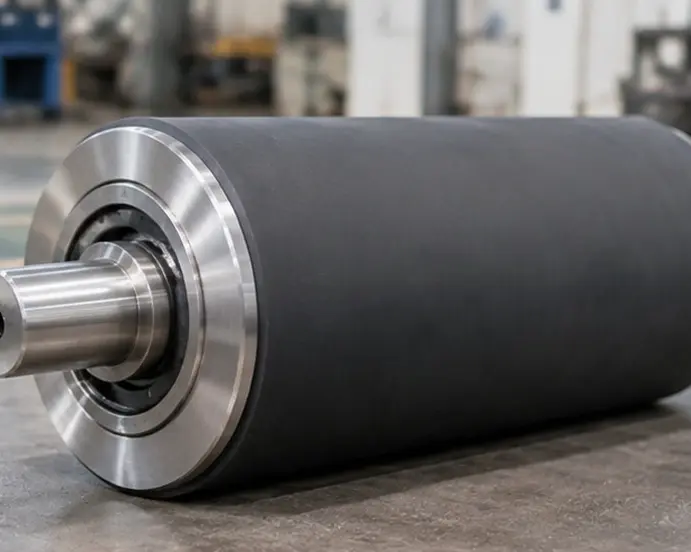
What Does a Guide Roll Do in Web Handling and Material Tracking?
Directing the Web Along a Defined Path
A guide roll is used to establish the entrance and exit angles between stages of a conversion line. When the angles are right, tension is uniformly spread, and the web glides through ovens, coaters, and slitters without straying. Operators instantly perceive the change in the form of reduced side wrinkles and less trash at the winder. The guide roll is more than a passive support and has a role in how the line performs under stress.
Supporting Stable Tracking and Edge Control
Tracking is the art of making the web where the computer thinks it should be. A guide roll assists in tracking by providing a steady, predictable surface for the web to rest against. Even the most costly vision-guided steering system downstream needs to combat disturbances caused much too early in the process without a steady guide roll upstream. The outcome is oscillation, wandering edges, and frustrated operators.
Feeding Data to Sensors and Measurement Devices
Some modern guide rolls even come with encoders, load cells, or edge sensors that report back to the line PLC or to inspection systems farther down the line. In a carefully built line, the guide roll provides an anchor point for measuring not just motion. If you are a buyer looking at Industry 4.0 retrofits, you should consider your guide rollers to be data nodes, not just mechanical components. If the guide roll can't support instrumentation, it restricts what the line can ever know about itself.
Guide Roll Alignment for Stable Web Travel and Accurate Lateral Positioning
Parallelism and Shaft Centerline Accuracy
Based on fundamental principles, a need is that the guiding roll shaft must be parallel to the downstream idler or driven roll. Even slight skew angles tend to move the web toward one frame wall and away from the other. This drift ends up as a positional mistake that no downstream actuator can completely cancel out. Suppliers who provide field-correctable shim or spacer kits and documented alignment processes should be requested by buyers, making field adjustment easy, not improvised.
Lateral Position Adjustment and Steering Integration
As the motorized lateral guide rolls dictate, the guide roll is the actuator that physically brings the web back to center. The accuracy of the web positioning is determined by the resolution of the actuator, the mechanical range of movement, and the stiffness of the roll body. A cheap guide scope with a fancy steering controller still will not operate since the mechanical stage can not resolve the corrections that the controller is requesting. The guide roll is the basis for steering precision, both for OEM and retrofit purchasers.
Frame Mounting, Bearings, and Load Reaction
Every lateral correction is a force applied to the web, and that force has to return through the frame. If the guide roll frame flexes, the correction is partially absorbed before it reaches the web. Rigid bearing housings, properly seated pillow blocks, and stiff side frames keep the force path honest. Buyers should ask suppliers how the frame, mounts, and guide roll body are matched as a system, because the weakest component dictates the result. For teams building lines that need to meet tight lateral tolerances, more information on standardized quality expectations is available through ISO 9001:2015 certifications, which set the baseline for documented manufacturing control.
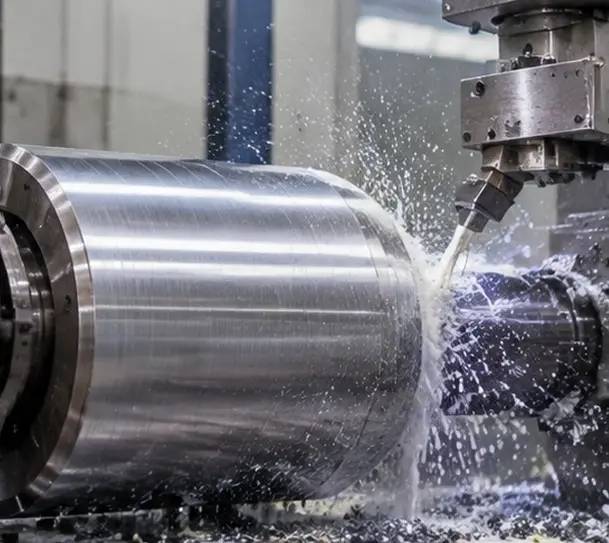
How Do Guide Roll Diameter and Surface Finish Affect Web Contact?
Wrap Angle, Contact Length, and Tension Behavior
Diameter determines wrap angle for a given geometry, and wrap angle determines how much friction the guide roll can generate without slipping. A larger guide roll reduces slip risk on sticky films and coated webs, but it also increases inertia, footprint, and cost. Buyers should match diameter to the actual wrap geometry of their line, not to a generic catalog value, because every degree of wrap that is missing is friction that the line never gets back.
Surface Finish and Coefficient of Friction
Surface finish is where the guide roll meets the web, and finish determines whether that meeting is friendly or destructive. Highly polished chrome or mirror finishes suit clear film and foil where marking is the main risk. Matte, blasted, or rubber-covered finishes suit paper and textile where traction matters more than appearance. Buyers should always specify a measured roughness value, such as Ra in microinches or micrometers, rather than relying on vague terms like “smooth” or “matte,” because suppliers interpret those words very differently.
Crown, Taper, and Edge-Sensitive Webs
Some webs, especially thin films and lightweight nonwovens, are extremely sensitive to edge contact pressure. A guide roll with a slight crown or a controlled taper can spread load away from the vulnerable edge and dramatically reduce edge wrinkles and tram lines. This is a subtle feature that is rarely discussed in marketing material, yet experienced converters know that the right crown profile on a guide roll can be the single most cost-effective upgrade on a line that has chronic edge quality issues.
Guide Roll Materials and Coatings for Film, Foil, Paper, and Textile Webs
Aluminum and Light Alloy Guide Rolls
Aluminum guide rolls are light, easy to balance, and fast to accelerate, which makes them popular on high-speed packaging and label lines. Their low mass reduces bearing loads during rapid direction changes, which extends bearing life. The trade-off is surface hardness, which is why aluminum guide rolls are almost always anodized, hard-coated, or chrome-plated before they enter service on a production floor.
Steel and Chrome-Plated Guide Rolls
Steel guide rolls, with or without chrome plating, are the workhorses of film, foil, and paper converting. They offer high stiffness, excellent dimensional stability, and long service life under continuous duty. Chrome plating adds a hard, low-friction surface that resists wear and marking. For lines running abrasive stocks or operating around the clock, a properly specified steel guide roll with a controlled plating thickness is usually the most economical choice over the full life of the line.
Rubber, Polyurethane, and Composite Coverings
When traction is the priority, a rubber or polyurethane covered guide roll grips the web where bare metal would slip. This is common in corrugating, textile printing, and heavy paper handling, where the guide roll actively feeds tension into the web rather than passively supporting it. Specialty elastomers also damp vibration, which protects sensitive webs from chatter marks. Buyers should match covering hardness, measured in Shore A, to the web’s compressibility and the line’s speed range.
Coatings for Corrosion, Static, and Release Control
Beyond the base material, coatings decide how the guide roll behaves in the presence of moisture, solvents, and static charge. For lines that run solvent-borne adhesives or operate in humid environments, corrosion-resistant coatings extend service intervals significantly. Anti-static or static-dissipative coatings help on film and nonwoven lines where electrostatic attraction causes the web to cling to the roll surface. For buyers comparing options across multiple web types, deeper technical references on material performance are maintained by ASTM International standards, which publish widely used test methods for surface roughness, adhesion, and coating thickness.
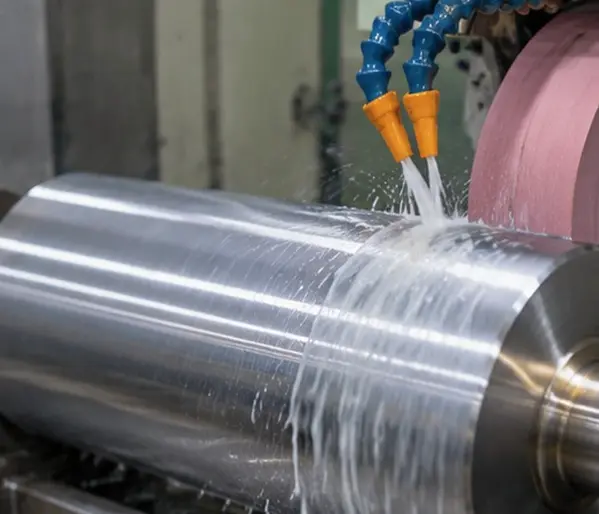
How Do Guide Roll Design and Operating Speed Improve High-Speed Web Handling?
Dynamic Balance and Vibration Control
At high line speeds, any remaining imbalance in a guide roll is intensified into vibration that manifests itself as banding, gage fluctuation, and bearing failure. Lines operating over a few hundred meters per minute need, and should be equipped with, precision dynamic balancing to ISO 1940 G1.0 or greater. Buyers should inquire whether balancing is done on the bare roll, on the roll with bearings fitted, or on the whole assembly; the answer drastically impacts the outcome.
Critical Speed, Deflection, and Roll Body Stuning
Each guide roll has a natural resonance or critical speed. The deflection behavior is a function of the body stiffness. Both are affected by wall thickness, journal diameter, and end-plate geometry. Running a guide roll too near to its critical speed is a typical and avoidable source of web quality issues and catastrophic bearing failures. The supplier that can supply you with deflection calculations and critical speed maps for each guide roll design is significantly more beneficial than the one who just gives you a catalog number.
Bearings, Lubrication, and Thermal Behavior
How much of the input energy is converted to usable tension in the web and how much is wasted as heat depends on bearings and lubrication. High-speed guide rollers produce significant heat at the bearing housings that migrates into the frame, web, and surrounding structure. Sealed, greased-for-life bearings decrease maintenance but restrict working temperature, whereas oil-mist or re-greasable bearings provide greater speeds at the expense of more rigorous lubrication regimens. The proper response relies on the duty cycle of the line, ambient circumstances, and maintenance philosophy.
Integration with Drives, Sensors, and Line Controls
In a modern line, a guide roll is seldom passive. It may include a tension transducer, encoder, edge sensor, or steering actuator. The mechanical design has to incorporate these components without loss of balance or rigidity. Cabling, signal grounding, and connection sealing are not add-ons. All are part of the guide roll requirement. Buyers planning new lines or substantial retrofits should consider the guide roll as a subsystem that interacts with controls, not as a separate mechanical spare part.
Conclusion
A guide roll silently determines whether a web handling line operates smoothly or fights itself all day. But with the correct diameter, surface polish, material, alignment, and balance, this common component becomes a real productivity lever, not a maintenance burden. Buyers who intentionally spec the guide roll, not just out of habit, will see fewer web defects, longer service intervals, and considerably less unplanned downtime throughout the life of the line.
FAQ
1. What is the most common cause of guide roll failure?
The most common cause is improper alignment combined with inadequate dynamic balancing. Misalignment loads bearings unevenly, while imbalance creates vibration that accelerates wear on bearings, journals, and seals. Both issues are preventable with proper installation and routine verification.
2. How often should guide rolls be inspected or replaced?
Inspection intervals depend on line speed, web type, and duty cycle. High-speed film and foil lines typically benefit from vibration and bearing condition checks every six to twelve months. Rubber-covered guide rolls on abrasive stocks may need re-covering or replacement more frequently, often based on surface wear and traction loss rather than a fixed calendar.
3. Can a standard guide roll be upgraded for higher line speeds?
Yes, in many cases. Upgrades usually involve rebalancing to a tighter ISO 1940 grade, switching to higher-precision bearings, adding stiffening rings or end plates, and refining surface finish or coating. A qualified supplier can usually retrofit an existing core rather than requiring a full replacement.
Discover Reliable Web Handling Components with WELONG
Choosing the right guide roll is easier when you have a supply partner who understands both standard catalog parts and fully customized solutions. WELONG, founded in 2001, is an international integrated supply chain service provider certified to ISO 9001:2015 and API 7-1. The company delivers tailored oilfield and industrial components backed by stringent quality control and a global service network. For buyers who want a partner that treats every guide roll as part of a complete system rather than a standalone part, WELONG is ready to help. Reach out today at [email protected] to discuss your specification.
References
1. ISO 1940-1:2003, Mechanical vibration — Balance quality requirements for rotors in a constant (rigid) state — Part 1: Specification and verification of balance tolerances. International Organization for Standardization, Geneva.
2. ASTM D4060-19, Standard Test Method for Abrasion Resistance of Organic Coatings by the Taber Abraser. ASTM International, West Conshohocken.
3. ISO 4287:1997, Geometrical Product Specifications (GPS) — Surface texture: Profile method — Terms, definitions and surface texture parameters. International Organization for Standardization, Geneva.
4. Bolton, W., Industrial Automation: Hands-On Tutorials for Engineers and Technicians. Newnes, Oxford.
5. Passewitz, G., Web Handling and Converting: A Practical Guide for Producers and Converters. TAPPI Press, Atlanta.
6. ISO 9001:2015, Quality management systems — Requirements. International Organization for Standardization, Geneva.
Share your inquiry, get the quotation accordingly!

CHINA WELONG - 20+ years manufactuer in oilfield tools