Tension Roll Buyer’s Guide: Features, Materials, and Costs
Specifying a tension roll is easy to do on paper. But every feature, material, and dimensional decision has a demonstrable influence on web quality, line uptime, and total cost of ownership. Often, buyers who solely look at pricing wind up with a tension roll that wanders, slides, or wears prematurely under actual production settings. A more practical method is to understand how each specification translates to an actual performance result, and pick appropriately. This buyer's guide talks you through the features, materials, shape, load capacity, and feedback systems that matter most when choosing a tension roll for any conversion line.
What Tension Roll Features Matter for Accurate Web Tension Control?
Dynamic Balance and Rotational Stability
A tension roll is rotating constantly at line speed, potentially hundreds of meters per minute. Even a minor amount of imbalance in mass will cause vibration, which results in oscillation of tension and web quality concerns. Therefore, precision dynamic balancing, preferably to ISO 1940 G1.0 or stricter, is a basic need, not an update. Request the vendors to provide balance certifications. The tension roll was not balanced at all since there is no balancing data.
Bearing Quality and Shaft Stiffness
The quality of rotation and the amount of side load a tension roll can handle without deflection is dictated by the bearings and shaft. The tension roll is kept turning silently over extended campaigns by high-quality bearings installed in sturdy housings with regulated internal clearance. Stiff shafts prevent the web load from displacing the roll and so causing unequal contact pressure and uneven measurement indications. In the tension roll specification, buyers should consider bearing brand, lubrication technique, and shaft material.
Repeatable Set-Up and Adjustment Features
Tension rollers are sometimes modified, cleaned, or shifted between product runs. Features such as precise alignment shims, calibrated load cell trunnions, repeatable dancer stops, and clearly indicated scale locations make setup quicker and less error-prone. These characteristics are a tremendous value to buyers who run numerous product families on the same line, since they cut changeover time and eliminate reliance on operator tribal knowledge. A tension roll that will provide consistent results is a tension roll that is straightforward to set up appropriately.
Tension Roll Materials and Surface Finishes for Different Web Applications
Bare Steel and Chrome-Plated Steel
The standard for film, foil, and metallized webs is bare or chrome-plated steel tension rollers. They provide great rigidity, good dimensional stability, and a wear-resistant surface for sustained use. Chrome plating provides a strong, low-friction coating which decreases marking and increases the period between roll changes. When handling abrasive materials or working 24/7, chrome-plated steel is frequently the most affordable option throughout the life of the tension roll.
Aluminum and Lightweight Alloys
Aluminum tension rollers are a common choice on high-speed package and label lines. Their reduced mass decreases bearing load and inertia during high-speed acceleration and deceleration. They are simple to balance and easy to work with while changing rolls. Aluminum tension rolls are nearly always surface treated, either hard anodized or chrome plated so as to impart the toughness necessary for extended service life. Buyers should verify the surface treatment requirements while obtaining aluminum tension rollers.
Rubber, Polyurethane, and Composite Coverings
Tension rollers have an elastomer covering and are excellent for webs requiring traction without marking. Rubber or polyurethane covers hold the web where bare metal would slide. This is crucial in corrugating, textile printing, and heavy paper handling. Coverings help dampen vibration, protecting delicate webs from chatter marks. Buyers should specify covering hardness in Shore A, as well as thickness, bonding process, and temperature rating, since these criteria impact how the tension roll will respond under stress.
Surface Roughness and Coatings
Surface roughness is a measured parameter which influences web handling. On a flat surface, the web will move with little friction, but on a rougher surface it will provide traction. Many contemporary tension rolls utilize designed surface textures, anti-static coatings, or release coatings to control various web behaviors. The term “smooth” or “matte” is general and might signify quite different things from various suppliers; therefore, buyers should specify Ra units of roughness and debate coating alternatives with the provider. Material and surface testing methods for these specifications are widely documented across ASTM International standards, which serve as a useful reference when comparing suppliers.
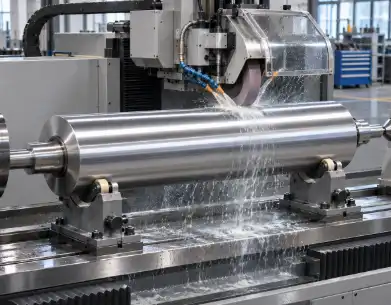
How Do Tension Roll Diameter, Width, and Wrap Angle Affect Web Handling?
Diameter and Wrap Geometry
Larger diameter tension rollers result in a longer contact arc for a given wrap angle and so more friction available to transfer stress. This is particularly crucial with sticky or coated webs that would cause slippage on a smaller roll. But a bigger diameter also implies greater inertia, a bigger footprint and more expense. The proper diameter is the one that corresponds to the worst-case web scenario, which the customer should precisely identify before approaching suppliers.
Roll Width and Web Coverage
The tension roll width must be adjusted to the greatest width of the web the line will run, with enough leeway for web wander and edge fluctuations. If the tension roll is too small, the web will track poorly at the edges. If the tension roll is far larger than is required, material is wasted, and inertia is added. And if you provide the right roll width, you’ll make future product modifications easier. The same tension roll may be used for numerous web widths without modification.
Wrap Angle and Tension Control Range
The wrap angle regulates how much friction the tension roll may create. This directly controls the range of tensions that can be controlled. Tight wrap angles are well suited for low stress applications that need delicate web handling. Large wrap angles are good for high-stress situations where maximum friction is required to avoid slipping. Some tension rollers are built with a changeable wrap geometry, so the line may be tweaked for various goods. Buyers should consult with the line designer or an experienced provider of tension rolls to achieve the optimum balance in terms of wrap geometry.
Tension Roll Load Capacity, Measurement Range, and Low-Tension Sensitivity
Load Cell Capacity and Overload Margin
The tension roll with load cell must be designed such that the desired operating tension is within the load cell’s measuring range with some margin. If the load cell limit is operated too near, the resolution of the signal is reduced; if operated too far from the load cell limit, the sensitivity is reduced. As a rule of thumb, pick a load cell with a rated capacity of about two to three times the usual operating tension. This allows the production of transient tension peaks with no loss of measurement precision.
Measurement Range for Multi-Product Lines
If a line is running many goods at various tension set points, it needs a tension roll that can measure correctly throughout the whole range of those set points. For instance, a tension roll used on both heavyweight paper and lightweight nonwoven must accurately read the whole range of tensions. Low-tension sensitivity is crucial for films and foils, because slight changes in tension may significantly affect the final quality. Buyers should verify the load cell signal conditioning and ensure it is adequate for the whole measurement range.
Low-Tension Performance and Signal Noise
In fact, it is frequently signal noise that limits low-tension performance, rather than the load cell. Small tension signals might be lost in electrical noise from drives, motors, and grounding problems. The tension roll electronics, shielding, and grounding are designed by the suppliers to keep noise to a minimum, but the customer should ensure that the installation site meets the criteria. The proper wiring, routing, and grounding are what make a tension roll function well at low tension.
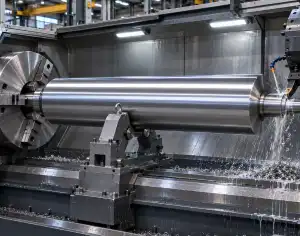
How Do Tension Roll Load Cells and Feedback Systems Support Closed-Loop Control?
Load Cell Fundamentals
The force exerted by the web on the tension roll is measured using a load cell. This force is proportional to the web tension times the wrap geometry around the roll. A high-precision, low-creep, and temperature-stable load cell gives a feedback signal that may be used directly by the closed-loop controller. Buyers should request load cells with established accuracy criteria and a traceable calibration certificate. The quality of the load cell dictates the quality of the tension control.
Signal Conditioning and Controller Integration
The raw output from the load cell is a low-level signal which must be amplified and filtered before it can be sent to the controller. This is the job of signal conditioning electronics, and the quality of the electronics influences how accurately the tension roll detects tension. Modern tension rolls include built-in signal conditioning, filtering, and digital communication, which simplifies wiring and decreases the likelihood of picking up noise. When designing a new line or retrofitting existing equipment, buyers should include signal conditioning options in the integration plan with the tension roll provider.
Feedback Loop Tuning and Long-Term Stability
A stable closed loop is based on a tension roll that properly measures tension. When the measurement is good, the controller may be tweaked to react fast to disturbances without becoming unstable. Long-term stability is given by the stability of the load cell and the stability of the mechanical parts in terms of stiffness and alignment. Buyers who purchase tension rolls with precise load cells and robust mechanical construction will enjoy constant tension management for years to come without recalibration.
Conclusion
A well-designed tension roll will have the suitable surface material, shape, and feedback to provide reliable tension management throughout the entire range of web conditions a line may experience. Buyers that consciously choose specifications in each of these areas, instead of accepting defaults from a one-size-fits-all approach, may see real benefits in tension accuracy, scrap reduction, and line uptime. For projects with specific application requirements, WELONG can provide customized component solutions, engineering support, and quality control to help buyers achieve a more suitable and reliable configuration. The least expensive tension roll is not the cheapest one; it is the one that works reliably during several manufacturing campaigns.
FAQ
1. What is the most important feature to look for in a tension roll?
The most important feature is accurate and repeatable tension feedback, whether through a load cell or a dancer. Without reliable feedback, no amount of mechanical refinement can deliver stable tension control. Buyers should make signal quality and measurement accuracy the first decision, then match the mechanical design to support it.
2. How do I choose between a chrome-plated and an elastomer-covered tension roll?
Choose chrome-plated steel for films, foils, and metallized webs where low friction and marking resistance matter most. Choose elastomer-covered rolls for paper, nonwoven, textile, and other traction-critical webs. The decision is usually driven by the web material and the required tension level.
3. How often should a tension roll load cell be calibrated?
Most load cells benefit from annual calibration to verify accuracy, and high-speed or high-precision lines may require more frequent checks. Many suppliers offer recalibration services and recommend scheduling calibration alongside other planned maintenance to minimize downtime.
Source Engineered Tension Rolls With WELONG
When your web handling line needs a tension roll built for stable, repeatable performance, WELONG is ready to support you. Founded in 2001 and certified to ISO 9001:2015 and API 7-1, WELONG is an international integrated supply chain service provider specializing in oilfield products and customized industrial components. The company supplies engineered tension rolls with strict quality control covering chemical composition inspection, dimensional inspection, dynamic balance testing, ultrasonic testing, and visual inspection. With flexible transport options including sea, air, and rail, and terms such as FOB, CIF, DDP, and DDU, WELONG makes procurement straightforward for converters and mill builders across global markets. Reach the team today at [email protected] to discuss your tension roll requirements.
References
1. ISO 1940-1:2003, Mechanical vibration — Balance quality requirements for rotors in a constant (rigid) state — Part 1: Specification and verification of balance tolerances. International Organization for Standardization, Geneva.
2. ISO 4287:1997, Geometrical Product Specifications (GPS) — Surface texture: Profile method — Terms, definitions and surface texture parameters. International Organization for Standardization, Geneva.
3. ISO 9001:2015, Quality management systems — Requirements. International Organization for Standardization, Geneva.
4. ASTM D4060-19, Standard Test Method for Abrasion Resistance of Organic Coatings by the Taber Abraser. ASTM International, West Conshohocken.
5. Bolton, W., Industrial Automation: Hands-On Tutorials for Engineers and Technicians. Newnes, Oxford.
6. Roisum, D. R., The Mechanics of Winding. TAPPI Press, Atlanta.
Share your inquiry, get the quotation accordingly!
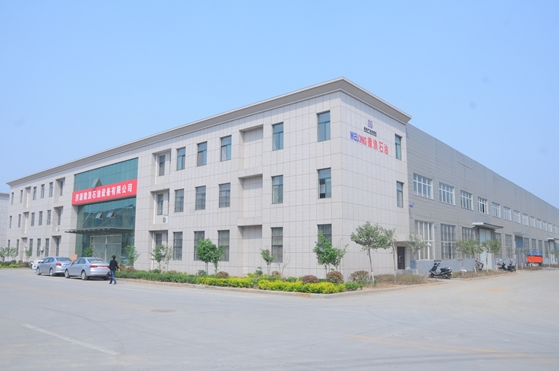
CHINA WELONG - 20+ years manufactuer in oilfield tools