Kill Manifold OEM Guide: How to Choose a Reliable Supplier
In high-pressure drilling conditions, well control equipment is the last line of defence in case of a catastrophic blowout. The most important choice an operator can make when investing in vital safety infrastructure is picking the correct original equipment manufacturer (OEM). This guide is your go-to resource for evaluating and selecting a great provider for your next kill manifold, helping you keep your drilling operations as safe, efficient, and regulatory compliant as possible.
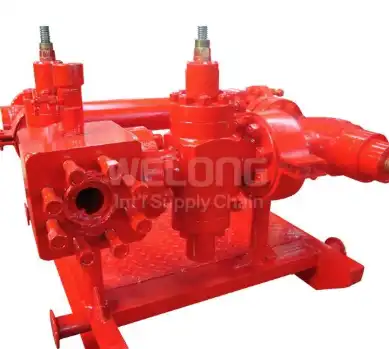
What Makes a Professional Kill Manifold OEM Manufacturer Stand Out?
Adherence to Strict International Certifications
A premium OEM is also one that is always compliant with globally accepted quality standards. Buyers seeking a crucial kill manifold should make sure the manufacturer maintains current API SPEC 16C and ISO 9001:2015 certification. These credentials validate that the manufacturing plant is operating under stringent quality control procedures, assuring that every valve and pipe assembly can endure severe wellbore pressures without structural collapse.
Comprehensive Quality Control Processes
Meticulous factory testing is essential for reliability in well control equipment. Every kill manifold you purchase from a reliable supplier will undergo rigorous in-process and final inspection procedures. Besides regular internal inspections, top producers engage with renowned third-party inspection bodies like SGS and DNV, ensuring purchasers get clear, certified data on material hardness, weld integrity, and hydrostatic pressure resistance.
Proven Global Supply Chain Integration
A great OEM doesn’t simply forge steel; it provides total peace of mind across the supply chain. Industry leaders like CHINA WELONG, established in 2001, optimise logistics to guarantee your kill manifold reaches your warehouse or rig site exactly on time. It provides buyers with variable Incoterms such as FOB, CIF, DDP, and DDU, and flexible global transport choices such as sea, air, and train, which may make the procurement process for buyers more efficient.
How to Evaluate Kill Manifold Design and Engineering Capabilities?
Precision Component Integration
The operational success of a well control system relies heavily on the seamless integration of its individual components. A high-grade kill manifold consists of meticulously matched check valves, gate valves, line pipes, and calibrated pressure gauges. Evaluating an OEM's ability to assemble these parts with absolute precision ensures that fluid dynamics remain stable and leak-free during high-pressure pumping operations.
Pressure and Temperature Handling Capacity
Drilling conditions vary drastically from Arctic fields to deepwater reserves, requiring equipment that excels across extreme parameters. Buyers should ensure their chosen OEM can engineer a kill manifold capable of handling working pressures ranging from 2,000 PSI up to an immense 20,000 PSI. Furthermore, the assembly must maintain operational integrity across a severe temperature spectrum of -46°C to 121°C (Class LU).
Material Selection for Extreme Corrosive Environments
The presence of hydrogen sulfide, carbon dioxide, and abrasive drilling mud accelerates equipment degradation. To combat this, OEMs must utilize superior metallurgy adhering to Material Class EE and FF specifications. Consulting resources like the National Science Data Center for Corrosion and Protection of Materials can help buyers verify how specific alloy selections in a kill manifold resist severe stress corrosion cracking in sour gas environments.
Key Manufacturing Features of High-Quality Kill Manifold Suppliers
Advanced Gate and Check Valve Reliability
The fundamental mechanical function of the system is the fast and fail-safe activation of its internal valves. Rugged gate and check valves are intended to allow heavy drilling fluids to flow in one direction only, in a better kill manifold. It is a specialised engineering solution that allows operators to inject kill-weight fluids downhole under high pressure and restore hydrostatic balance, preventing the deadly backflow from the wellbore.
Robust Nominal Bore Configurations
The physical dimensions of the well control pipe are driven by the flow rate requirements. A good manufacturing partner can supply a large variety of nominal bore diameters, generally from 2.1/16” to 4.1/16”. This is where choosing the right bore size for your kill manifold comes into play. High-volume mud pumps may then be used to pump fluids into the wellhead. This will not cause too much friction pressure, which might cause the underground formation to fracture.
Versatile Fluid Injection Capabilities
A really successful well control system must be adaptable to the numerous emergency conditions other than normal mud circulation. A properly constructed kill manifold enables personnel to feed not only heavy drilling mud but also clean water or specific extinguishing chemicals straight into the well in case of a hazardous kick. This flexibility gives important tactical choices for extinguishing underground fires or controlling unstable gas zones.
Effective Bottom Hole Pressure Release
Fluid injection is important, but regulated pressure evacuation is also important in well control events. Through blowdown lines built directly into the kill manifold, rig workers may safely drain off dangerously excessive wellhead pressure. This direct release system relieves excess bottom hole pressure, avoiding catastrophic damage to the casing string and surface blowout preventer (BOP) stack.
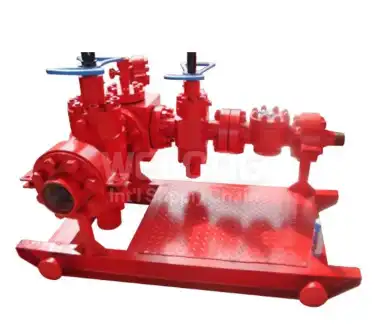
What Custom Solutions Can a Kill Manifold OEM Provide for Different Projects?
Tailored Pressure Ratings for Specific Well Depths
No two reservoirs present identical geological challenges, making off-the-shelf equipment impractical for complex wells. An experienced OEM collaborates with drilling engineers to customize the exact pressure rating of the kill manifold, scaling from standard 2,000 PSI setups for shallow wells to ultra-heavy-duty 20,000 PSI configurations necessary for deep, overpressured exploration drilling.
Adaptable Skid and Piping Layouts
Offshore platforms and mobile land rigs often operate under severe spatial constraints. A skilled custom manufacturer can modify the structural frame, valve orientation, and piping footprint of a kill manifold to fit unique rig floor geometries. This bespoke engineering ensures optimal ergonomics for rig personnel during high-stress emergency operations without sacrificing flow efficiency.
Flexible Manufacturing Timelines and Delivery
Project delays in the oil and gas sector cost thousands of dollars per hour. A premier OEM utilizes agile manufacturing workflows to adjust production schedules based on urgent client timelines. By maintaining a skilled production workforce, the supplier guarantees that your customized kill manifold is completed, tested, and dispatched to meet strict project spud dates.
How Does Supplier Experience Affect Kill Manifold Reliability and Field Performance?
Over Two Decades of Industry Mastery
Staying power in the oilfield manufacturing industry is a direct result of product durability and customer confidence. When you are working with an experienced manufacturer with more than 20 years of focused expertise in the area, you are certain that your kill manifold is based on decades of empirical engineering advancements. Good suppliers see the usual mechanical weak areas and take them out of the system in advance.
Mitigating Risks of Well Kicks and Blowouts
The final test of the well control system is performance during a real subsurface inflow. An OEM has a long and deep history of the violent physical forces exerted in a well kick. They know, with their manufacturing rigour, that the kill manifold will perform perfectly at maximum stress, balancing bottom hole pressure to avoid catastrophic blowouts at the surface.
Streamlined Third-Party Inspection Coordination
Seamless collaboration with global verification authorities is a must to navigate worldwide regulatory compliance. An experienced supplier has long-term working ties with inspectors from DNV, SGS, and ABS. Familiarity means the OEM can provide timely, complete inspection plans for your kill manifold, significantly minimising administrative bottlenecks and speeding final project sign-off.
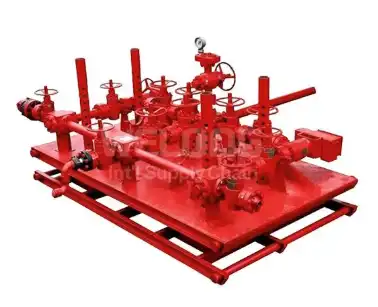
Conclusion
When selecting an OEM for essential well control infrastructure, a careful review of manufacturing certifications, metallurgical knowledge, and quality assurance methods is necessary. To be dependable, a kill manifold must have high-pressure valves and pipes capable of withstanding harsh temperatures and corrosive media. Buyers of oil and gas equipment that choose suppliers with decades of industry expertise, extensive customisation capabilities, and flexible worldwide delivery terms may be assured of reliable equipment that safeguards rig people and high-value wellbore assets.
FAQ
Q1: What is the primary function of a kill manifold in drilling operations?
A1: It is designed to pump heavy drilling fluids, water, or extinguishing agents into the wellbore to balance bottom hole pressure, effectively preventing well kicks and blowouts during high-pressure drilling anomalies.
Q2: What working pressure and temperature ranges should a quality unit withstand?
A2: A high-grade system manufactured to API SPEC 16C standards should handle working pressures from 2,000 PSI to 20,000 PSI and operate reliably in extreme temperatures ranging from -46°C to 121°C (Class LU).
Q3: Can the equipment be customized for sour gas environments?
A3: Yes, reputable OEMs produce assemblies using specialized metallurgy conforming to Material Class EE and FF specifications, specifically engineered to resist corrosion and cracking in hydrogen sulfide (H2S) and carbon dioxide (CO2) environments.
Partner With a Trusted Kill Manifold OEM Today
Elevate your rig's safety and operational efficiency by sourcing your well control equipment from an industry-leading manufacturer. Founded in 2001, CHINA WELONG is a premier international supply chain service provider specializing in customized, high-pressure oilfield equipment.
Certified by ISO 9001:2015 and API 7-1, our rigorous quality control, comprehensive third-party inspection options (SGS, DNV), and flexible global shipping terms (FOB, CIF, DDP, DDU) ensure your Kill Manifold project receives durable, field-proven technology on time, every time.
Ready to empower your drilling operations with China's finest manufacturing? Contact our engineering team today at: [email protected].
References
1. American Petroleum Institute. "API Specification 16C: Choke and Kill Equipment." Washington, D.C.: API Publishing Services.
2. Grace, Robert D. "Blowout and Well Control Handbook." Gulf Professional Publishing.
3. Watson, D., et al. "Well Control for Completions and Interventions." Gulf Publishing Company.
4. Mitchell, Robert F., and Stefan Z. Miska. "Fundamentals of Drilling Engineering." Society of Petroleum Engineers.
5. International Association of Drilling Contractors. "IADC Deepwater Well Control Guidelines." IADC Publications.
6. Bourgoyne Jr., Adam T., et al. "Applied Drilling Engineering." SPE Textbook Series.
Share your inquiry, get the quotation accordingly!
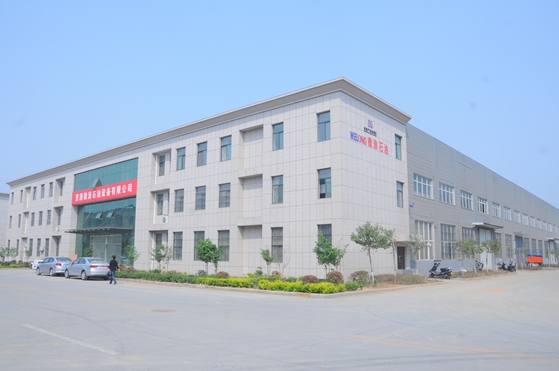
CHINA WELONG - 20+ years manufactuer in oilfield tools