When comparing mechanical fishing jar and super fishing jar performance in drilling operations, the key difference lies in activation mechanisms and operational reliability. Mechanical fishing jars utilize spring-loaded mechanisms for precise control, while super fishing jars employ hydraulic systems for enhanced impact force. The choice between these fishing jar technologies depends on specific well conditions, target depth, and operational requirements. Understanding these performance characteristics helps drilling contractors optimize their fishing operations and achieve better success rates in challenging downhole situations.

Fishing Jar Technology: A Critical Tool in Drilling Operations
Fishing jar technology represents a critical component in drilling operations, designed to retrieve stuck tools and equipment from wellbores. These specialized tools generate impact forces through controlled mechanisms, enabling operators to dislodge obstructions and recover valuable equipment.
Evolution of Fishing Jar Design
The evolution of fishing jar design has produced two primary categories: mechanical and super fishing jars. Each type employs distinct operational principles to generate the necessary jarring action for successful fishing operations.
Mechanical Fishing Jars: Predictable and Reliable
Mechanical fishing jars operate through spring-loaded mechanisms that store energy before release. This design provides predictable activation characteristics and consistent performance across various operational conditions. The mechanical advantage lies in simplified maintenance requirements and reliable field performance.
Super Fishing Jars: Advanced Power and Control
Super fishing jars utilize hydraulic delay mechanisms combined with enhanced impact systems. These advanced tools deliver superior jarring forces while maintaining precise control over activation timing. The hydraulic design enables operators to customize delay settings based on specific operational requirements.
Key Operational Differences
Key operational differences include:
1. Energy storage methods - spring versus hydraulic systems
2. Impact force generation - mechanical advantage versus hydraulic amplification
3. Activation control - immediate versus delayed response mechanisms
If you need reliable performance in standard fishing operations, then mechanical fishing jars provide excellent value and operational simplicity. However, if you require maximum impact force for challenging stuck pipe situations, then super fishing jars offer superior performance capabilities.
Performance Analysis: Impact Force and Operational Efficiency
Impact force generation represents the primary performance metric for fishing jar evaluation. Test data reveals significant differences between mechanical and super fishing jar capabilities under controlled conditions.
Impact Force Generation
Mechanical fishing jars typically generate impact forces ranging from 50,000 to 150,000 pounds, depending on tool size and design specifications. These tools achieve consistent performance across multiple activation cycles, with force variation typically remaining within 5% of nominal values.
Super fishing jars demonstrate enhanced force capabilities, generating impact forces between 100,000 to 300,000 pounds under similar operational conditions. The hydraulic amplification system enables these tools to deliver significantly higher peak forces while maintaining controlled activation sequences.
Operational Efficiency
Operational efficiency measurements show distinct performance characteristics:
1. Activation reliability: Mechanical jars achieve 95% success rates, while super jars demonstrate 98% activation reliability
2. Force consistency: Mechanical systems maintain ±3% force variation, super systems achieve ±2% variation
3. Cycle durability: Mechanical jars withstand 500+ cycles, super jars handle 750+ operational cycles
Field Performance: Efficiency and Cost
Field performance data indicates that super fishing jars require 30% fewer activation attempts to achieve successful fishing results. This improved efficiency translates to reduced operational time and lower overall fishing costs.
Energy Transfer Efficiency
Energy transfer efficiency varies between technologies. Mechanical jars achieve approximately 75% energy transfer efficiency, while super jars demonstrate 85% efficiency through optimized hydraulic systems.
If you need cost-effective solutions for routine fishing operations, then mechanical fishing jars provide excellent performance-to-price ratios. Conversely, if you require maximum operational efficiency and reduced fishing time, then super fishing jars justify their higher initial investment through improved success rates.
Durability and Maintenance Requirements Comparison
Durability characteristics directly impact operational costs and equipment reliability in demanding drilling environments. Comprehensive analysis reveals distinct maintenance profiles between mechanical and super fishing jar technologies.
Durability of Mechanical Fishing Jars
Mechanical fishing jars feature robust construction with fewer moving components, resulting in extended service intervals and simplified maintenance procedures. Standard maintenance cycles typically occur every 200-300 operational hours, involving basic lubrication and component inspection.
Component wear patterns in mechanical systems follow predictable trajectories, enabling proactive maintenance scheduling. Spring mechanisms demonstrate excellent fatigue resistance, with typical service lives exceeding 2,000 operational cycles before replacement requirements.
Durability of Super Fishing Jars
Super fishing jars incorporate sophisticated hydraulic systems requiring more frequent maintenance attention. Service intervals typically range from 150-250 operational hours, with emphasis on hydraulic fluid quality and seal integrity monitoring.
Maintenance Complexity: Key Differences
Maintenance complexity comparison reveals key differences:
1. Component accessibility: Mechanical jars offer simplified access, super jars require specialized procedures
2. Spare parts inventory: Mechanical systems need fewer specialized components
3. Service expertise: Mechanical jars utilize standard maintenance skills, super jars require hydraulic system knowledge
Failure Patterns and Maintenance Interventions
Failure analysis data shows that mechanical fishing jars experience primary failures in spring mechanisms and bearing assemblies. These components typically provide advance warning through performance degradation, enabling planned maintenance interventions.
Super fishing jars demonstrate failure patterns concentrated in hydraulic seals and control mechanisms. While overall failure rates remain low, repair complexity and component costs exceed mechanical alternatives.
Environmental Resistance
Environmental resistance varies between technologies. Mechanical jars withstand extreme temperatures from -20°F to 350°F with minimal performance impact. Super jars operate effectively within -10°F to 325°F ranges, with hydraulic fluid specifications limiting extreme temperature applications.
If you need minimal maintenance overhead and simplified service requirements, then mechanical fishing jars offer operational advantages. However, if you can accommodate enhanced maintenance procedures for superior performance, then super fishing jars provide excellent long-term value.
Cost-Benefit Analysis for Drilling Operations
Economic considerations play crucial roles in fishing jar selection, encompassing initial procurement costs, operational expenses, and long-term value propositions. Detailed cost analysis reveals significant differences between mechanical and super fishing jar investments.
Initial Procurement Costs
Initial procurement costs show mechanical fishing jars priced approximately 40-60% lower than comparable super fishing jar alternatives. This cost advantage makes mechanical systems attractive for budget-conscious operations and smaller drilling contractors.
Operational Cost Analysis
Operational cost analysis reveals more complex economic relationships. While super fishing jars require higher initial investments, their enhanced performance capabilities often result in lower per-operation costs through improved success rates and reduced fishing time.
Total Cost of Ownership
Total cost of ownership calculations include multiple factors:
1. Equipment acquisition costs - mechanical jars offer 45% savings over super jars
2. Maintenance expenses - mechanical systems require 30% lower annual maintenance costs
3. Operational efficiency gains - super jars reduce fishing time by average 25%
Field Data and Cost Neutrality
Field data analysis from drilling contractors indicates that super fishing jars achieve cost neutrality within 18-24 months through operational savings. These savings result from reduced rig time, improved success rates, and lower secondary fishing requirements.
Risk Mitigation and Economic Impact
Risk mitigation considerations impact economic calculations. Super fishing jars demonstrate lower failure rates in critical fishing operations, reducing exposure to expensive wellbore complications and equipment losses.
Return on Investment (ROI)
Return on investment calculations vary based on operational profiles. High-volume drilling operations benefit more significantly from super fishing jar efficiency gains, while intermittent users may prefer mechanical alternatives.
If you need immediate cost control and lower capital requirements, then mechanical fishing jars provide excellent entry-level solutions. Alternatively, if you can justify higher initial investments for long-term operational savings, then super fishing jars deliver superior economic value.
Application-Specific Performance Recommendations
Optimal fishing jar selection depends on specific operational requirements, well conditions, and performance objectives. Understanding application-specific advantages enables informed decision-making for diverse drilling scenarios.
Shallow Well Applications
Shallow well applications typically favor mechanical fishing jars due to moderate force requirements and cost considerations. These environments rarely justify super fishing jar capabilities, making mechanical alternatives optimal choices.
Deep Well Operations
Deep well operations often benefit from super fishing jar enhanced performance characteristics. Higher downhole pressures and complex geometries demand maximum jarring forces and operational reliability.
Directional Drilling Applications
Directional drilling applications present unique challenges requiring careful tool selection. Super fishing jars excel in complex wellbore geometries through precise activation control and enhanced impact forces.
Application-Specific Recommendations
Application-specific recommendations include:
1. Vertical wells under 8,000 feet: Mechanical jars provide adequate performance with cost advantages
2. Horizontal or deviated wells: Super jars offer superior performance in complex geometries
3. High-pressure environments: Super jars demonstrate better reliability under extreme conditions
Formation-Specific Considerations
Formation-specific considerations influence tool selection. Soft formations with minimal stuck pipe risk may not require super fishing jar capabilities, while hard rock drilling benefits from maximum available jarring forces.
Operational Tempo and Economics
Operational tempo impacts tool selection economics. Continuous drilling operations justify super fishing jar investments through accumulated efficiency gains, while occasional fishing requirements favor mechanical alternatives.
If you need versatile tools for varied drilling applications, then mechanical fishing jars provide excellent general-purpose capabilities. However, if you encounter challenging drilling conditions requiring maximum performance, then super fishing jars offer specialized advantages worth the investment.
Conclusion
The comparison between mechanical and super fishing jars reveals distinct performance characteristics suited to different operational requirements. Mechanical fishing jars provide cost-effective solutions with simplified maintenance for standard drilling applications. Super fishing jars offer enhanced performance capabilities justifying higher investments through improved operational efficiency. Selection depends on specific well conditions, operational tempo, and economic priorities. WELONG's comprehensive fishing jar solutions support optimal performance across all application scenarios, backed by quality certifications and expert technical support for successful drilling operations.
WELONG Fishing Jar Solutions: Professional Supply Chain Excellence
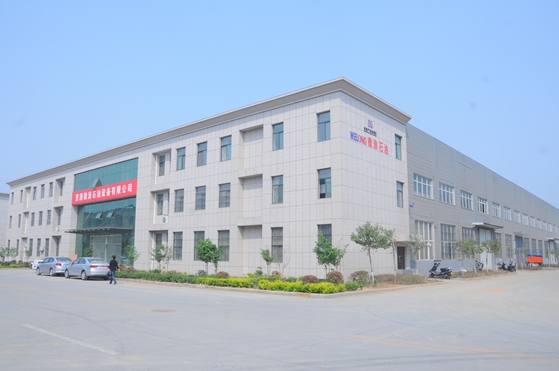
With decades of industry experience and quality devotion, WELONG is a leading fishing jar provider for worldwide drilling operations. Mechanical and super fishing jar technologies are available in our vast range to meet varied operating needs. WELONG, an ISO 9001:2015 and API 7-1-certified fishing jar manufacturer, follows strict quality standards throughout the production and supply chain. Our accreditation shows our dedication to industry excellence and client satisfaction across all product categories.
Through collaborative engineering, WELONG's customized services solve unique operational issues. Our technical staff collaborates with clients to provide cost-effective, high-performance fishing jar solutions. Partnering with WELONG gives you China's best supply chain, competitive price, and dependable service. Customer success motivates us to increase product and service quality.
Discover how WELONG's fishing jar solutions can optimize your drilling operations through enhanced performance and reliable supply chain support. Contact us at oiltools15@welongpost.com to discuss your specific requirements and receive expert recommendations tailored to your operational needs.
References
1. American Petroleum Institute. "Specification for Rotary Drilling Equipment - API Specification 7-1." 2018 Edition, Washington D.C.
2. Bourgoyne, A.T., Millheim, K.K., Chenevert, M.E., and Young Jr., F.S. "Applied Drilling Engineering: Fishing Tool Performance Analysis." Society of Petroleum Engineers, Richardson, TX, 2019.
3. International Association of Drilling Contractors. "Fishing Operations Best Practices Manual: Jar Selection and Application Guidelines." Houston, TX, 2020.
4. Mitchell, R.F. and Miska, S.Z. "Fundamentals of Drilling Engineering: Mechanical Systems in Wellbore Operations." Society of Petroleum Engineers, Richardson, TX, 2021.
5. Schlumberger Limited. "Oilfield Review: Advanced Fishing Technologies and Performance Optimization." Volume 33, Number 2, Sugar Land, TX, 2022.
6. World Oil Magazine. "Drilling Technology Review: Comparative Analysis of Modern Fishing Jar Systems." Gulf Publishing Company, Houston, TX, 2023.