Lifting Bail for Oilfield Equipment: Uses and Safety Tips
Purpose-designed lifting bail allows personnel to move compatible oilfield equipment during shipment, inspection, and assembly. Selecting the correct kind requires evaluating the equipment, connection, load rating and lifting plan, not simply that the bail ‘looks’ like it will fit. This handbook covers popular uses, thread compatibility, design considerations and practical inspection procedures for improved control when employing a lifting bail.
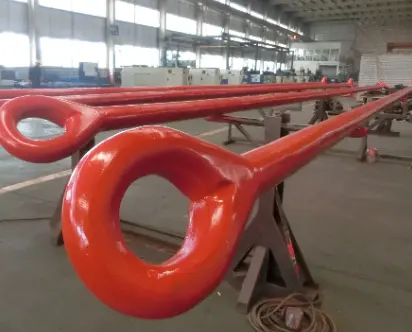
What Oilfield Equipment Can Be Lifted with a Lifting Bail?
Drill-string and tubular components
A drilling location’s lifting bail may sustain defined drill-string tubulars, such as individual drill-pipe junctions, drill collars, and chosen subs. Some handling systems additionally include purpose made bails with casing or tubing equipment. The component must have the necessary lifting interface. The rated capacity of the bail should be sufficient for the load in the envisaged configuration. Choose the attachment as directed by the tool manufacturer.
Bottom-hole assembly equipment
When the design allows, a lifting bail is also chosen for bottom-hole assembly (BHA) equipment such as stabilisers, reamers and crossover subs. These instruments may be short and quite heavy therefore handling strategies should include weight and balance over length alone. Use a suitable tool-specific bail and recorded lifting points, with rigging organised to maintain the component under control.
Shop, yard, and rig-floor transfers
A lifting bail helps staff transport a suitable component from inspection to storage to make-up locations throughout a shop, pipe yard or rig floor. It is one part of a whole lifting system and is not a replacement for a lifting plan, correct crane or certified slings. Choose the device for the particular load route. Ensure that its identification is easy to see. Use it for equipment handling – not for raising persons.
Lifting Bail Applications for Drill Pipe, Drill Collars, Stabilizers, and Tool Joints
Drill pipe and tool joints
For drill pipe, a lifting bail must only be used if its connection and design are permitted for the specific joint or handling assembly. Tool joint measurements may seem comparable but thread shapes may vary, thus be sure to match the stated connection rather than depending on visual matching. Before the lift, check the full rigging arrangement, load distribution and rated capability for multi-leg or multi-joint lifts.
Drill collars and stabilizers
The use of a specially graded lifting bail and a balanced pick is of particular importance for drill collars and stabilisers which may occasionally have a substantial mass concentrated in a relatively compact length. Verify the lifting interface and center of gravity of the tool, then rig slings or attachments as specified by the manufacturer. The bail is intended expressly to enable transfer between racks and work areas, and to offer a repeatable connection for competent personnel.
Crossover subs and mixed BHA components
Crossover subs, reamers and other BHA items that need to be transported separately for inspection or assembly may be ordered with a lifting bail. In the case of a lift made up of many parts , find the combined weight . Think about how the contact points or the offset geometry might impact the balance . If the authorised lift plan does not call for a combined lift, each item should be secured separately.
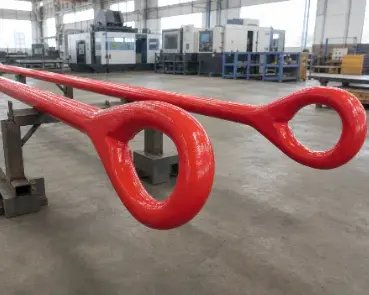
How Do Thread Connections Affect Lifting Bail Compatibility with Drilling Tools?
Match connection type and size
Connection compatibility is more than just nominal diameter. The lifting bail should be compatible with the drilling tool connection designation comprising proper thread form, size and shoulder arrangement; rotary-shouldered connections are not interchangeable merely because the outer dimensions are similar. Before buying or using, check drawings, markings and suppliers’ requirements. Confirm which end of the tool the bail is supposed to engage.
Verify threads, shoulders, and engagement
The lifting bail and tool connection must be free of any substance that might interfere with correct engagement prior to the application of make-up. Check for wear, damage or contamination on threads and shoulders. Follow manufacturer’s guidelines for engaging and tightening. If the connection does not come smoothly, back off and recheck rather than take a chance of straining the bail on the tool.
Use approved adapters and documentation
If there is no direct fit, use only a purpose-designed adapter that is authorised for both the lifting bail and the drilling instrument. Ensure the adapter is rated for the necessary load, compatible with the connection, and traceable with the lifting equipment. A shop-made, unplanned transition is less sound as a foundation for selection than a supplier’s connection drawing, part number and documented load information.
Lifting Bail Design Options: Integral, Non-Integral, Static, and Swivel Types
Integral lifting bail designs
Integral lifting bail — A lifting bail incorporated into or permanently affixed to the part or assembly it serves. Providing the design and rating are appropriate for the intended usage, this may provide a defined load route and decrease the number of detachable interfaces. Buyers must look at the indicated capacity, the production paperwork and whether the inherent feature is especially for lifting.
Non-integral lifting bail designs
A non-integral lifting bail is a separate attachment that attaches to a suitable tool or adapter. This may be useful when a site has to deal with numerous equipment kinds when the same device family is available in different connection sizes. Every arrangement still needs a matching interface and verified rating. Interchangeability does not imply any bail fits any drill-stem component.
Static lifting bail
Static: A static lifting bail has a fixed orientation and is suitable for a lift when the crane hook and the load may be aligned before tension is applied. It’s simple shape may make it easy to check and place and the lift plan regulates sling direction and load balancing. Check that the fixed orientation is correct for the site's access, clearance and handling procedure.
Swivel lifting bail
The swivel lifting bail is designed to rotate or articulate at the joint to help align the hook to the cargo while placing. Select on the basis of rated capacity and permissible travel. A swivel is not designed to be constantly rotated under load. Check the bearing, locking features and articulation as per manufacturer’s instructions before use.
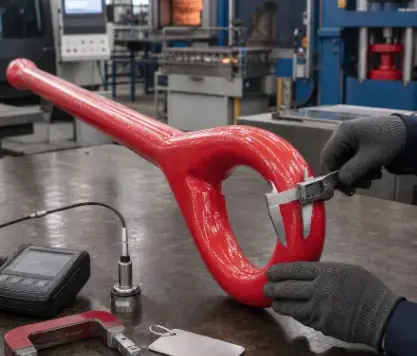
How to Inspect a Lifting Bail Before Handling Oilfield Equipment?
Confirm identification and rated capacity
Check the lifting bail is marked with legible manufacturer or traceability marks, rated capacity and any connection identification required for the task. Compare this capacity to the anticipated load and rigging configuration, including applicable limits of the crane or sling. If you notice any marks are missing or obscured do not guess but retain the equipment for inspection by a competent individual.
Inspect the body, welds, threads, and moving parts
Examine the lifting bail body for distortion, breaks, deep scratches, unusual corrosion or indications of illegal repair. Check all welds used in the design. Check threads for galling, wear and contamination. On a swivel type check for easy movement and locking or retaining features. Document findings in the site’s lifting equipment program according to manufacturer’s inspection criteria.
Set up and verify the lift
Before lifting, ensure the bail is fully engaged, the load is secure and the crane hook or sling is in its appropriate bearing area. Keep pull in queue so side loading doesn't occur. Remove slack slowly. Do a short test lift to check balance and solid engagement. Follow site procedures and suitable lifting standards incorporating practices of ASME B30.20.
Conclusion
The first stage in safe lifting bail use is fitting the device to the equipment, connection, load and lift plan. There are application specific alternatives for drill pipe, drill collars, stabilisers, tool joints and other BHA components. Integral, nonintegral, static and swivel designs provide for the wide variety of handling needs. Clear markings, good threads, documented ratings and pre-use inspections result in consistent functioning. WELONG has oilfield supply chain know-how, tailored service and quality controls. Please check the product specific drawings, connecting details and rated capacity before ordering. A lifting bail, when properly specified and inspected for discipline, may offer a controlled equipment handling from the pipe yard to the rig floor.
FAQ
1: What information is needed to select a lifting bail?
State the kind and weight of equipment, connection identification, needed capacity, lifting direction, and tool drawing. This feature allows a provider to verify fit and give rating and traceability evidence.
2: Can one lifting bail fit drill pipe, drill collars, and stabilizers?
No, not automatically. The connecting points, the component weights and the lifting points are not same. Use matching and rated bail or certified adapter for the application stated and check configuration with manufacturer documentation.
3: How often should a lifting bail be inspected?
Inspect before use and adhere to the site inspection schedule outlined. Review any ambiguous or contingent situation requiring inspection using the manufacturer’s criteria and have a competent person review it.
Request a Custom Lifting Bail for Your Oilfield Equipment
Lifting Bails Looking for a lifting bail to match drill pipe, drill collars, stabilisers, tool joints or any other oilfield component? Since 2001, WELONG has been providing customer-specific product solutions, production coordination and quality control services for oilfield supply chains across the globe. The organization is ISO 9001:2015 and API 7-1 accredited. The ISO 9001:2015 quality-management standard provides a definition of the structure. Please supply equipment drawings, connection identification, and required rated capacity, quantity, and delivery requirements so the team can help confirm an acceptable specification. For your project discussion and product documentation, please contact WELONG at [email protected].
References
1. American Petroleum Institute. Specification 7-1: Rotary Drill Stem Elements.
2. American Petroleum Institute. Specification 8C: Drilling and Production Hoisting Equipment.
3. American Petroleum Institute. Recommended Practice 8B: Inspection, Maintenance, Repair, and Remanufacture of Hoisting Equipment.
4. ASME. B30.20: Below-the-Hook Lifting Devices.
5. ASME. BTH-1: Design of Below-the-Hook Lifting Devices.
6. Occupational Safety and Health Administration. 29 CFR 1910.184: Slings.
Share your inquiry, get the quotation accordingly!
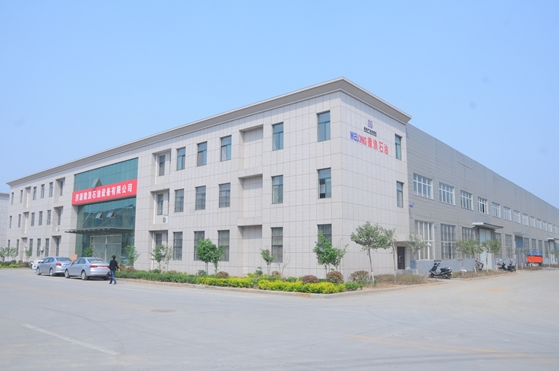
CHINA WELONG - 20+ years manufactuer in oilfield tools