Understanding Well Head Equipment What You Need to Know?
Every oil and gas well depends on a system of surface equipment that controls pressure, supports the tubular strings suspended in the wellbore, and provides the interface between the subsurface and the surface process facilities. The wellhead is the central element of this system — a structured assembly of mechanical components installed at the top of the well to perform these functions throughout the well's operational life. Understanding how a wellhead system is constructed, what each component does, and how the assembly contributes to well safety and production integrity is essential knowledge for anyone involved in drilling, completion, or production operations. This article explains the wellhead from the ground up.
What Is a Wellhead System and Why Is It Essential in Well Operations?
Defining the Wellhead and Its Operational Scope
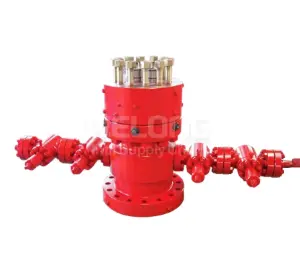
A wellhead is the surface termination of the casing and tubing strings that extend from the surface down through the wellbore to the producing formation. It is not a single component but an integrated assembly — casing head, casing spools, tubing head, and Christmas tree — each contributing a specific structural or pressure-control function. It provides the mechanical foundation that supports the weight of all the casing and tubing strings suspended below it, seals the annular spaces between those strings to prevent fluid migration, and provides the pressure-rated connection points for surface equipment. Without a correctly designed and installed wellhead, neither drilling nor production operations can be conducted safely.
The Role of the Wellhead Across the Well Lifecycle
A wellhead serves different functions at different stages of the well's life. During drilling, it provides a mounting point for the blowout preventer stack and supports the successive casing strings as they are set and cemented. During completion and perforation, it provides the pressure-rated envelope within which tubing is installed and production strings are hung. During production, it houses the flow control valves, chokes, and instrumentation that regulate production rates and monitor wellbore conditions. During workover or abandonment, it provides the access and isolation points for well intervention. This functional continuity across the entire well lifecycle is what makes the wellhead one of the most consequential pieces of equipment on any well site.
Key Structural Components of Wellhead Equipment Explained (Casing Head, Tubing Head, Valves)
The Casing Head: Foundation of the Wellhead Assembly
The casing head is the first component installed at the surface, welded or threaded onto the top of the conductor or surface casing string. It provides the primary structural base of the entire wellhead assembly. Its internal bowl accepts the casing hanger — the device that suspends the next casing string — and its external flange connections accept the blowout preventer stack during drilling and the subsequent casing spools as the well is cased to depth. The casing wellhead unit connects the casing head with the various wellhead assembly components above it, supporting the gravitational load of the intermediate and production casing strings while sealing the annular space between consecutive casings. This sealing function prevents formation fluids or gas from migrating up the annulus to the surface.
The Tubing Head: Supporting Production Tubing and Sealing the Annulus
The tubing head is a spool fitted with both a top flange and a bottom flange, installed on the casing head flange after the production casing is cemented and the well is ready for completion. Its primary functions are to hang the production tubing string and to seal the annular space between the production tubing and the production casing. The tubing hanger inside the wellhead tubing spool supports the full weight of the tubing string and incorporates sealing elements that prevent wellbore pressure from escaping through the tubing-casing annulus. The top flange of the tubing head accepts the Christmas tree — the assembly of valves and fittings that controls flow from the well to the surface process facilities.
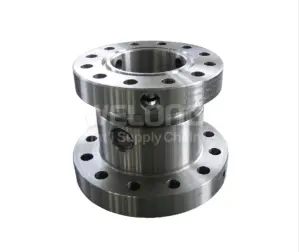
Surface Pressure Control Role of Wellhead Equipment in Oil and Gas Wells
Pressure Ratings and Containment Requirements
The wellhead must contain the full range of pressures that the well will generate throughout its productive life — from the initial shut-in pressure of a newly perforated well to the lower flowing pressures of a mature field. Wellhead pressure ratings are standardized under API 6A in classes ranging from 2,000 PSI to 20,000 PSI working pressure, with material and testing requirements specified for each class. Selecting a wellhead rated for the anticipated maximum wellbore pressure — with adequate margin for transient pressure events — is a fundamental well design decision that determines which it components are appropriate for the application. China Welong supplies wellhead equipment manufactured to API standards, with ISO 9001:2015 certified quality management ensuring consistent compliance with rated pressure specifications.
Valve Functions in the Wellhead Assembly
The valves associated with the wellhead perform distinct functions in the pressure control system. The master valve on the Christmas tree is the primary isolation valve between the wellbore and the surface process — closing it shuts in the well completely. The wing valves control flow to the flowline or test line. The swab valve on the top of the tree allows wireline or coiled tubing equipment to enter the well. Choke valves downstream of the wing valves regulate production rate by controlling the pressure drop from wellbore to flowline pressure. Each of these wellhead valve positions must be rated for the full wellhead working pressure and must seal reliably under all operating conditions including sour service if H2S is present.
How Wellhead Equipment Interfaces with Drilling and Production Stages
Wellhead Integration During the Drilling Phase
During drilling, it serves as the structural base for the blowout preventer stack — the assembly of annular and ram preventers that seal the wellbore in the event of a kick or blowout. The wellhead's top flange must be dimensionally compatible with the BOP stack's bottom flange, and the wellhead must be strong enough to support the full weight and dynamic loads of the BOP stack during drilling operations. As each casing string is set, cemented, and tested, a new casing spool is landed on the wellhead assembly and the BOP is reconnected at the higher elevation. This progressive build-up of the wellhead assembly during drilling requires careful dimensional planning to ensure that all components fit together correctly and that rated pressure integrity is maintained at every interface.
Transitioning the Wellhead from Drilling to Production Configuration
The transition from drilling to production configuration is a critical phase in which the wellhead changes from a pressure-control and casing-support function to a production flow-control function. The BOP stack is removed and replaced with the Christmas tree, the tubing head is installed on top of the casing head assembly, and the production tubing is run and hung in the tubing head. China Welong's wellhead products support this transition efficiently, with casing wellhead and tubing wellhead units designed for straightforward installation and interfacing with standard Christmas tree and BOP equipment. Our skilled production team ensures on-time delivery so that it components are available when the drilling program requires them, avoiding costly rig waiting time.
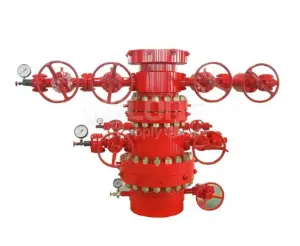
Wellhead Integrity and Its Function in Maintaining Long-Term Well Stability
Sealing Integrity Across the Wellhead Assembly
The long-term integrity of a wellhead is determined primarily by the performance of its sealing elements — the metal-to-metal seals and elastomeric seal assemblies at each interface in the casing hanger, tubing hanger, and spool connections. A wellhead that loses sealing integrity allows pressurized formation fluids or gas to migrate between annuli or to the surface, creating safety hazards and potential regulatory compliance failures. Regular wellhead integrity testing — pressure testing seals against rated working pressure — is the standard method for verifying that sealing function is maintained throughout the well's productive life. Wellheads manufactured to API 6A specification with high-quality materials and precision machining deliver the sealing performance needed for long-term integrity.
Material Durability and Corrosion Resistance in Hostile Well Environments
Wells producing in sour gas environments — where hydrogen sulfide is present — require it materials specified for sour service under NACE MR0175 / ISO 15156. These materials must resist sulfide stress cracking, a form of embrittlement that can cause sudden mechanical failure in high-strength steels exposed to H2S. Similarly, wells in high-temperature or high-CO2 environments require specific alloy selections to resist corrosion over the well's operational life. China Welong's stringent quality control process — covering material traceability, chemical composition verification, and mechanical property testing — ensures that wellhead components meet the material specifications required for the service environment of each specific well program.
Conclusion
The wellhead is a precision-engineered assembly that performs structural, sealing, and pressure-control functions across the entire lifecycle of an oil or gas well. From supporting casing strings during drilling to enabling safe, controlled production flow, every component of the wellhead system plays a defined and critical role. China Welong, with ISO 9001:2015 and API 7-1 certification and over 20 years of oilfield equipment manufacturing experience, provides wellhead solutions that meet the demands of the most challenging well environments worldwide.
FAQ
Q1: What is the difference between a casing wellhead and a tubing wellhead?
A casing wellhead unit connects with the casing head and various wellhead assembly components above it to support the gravitational load of the intermediate and production casing strings while sealing the annular space between consecutive casings. A tubing wellhead is a spool with top and bottom flanges, installed on the casing head flange, which hangs the production tubing string and seals the annular space between the tubing and the production casing. The two components serve sequential functions in the wellhead build-up — the casing wellhead is installed first, and the tubing head follows after the production casing is cemented and the well is ready for completion.
Q2: What API standards govern wellhead equipment design and testing?
It and Christmas tree equipment is primarily governed by API Specification 6A, which covers pressure ratings, material requirements, dimensional standards, and testing procedures for equipment operating at working pressures from 2,000 to 20,000 PSI. For sour service applications, material selection must additionally comply with NACE MR0175 / ISO 15156. China Welong holds ISO 9001:2015 and API 7-1 certifications, providing quality management assurance that oilfield equipment — including wellhead components — is manufactured under controlled, audited processes that meet international standards.
Q3: How does China Welong support wellhead equipment procurement for international projects?
China Welong supports international wellhead equipment procurement with multiple shipping options including sea, air, and railway freight, and flexible trade terms including FOB, CIF, DDP, and DDU — allowing buyers to select the logistics arrangement that fits their project schedule and procurement structure. Standard inspection includes in-process and final inspection with full documentation. Third-party inspection through SGS, DNV, and other accredited agencies is available on request. Over 20 years of international supply experience means Welong's team can handle complex export logistics and customs documentation efficiently, ensuring wellhead components arrive on-site when the drilling program requires them.
Looking for Reliable Wellhead Equipment? Contact China Welong Today
Whether you need casing wellhead assemblies, tubing heads, or complete wellhead system components for onshore or offshore applications, China Welong has the manufacturing capability and quality certification to deliver. With ISO 9001:2015 and API 7-1 certification, over 20 years of oilfield manufacturing experience, and flexible global logistics including sea, air, and rail freight under FOB, CIF, DDP, and DDU terms, we are ready to support your wellhead equipment requirements. Contact our technical team today: [email protected].
References
1. Bourgoyne, A. T., Millheim, K. K., Chenevert, M. E., & Young, F. S. (1986). Applied Drilling Engineering. Society of Petroleum Engineers.
2. Mitchell, R. F., & Miska, S. Z. (Eds.). (2011). Fundamentals of Drilling Engineering. Society of Petroleum Engineers.
3. American Petroleum Institute. (2018). API Specification 6A: Wellhead and Tree Equipment (21st ed.). API Publishing Services.
4. Nelson, E. B., & Guillot, D. (Eds.). (2006). Well Cementing (2nd ed.). Schlumberger Educational Services.
5. Grace, R. D. (2003). Blowout and Well Control Handbook. Gulf Professional Publishing.
6. Rabia, H. (2002). Well Engineering and Construction. Entrac Consulting.
Share your inquiry, get the quotation accordingly!
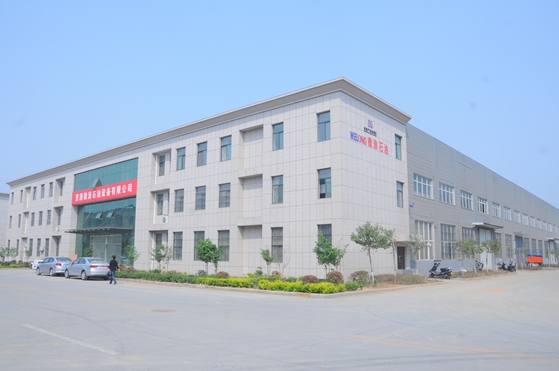
CHINA WELONG - 20+ years manufactuer in oilfield tools