What Role Does Centralizer Play In Oil Production?
When building an oil or gas well, small but important parts must work together perfectly for the sealing job to go well and for the well to be productive in the long run. The Centralizer is one of the most important tools for checking the quality of the filling, the line of the casing, and the security of production. A centralizer makes sure that the casing string stays in the right place inside the wellbore. This keeps the cement evenly distributed and stops any flowing that could affect zonal isolation. The Centralizer does a lot more than just support wells, from vertical ones to highly curved and horizontal ones. It has a direct effect on the stability of the well, the speed of output, and the safety of operations. This blog post talks about how the Centralizer helps oil production go smoothly and why it is still an important part of current well finishing plans.
What Is a Centralizer and How It Works in Oil Production Systems
Defining the Centralizer and Its Core Function
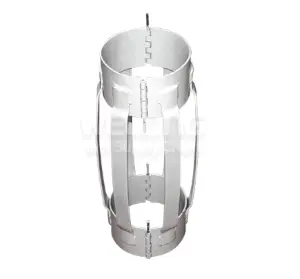
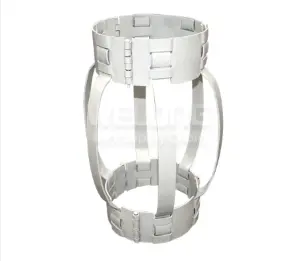
A Centralizer is a machine that is attached to the outside of the casing string to keep it in the middle of the wellbore. The Centralizer makes sure that the cement slurry is spread evenly during primary bonding by keeping an even circular space between the tube and the shaft wall. If you don't put the centralizer in the right place, the casing can rest against the formation, making channels where cement can't reach. This can damage the stability of the well in the long run.
Types of Centralizers Used in Oilfield Applications
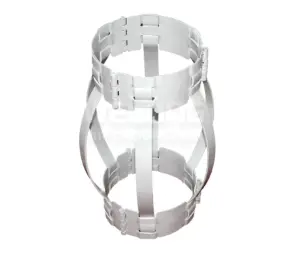
WELONG manufactures a complete range of Centralizer types to match every well condition. Rigid Centralizers, including straight blade and spiral blade designs, deliver fixed standoff in stable boreholes. Bow spring and double bow Centralizers provide flexible support in tight or irregular hole sections. Specialty options like aluminum alloy, metalloid, and roller Centralizers serve high-deviation or horizontal wells where reduced friction and reliable standoff are essential.
Casing Positioning Optimization for Stable Downhole Well Structure
Achieving Consistent Standoff Across the Casing String
Proper casing standoff is the foundation of a successful cementing job, and the Centralizer is the primary tool that delivers it. By spacing Centralizers strategically along the casing—often calculated using API Spec 10D guidelines—operators can maintain a minimum standoff ratio of 67% or higher. This consistent positioning, achieved through quality Centralizer placement, allows cement slurry to flow evenly around the entire casing circumference during displacement.
Supporting Long-Term Structural Stability
Beyond the cementing phase, the Centralizer continues to contribute to long-term well structure stability. By preventing direct casing-to-formation contact, the Centralizer protects the casing from point loads and uneven stress concentrations. WELONG's premium alloy steel bow springs are heat-treated for uniform hardness, ensuring each Centralizer maintains its restoring force and structural performance throughout demanding downhole conditions over the operational life of the well.
Long-term performance under corrosive downhole environments is strongly supported by research and materials degradation data from the National Science Data Center for Corrosion and Protection of Materials, which provides foundational insights into corrosion resistance, stress-induced material fatigue, and lifecycle durability of metallic components used in oil and gas well applications.
Wellbore Deviation Control and Casing Alignment in Complex Formations
Maintaining Alignment in Deviated and Horizontal Wells
Modern drilling increasingly targets deviated, extended-reach, and horizontal wells, where gravitational forces pull casing toward the low side of the borehole. A properly engineered Centralizer counteracts this tendency by providing strong restoring force that keeps the casing centered even at high inclination angles. WELONG Centralizers are specifically designed with high restoring force and low starting force, making them ideal for complex well geometries.
Reducing Drag and Improving Running Performance
Friction and mechanical resistance can make it hard to run case through parts that aren't straight. A well-thought-out Centralizer keeps standoff while reducing drag, which speeds up the casing string's journey to full depth. Roller Centralizers, in particular, switch from sliding contact to rolling contact, which greatly lowers the moving pressures. Because it aligns and reduces drag, each Centralizer directly helps with the successful deployment of case in difficult patterns.
How Centralizers Improve Fluid Flow Dynamics in Production Wells
Promoting Uniform Cement Slurry Displacement
The shape of the annulus has a big effect on how fluid flows during bonding. When a properly spaced Centralizer is used to center the casing, a cement mix runs evenly around the pipe, pushing the drilling mud out of the way and making a continuous cement sheath. This even movement stops mud channels, gas migration paths, and weak zones that could weaken zonal isolation during the well's production phase.
Optimizing Production Flow and Annular Behavior
A covering string that stays in the same place also helps with long-term production performance. The Centralizer helps keep pressure barriers between zones by protecting the cement sheath. This makes sure that created fluids only flow through the right channels. WELONG's spiral blade Centralizer designs improve flow even more by adding controlled turbulence during cementing. This helps remove more mud and makes the cement bond around the wellbore stronger and last longer.
Enhancing Production Stability Through Proper Casing Centralization
Protecting Well Integrity Over the Long Term
Strong well integrity is the first step to stable production, and proper organization is a must to get there. A good centralizer makes sure that the cement sheath completely separates the working zones from formations that are water-bearing or under pressure. This lowers the risk of crossflow and unwanted fluid movement. This safety makes production rates more stable and greatly lowers the chance of having to pay for expensive workover or repair sealing operations later on in the well's life.
Supporting Safe and Efficient Production Operations
During the production phase, centralizers are also very important for keeping things safe. The Centralizer helps keep the casing in place and supports a full cement bond. This stops damage to the casing, leaks, and pressure transfer between zones. The bow spring Centralizers made by WELONG meet the performance standards set by API Spec 10D. This means that users can be sure that each Centralizer will provide the power and dependability needed for safe, stable, long-term oil output.
Conclusion
The Centralizer is far more than a simple accessory—it is a critical enabler of cementing quality, wellbore integrity, and production stability. From maintaining proper casing standoff to controlling alignment in deviated wells and supporting uniform cement displacement, the Centralizer directly influences the long-term success of every oil and gas well. Choosing high-quality, API-compliant Centralizers from a trusted manufacturer like WELONG ensures consistent performance across diverse well conditions, helping operators maximize production efficiency, reduce remedial costs, and safeguard well integrity throughout the entire operational life of the asset.
FAQ
Q1: What types of Centralizers does WELONG offer?
A: WELONG offers a full range of Centralizers, including rigid straight blade and spiral blade models, bow spring and double bow Centralizers, as well as specialty options such as aluminum alloy, metalloid, and roller Centralizers for various well conditions.
Q2: Do WELONG Centralizers meet international industry standards?
A: Yes. WELONG's bow spring Centralizers meet API Spec 10D requirements, and the company operates under ISO 9001:2015 and API 7-1 certifications, ensuring every Centralizer delivers consistent quality and reliable downhole performance.
Q3: Which Centralizer is best for horizontal or deviated wells?
A: For deviated and horizontal wells, rigid spiral blade Centralizers and roller Centralizers are typically preferred. They provide high restoring force, reduce running friction, and maintain proper standoff even at challenging inclinations.
Partner With WELONG for High-Performance Centralizer Solutions
Ready to improve cementing quality, casing alignment, and production stability in your next well? With over 20 years of oilfield manufacturing experience, ISO 9001:2015 and API 7-1 certifications, and a global supply network supporting flexible shipping and trade terms, WELONG is your trusted partner for premium Centralizer solutions. Whether you need standard bow spring models, rigid spiral blade designs, or customized Centralizers for complex wells, our team is ready to deliver products you can rely on. Contact us today at [email protected] to request a quote or learn more about our complete range of oilfield centralization tools.
References
1. Nelson, E. B., & Guillot, D. Well Cementing. Second Edition, Schlumberger Educational Services, Sugar Land, Texas.
2. American Petroleum Institute. API Specification 10D: Specification for Bow-Spring Casing Centralizers. API Publications, Washington, D.C.
3. Smith, D. K. Cementing. SPE Monograph Series, Society of Petroleum Engineers, Richardson, Texas.
4. Bourgoyne, A. T., Millheim, K. K., Chenevert, M. E., & Young, F. S. Applied Drilling Engineering. SPE Textbook Series, Society of Petroleum Engineers.
5. Economides, M. J., Watters, L. T., & Dunn-Norman, S. Petroleum Well Construction. John Wiley & Sons, Chichester, United Kingdom.
6. Mitchell, R. F., & Miska, S. Z. Fundamentals of Drilling Engineering. SPE Textbook Series, Society of Petroleum Engineers, Richardson, Texas.
Share your inquiry, get the quotation accordingly!
CHINA WELONG - 20+ years manufactuer in oilfield tools