What Are the Critical Power Tong Parts in Drilling Operations?
Power tongs are the hydraulic workhorses that tighten and loosen threaded connections on the rig floor, and every connection depends on the components inside them. This article explains the critical power tong parts in drilling operations, from the jaw assembly that grips the pipe to the gearbox that multiplies torque. You will see how the parts function during makeup and breakout, how they coordinate through a grip, rotate and release cycle, which components control torque, and which ones adapt a tong to different drill pipe diameters. Whether you maintain tools, buy spares or plan rig-floor equipment, understanding power tong parts helps you work with confidence.
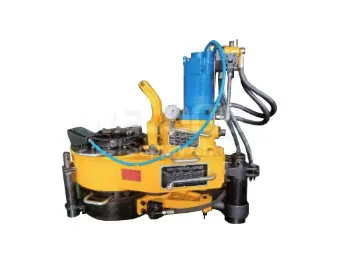
A Complete Breakdown of Power Tong Parts: From Jaw Assembly to Gearbox
Jaw Assembly and Dies
The jaw assembly is the contact point between the tong and the pipe. Hardened, replaceable dies with sharp teeth bite into the tool joint so the tong can turn it without slipping. Among all power tong parts, the jaws and dies work hardest, which is why crews keep a matched set ready and choose die profiles that suit the pipe in the hole.
Cage Plate and Rotary Gear
The cage plate carries the jaws and rotates around the pipe, driven by the rotary gear that sits inside the tong body. Together they convert the motion of the gear train into a smooth turning force at the tool joint. A door and latch let the open-throat frame be placed around the pipe quickly. These power tong parts give the tong its familiar shape and fast rig-floor handling.
Hydraulic Motor and Valve Block
The hydraulic motor turns fluid pressure from the power unit into rotation, and the valve block directs that flow. With the control valve, the operator selects direction and speed, starting a makeup turn or a breakout turn with smooth, repeatable control. Motor and valve are the heart of the hydraulic system, and well-matched power tong parts here keep the tong responsive from the first rotation to the final tightening.
Gearbox and Shifting Mechanism
The gearbox reduces motor speed and multiplies torque. Many tongs use a two-speed arrangement, with a high-speed gear for spinning a connection quickly and a low-speed gear for the final high-torque tightening or the first loosening turn, selected with a shift lever. Of all the power tong parts, the gearbox does the most to determine how much work a tong can deliver and how smoothly it delivers it.
Power Tong Parts and Their Functions in Drill Pipe Makeup and Breakout
Makeup: Tightening Connections to Specification
During makeup, the power tong grips the upper tool joint while a backup tong holds the lower one, and the tong rotates until the connection reaches its specified torque. The right power tong parts make this sequence consistent: jaws that grip firmly, a gearbox that delivers steady turning force and a gauge that confirms the result. Consistent tightening supports sound connections along the whole drill string.
Breakout: Loosening Connections Efficiently
Breakout reverses the sequence. The tong turns in the opposite direction, and the low gear supplies the high initial torque needed to free a tight connection before the operator shifts to faster rotation to spin the joint out. Strong jaws, a robust gearbox and a secure backup are the power tong parts that make breakout controlled and efficient, so crews can move pipe quickly during tripping operations.
Backup Tong and Support Parts
No tong works alone. The backup tong holds the lower joint, the snub line or reaction arrangement carries the torque, and the hanger or sling supports the tong's weight so the operator can position it easily. These supporting power tong parts keep the working tong steady and aligned with the pipe, which lets every other component deliver its full performance and keeps rig-floor handling smooth and predictable.
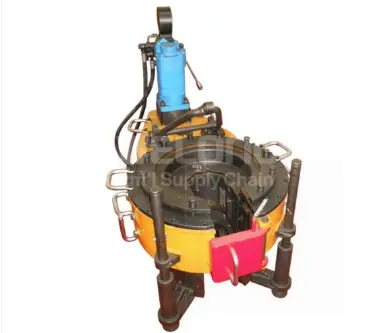
How Do Power Tong Parts Coordinate to Grip, Rotate and Release Drill Pipe?
Grip: Positioning and Jaw Closure
A tong cycle begins when the crew positions the tong around the tool joint and the jaws close on the pipe. In many designs the cage plate and jaw geometry draw the jaws inward as rotation starts, increasing grip as torque builds. Properly maintained power tong parts, especially dies and jaw pins, ensure the grip is firm, even and ready before any turning force is applied.
Rotate: Motor, Gears and Cage Plate in Sequence
Once the jaws hold the pipe, the hydraulic motor drives the gear train, the rotary gear turns the cage plate, and the jaws carry that rotation to the tool joint. Each link transfers energy to the next with little loss, so the connection turns steadily. This coordinated chain of power tong parts, from motor to jaws, is what turns hydraulic pressure into controlled work at the pipe.
Release: Opening the Jaws and Resetting
After the connection is tightened or loosened, a small reverse movement relaxes the jaws, the door opens, and the tong can be lifted clear or moved to the next joint. Return springs and well-lubricated pivots help the jaws reset cleanly. Smooth release lets crews keep a steady rhythm on the rig floor, and reliable power tong parts make each cycle as quick as the last.
Which Power Tong Parts Control Torque Transmission During Tubular Handling?
From Hydraulic Pressure to Rotational Torque
Torque begins with hydraulic pressure. The motor converts pressure and flow into rotation, and the gearbox multiplies that rotation into the torque needed at the connection, with output rising in proportion to the gear ratio. Operators control the result through the valve and the pressure setting. Because the whole chain depends on well-matched power tong parts, correct selection of motor and gearbox sets the tong's working range for tubular handling.
Gears, Shafts and Bearings in the Torque Path
The path from motor to pipe runs through gears, shafts and bearings. Forged alloy-steel shafts and hardened gears carry the load, while quality bearings keep everything aligned and turning freely. Good lubrication preserves smooth operation and long service life. Among power tong parts, these internal components are rarely seen yet constantly working, and their precision determines how evenly torque is transmitted during every makeup and breakout.
Torque Measurement and Control
Torque control also depends on measurement. A load cell or gauge on the reaction line reads the force the tong applies, and a relief valve sets a maximum hydraulic pressure so the tong does not exceed the intended torque. Together these power tong parts let operators apply the specified torque with confidence and produce repeatable connection quality across the string.
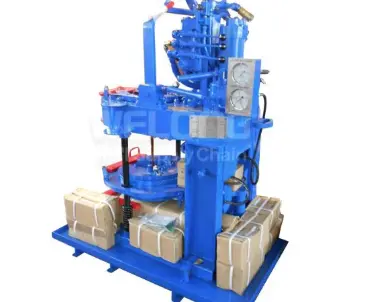
Essential Power Tong Parts for Handling Different Drill Pipe Diameters
Interchangeable Jaw Dies and Cassettes
Different pipe sizes call for different jaw dies. Interchangeable dies and jaw cassettes let one tong handle a range of outside diameters, with the die profile matched to the tool joint for even contact. Swapping these power tong parts is a quick job on the rig floor, and it keeps the same tong productive as the drill string changes from section to section.
Adapters, Spacers and Pipe-Size Kits
Adapters, spacers and pipe-size kits extend the working range of a tong. Spacers position the jaws correctly for smaller diameters, while adapters let the tong accommodate larger tool joints. These power tong parts add flexibility to the equipment, so a crew can prepare for a wide variety of tubulars with a single, well-organized set of components and without changing the tong itself.
Matching Parts to Tool Joint Dimensions
Matching parts to the tool joint dimensions gives the best result, and rotary drill stem dimensions defined in API 7-1 are a common reference. Correct jaws spread contact evenly across the joint and support consistent gripping. WELONG supports oilfield customers with customized power tong parts and tailored solutions, working under ISO 9001:2015 quality management and stringent quality control to deliver durable components.
Conclusion
Power tongs turn hydraulic pressure into controlled torque, and every stage depends on well-chosen components: jaws and dies for grip, the cage plate and rotary gear for rotation, the motor and valve for power, and the gearbox for torque. Correct sizing parts for each pipe diameter completes the system. WELONG, certified to ISO 9001:2015 and API 7-1, offers customized oilfield solutions and stringent quality control. Contact the WELONG team to match power tong parts to your drilling operation and keep your rig floor running smoothly, safely and on schedule through every makeup and breakout.
FAQ
1. What are the main power tong parts?
The main power tong parts are the jaw assembly with dies, the cage plate and rotary gear, the hydraulic motor and valve block, the gearbox, and the supporting backup and hanger components.
2. What does the gearbox do in a power tong?
The gearbox reduces motor speed and multiplies torque. A low gear supplies high torque for final tightening or first loosening, while a high gear spins connections quickly.
3. Does WELONG supply customized power tong parts?
WELONG specializes in oilfield products and customized solutions under ISO 9001:2015 and API 7-1 certification. Send your tong model and requirements to discuss your needs.
Source Reliable Power Tong Parts With WELONG
Looking for dependable components for your next rig-floor project? WELONG is an international supply chain service provider specializing in oilfield products and customized solutions, backed by ISO 9001:2015 and API 7-1 certification and stringent quality control. Send us your tong model, pipe sizes and performance requirements, and our team will help you select the right power tong parts for your operation. Reach us at [email protected] for practical guidance and a tailored quotation, and let WELONG deliver durable, well-documented parts to keep your drilling on schedule, with responsive service from first inquiry to final delivery.
References
1. American Petroleum Institute. Specification 7-1 / ISO 10424-1: Petroleum and Natural Gas Industries, Rotary Drilling Equipment, Part 1: Rotary Drill Stem Elements. Washington, DC: API; 2004.
2. Bourgoyne AT Jr, Millheim KK, Chenevert ME, Young FS Jr. Applied Drilling Engineering. SPE Textbook Series, Vol 2. Richardson, TX: Society of Petroleum Engineers; 1986.
3. Mitchell RF, Miska SZ. Fundamentals of Drilling Engineering. SPE Textbook Series, Vol 12. Richardson, TX: Society of Petroleum Engineers; 2011.
4. Lyons WC, Plisga GJ, Lorenz MD, eds. Standard Handbook of Petroleum and Natural Gas Engineering. 3rd ed. Oxford: Gulf Professional Publishing; 2016.
5. Rabia H. Oilwell Drilling Engineering: Principles and Practice. London: Graham & Trotman; 1985.
6. Budynas RG, Nisbett JK. Shigley's Mechanical Engineering Design. 11th ed. New York: McGraw-Hill; 2020.
Share your inquiry, get the quotation accordingly!

CHINA WELONG - 20+ years manufactuer in oilfield tools