Forged Step Shaft vs. Machined Shaft: Which Is Better?
Choosing between a forged step shaft and a machined shaft affects load capacity, service life and total cost, so the decision deserves a clear comparison. A forged step shaft begins as a heated billet that is pressed into a shape close to the final profile, while a machined shaft is cut from solid bar. Both routes can deliver precise parts, yet they behave differently under torque, bending and repeated stress. This guide walks through manufacturing methods, grain flow, design fit, machining allowances and selection tips for engineers who specify shafts for pumps, gearboxes, compressors and oilfield rotating equipment.
What Are the Main Manufacturing Differences Between Forged Step Shaft and Machined Shaft?
How a Forged Step Shaft Is Made
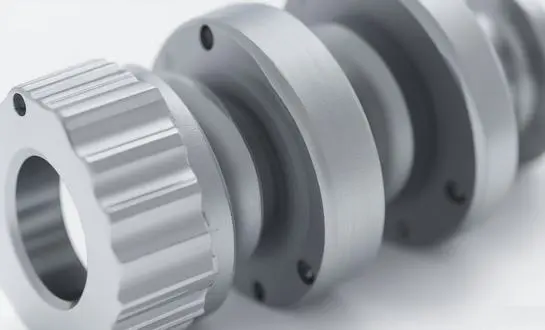
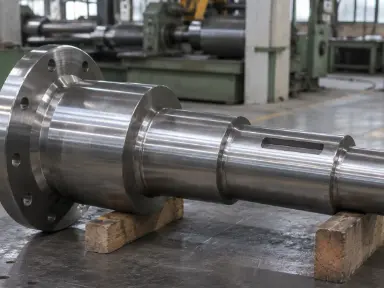
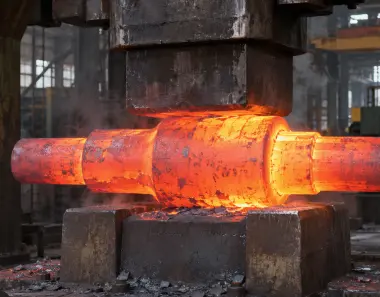
A forged step shaft starts with a heated steel billet that is drawn, upset or pressed in open or closed dies until the main diameters, shoulders and flanges take shape. The metal is deformed rather than removed, so the part leaves the press already close to its final outline. After forging, the blank usually goes through normalizing or quenching and tempering, followed by rough and finish machining.
How a Machined Shaft Is Produced
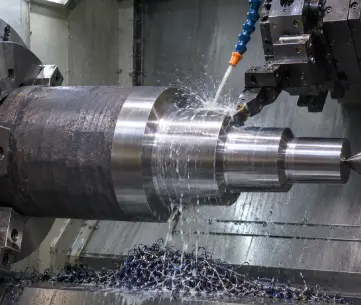
A machined shaft is produced from rolled or drawn bar by turning, milling and grinding until every diameter and shoulder matches the drawing. The geometry is cut out of the bar, so the internal structure still follows the original rolling direction. When engineers compare it with a forged step shaft, the key question is how much material must be cut away and how the final shape sits within the bar.
Where the Two Routes Meet
The two routes meet at the lathe. Nearly every forged step shaft is finished by machining to reach tight tolerances, surface finish and bearing seats, so forging and machining work together. Because the forged blank is already near net shape, less stock must be removed, and standardized forging specifications such as those published by ASTM International help buyers describe material, heat treatment and testing in a common language.
How Does Grain Flow Affect Forged Step Shaft Strength and Fatigue Resistance?
What Grain Flow Means
Grain flow describes the direction in which grains and inclusions line up after metal is deformed. During forging, the structure stretches and bends along the contour of the part, forming continuous flow lines that follow shoulders and diameter changes. A forged step shaft therefore carries a structure shaped by its own geometry. This is a visible advantage when a polished and etched section is examined, since the flow lines hug the profile instead of ending abruptly at a machined surface.
Why Aligned Flow Supports Strength
Metals show their best strength and toughness along the direction of flow, and forging places that direction where loads travel. In a forged step shaft, aligned flow supports resistance to torsion, bending and impact along the length of the part. The worked structure also helps close internal voids that can exist in cast or heavy bar stock.
Fatigue Resistance at Shoulders
Fatigue cracks usually begin where stress concentrates, and shoulders and fillets are the classic locations on any stepped shaft. A forged step shaft allows flow lines to wrap around those transitions, which supports resistance to crack initiation under repeated loading. Combined with a well-chosen fillet radius and a smooth finish, this structure helps a forged step shaft maintain performance through long duty cycles.
Which Shaft Design Benefits More from Forging: Multi-Step or Uniform-Diameter?
Why Multi-Step Designs Gain the Most
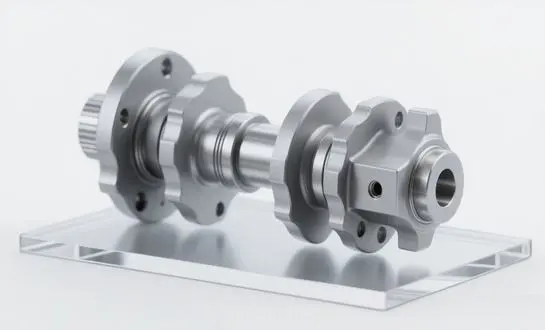
Multi-step designs gain the most from forging. When journals, shoulders and flanges differ widely in diameter, cutting the shape from bar means removing a large volume of material and leaving a structure that does not follow the shoulder. A forged step shaft places metal where the design needs it and lets flow lines trace each step. The larger the contrast between the biggest and smallest diameters, the stronger the case for choosing a forged step shaft.
Where Uniform-Diameter Shafts Fit
Uniform-diameter shafts are often machined efficiently from bar, especially in smaller sizes and moderate duty. Even so, a forged step shaft or forged straight shaft can be attractive when the diameter is large or when the soundness of the core matters, because forging works the center of the section and closes internal voids. For heavy rotating equipment, a forged step shaft with uniform sections can still give engineers a consistent structure from end to end.
Material Yield and Cost Logic
Material efficiency adds another practical reason to forge. A forged step shaft starts near net shape, so less alloy steel turns into chips and less machine time is needed to reach final size. The savings grow with part size and with the number of steps. When a drawing combines large diameter changes, expensive alloy grades and tight delivery plans, a forged step shaft often gives a smoother path from raw material to finished component.
How Do Machining Allowances Influence the Final Geometry of a Forged Step Shaft?
What a Machining Allowance Is
A machining allowance is the extra stock deliberately left on a forged surface so that finish machining can bring the part to final dimensions. It covers surface scale, shallow surface layers affected by heating, and the normal dimensional variation of forging. For a forged step shaft, the allowance is the bridge between the forged blank and the finished drawing, and it is specified for each diameter, shoulder and length.
How Allowance Shapes Final Geometry
The allowance directly influences final geometry. A uniform, well-planned allowance lets machining clean up every surface, hold concentricity between steps and keep shoulder and fillet radii exactly as designed. Because heat treatment can cause small movements, a forged step shaft is usually rough machined first and finished afterward, with enough stock left to correct those movements. Larger diameters normally call for larger allowances, and thoughtful planning keeps the final forged step shaft accurate without wasting material.
Planning With a Forging Partner
Good allowance planning is a team effort between the designer and the forging supplier. Sharing the drawing, tolerances, material grade, required mechanical properties and heat treatment condition lets the supplier set die shapes and stock levels that suit the machining plan. WELONG works with customers on customized oilfield and industrial products, and early drawing review helps a forged step shaft move smoothly from blank to finished part with fewer iterations and predictable results.
When Should Engineers Choose a Forged Step Shaft for Heavy-Duty Rotating Equipment?
Load and Duty Cycle Signals
Choose a forged step shaft when duty is demanding. High torque, cyclic bending, shock loads and large diameters are the signals that point toward forging. Heavy-duty gearboxes, pumps, compressors and oilfield rotating equipment all place long, stepped shafts under repeated stress, and a forged step shaft offers a structure that follows the shape of the part. When failure would stop production, that built-in strength becomes a practical advantage.
Reliability and Quality Documentation
Reliability also depends on documentation. Heavy-duty buyers expect material certificates, heat treatment records and nondestructive testing, and a forged step shaft supported by those records is easier to approve and install. A supplier working under a quality system such as ISO 9001:2015, with API 7-1 certification for rotary drilling elements, gives engineers added confidence. WELONG holds both certifications and applies stringent quality control to the customized products it supplies.
A Practical Selection Checklist
A short checklist makes the decision simple. Consider the diameter range, the step ratio, sensitivity to fatigue, the expected duty and the production volume. When several of these point upward, a forged step shaft is a sound choice. For small, lightly loaded parts with plain profiles, a machined shaft from bar may be enough. For heavy-duty rotating equipment, many engineers find that a forged step shaft supports long, steady service.
Conclusion
Forged and machined shafts each have a place, and the better choice follows the load, the geometry and the duty cycle. A forged step shaft shines when diameters change often, when fatigue matters and when heavy rotating equipment must run reliably. Machining remains essential for the final tolerances in either route. WELONG supports customers with customized oilfield and industrial products, ISO 9001:2015 and API 7-1 certification, and stringent quality control. Share your drawing and requirements with the WELONG team to discuss a forged step shaft solution built around your equipment, schedule and delivery goals today.
FAQ
1. Is a forged step shaft always stronger than a machined shaft?
Not automatically. Strength depends on material grade, heat treatment and design, yet forging aligns grain flow with the shaft contour, which supports strength and fatigue resistance in demanding service.
2. How much machining allowance should a forged step shaft have?
The right allowance depends on diameter, length, tolerances and heat treatment. Share your drawing with the supplier so the allowance can be set for each diameter and shoulder.
3. Does WELONG offer customized forged step shaft solutions?
WELONG specializes in oilfield products and customized solutions, with ISO 9001:2015 and API 7-1 certification. Send your drawing and application details to discuss your requirements.
Start Your Forged Step Shaft Project With WELONG
Ready to review your next shaft design? WELONG is an international supply chain service provider specializing in oilfield products and customized solutions, backed by ISO 9001:2015 and API 7-1 certification. Send your drawing, material grade, tolerances and application details, and our team will help you evaluate a forged step shaft against a machined alternative. Contact us at [email protected] for friendly, practical guidance and a tailored quotation. Let WELONG help you build a reliable, well-documented supply of forged step shaft components for demanding rotating equipment, with responsive communication and dependable quality from the first inquiry to final delivery.
References
1. Dieter GE. Mechanical Metallurgy. 3rd ed. New York: McGraw-Hill; 1986.
2. Semiatin SL, ed. ASM Handbook, Volume 14A: Metalworking: Bulk Forming. Materials Park, OH: ASM International; 2005.
3. Altan T, Ngaile G, Shen G, eds. Cold and Hot Forging: Fundamentals and Applications. Materials Park, OH: ASM International; 2005.
4. Suresh S. Fatigue of Materials. 2nd ed. Cambridge: Cambridge University Press; 1998.
5. Pilkey WD, Pilkey DF. Peterson's Stress Concentration Factors. 3rd ed. Hoboken, NJ: John Wiley & Sons; 2008.
6. Krauss G. Steels: Processing, Structure, and Performance. 2nd ed. Materials Park, OH: ASM International; 2015.
Share your inquiry, get the quotation accordingly!

CHINA WELONG - 20+ years manufactuer in oilfield tools