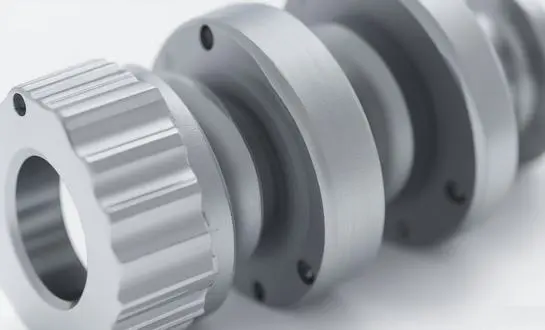
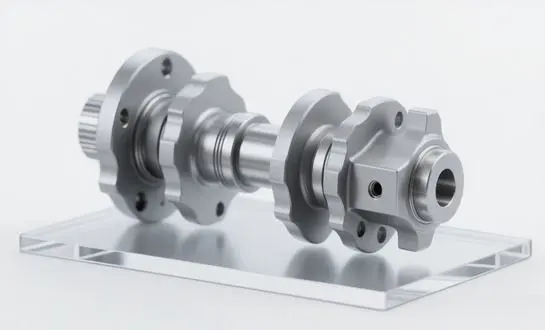
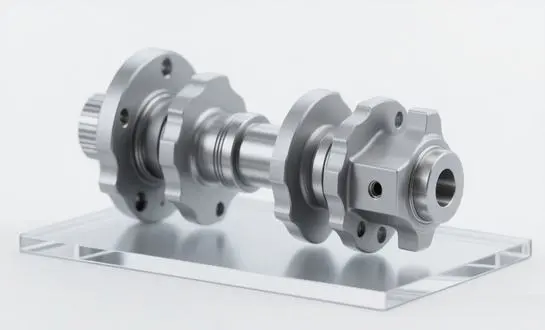
What Is a Drilling Stabilizer and How Does It Work?
A drilling stabilizer is a critical downhole tool positioned in the bottom hole assembly (BHA) that mechanically stabilizes the drill string within the borehole. It prevents unintentional sidetracking, reduces harmful vibrations, and ensures consistent hole quality during drilling operations. These cylindrical steel components feature specialized blades that maintain proper drill string positioning while enabling efficient weight and torque transfer to the drill bit, making them indispensable for successful drilling projects across various formations.

What is a Drilling Stabilizer?
A drilling stabilizer represents one of the most fundamental components in modern drilling operations. This downhole equipment consists of a hollow cylindrical body manufactured from high-strength steel, equipped with stabilizing blades that extend radially outward. The blades can feature straight or spiral configurations, depending on specific drilling requirements and formation characteristics.
The primary construction involves either integral machining from a single steel piece or modular designs like replaceable sleeve configurations. Our replaceable sleeve stabilizer at WELONG utilizes an integral mandrel paired with interchangeable sleeves, allowing one mandrel series to accommodate multiple hole sizes efficiently. This design philosophy reduces inventory costs while maintaining operational flexibility.
Material selection plays a crucial role in stabilizer performance. We utilize AISI 4145H and 4145H MOD steel for superior strength characteristics. Non-magnetic variants are available for specific drilling applications where magnetic interference must be eliminated. The blade surfaces receive specialized hardfacing treatments ranging from HF1000 to HF5000, providing exceptional wear resistance against abrasive formations.
The positioning within the drill string determines stabilizer effectiveness. Engineers strategically place these tools at specific intervals throughout the BHA to create optimal drilling dynamics. The blade diameter maintains close tolerances to the drill bit size, typically kept slightly under gauge to prevent excessive torque buildup while providing adequate borehole contact.
Understanding stabilizer gauge becomes critical for directional drilling applications. The precise diameter relationship between stabilizer blades and the borehole wall directly influences the assembly's tendency to build or drop angle. This relationship forms the foundation for directional drilling success, making stabilizer selection a calculated engineering decision rather than arbitrary equipment choice.
The Critical Problems Drilling Stabilizers Solve
Modern drilling operations face numerous challenges that directly impact project success and economic viability. Uncontrolled drill string movement creates significant operational risks, including unintentional sidetracking that can compromise wellbore integrity and increase drilling costs exponentially. Without proper stabilization, drill strings experience excessive lateral movement, leading to irregular hole geometry and potential equipment damage.
- Vibration control represents another critical challenge addressed by stabilizers. Downhole vibrations transfer destructive energy throughout the drilling system, causing premature equipment failure and reduced drilling efficiency. These vibrations manifest as stick-slip, whirl, and bit bounce, each contributing to increased operational costs and potential safety hazards.
- Hole quality issues plague drilling operations when stabilization proves inadequate. Irregular borehole geometry complicates subsequent completion operations, potentially requiring expensive remediation efforts. Poor hole quality also affects casing installation, cementing operations, and long-term well integrity, making stabilizer selection crucial for overall project success.
- Differential sticking poses significant operational risks when drill strings contact the borehole wall unevenly. This phenomenon can result in costly fishing operations and project delays. Proper stabilization maintains consistent drill string positioning, reducing contact area and minimizing differential sticking probability.
- Energy loss through uncontrolled string movement reduces drilling efficiency substantially. When drill strings move erratically within the borehole, energy intended for rock cutting dissipates through unnecessary friction and vibration. Stabilizers optimize energy transfer by maintaining proper drill string position and reducing parasitic energy losses.
- Directional drilling accuracy depends heavily on predictable BHA behavior. Without adequate stabilization, achieving planned well trajectories becomes extremely challenging. Stabilizers provide the mechanical foundation necessary for precise directional control, enabling complex well profiles essential for modern reservoir development strategies.
Core Features and Functionality Deep Dive
The engineering excellence behind drilling stabilizers lies in their sophisticated feature integration designed for optimal downhole performance.
- Engineers calculate blade size, spacing, and profile to meet drilling goals. Straight blades provide aggressive hole reaming due to maximal gauge contact, while spiral blades optimize cuttings evacuation and torque.
- Hardfacing makes steel blades wear-resistant and downhole-resistant. HF1000–HF5000 hardfacing choices provide progressive wear resistance, letting operators balance blade protection with formation abrasiveness. Crushed tungsten carbide particles in the hardfacing matrix provide small cutting edges that preserve blade gauge over long drilling operations.
- Fluid flow around stabilizer bodies is optimized by hydraulic design. Flow passages strategically placed for cuttings removal and hydraulic efficiency. These tubes prevent clippings from clogging stabilizers or causing stopped pipes. Effective hydraulic design cools hardfaced surfaces, prolonging operating life.
- Separating the wear component from the structural mandrel with a changeable sleeve revolutionizes stabilizer economics. Instead of replacing the stabilizer, operators change the sleeve when blade wear reaches permissible limits. This modular strategy cuts inventory and downtime. Without major equipment adjustments, one mandrel can support several sleeve diameters for different hole conditions.
- Tool reliability under intense drilling stresses depends on connection integrity. Premium threaded connectors effectively transmit torque and weight without compromising hydraulic seals. Heat treatment and careful machining improve connection strength and longevity in our production processes. Thread compounds and correct composition improve connection reliability.
- Quality control ensures stabilizers satisfy strict performance requirements. Dimensional checks verify blade diameter and connecting tolerances. Material certifications verify steel chemistry and mechanics. Hardfacing checks check application thickness and adherence. Comprehensive quality measures provide consistent performance across all operating situations.
Advanced Technology and Manufacturing Excellence
Drilling stabilizer performance and dependability in abrasive downhole settings are determined by manufacturing perfection. Advanced CNC machining centers in our factories maintain thousandth-of-inch tolerances. Precision enables constant blade dimensions and good connection fits, improving field performance.
Material characteristics are optimized for drilling by heat treatment. Heat and cold cycles improve steel microstructure strength, toughness, and wear resistance. Our metallurgical experience allows us to design heat treatment techniques for material qualities and service circumstances. This technology offers substantial benefits over commercial alternatives.
Non-destructive testing checks interior material integrity without affecting component function. Ultrasonic checks detect out internal faults that might jeopardize tool dependability. Magnetic particle examination detects stress-propagating surface flaws. These quality assurance procedures remove faulty parts before operation.
Hardfacing application technique is a crucial industrial skill that requires specific equipment. Our hardfacing stations include precision welding technologies for uniform material deposition. Controlled cooling optimizes hardfacing metallurgy and prevents heat-affected zone cracking. Precision dimensional tolerances are restored during application machining.
CAD systems allow quick prototyping and drilling application-specific setups. Our engineers optimize blade geometry and hydraulics using modern modeling tools. Finite element analysis verifies stress distribution and finds failure mechanisms. Computational capabilities speeds product development and ensures strong designs.
Supply chain management maintains material traceability and quality throughout production. Each component must meet our procurement standards for material grades and certifications. Incoming inspections check material compliance before manufacturing. This methodical strategy reduces material failures and maintains product performance.
Target Applications and Optimal Use Cases
Professional drilling stabilizers are mostly used in oil and gas drilling. These challenging applications need equipment that can tolerate high temperatures, pressures, and corrosion. Stabilizer flexibility is needed to adapt drilling parameters for soft sediments to hard carbonate. Directional drilling and extended reach drilling need more stabilizer performance and dependability.
- Equipment standardization and dependability reduce operational interruptions for drilling contractors. Stabilizer consistency improves drilling dynamics and operational planning. Reduced equipment failures reduce fishing costs and delays. Contractors rely on our rigorous quality control methods for dependable performance.
- Manufacturing facilities need reliable suppliers with predictable delivery times and quality. Just-in-time manufacturing requires dependable supply chains that deliver quality items on schedule. Our production and logistical skills provide industrial partners confidence. Configurations meet unique needs without long lead periods.
- Unique geothermal drilling issues need specific equipment. Extreme temperatures need materials and designs that function well. Material resistance must exceed oil and gas applications for corrosive geothermal fluids. Our technical expertise provide specific solutions for these unique needs.
Cheap stabilizers that operate well in mining and water well applications are beneficial. In these applications, less demanding settings offer economy designs. Maintaining drilling schedules and avoiding operational interruptions requires dependability. Our product line meets these needs with acceptable performance.
Global logistics and technical providers are needed for international operations. International shipping restrictions and complex shipping criteria necessitate expert logistics management. Technical assistance across time zones and languages demands worldwide expertise. Global experience allows smooth assistance regardless of operating location.
Frequently Asked Questions
Q1: How do I choose a stabilizer gauge for drilling?
A: Directional drilling and formation parameters determine stabilizer gauge selection. To avoid excessive torque and ensure borehole contact, keep 1/32" to 1/16" under-gauge relative to bit size. Build assemblies with near-gauge stabilizers near the bit. Stabilizers should be further from the bit and somewhat under-gauge for falling assemblies. Based on your drilling specifications and goals, our technical staff may provide suggestions.
Q2: What maintenance extends drilling stabilizer life?
A: Regular dimensional inspections detect blade wear and replacement needs before performance degrades. After each run, properly clean stabilizers to eliminate formation debris that accelerates wear. Check hardfacing for damage or excessive wear that may signal operating issues. Correctly store stabilizers to avoid handling damage. Track performance trends and optimize replacement schedules with full service data.
Q3: Are replacement sleeve stabilizers cheaper than integrated ones?
A: Reduced replacement prices and inventory needs make replaceable sleeves cost-effective over time. Replace the sleeve instead of the stabilizer when blade wear necessitates servicing. Multiple sleeve sizes fit on one mandrel, simplifying inventory. In high-wear applications or lengthy drilling programs, replacement sleeves have a lower total cost of ownership despite higher starting expenses.
Conclusion
Drilling stabilizers serve as essential components in modern drilling operations, providing mechanical stability that ensures successful wellbore construction. Understanding their functionality, proper selection criteria, and operational considerations enables drilling professionals to optimize performance while controlling costs. Quality manufacturing, appropriate material selection, and comprehensive support services distinguish professional equipment suppliers from commodity providers. As drilling operations become increasingly complex and demanding, investing in quality stabilizer solutions proves essential for maintaining competitive advantage and operational success. The technology continues evolving to meet emerging challenges while proven designs remain the foundation for reliable drilling performance.
Partner with WELONG for Superior Drilling Stabilizer Solutions
WELONG stands as your trusted drilling stabilizer manufacturer with over two decades of proven excellence in oilfield equipment manufacturing. Our replaceable sleeve stabilizers deliver exceptional performance while optimizing operational costs through innovative modular design. With ISO 9001:2015 and API 7-1 certifications, comprehensive quality control processes, and flexible delivery options, we provide the reliability and service excellence your drilling operations demand. Ready to enhance your drilling performance? Contact us at oiltools15@welongpost.com for expert consultation and competitive pricing.
References
- Bourgoyne Jr., Adam T., et al. "Applied Drilling Engineering." Society of Petroleum Engineers Textbook Series, 1986.
- Mitchell, Robert F. "Fundamentals of Drilling Engineering." Society of Petroleum Engineers, 2011.
- Rabia, Hassan. "Oilwell Drilling Engineering: Principles and Practice." Graham & Trotman Publishers, 1985.
- API Specification 7-1. "Specification for Rotary Drill Stem Elements." American Petroleum Institute, 2019.
- Brett, J.F., Warren, T.M., and Behr, S.M. "Bit Whirl: A New Theory of PDC Bit Failure." SPE Drilling Engineering Journal, 1990.
- Pastusek, Paul E., et al. "Drilling Interbedded and Hard Streaky Formations." IADC/SPE Drilling Conference Proceedings, 2005.

Share your inquiry, get the quotation accordingly!
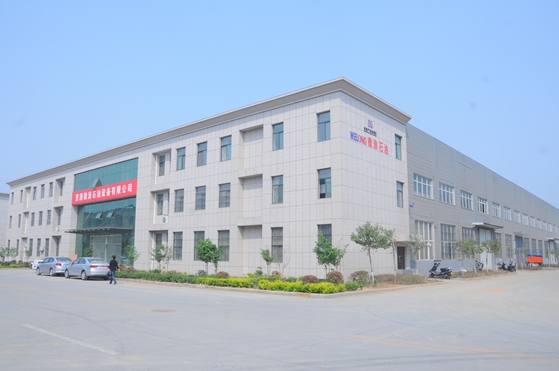
CHINA WELONG - 20+ years manufactuer in oilfield tools