What Is a Rolling Mill Roll and Its Role in Steel Rolling
Every flat steel product that comes out of a mill has been squashed between two or more rollers under tremendous pressure. The part that provides this shaping is called a milling roll. It is the single most critical tool in any rolling mill. Milling rolls do much more than squeeze metal. They create the thickness profile, surface polish, and flatness of the completed strip. This book describes the true purpose of a milling roll inside a steel rolling mill, and the reasons why each choice in its design, material, and installation affects the whole production line.
What Is a Milling Roll and How Does It Shape Steel During Rolling?
The Basic Function of a Milling Roll
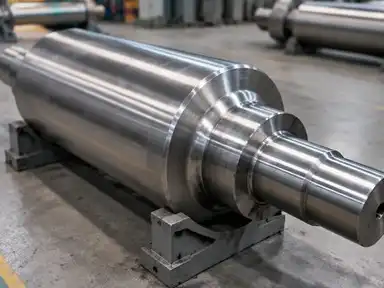
A milling roll is a heavy cylindrical precision-engineered tool that revolves against the steel strip, reducing its thickness and forming the profile. The strip is passed through the roll gap, and the milling roll, under a regulated pressure, elongates the metal and compresses it. The shape of the roll and the forces exerted control precisely how the steel will flow. You can't get steel rolled to today's strict thickness tolerances without a correctly constructed set of milling rolls.
Plastic Deformation and the Roll Gap
Steel rolling is based on plastic deformation, i.e., a permanent change of shape without splitting of the metal. The ultimate thickness of the strip leaving the mill stand is determined by the roll gap between two milling rollers. Operators manage the roll gap by means of hydraulic or mechanical screw-down devices. The milling roll itself must be sturdy and stable. Any roll deflection, even a small amount, will generate detectable thickness variations along the strip, so a milling roll must be strong and have predictable elastic behavior.
Influence on Final Product Geometry
Apart from basic thickness reduction, the milling roll also influences the crown, flatness, and profile of the steel strip. Crown is the modest thickening in the center of the roll barrel that compensates for roll deflection under load and helps keep the strip level throughout its width. Flatness is managed via roll bending, roll shifting, and selective roll chilling. A well-maintained milling roll provides the mill with a strong tool to fine-tune strip form. A worn or incorrectly ground milling roll can cause shape faults that no downstream operation can entirely fix.
Milling Roll Structure: Barrel, Neck, and Drive-End Functions in Steel Mills
The Barrel as the Working Surface
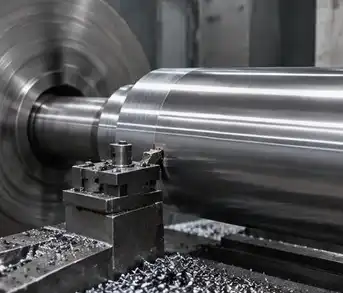
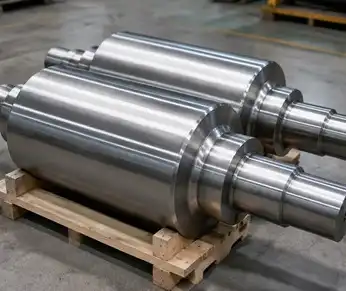
Barrel. The middle cylindrical part of the milling roll that meets the steel. Diameter, length, and surface polish of the strip directly impact strip quality. For work roll applications, the barrel is hardened and honed to a highly accurate profile, often with a little crown or tapered grind to regulate strip form. In hot rolling, the barrel may be deeply textured on the surface to grasp the incoming bar and give traction. Every detail of the barrel is important, since a defect on the surface is transferred immediately to the steel strip.
Roll Necks and Bearing Seats
The roll necks on each side of the barrel seat into the mill’s bearings. The necks need to be machined to exact tolerances since they carry the whole rolling load supplied by the bearings. Any wear, scoring, or out-of-round condition on the neck may cause vibration and unequal load distribution, which subsequently shows up as gage variation or surface markings on the strip. For this reason, the milling roll is routinely reground on the barrel and checked at the necks throughout every maintenance cycle.
Drive-End and Coupling Connection
The driving end of the milling roll is connected to the mill drive system by means of a spindle or universal connection. This part has to transfer very significant torque, particularly in roughing and intermediate stands, when big volumes of material are removed in each pass. The connection to the drive end must be robust to transmit torque smoothly and flexible to allow slight misalignment between the roll and the drive train. The drive end interface, if properly constructed, will maintain the milling roll operating smoothly under continuous load, but if improperly designed, it can generate harmonics that will increase wear across the whole mill stand.
How Does a Milling Roll Control Steel Thickness and Surface Profile?
Thickness Control Through Roll Gap and Force
The strip thickness is regulated by the combined effect of the roll gap setting, rolling force, and the strip tension. Therefore, the compression of the steel is generated by the mechanical element, i.e., the milling wheel, which is set at this stage. In modern mills, the screw-down is controlled in real time by automated gage control systems, based on data from thickness sensors. The systems depend on the milling roll reacting predictably and elastically to each modification. If a milling roll is not adequately heat-treated, ground badly, or fatigued, it will not be uniform, and thickness control will suffer.
Crown, Shape, and Profile Control
Strip shape is mostly controlled by roll crown and roll bending. Roll crown thickens the barrel in its center after grinding to prevent it from flattening under load. Actuators like roll bending jacks and changing gears help the milling roll fine-tune shape. These properties allow the mill to produce strip that is flat throughout its width, buckle-free, and ready for processing.
Surface Finish and Strip Cleanliness
Milling roll surface finish is transferred to steel strip. Cold rolling mills polish work rolls to microinch roughness for paint adhesion, galvanising, or shaping. Hot rolling produces oxide layers and a rougher roll surface, but the milling roll quality determines whether the descaled strip is clean and consistent. Operators monitor milling roll surface quality since a single damage point might ruin thousands of feet of strip before the roll is replaced.
Milling Roll Types: Work Rolls, Backup Rolls, and Intermediate Rolls in Steel Rolling
Work Rolls and Direct Strip Contact
The work rolls are the rollers that actually touch the strip. They are generally smaller in diameter than the other rolls in the stand and are composed of materials that may be hardened to extremely high levels. Work rolls wear more quickly than other rolls since they touch the strip directly and need to be reground or replaced often. The work roll is the roll that most directly affects surface quality and thickness accuracy, and thus gets the most attention regarding material selection, grinding technique, and campaign management.
Backup Rolls and Stand Stiffness
Backup rolls are located behind the work rolls in a four-high or cluster mill setup. They do not contact the steel strip, but contribute to the stiffness that prevents the work rolls from deflecting too much under rolling force. The use of backup rolls allows a smaller diameter work roll to be used by the mill in an effort to enhance gage control and strip form without reducing stand rigidity. The backup roll is normally bigger in diameter and constructed of a more crack-resistant material than the work roll, since it must endure numerous loading cycles over extended campaigns.
Intermediate Rolls in Cluster Mills
Intermediate rollers are inserted between the work rolls and the backing rolls in six-high or cluster mill arrangements. They provide the mill with an extra degree of flexibility in shape management, as they may be moved axially or bent individually to compensate for wave flaws that a four-high mill cannot entirely remove. Intermediate rollers are one of the main reasons why contemporary cold mills can produce strip for the most demanding applications like car exposed panels and high-grade electrical steel. To be used as part of an integrated system, each intermediate roll must be matched in diameter, material, and surface condition to the remainder of the stand.
How Does Milling Roll Material Influence Performance in Hot and Cold Steel Rolling?
Hot Rolling Mill Materials
In hot rolling, the milling roll has to be able to handle steel that is up to 1,000 degrees Celsius, water spray from headers that remove scale, and mechanical shock from each bar entering. In hot mills, work rolls are usually made of high-chromium cast iron, indefinite chill iron, or high-speed steel, depending on where they are placed and how long they need to last. These materials are both hard when hot and resistant to thermal fatigue. This keeps the roll surface from getting cracks too quickly. Choosing the right milling roll material for each hot mill stand has a direct effect on the length of the campaign and the quality of the transfer bar's surface.
Cold Rolling Mill Materials
When cold rolling is done at room temperature, much harder materials can be used for the milling roll. It is common to use forged steel work rolls made from alloyed chromium steel or high-chromium tool steel. These rolls are often through-hardened to make the hardness the same from the surface to the core. This even hardness lets the roll be re-ground many times over its lifetime. How many times a grinding roll can be reground before it hits its smallest width is affected by the material choice. This, in turn, affects the cost per tonne of strip made.
Material Standards and Quality Verification
Because the milling roll carries so much responsibility, manufacturers follow recognized material and testing standards during production. Standards for material composition, mechanical properties, and dimensional inspection give mills confidence that each milling roll will perform consistently. Quality verification typically includes chemical composition inspection, dimensional checks, dynamic balance testing, ultrasonic testing, and visual inspection. Buyers looking for a reliable milling roll should look for suppliers who document these inspections clearly and follow internationally recognized standards such as those published by ASTM International, which cover material testing methods commonly applied to rolling mill components.
Conclusion
The milling roll is the heart of any rolling mill and the decisive tool that turns a steel slab into a strip with precise thickness, profile, and surface quality. Every choice about roll structure, roll type, and roll material shapes the efficiency, stability, and product capability of the mill. Operators and procurement teams who invest time in proper milling roll selection consistently achieve better strip quality, longer campaigns, and lower cost per ton.
FAQ
1. How long does a milling roll typically last before regrinding?
Campaign length depends on roll type, mill configuration, and the material being rolled. Work rolls in cold mills may need regrinding after a few hundred tons, while hot mill work rolls often run several thousand tons before requiring redress. Backup rolls last considerably longer than work rolls.
2. What is the difference between a work roll and a backup roll?
A work roll contacts the steel strip directly and primarily controls thickness and surface quality, while a backup roll supports the work roll to prevent deflection. In a four-high mill, the backup roll never touches the strip but is essential for maintaining stand stiffness and shape control.
3. Can a worn milling roll be repaired?
Yes, in most cases. Milling rolls are routinely reground to restore their profile and surface finish, and they can often be reground multiple times before reaching minimum diameter. Backup rolls with surface damage can sometimes be weld-repaired and reground, although this depends on the extent of the damage and the roll material.
Source Reliable Milling Rolls with WELONG
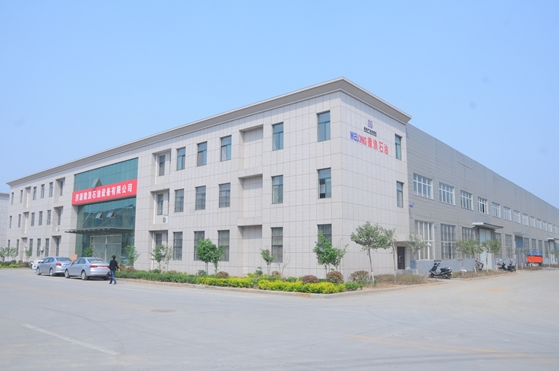
When your steel mill needs milling rolls that meet tight dimensional, material, and surface standards, WELONG is ready to support you. Founded in 2001 and certified to ISO 9001:2015 and API 7-1, WELONG is an international integrated supply chain service provider specializing in oilfield products and customized industrial solutions. The company manufactures milling rolls using forging, machining, welding, and assembly processes, with materials conforming to ANSI, ASTM, ASME, DIN, and GB standards, and full quality control including chemical composition inspection, dimensional checks, dynamic balance testing, UT testing, and visual inspection. With precision CNC equipment, flexible transport options, and terms including FOB, CIF, DDP, and DDU, WELONG streamlines procurement for mills worldwide. Reach the team today at [email protected] to discuss your milling roll requirements.
References
1. ASTM A681, Standard Specification for Tool Steels Alloy. ASTM International, West Conshohocken.
2. ASME B46.1, Surface Texture (Surface Roughness, Waviness, and Lay). American Society of Mechanical Engineers, New York.
3. ISO 9001:2015, Quality management systems — Requirements. International Organization for Standardization, Geneva.
4. Roberts, W. L., Hot Rolling of Steel. Marcel Dekker, New York.
5. Ginzburg, V. B., Steel-Rolling Technology: Theory and Practice. Marcel Dekker, New York.
6. Beddoes, J., and Bibby, M. J., Principles of Metal Manufacturing Processes. Elsevier Butterworth-Heinemann, Oxford.
Share your inquiry, get the quotation accordingly!
CHINA WELONG - 20+ years manufactuer in oilfield tools