Why Tricone Drill Bit Alloy Composition Matters for Hard-Rock Drilling
Every part of a tricone drill bit gets abused by hard-rock drilling, but the cutting structure takes the worst of it. The alloy of the teeth or tungsten carbide inserts influences whether the bit continues to cut effectively or fails before the run is complete. Alloy composition and its effect on wear rate, impact survival, heat tolerance, and gage protection control overall footage and trip economics. Buyers who understand the impact of alloys on tricone drill bit performance don’t make the error of selecting a bit based on IADC code alone; they look at the material science that drives actual drilling outcomes.
How Does Alloy Hardness Affect Tricone Drill Bit Wear in Hard Rock?
Hardness as the First Line of Defense
In strong abrasive formations such as chert, sandstone, and dolomite, the cutting structure of a tricone drill bit is continually being rubbed against rock harder than steel. The hardness, as in HRC or HV, is the point at which a tooth or insert starts to wear at that contact pressure. In this environment, a tricone drill bit with low-alloy steel teeth would lose its cutting volume in a matter of hours. A suitably hardened alloy surface resists wear and maintains a sharp cutting edge engaged with the formation.
Balancing Hardness with Toughness
Not just hardness. If you harden the alloy to the extreme, with no consideration for toughness, the teeth will become brittle and will chip under the hammer-like impact stresses when each cone tooth impacts the bottom of the hole. This is why the steel teeth of a tricone drill bit are made using a regulated alloy and heat treatment method, which provides a hard surface and a robust core. The result is a cutting structure that resists wear and still absorbs the repetitive stress of rotation and weight on bit.
Role of Hardfacing in Extending Bit Life
Premium tungsten carbide hardfacing is applied to the tooth surfaces of a steel tooth tricone drill bit to provide an additional wear-resistant coating on the most exposed locations. Hardfacing is applied selectively to tooth crests, flank surfaces, and gage rows where abrasive wear is most severe. When placed correctly, this hardfacing significantly reduces the rate of tooth wear and enables the tricone drill bit to retain its penetration rate over longer portions. If you are a buyer looking at bids on tricone drill bits, always inquire how and where the hardfacing is placed. Coverage varies greatly from one manufacturer to the next.
Tungsten Carbide Composition and Insert Toughness in Tricone Drill Bit Design
Why Tungsten Carbide Inserts Dominate Hard Rock
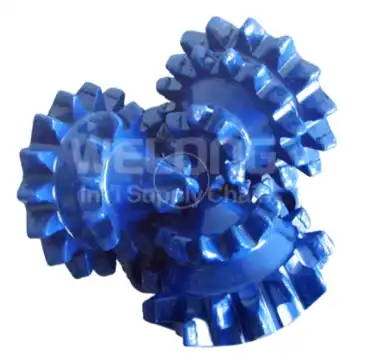
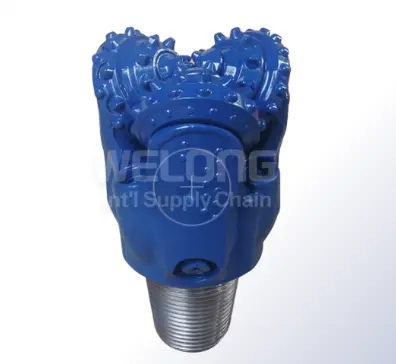
The machined teeth steel cutters have limited practical use and are used only in particularly hard and abrasive formations. Tungsten carbide tricone drill bits are appropriate for these circumstances because tungsten carbide is very hard, but also has the fracture toughness to withstand impact loads. The inserts are pushed and brazed into the body of the tricone drill bit and protrude from each cone to provide the principal contact points with the rock.
Grain Size and Cobalt Binder Ratio
The performance of a tungsten carbide insert is defined by the grain size and the ratio of the cobalt binder. Fine grain tungsten carbide is more wear resistant, being used in highly abrasive formations where cutting blades are required to remain sharp. Coarse-grain carbide provides superior fracture resistance and shock absorption, which is more appropriate for interbedded formations with hard stringers and impact loads. The cobalt-to-binder ratio affects both qualities. A lower cobalt percentage will enhance hardness, but it will decrease toughness. A greater cobalt content will increase impact resistance, but it will decrease wear life.
Insert Geometry and Mounting Integrity
Composition is equally as vital as form. Chiseled, conical, and wedge-shaped inserts all cut into the rock in various ways. Moderately hard formations are effectively cut using a chisel insert. Hard rock is violently fractured with a longer conical insert. The insert will remain in the tricone drill bit cone during high rotational speed operation depending on the mounting integrity, which is a function of the braze alloy and the press fit. That’s why discerning purchasers carefully evaluate the retention of inserts, not simply their grade, since a tricone drill bit with improperly mounted inserts can lose cutters long before the matrix is worn out.
How Does Cobalt Content Influence Tricone Drill Bit Insert Impact Resistance?
Cobalt as the Binder Phase
Within a cemented carbide insert, the tungsten carbide grains are held together by a binder phase, cobalt. The impact behavior of the insert is directly defined by its content. For a tricone drill bit used in hard rock drilling, the cobalt concentration is adjusted to provide sufficient resistance to fracture to absorb the stress of each tooth hit, without making it excessively soft and wearing away rapidly. This balancing is the core of the current carbide grade selection.
Low Cobalt Grades for Abrasive Wear
Where the deposit is abrasive but reasonably continuous, such as hard sandstone or thick limestone, a modest cobalt grade (6 to 8 percent) gives good wear resistance. The insert maintains its sharpness and dimensional stability so the tricone drill bit will cut effectively for thousands of rotations. Operators conducting lengthy bit runs in such formations frequently favor low cobalt inserts because they increase footage per bit and minimize trip frequency.
Higher Cobalt Grades for Intermittent Impact
In rocks with strong chert stringers or pyrite nodules, or alternating hard and soft layers, the cutting structure must resist repeated impact stresses. Cobalt grades higher at 10 to 13 percent make the insert more ductile to bend slightly under stress rather than fracture. A tricone drill bit of this grade may wear a little quicker but is far less prone to catastrophic insert loss. In exploratory drilling or in hard-rock intervals when bit trips are costly, operators may often choose greater cobalt grades.
Manufacturing Control of Cobalt Distribution
Even with the right cobalt percentage, performance depends on how uniformly the cobalt is distributed through the insert. Inhomogeneous cobalt distribution creates weak zones where cracks can initiate under impact, leading to insert chipping. Reputable manufacturers use controlled sintering processes to ensure that each insert in the tricone drill bit has a uniform microstructure. This kind of process discipline is part of what buyers evaluate when they review a supplier’s quality system, and it aligns with the expectations set by ISO 9001:2015 certifications.
Tricone Drill Bit Alloy Selection for Abrasive Rock and High-Load Conditions
Matching Alloy to Formation Abrasiveness
One of the most critical criteria in choosing alloys for a tricone drill bit is abrasiveness. Teeth and inserts tend to wear out quickly in highly abrasive formations, such as unconsolidated sand containing quartz or volcanic rock, but the rock itself may not be very hard. These circumstances make hardfacing coverage, insert wear resistance, and gage protection essential. A tricone drill bit, regardless of how well engineered for low-abrasion shale, will be consumed much too rapidly in abrasive rocks.
High-Load Drilling and Alloy Demands
A heavy weight on bit and fast rotational speed increase the stress on each cutting element of a tricone drill bit mechanically. Alloys must thus withstand both wear and plastic deformation at high contact stress. In high load applications, producers may frequently use heat-treated alloy steels with higher nickel or molybdenum content for milling tooth bits, and more robust carbide grades with properly balanced cobalt concentration for insert bits. This permits the tricone drill bit to bear larger loads without being damaged by cracking or yielding.
Gauge Protection as Part of Alloy Strategy
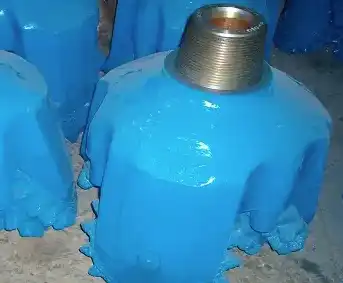
Gauge protection is also very tightly tied to the choice of alloy, since the gage row is responsible for maintaining the hole to full diameter. Premium tricone drill bit designs incorporate several gage protection features, including gage trimmers on the heel, tungsten carbide inserts on the gage surface of the cone, and hardfacing on the shirttail. Each of these components has its own alloy standard to resist wear in a particular location of the bit. A well-protected gage row supports keeping the tricone drill bit drilling a full-gauge hole, which promotes smoother drillstring dynamics and better cementing down the well.
How Do Carbide Grade and Insert Structure Improve Tricone Drill Bit Durability?
Carbide Grade Selection Beyond the Basics
Selecting a carbide grade is not just a matter of picking a single hardness value. Modern tricone drill bit manufacturers use application-specific grades formulated from grain size, cobalt concentration, and trace additives to satisfy specific drilling conditions. Certain grades include modest additions of chromium or vanadium carbides to enhance hot hardness, which is beneficial when tricone drill bit cones operate at high temperatures for long periods of time. Other grades emphasize fracture toughness for formations where bit bounce is a regular occurrence.
Insert Layout and Coverage Patterns
The insert arrangement controls how the tricone bit will interact with the rock on each rotation. Inserts are closely spaced to offer continuous coverage and smooth cutting action. This works well in soft to medium formations. Larger inserts are more widely spread and penetrate deeper with each stroke. They are used in hard rock because they concentrate impact energy into fewer contact points. The interaction of the tricone drill bit with the bottom of the hole is affected by the number of inserts per cone and the orientation and height of projection.
Advanced Manufacturing Techniques for Durability
The life of a tricone drill bit also relies on how the inserts are merged with the cone body. Modern manufacturing procedures increase insert retention and decrease the potential for insert loss during high-speed rotation. Controlled infiltration procedures, optimum braze alloys, and precise press fits all assist in guaranteeing inserts stay seated even under high stresses. When coupled with appropriate alloy selection and careful machining of the bearing surfaces, these procedures enhance the usable life of a tricone drill bit and improve drilling economics on each run.
Conclusion
The drilling performance of a tricone bit is not a background feature but the basis of the alloy composition. Tricone drill bit life and footage are a function of hardness, tungsten carbide grain structure, cobalt binder percentage, and insert shape. Operators that make these selections at the alloy level rather than just at the IADC code level regularly get greater penetration rates and reduced cost per foot in hard-rock drilling.
FAQ
1. Which alloy property is most important for hard-rock drilling?
For hard-rock drilling, a balance of wear resistance and impact toughness is most important. A tricone drill bit must have a hard cutting surface to resist abrasive wear and enough internal toughness to survive repeated impact without chipping or losing inserts.
2. How do I know if a tungsten carbide insert is the right grade?
The right grade depends on formation abrasiveness and the presence of hard stringers. Suppliers can provide grade data sheets showing cobalt percentage, hardness, and recommended applications, and experienced drilling teams can validate the choice through offset well performance records.
3. Can the same tricone drill bit design be used for different formations?
A single design can sometimes cover a range of formations, but performance is always better when the alloy package is tailored to the specific interval. Operators planning multi-section wells often stage different tricone drill bit designs for each section to maximize efficiency.
Source Hard-Rock Tricone Drill Bits with WELONG
When hard-rock drilling demands a tricone drill bit that holds up under real field conditions, WELONG delivers. Founded in 2001 and certified to ISO 9001:2015 and API 7-1, WELONG is an international integrated supply chain service provider with over 20 years of oilfield manufacturing experience. The company produces tricone drill bits from 4 ¾” to 36” in both milled tooth and tungsten carbide insert designs, with premium hardfacing, optimized carbide grades, and high-precision roller bearings built for high WOB and high RPM service. With strict quality control, flexible transport options including sea, air, and rail, and terms such as FOB, CIF, DDP, and DDU, WELONG streamlines procurement for operators worldwide. Contact the team today at [email protected] to discuss your tricone drill bit requirements.
References
1. API Spec 7, Rotary Drill Stem Elements. American Petroleum Institute, Washington, D.C.
2. ISO 9001:2015, Quality management systems — Requirements. International Organization for Standardization, Geneva.
3. ASTM B777, Standard Specification for Tungsten Base, High-Density Metal. ASTM International, West Conshohocken.
4. ASM Handbook Volume 2, Properties and Selection: Nonferrous Alloys and Special-Purpose Materials. ASM International, Materials Park.
5. Upadhyaya, G. S., Cemented Tungsten Carbides: Production, Properties, and Testing. William Andrew Publishing, Norwich.
6. Rabia, H., Oilwell Drilling Engineering: Principles and Practice. Graham & Trotman, London.
Share your inquiry, get the quotation accordingly!

CHINA WELONG - 20+ years manufactuer in oilfield tools