Die Collar Fishing Tool for Drill Pipe & Tubing
A die collar fishing tool is one of the most dependable options when a string of drill pipe or tubing is left in the hole and the top of the fish is still within reach. Instead of relying on a smooth, wide catch, it cuts its own threads into the outside of the fish, creating a mechanical connection strong enough to pull, jar and rotate. This article walks through how the tool grips, where it is used, how it compares with an overshot, how its guide handles misaligned fish, and why it still works when the bore is plugged.
How Does a Die Collar Fishing Tool Engage the Outer Surface of Drill Pipe?
Threading Action on the Pipe Body
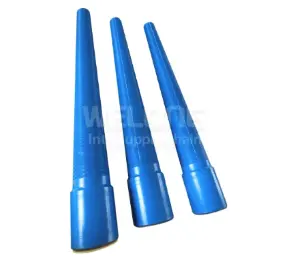
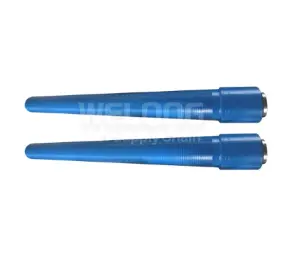
The die collar fishing tool is a hollow, tapered sleeve whose inner wall carries hardened, thread-form cutting teeth. When the crew lowers it over the top of the fish and applies right-hand rotation with light weight, those teeth bite into the steel and form a fresh thread as the tool advances. This self-made thread gives the string a firm, continuous contact area instead of a few scattered grip points, which is why operators trust it for heavy pulls.
Taper Design and Load Transfer
Because the bore of a die collar fishing tool narrows gradually from the mouth to the upper end, the cut thread tightens as the tool is run further down. The taper spreads tensile load along many turns of thread rather than concentrating it at one shoulder. Rig crews value this behavior when a stuck string requires sustained tension, repeated jarring or a long, slow pull to free the pipe.
Heat-Treated Steel and Cutting Quality
The performance of any die collar fishing tool depends on the steel behind its teeth. Properly heat-treated alloy keeps the cutting edges sharp through repeated engagements while the body remains tough enough to take impact from jars. Suppliers that follow documented quality systems, such as ISO 9001:2015 and API 7-1 practices, give buyers consistent hardness, accurate thread geometry and predictable results from one tool to the next.
Die Collar Fishing Tool Applications for Tubing, Casing and Dropped Downhole Tubulars
Recovering Tubing Strings
Tubing that parts at a connection or corrodes through leaves a clean, round stub that suits a die collar fishing tool very well. Because the tool cuts directly into the wall, it works across a wide range of tubing sizes and weights when matched to the correct catch diameter. Many workover teams keep several sizes on the rack so they can respond quickly once the fish top has been confirmed.
Casing Pieces and Short Tubulars
Beyond tubing, a die collar fishing tool can be run to retrieve short casing joints, pup joints and similar tubulars that have fallen or been left after a cutting operation. Its strong thread engagement lets the crew lift heavier objects with confidence. Material quality matters here, and engineers often compare steel performance against published standards from ASTM International when specifying tool grades for demanding wells.
Dropped Tools and Parted Drill Collars
When a heavy tubular drops during a trip or a drill collar parts, the exposed outer surface is usually all the crew has to work with. A die collar fishing tool turns that exposed steel into a secure handle, letting the rig bring the object back with a steady, controlled pull and return the wellbore to normal operations without unnecessary delay.
Die Collar Fishing Tool vs. Overshot: When to Choose Each External Catch Tool
Different Gripping Principles
An overshot uses a spiral grapple or basket that wraps around the fish and tightens under pull, while a die collar fishing tool forms its own thread in the metal. The overshot is fast and releasable, which suits clean, undamaged fish tops. The die collar fishing tool is chosen when maximum holding strength is the priority, since a cut thread resists slipping under severe loads.
Choosing by Fish Condition
Fish condition guides the decision. If the top is flared, worn or oddly shaped, a die collar fishing tool can still carve a thread in sound metal below the damage, giving a reliable catch where a grapple may struggle. If the top is clean and a quick release is wanted, many crews run an overshot first and keep the die collar fishing tool as a strong follow-up option.
Planning a Fishing Assembly
Experienced fishing supervisors seldom treat the two tools as rivals. They build a program in which each has a role, and the die collar fishing tool is often the final, high-strength choice when jars, accelerators and a long pull are expected. Preparing both tools in advance saves valuable rig time and gives the crew flexibility if conditions change downhole.
Die Collar Guide Design for Retrieving Misaligned Drill Pipe and Tubing
Centering the Fish Top
In deviated or washed-out holes, the fish rarely stands in the middle of the wellbore. A guide fitted to the die collar fishing tool funnels the fish top toward the cutting section, correcting small offsets before the teeth make contact. This keeps the first thread clean and square, which directly improves the strength of the final connection.
Guide Shapes for Different Hole Conditions
Guides come in several forms, including flared mouths, extended skirts and bent leads, each designed for a specific situation. A flared mouth helps a die collar fishing tool pick up a leaning fish, while a longer skirt provides stability in larger holes. Selecting the right guide at the surface can decide whether the catch takes minutes or hours.
Matching the Guide to the Tool Body
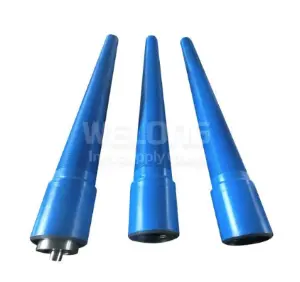
A guide only helps when it fits the tool body precisely and withstands rotation, circulation and jarring. For this reason, a well-made die collar fishing tool is machined as a complete system, with guide, body and cutting section sharing tight tolerances. Customized dimensions are available from specialist manufacturers, allowing crews to match a particular hole size and fish profile.
How Does a Die Collar Fishing Tool Recover Tubulars with Blocked Internal Bores?
Working From the Outside
Many internal catch tools depend on a clear bore, but a die collar fishing tool needs no access to the inside of the pipe. Because it grips the outer wall, sand, cement, scale or debris inside the fish has no effect on the connection. This independence makes the tool a practical first choice whenever the condition of the internal passage is unknown.
Circulation Through the Tool
Most designs allow fluid to pass through the string above the die collar fishing tool, so the crew can wash around the fish top and clear fill before engagement. Cleaner contact surfaces give the teeth a better start and reduce the number of attempts required. Once the thread is cut, the pull can begin immediately, even if the tubular is packed solid.
Pulling and Releasing the Fish
After the connection is made, the crew can apply tension, rotate or jar as the situation demands, then bring the recovered pipe to surface. At the rig floor, the threaded fish is backed out of the die collar fishing tool, and the tool is inspected and prepared for its next run. Dependable manufacturing helps these tools serve many jobs.
Conclusion
The die collar fishing tool remains a strong external catch solution because it cuts its own thread, spreads load across a long contact area and works regardless of what lies inside the fish. Matched with the right guide and a sound fishing plan, it can recover drill pipe, tubing, casing pieces and dropped tubulars with confidence. Choosing a supplier with certified quality control and customization ability adds further security, helping operators keep wells productive and project schedules on track. For any team planning ahead, stocking the right sizes before a job begins is a simple step that pays off quickly.
FAQ
Q: What is a die collar fishing tool used for?
A: It is used to retrieve drill pipe, tubing, drill collars and other tubulars by cutting threads onto the outer surface and gripping the fish securely.
Q: Can a die collar fishing tool work when the pipe bore is blocked?
A: Yes. Because it engages the outside of the fish, internal fill or debris does not affect the connection, so retrieval can proceed as planned.
Q: How do I choose between a die collar fishing tool and an overshot?
A: Choose a die collar fishing tool when maximum holding strength is needed or the fish top is damaged; choose an overshot for quick, releasable catches on clean tops.
Contact WELONG for Your Die Collar Fishing Tool Needs
Founded in 2001, China Welong is a professional international integrated supply chain service provider focused on oilfield products and customized solutions. We are certified to ISO 9001:2015 and API 7-1 of die collar fishing tool, and our strict quality control delivers durable products and dependable service worldwide. Whether you need standard sizes or a tailored design, our team is ready to help. Send your specifications and questions to [email protected] today, and let WELONG support your next fishing operation with the finest supply chain from China. We look forward to hearing from you and building a lasting partnership.
References
1. American Petroleum Institute. (2021). API Specification 7-1: Specification for Rotary Drill Stem Elements. Washington, DC: API Publishing Services.
2. Bourgoyne, A. T., Millheim, K. K., Chenevert, M. E., & Young, F. S. (1986). Applied Drilling Engineering. Richardson, TX: Society of Petroleum Engineers.
3. Mitchell, R. F., & Miska, S. Z. (2011). Fundamentals of Drilling Engineering. Richardson, TX: Society of Petroleum Engineers.
4. Aadnoy, B. S., Cooper, I., Miska, S. Z., Mitchell, R. F., & Payne, M. L. (2009). Advanced Drilling and Well Technology. Richardson, TX: Society of Petroleum Engineers.
5. Hossain, M. E., & Al-Majed, A. A. (2015). Fundamentals of Sustainable Drilling Engineering. Hoboken, NJ: Wiley.
6. Adams, N. J. (1985). Drilling Engineering: A Complete Well Planning Approach. Tulsa, OK: PennWell Books.
Share your inquiry, get the quotation accordingly!

CHINA WELONG - 20+ years manufactuer in oilfield tools