Drill Pipe vs Drill Collar: Explore Their Differences
All those engaged in drilling operations, from the rig manager to the drilling engineers planning well construction, need to understand the difference between drill pipe and drill collar. Both of these components are important parts of the drill string. However, they have quite different functions and are subjected to various loading conditions. Drill collars are placed near the bit to provide weight and stiffness to the drill string. This allows the operator to manage the bit performance and to steer the well. Conversely, the drill pipe conveys rotational power and tensile strains from the surface. This article discusses structural distinctions, functional roles, operational linkages, and certain drilling situations in which drill collars are must-haves, not nice-to-haves.
What Is the Main Difference Between Drill Pipe and Drill Collar?
Understanding Weight and Rigidity Characteristics
The main difference between drill pipe and drill collars resides in their construction and the load they are designed to bear. Drill pipe is relatively light and flexible; its main purpose is to transfer torque from the surface and to carry bending and tension stresses. Conversely, drill collars are heavier and stiffer and are designed to give weight-on-bit and to keep the drill string stiff in the vicinity of the wellbore. Drill pipe is not a significant contributor to bit loading. The weight of a drill collar is applied by gravity, pressing the drill bit into the formation. This structural distinction is important to understand how both components interact during drilling and why both are required in most drill string combinations.
Material and Manufacturing Distinctions
Drill pipes and drill collars are made from various grades of material, and they undergo different heat-treatment techniques. Drill collars are commonly constructed from AISI 4145H or AISI 4145H MOD steel, quenched and tempered to API strength and hardness specifications for the high-stress service downhole. The material selection allows the drill collars to resist the compressive and bending forces that develop around the bit. Drill pipe is also constructed from high-strength steel grades, but it doesn’t have to be as hard since the main loading is tensile and not compressive. The material parameters are determined by the distinct basic operating conditions demanded of each component.
Size and Outer Diameter Range
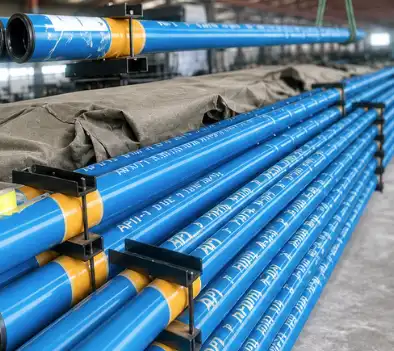
Drill collars have an exterior diameter between 3 1/8 and 11 inches, and are not typical diameters for drill pipe, which shows their specific use. Drill collars of larger diameter are stiffer and weigh more per unit length than drill pipe. This relative size enables drill string designers to place drill collars at the lower end of the drill string, where weight and rigidity are most desirable. When you look at drill string components, it is obvious at a glance which pieces are drill collars and which are drill pipe due to the huge variation in outside diameter.
Drill Pipe and Drill Collar: Comparing Their Functions in a Drill String
Tensile Load Management by Drill Pipe
Drill pipe is designed to withstand the tensile stresses due to the weight of drill string components and the forces exerted at the surface. As the drill string progresses further into the wellbore, the weight builds up and puts great stress on the top drill pipe sections. The pipe must be able to securely carry this weight while delivering rotating power from the surface. A drill collar farther down in the string adds to these tensile stresses, but is not intended principally to handle tension loads. This difference in function explains why drill pipe has certain minimum yield strength criteria and why drill string design must be carefully considered to avoid overstressing the higher drill pipe sections.
Weight-on-Bit Application Through Drill Collar
A drill collar is a weighted pipe used to provide gravity weight on the drill bit to provide the downforce needed to cut rock and advance drilling. Drill collars are dense and large, and their weight may be accumulated in a confined space. Drill collars are placed by drilling engineers just above the bit so that there is as much weight as possible on the bit, but not too much weight further up the string, thus increasing the tension pressures. The choice of size and number of drill collars directly controls the weight available on the bit, and hence the drill collar specification is an important part of the design of the drilling program.
Drill String Rigidity and Directional Stability
A drill collar adds stiffness to the bottom drill string, enhancing directional stability and preventing buckling under compression. This stiffness maintains the intended wellbore trajectory in deviated wells, preventing the drill string from folding back on itself. Drill pipe is more flexible and would buckle under stress if it were placed directly above the bit without the support of a drill collar. The stiffness difference is the reason you will always find drill collars just above the bottomhole assembly independent of well type or drilling technique in current drill strings.
How Do Drill Pipe and Drill Collar Work Together During Drilling?
Coordinated Load Distribution in the Drill String
A successful drill string design is a compromise between the tensile load-bearing capability of the drill pipe and the weight and stiffness contribution of the drill collars. The higher portions of drill pipe carry the whole weight of the lower drill string and drill collar assembly. As the string gets deeper, engineers choose drill pipe grades with the right yield strengths to manage the combined loads . These loads are also supplied by drill collars farther down the string, but they also serve the crucial role of putting weight-on-bit. This integrated layout ensures each component works within its design capabilities and that the drilling goals stated in the well program are achieved.
Sequential Component Assembly and Connection
Drill strings are assembled by connecting drill collars and drill pipe in a precise order to improve drilling performance. Drill pipe usually refers to the top and center of the string that provides the rotation and tensile strength. Placed directly above the bottomhole assembly (which includes the bit and specialized equipment), drill collars are used in quantities and sizes according to the weight-on-bit required. This assembly procedure is designed before drilling starts and is generally not changed until input from drilling performance indicates changes.
Integrated Response to Drilling Conditions
As the drilling advances and the formation attributes change, the drill pipe and drill collar combination adjusts to the different drilling circumstances. For tougher formations, higher weight-on-bit may be achieved by increasing drill collar sections, with drill pipe taking up the corresponding increase in tensile load. The flexibility of drill pipe allows the wellbore geometry and hole condition to be changed, while the stiffness of drill collars preserves the efficiency of drilling. This integrated response capability illustrates how drill pipe and drill collars work together synergistically to keep the drilling going even when downhole circumstances change.
Key Structural Differences Between Drill Pipe and Drill Collar Components
Thread Design and Connection Methods
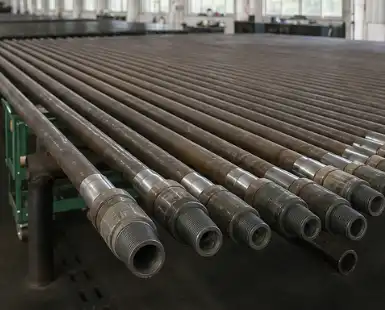
Special threads are designed into drill collars for the high-stress connections necessary in the lower drill string. Drill collars equipped with pressed steel thread guards are given further protection and are also protected from damage to the threads during handling and installation. Drill pipe connections, while equally important, have a different thread shape because drill pipe connections must focus on transmitting tensile loads while tolerating some angular misalignment. The thread guards on the drill collars show the more severe mechanical environment and greater loads in this component.
Internal Bore Configuration and Drilling Fluid Flow
The bore size is not the key design motivation for drill collars; hence, they often have smaller internal bores than drill pipe. The constricted bore allows for faster fluid velocity through drill collars, therefore enhancing hole cleaning effectiveness in the immediate area of the bit. Drill pipe usually has a bigger inside diameter to reduce pressure drop throughout the string and to allow higher flow rates of fluid. The reason for this variance is that the top and lower parts of the drill string have differing hydraulic needs.
Stress Relief Features and Design Details
A drill collar has stress relief grooves and bore-back features to spread out stress concentrations and lessen the potential for fatigue cracking in service. These design elements are a consequence of the tremendous pressures drill collars endure in service. The heat treatment of AISI 4145H modified material (quenching and tempering) produces a robust, strong structure that can sustain these loads without permanent deformation. Drill pipe is likewise subjected to high loads similar to drill collars, but does not need the same specific stress-release features since loading patterns are fundamentally different than drill collar working circumstances.
Weight and Density Relationship
A drill collar is solid, and a drill pipe is hollow; hence, a drill collar is a lot heavier per foot than drill pipe of the same outside diameter. This link between weight and density is purposeful; drill collars are designed to add weight. A typical drill collar may weigh 150-200 pounds/foot, but a drill pipe of equivalent diameter would weigh considerably less because of its hollow design. And this difference in weight is the reason drill collars are placed in the lower drill string.
Which Drilling Conditions Require Drill Collar Rather Than Drill Pipe?
Deviated and Horizontal Well Drilling
In deviated wells, drill collars are used to keep the wellbore trajectory on course and to avoid excessive buckling of the drill string as it gains angle. Drill collars are used to provide stiffness to the directional drilling equipment for efficient operation and to maintain the desired inclination of the drill string. In highly deviated or horizontal sections, the concentration of drill collars directly above the bottomhole assembly becomes even more crucial. Drilling engineers must then carefully pick the size and number of the drill collars to balance the weight-on-bit available against the stability requirements of the anticipated wellbore shape.
Deep Wells Requiring Significant Weight-on-Bit
Drilling into deeper, harder rocks usually requires a high weight-on-bit to achieve acceptable drilling penetration rates. The main way this force is delivered is via the weight of the drill collars. As wells become deeper, the number of drill collars usually rises to give the required bit loading. Engineers may fine-tune the weight-on-bit available from the specified drill collar assembly by choosing multiple drill collar diameters (from 3 1/8 inches to 11 inches).
High-Temperature and Corrosive Service
In wells where magnetic interference must be reduced, or where corrosive circumstances require better material qualities, non-magnetic materials or specific grades of drill collars are required. The non-magnetic drill collar option enables MWD and directional tools to operate without magnetic interference from drill collar components. In sour service or corrosive settings, material selection for drill collars becomes crucial, and manufacturers such as China Welong have specific drill collar grades that are designed for these harsh environments.
Controlled Drilling in Sensitive Geological Formations
Precise management of weight-on-bit is critical in drilling weak zones, depleted reservoirs, or formations susceptible to overpressure. Drill collars help drilling engineers to apply the right amount of weight to the drill bit to bore efficiently without undermining the formation. Gravity releases the weight in a controlled way instead of a forceful mechanical movement. In these cases, the selection and placement of drill collars are key components of the drilling technique.
Conclusion
The role of the drill pipe and the drill collars in the drill string are fundamentally distinct yet complementary. Drill pipe transfers power and supports tensile stresses. Drill collars give weight-on-bit and preserve the stiffness of the drill string. Understanding these distinctions helps drilling engineers build efficient drill strings that optimize drilling efficiency while safeguarding equipment integrity. Quality drill collar buying from experienced suppliers such as China Welong has shown consistent performance in a wide range of drilling situations and complex wellbore geometry.
FAQ
1. What is the primary reason for using drill collars in a drill string?
A drill collar provides weight-on-bit through gravity and maintains rigidity in the lower drill string. These functions enable controlled drilling performance, directional stability, and protection of drill pipe from compressive buckling. Without drill collars, drill string design would be significantly compromised, particularly in deviated and deep wells.
2. What material grades are used for manufacturing drill collars?
Drill collars are typically manufactured from AISI 4145H or AISI 4145H MOD steel, quenched and tempered according to API standards. These materials provide the strength, hardness, and fatigue resistance required for the extreme stresses experienced by drill collars in service. Non-magnetic versions are available for applications where magnetic interference must be minimized.
3. How do I determine the correct drill collar size and quantity for my well?
Drill collar selection depends on the required weight-on-bit, wellbore geometry, well depth, formation hardness, and drilling method. Drilling engineers typically calculate weight requirements and select drill collar sizes from the available range (3 1/8 inches to 11 inches OD) to achieve the target weight without overloading upper drill pipe sections. Consultation with experienced drilling professionals is recommended for complex well designs.
Source High-Quality Drill Collars From WELONG
Maximize drilling efficiency and reliability with premium drill collars from China Welong. Our drill collars are manufactured from AISI 4145H MOD material, quenched and tempered to API standards, with available sizes from 3 1/8 inches to 11 inches OD. Each drill collar includes pressed steel thread protectors, stress relief grooves, and bore-back features for enhanced durability and extended service life. With over twenty years of oilfield equipment experience and ISO 9001:2015 and API 7-1 certifications, WELONG delivers drill collars engineered for demanding drilling conditions. Our quality control processes include comprehensive inspection, material certification, and dimensional verification. Whether you require standard slick drill collars, spiral designs, or non-magnetic configurations, we provide customized solutions matched to your well requirements. Contact WELONG at oiltools@welongpost.com to discuss your drilling program, request technical specifications, or place an order for drill collars that deliver consistent performance and long-term value.
References
1. Bourgoyne, A. T., Millheim, K. K., Chenevert, M. E., and Young, F. S. Applied Drilling Engineering.
2. American Petroleum Institute. Specification for Drill Stem Elements, API Specification 7-1.
3. Rehm, B., Williams, H. B., McClendon, R. T., and Greene, B. K. Managed Pressure Drilling: Recent Experience, Potential Efficiency Gains, and Future Opportunities.
4. Witt, M. J., and Harmathy, P. Drilling Hydraulics: Fundamentals, Design, and Optimization.
5. Rabia, H. Well Engineering and Construction: Drilling and Well Completion.
6. Mitchell, R. F., and Miska, S. Z. Fundamentals of Drilling Engineering.
Share your inquiry, get the quotation accordingly!

CHINA WELONG - 20+ years manufactuer in oilfield tools