Efficiency Unleashed - Exploring the Drilling Mud Motors Market Innovations
The drilling business globally continues to seek quicker rates of penetration, longer laterals, and better wellbore placement. The heart of this performance progression is the drilling mud motor, a positive-displacement downhole tool that transforms hydraulic energy from the drilling fluid into bit spin. But new developments in rotor geometry, stator design, seal technology, and material engineering are changing the capabilities of these tools. This paper explores the technologies, design concepts, and market trends that are driving the next generation of high-performance drilling mud motor systems, and what they imply for operators looking for better well-construction efficiency.
What New Technologies Are Transforming Modern Drilling Mud Motors?
Hollow Rotor Architecture for Higher Flow Capacity
One of the most important improvements in drilling mud motor design is the use of hollow rotor technology. This limits the amount of drilling fluid that can flow through the motor, thereby reducing horsepower production at high flow rates. Conventional solid rotors. By having a hollow rotor, you establish an internal bypass channel. This allows for better fluid flow without expanding the overall motor diameter. This design boosts the hydraulic horsepower supplied to the bit, allows for greater flow rates for enhanced hole cleaning, and lowers the pressure drop across the motor assembly during heavy extended-reach drilling operations.
Uniform Wall Thickness Stator for Greater Power Density
The stator is the flexible component that, in combination with the rotor, creates the seal chambers of a drilling mud motor. In the older stator designs, the rubber was thicker in certain areas surrounding the internal lobes, resulting in uneven stress distribution and localized heat accumulation during operation. Uniform wall thickness stator technology allows for a more level distribution of elastomer material over the stator bore, for more constant seal engagement, better heat dissipation, and increased power production per unit length. This enables operators to get more torque without expanding the length of the motor unit or sacrificing dependability.
Oil-Sealed Transmission Shaft for Extended Run Life
In the past, failures of the transmission shaft have reduced the single-trip operation duration of a drilling mud motor. The method uses oil-sealed transmission shafts to keep shaft bearings and universal joints clean and free from abrasive drilling fluid contamination. This closed design lowers wear on key components of the drive train and increases the time between motor pulls, allowing operators to drill longer sections before a trip is required to change the bottomhole assembly. Fewer trips and reduced well-construction expenses are the result of extended run duration.
Advanced Elastomer Compounds for Harsh Downhole Environments
Downhole temperatures and exposure to hydrocarbons, hydrogen sulfide, and carbon dioxide pose serious challenges to the elastomeric stator of a drilling mud motor. Development of new elastomer compositions with increased thermal stability, chemical resistance, and tear strength to retain seal function throughout broader temperature ranges, e.g. 120°C-150°C and above. These material breakthroughs enable motors to run consistently in hotter, deeper wells where prior rubber compounds would break down prematurely, widening the range of operations for directional drilling projects.
How Are Advanced Drilling Mud Motor Designs Improving Well Construction?
Reducing Non-Productive Time Through Longer Motor Runs
Every trip to change a failed or worn drilling mud motor means hours of non-productive time on the rig. Over the last 10 years, the average life of motors has been dramatically increased due to improvements in stator materials, seal technology, and shaft protection. Operators operating long horizontal or extended-reach wells benefit most as their bottomhole assemblies must stay effective for several hours of continuous drilling. The expense and delay of an unanticipated trip are eliminated when a motor can last the whole intended portion in one run, increasing the total well-construction timetable.
Enabling Precise Directional Control in Complex Trajectories
Adjustable bend housing (ABH) settings from 0° to 3° are available in contemporary versions of drilling mud motors, allowing directional drillers to optimize the build or turn rate without having to change the bottomhole assembly. More consistent control of the toolface is important for negotiating complicated three-dimensional well pathways, and is achieved via better stability of the bearing pack and less backlash in the drivetrain. A consistent directional reaction decreases the amount of corrective slides, prolonging rotary mode operation and enhancing the total rate of penetration into difficult geological formations.
Improving Hydraulic Efficiency for Better Hole Cleaning
The hydraulic performance of a drilling mud motor influences the power output and the quality of cuttings removal from the wellbore. Motors with enhanced flow channels and hollow rotor designs reduce parasitic pressure losses; hence, more hydraulic energy is accessible at the bit nozzles and annular transport. Better hole cleaning minimizes the chance of cuttings beds collecting in high-angle sections and thus reduces stopped pipe events and torque and drag difficulties, which may stop drilling altogether.
Supporting Larger Hole Sizes With Compact Motor Diameters
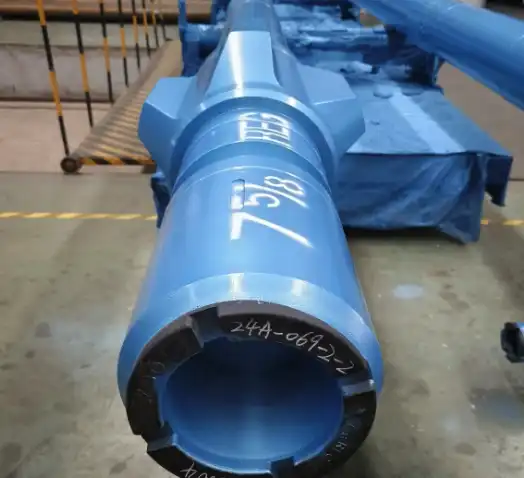
The drilling mud motor must be able to provide adequate torque and flow capacity within a diameter that will allow the intended wellbore, as operators aim to drill bigger production holes in fewer runs. Modern motors are capable of delivering greater power for a given outside diameter due to advances in rotor-stator lobe design and stator manufacture. China Welong provides mud motors with OD ranging from 1 7/8” to 9 5/8” to cover applications from slimhole exploratory wells to big-diameter development sections. The range enables operators to pick motors that are perfectly suited to their hole size program.
Innovative Features Driving the Evolution of Drilling Mud Motor Systems
Multi-Lobe Rotor-Stator Configurations for Higher Torque
The lobe ratio between rotor and stator determines the torque and speed characteristics of a drilling mud motor. Traditional designs used lower lobe counts that produced higher speed but lower torque. Newer multi-lobe configurations—such as 7/8, 9/10, or higher ratios—generate greater torque at reduced rotation speeds, which is better suited to polycrystalline diamond compact bit designs that perform optimally at lower RPM. This matching of motor output to bit requirements improves cutting efficiency and extends bit life across the drilling interval.
Modular Motor Section Design for Field Flexibility
Some manufacturers now offer modular drilling mud motor assemblies that allow operators to combine different power section lengths, bearing pack configurations, and bend housing settings at the rig site. This modular approach reduces the number of complete motor assemblies that must be stocked in the supply chain while giving the directional driller more configuration options. When geological conditions change unexpectedly during drilling, crews can adapt the motor assembly to the new requirements without waiting for a completely different motor to be delivered from the warehouse.
Enhanced Bearing Pack Durability for Harsh Drilling Conditions
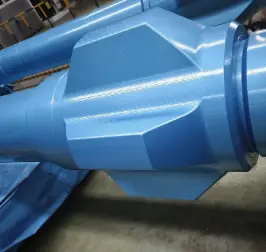
The bearing pack in a drilling mud motor absorbs the weight on bit, radial loads, and axial thrust generated during drilling. Traditional bearing assemblies experienced premature failure in abrasive or high-vibration environments. New bearing designs incorporate improved materials, optimized load distribution, and better lubrication systems that extend bearing life under demanding conditions. A more durable bearing pack keeps the motor operating within its design parameters for longer periods, supporting the extended run times that modern well-construction economics require.
How Does Smart Engineering Improve Drilling Mud Motor Efficiency?
Precision Rotor-Stator Fit for Optimal Seal Performance
The efficiency of a drilling mud motor depends fundamentally on the precision of the seal between rotor and stator. Too tight a fit increases friction and heat generation; too loose a fit allows fluid bypass that reduces volumetric efficiency. Advanced manufacturing techniques now allow tighter dimensional tolerances on both rotor outer diameter and stator inner bore, producing a more consistent interference fit across the motor's operating temperature range. Precision fit directly translates into higher conversion of hydraulic energy into mechanical rotation at the bit.
Computational Modeling of Motor Hydraulic Behavior
Engineers developing new drilling mud motor designs increasingly rely on computational fluid dynamics and finite element modeling to predict performance before physical prototyping begins. These simulations analyze fluid flow through the power section, stress distribution in the stator elastomer, rotor orbit behavior, and heat generation patterns. By optimizing the design digitally, manufacturers can reduce development cycles, identify potential failure modes earlier, and produce motors that deliver more predictable field performance. This data-driven approach represents a fundamental shift from trial-and-error development methods.
Quality Manufacturing Processes for Consistent Output
Even the best-designed drilling mud motor will fail to meet expectations if manufacturing quality is inconsistent. China Welong applies rigorous in-process and final inspection procedures throughout motor production, and the company's ISO 9001:2015 certified management system provides a structured framework for maintaining quality discipline across every manufacturing stage. When buyers require additional verification, third-party inspection through organizations such as SGS or DNV can be arranged. Consistent manufacturing quality ensures that each motor delivered to the field performs according to its published specifications rather than deviating due to production variability.
Integration With Real-Time Downhole Data Systems
Modern drilling programs increasingly pair the drilling mud motor with measurement-while-drilling and logging-while-drilling telemetry systems that transmit real-time downhole data to the surface. Motor operating parameters—such as differential pressure, torque, and vibration—can be monitored during drilling, allowing the driller to adjust weight on bit, flow rate, and rotary speed for optimal performance. This integration of mechanical motor technology with digital monitoring creates a feedback loop that maximizes drilling efficiency and helps crews avoid operating conditions that could damage the motor prematurely.
Future Trends Shaping the Development of High-Performance Drilling Mud Motors
Higher Temperature Ratings for Ultra-Deep Drilling
As the industry moves into deeper hydrocarbon reserves and geothermal energy, the drilling mud motor must be reliable at temperatures above existing standard specifications. Work on improved elastomer compounds, metal-to-metal seal alternatives, and thermally stable bearing materials is aimed at pushing the working envelope beyond 150°C toward 180°C and higher. Successful raising of the temperature rating of mud motors would allow improvements in drilling efficiency in deep gas wells, high-pressure, high-temperature formations, and geothermal projects where existing motor technology suffers from premature deterioration of components.
Sustainable Materials and Reduced Environmental Footprint
The materials and techniques required to create a drilling mud motor are impacted by environmental responsibility. Suppliers are investigating elastomer compositions with less environmental impact, recyclable metal parts, and production processes that use less energy and produce less waste. Performance and dependability remain the fundamental purchase criteria, but operators in areas with stringent environmental restrictions are now more concerned than ever about the sustainability credentials of their equipment supply chain. Companies that handle these expectations proactively put themselves in good stead for future procurement assessments.
Digital Twin Technology for Motor Performance Prediction
A digital twin is a virtual version of the actual drilling mud motor, updated with real-time operating data, and it is gaining momentum in the drilling sector. Engineers may input historical run data, current drilling parameters, and bottomhole assembly configuration into a digital twin model to anticipate the remaining life of the motor, optimize operating settings, and plan preventive maintenance before problems occur. This predictive capacity may change mud motor management from reactive replacement based on failure symptoms to proactive optimization based on continuous performance monitoring.
Deeper Integration With Automated Drilling Systems
As rig automation moves toward completely automated slide and rotate drilling sequences, the drilling mud motor must be capable of integrated operation with surface control systems. Future motors may have electrically adjustable bend settings, real-time torque feedback, and automatic stall detection that directly integrates with the rig’s programmable logic controller. This would enable the drilling equipment to react to downhole circumstances in milliseconds, rather than the driller’s response time, and might provide step-change increases in directional drilling accuracy and total rate of penetration.
Conclusion
Across rotor technology, stator materials, seal engineering and digital integration, the drilling mud motor industry is innovating in important ways. Hollow rotors, consistent wall thickness stators, oil-sealed shafts and precise manufacturing are lengthening motor run life, boosting power density and enhancing directional control. As the sector moves toward deeper, hotter, and more difficult drilling settings, providers such as China Welong continue to develop and offer motor solutions to assist operators in improving their well construction efficiency. Knowledge of these advancements assists the customer in selecting equipment that meets their operating objectives.
FAQ
1. What specifications does China Welong offer for drilling mud motor equipment?
China Welong supplies drilling mud motor assemblies with outside diameters ranging from 1 7/8 inches to 9 5/8 inches, adjustable bend housing angles from 0° to 3°, and temperature ratings of 120°C to 150°C. Features include hollow rotors for higher flow rates, uniform wall thickness stators for greater power output, and oil-sealed transmission shafts for extended single-trip run time.
2. What quality inspection services are available for drilling mud motor orders?
China Welong provides in-process inspection and final inspection as standard for every drilling mud motor order. When additional verification is required, the company can arrange third-party inspection through experienced organizations such as SGS or DNV, covering material certificates, dimensional checks, functional testing, and packing verification before shipment.
3. What shipping terms and transport options are available for international drilling mud motor orders?
International buyers can choose FOB, CIF, DDP, or DDU terms when ordering a drilling mud motor from China Welong. Transport options include sea freight, air freight, and railway, depending on destination, urgency, and cargo weight. The company coordinates export packing, documentation, and logistics to support timely delivery to the buyer's warehouse or project location.
Partner With WELONG for Your Drilling Mud Motor Needs
Searching for a reliable drilling mud motor supplier that understands oilfield quality expectations? China Welong delivers customized drilling solutions backed by ISO 9001:2015 and API 7-1 certifications, strict quality control, and over 20 years of oilfield manufacturing experience. From technical consultation and specification matching through production monitoring, third-party inspection coordination, and international shipping on FOB, CIF, DDP, or DDU terms, our team supports your procurement from start to finish. Whether you need standard configurations or tailored motor specifications, we are ready to help. Contact us today at oiltools@welongpost.com to discuss your next drilling project.
References
1. Robello Samuel, G. Downhole Drilling Tools: Theory and Practice. Gulf Professional Publishing, 2007.
2. Bourgoyne, A. T., Millheim, K. K., Chenevert, M. E., and Young, F. S. Applied Drilling Engineering. Society of Petroleum Engineers, 1986.
3. Rehm, B., Schubert, J., Haghshenas, A., Paknejad, A. S., and Hughes, J. Managed Pressure Drilling. Gulf Publishing Company, 2008.
4. Rabia, H. Oilwell Drilling Engineering: Principles and Practice. Graham and Trotman, 1985.
5. Pinkerton, J. L., and Hulse, G. K. "Motor Selection and Operating Practices to Avoid Stalling of Positive Displacement Downhole Motors." SPE/IADC Drilling Conference, 1994.
6. Downton, G., Hendricks, A., Klausen, T. S., and Pelfrene, G. "New Directions in Rotary Steerable Drilling." Oilfield Review, Spring 2000.
Share your inquiry, get the quotation accordingly!
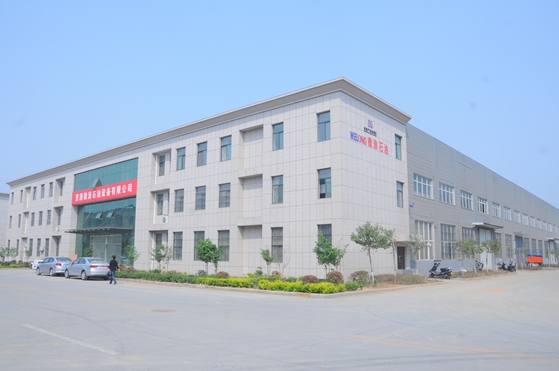
CHINA WELONG - 20+ years manufactuer in oilfield tools