Where to Buy Oil Christmas Trees: Supplier and Import Guide
Sourcing an oil christmas tree is not just about getting competitive bids from a number of providers. The equipment must be compatible with the wellhead design, pressure rating, production fluids, temperature range, and operating requirements of the particular oilfield project. Manufacturing capability of suppliers, material quality, testing methods, documentation standards, and logistical support should be considered by the buyers. The correct source for an oil Christmas tree enables dependable well control, safe production flow management, and interaction with existing surface infrastructure. This guide assists foreign importers in the selection process to find providers that can fulfill high oilfield criteria.
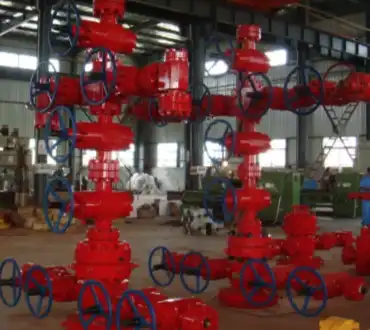
What Should Buyers Look for When Selecting an Oil Christmas Tree Supplier?
Verify Pressure Rating and Service Class Compatibility
An oil Christmas tree must be rated for the estimated wellhead pressure, production flow conditions, and servicing environment of the planned use. Buyers are required to provide the design pressure, normal working pressure, bore size, fluid composition (oil, natural gas, mud, and corrosive media such as H2S or CO2), working temperature range, and appropriate API standard level (PSL1-PSL4). The provider should check if the recommended equipment is suitable for these needs, and should not just supply a standard model. Wrong pressure or class selection might affect well safety and operating efficiency.
Assess Supplier Experience With Multiple Wellhead Configurations
Oilfield projects have diverse wellhead designs, casing head shapes, tubing programs, and connection configurations. A good oil Christmas tree provider should be able to accommodate a variety of configurations, including equipment for traditional vertical wells, for deviated operations, for subsea applications, and for specialty production situations. China Welong is dedicated to providing oilfield goods and tailor-made solutions, allowing worldwide customers to align wellhead equipment with their project needs. “We have experience in a range of well types, demonstrating manufacturing flexibility and technical depth.
Review Quality Management and Industry Certifications
By buying from a registered oil Christmas tree provider, you are more certain that the quality levels are maintained. China Welong has been certified to ISO 9001:2015 and API 7-1, which demonstrates a systematic quality management and conformity to oilfield equipment requirements. “Certifications are no guarantee of perfect products, but they are a sign of disciplined processes for material control, production planning, inspection, documentation, and continuous improvement. Buyers should examine how these certifications are precisely applied to the oil Christmas tree production process, and what internal quality checks are involved.
How to Identify a Reliable Oil Christmas Tree Manufacturer for Oilfield Applications?
Check for Long-Term Oilfield Manufacturing Experience
A good oil Christmas tree producer should have considerable expertise in manufacturing pressure-containing equipment for wellhead servicing. China Welong was created in 2001 and has been concentrating on oilfield goods for more than 20 years. Long manufacturing history means that the design problems, material behavior, production procedures, and field performance are well known. Buyers may gain trust by studying prior projects, inquiring about manufacturing facilities, understanding production procedures, and verifying whether the supplier keeps technical documentation from previous purchases.
Evaluate Communication During the Quotation Phase
The way an oil Christmas tree seller handles technical questions shows the seriousness with which they approach each purchase. A professional manufacturer would inquire about bore size, pressure class, operating temperature, production fluids, tubing program specifics, connection style, and relevant standards. They should also provide constraints or unique concerns. The supplier that can quote quickly in broad terms without any technical conversation may not have a complete understanding of the project or be prepared properly for modification. A good sign of future project support is good and transparent communication during the quote.
Verify Testing and Inspection Capabilities
An oil Christmas tree should be subjected to relevant hydrostatic pressure tests, visual inspections, dimensional checks, and functional verification prior to delivery. Ask vendors about their testing equipment, inspection methods, documentation requirements, and availability of third-party witnesses. China Welong carries out in-process and final inspection methods and may arrange third-party inspection by organizations such as SGS or DNV. Buyers aware of the extent of an examination may verify that quality control is extensive and recorded.
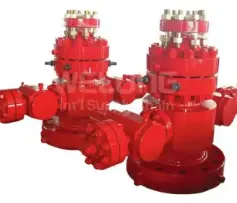
Essential Technical Capabilities of Professional Oil Christmas Tree Suppliers
Precision Machining of Wellhead Connection Surfaces
The oil Christmas tree should be firmly attached to the wellhead casing head and tubing programs, with dependable sealing and structural integrity. This demands accurate machining of the connecting surfaces, thread diameters, sealing grooves, and flange configurations. Professional suppliers should have appropriate machining centers, measurement tools, and quality control systems. Buyers may want dimensional inspection reports to ensure that essential connecting surfaces are within specified tolerances. During installation, poor machining accuracy may cause leakage, misalignment, or connection failure.
Material Selection and Traceability for Pressure-Containing Components
The materials used in an oil Christmas tree directly affect safety, corrosion resistance, and reliability. A capable supplier should maintain traceability for all major pressure-containing materials, including casing heads, tubing programs, valve bodies, and connectors. Material certificates should identify grade, mill source, and test results. When the oil Christmas tree is intended for corrosive service (H₂S, CO₂), special material grades may be required. Buyers should discuss corrosion requirements and material selection with the supplier before manufacturing begins, and reference standards such as ASTM International standards when specifying material properties.
Valve Integration and Safety System Design
Oil christmas tree equipment nowadays generally contains integrated safety valves, block and bleed arrangements, and control systems to manage the production flow and well pressure. A competent manufacturer should be adept at integrating hydraulic and pneumatic valves, testing safety devices, and ensuring all control components perform properly. The provider must provide documentation on the functioning of the valve, its pressure ratings, reaction times, and maintenance needs. Buyers should check that the suggested safety valve configuration fulfills project criteria and customer needs.
What Questions Should Importers Ask Before Purchasing Oil Christmas Tree Equipment?
What Exactly Is Included in the Equipment Scope?
The oil Christmas tree quote should include a full bill of materials, which importers should request. It must include the casing head, tubing programs, all connections, valves, safety devices, block and bleed arrangement, flanges, bolts, studs, seals, plugs, caps, shipping covers, lifting lugs, and nameplate information. The supply range is clear, so there is no uncertainty once the equipment arrives. It also enables the customer to compare various suppliers’ bids on a like-for-like basis. The supply of the accessories, such as installation tools, handbook documentation and suggestions for spare parts, should also be included.
What Standards and Specifications Apply to the Equipment?
An oil Christmas tree has to be developed and built according to the appropriate API standards, regional legislation and client-specific needs. Buyers should check whether API spec levels (PSL1 to PSL4), working classes (AA to HH) and pressure ratings (PR1 to PR2) apply to the order. They should also inquire about any extra certifications, pressure relief calculations, or material grades that may be needed. The expert supplier will reference the relevant standards in the technical proposal and will clarify any non-standard needs before manufacturing.
How Long Is the Production Schedule and When Can Inspection Occur?
Lead time is important to project planning. Buyers should request the anticipated production timeline of the oil Christmas tree, comprising material procurement, manufacture, inspection, documentation, and packing. They should also consider when inspection may be seen, and whether in-process inspections, final factory inspection, or third-party independent verification can be done. China Welong may collaborate with inspection agencies like SGS or DNV. With a specific timeframe and inspection plan, the equipment comes ready to be installed.
How to Choose an Oil Christmas Tree Supplier for Customized Wellhead Projects?
Provide Comprehensive Technical Requirements at the Beginning
The purchase of a custom-made oil Christmas tree starts with the correct technical requirements from the customer. Bore size, casing pressure rating, tubing working pressure, predicted production fluids (water cut, gas content, and corrosive components), temperature extremes, connection types, valve configurations, safety requirements, and any client-specific standards should be provided by project teams. The greater the information supplied at the inquiry stage, the better the provider can match the equipment to the real project. Incomplete requirements often result in design changes, delays, and additional expense.
Discuss Customization Capacity and Technical Flexibility
Not every oil Christmas tree provider can handle non-standard designs well. Buyers can inquire about supplier expertise with bespoke casing head configurations, customized tubing programs, integrated safety systems, or regional compliance needs. A bespoke oilfield solutions provider may revise common designs, create new combinations, and coordinate technical drawings with the customer. China Welong focuses on customized services and bespoke solutions, serving purchasers requiring equipment matched to unique wellhead designs and project limitations.
Plan for Documentation, Testing, and Post-Delivery Support
In addition to the actual equipment, purchasers should arrange for complete documentation of the oil Christmas tree. This comprises certified material reports, dimensional inspection certifications, pressure test records, pictures of the surface conditions, operation and maintenance manuals, assembly drawings, spare-part lists, and export compliance documentation. Professional providers should also be able to help with installation, give technical guidance on commissioning, and offer spare-part assistance throughout the lifetime of the equipment. Planning these services early will help the project run more smoothly.
Conclusion
In selecting an oil christmas tree provider, it is important to consider technical compatibility, production capabilities, quality assurance, customisation options, and logistical assistance. Buyers should check pressure ratings, working classes, fluid compatibility, connection types, and relevant requirements before confirming purchase. A certified supplier like China Welong can provide customized wellhead equipment with organized quality control, third-party inspection coordination, and dependable export assistance. A careful and conservative examination of the supplier and extensive technical preparation allow importers to acquire equipment that is well integrated with surface facilities and conducive to safe and efficient manufacturing operations.
FAQ
1. What pressure ratings and working classes are available for oil Christmas trees?
An oil Christmas tree can be manufactured in multiple pressure ratings (2000 PSI to 20000 PSI), working classes (AA through HH), and specification levels (PSL1-PSL4). The correct selection depends on the wellhead design pressure, tubing working pressure, expected temperature range, and applicable API standards for the project.
2. Can an oil Christmas tree be customized for H₂S or CO₂ service?
Yes. An oil Christmas tree can be equipped with special material grades and corrosion-resistant components when designed for sour service containing H₂S or CO₂. The buyer should inform the supplier about corrosive media composition, concentration, and operating temperature so appropriate materials can be selected before manufacturing begins.
3. What inspection and testing procedures are performed before delivery?
A professional oil Christmas tree supplier should perform in-process inspection, final visual inspection, dimensional verification, hydrostatic pressure testing, and functional checks before packing. Third-party inspection through organizations such as SGS or DNV can be arranged when required. Buyers should receive certified inspection reports confirming that all quality checkpoints have been completed.
Partner With WELONG for Your Oil Christmas Tree Supply
Ready to source a dependable oil Christmas tree for your oilfield project? China Welong specializes in customized wellhead equipment, pressure-containing products, and integrated oilfield solutions. With ISO 9001:2015 and API 7-1 certifications, our team delivers equipment that meets stringent quality and safety standards. From technical confirmation and material selection through final inspection and global logistics, we provide comprehensive support for importing oil christmas tree equipment. Sea, air, railway, FOB, CIF, DDP, and DDU delivery options are available. Contact WELONG today at oiltools@welongpost.com to discuss your wellhead requirements, request technical specifications, or receive a project-based quotation.
References
1. American Petroleum Institute. Specification for Wellhead and Christmas Tree Equipment, API Specification 6A.
2. American Petroleum Institute. Recommended Practice for Care and Use of Subsurface Safety Valve Systems, API Recommended Practice 14B.
3. International Organization for Standardization. ISO 10423: Petroleum and Natural Gas Industries—Drilling and Production Equipment—Wellheads and Christmas Trees.
4. Ourgoyne, A. T., Millheim, K. K., Chenevert, M. E., and Young, F. S. Applied Drilling Engineering.
5. National Academies of Sciences, Engineering, and Medicine. Safety Culture in the Oil and Gas Industry.
6. Grace, R. D., and Cudd, B. D. Advanced Blowout and Well Control.
Share your inquiry, get the quotation accordingly!

CHINA WELONG - 20+ years manufactuer in oilfield tools