Forged Step Shaft Heat Treatment: Processes and Performance
A forged step shaft owes much of its strength, wear resistance and service life to the heat treatment it receives after forging. Shafts with several diameters sit at the heart of gearboxes, pumps and the drive trains used in power tongs oil and gas equipment, where torque and shock loads are part of daily work. In the pages below, this article explains the main heat treatment routes, how each one shapes the steel, how crews control distortion, and how testing proves the result.
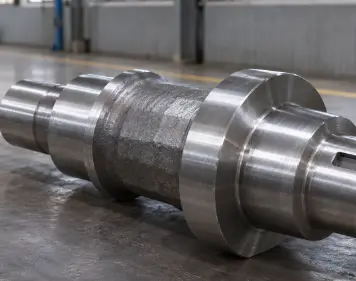
What Heat Treatment Processes Are Used for Forged Step Shafts?
Normalizing as the Starting Point
Most forged step shafts begin with normalizing, a controlled heating and air-cooling cycle that evens out the grain structure left by forging. The process prepares the steel for machining and for later hardening, and it is widely used for shafts that serve inside power tongs oil and gas drive systems, where predictable behavior during machining and service is highly valued.
Quenching and Tempering for Strength
For shafts that must carry heavy torque, quenching and tempering is the preferred route. The steel is heated, cooled rapidly in oil or polymer, and then tempered to the desired strength level. This combination gives power tongs oil and gas shafts a tough core that resists twisting, impact and fatigue under repeated loading.
Surface Hardening for Wear Resistance
Where a journal, spline or gear seat must resist wear, induction hardening or carburizing can be applied to selected zones of the step shaft. The hard outer layer protects the contact surface while the core remains tough. Many manufacturers of power tongs oil and gas components specify this approach for areas that see continuous rotation and sliding contact.
Stress Relief Before Final Machining
A low-temperature stress relief cycle is often added before finish machining so the shaft holds its shape through the last cuts. Equipment makers serving power tongs oil and gas customers appreciate this step because it supports tight tolerances on bearing seats and shoulders, helping the assembled unit run smoothly from its very first hour of work and well into long service.
How Does Normalizing Refine the Microstructure of a Forged Step Shaft?
Grain Refinement Through Recrystallization
When a forged step shaft is heated above its transformation range, the coarse, uneven grains from forging transform into a fresh, finer structure. Cooling in still air locks in that refined grain. For shafts that will end up inside power tongs oil and gas machinery, this uniform structure forms a dependable base for every step that follows, from rough machining to final inspection.
Improved Machinability and Consistency
A normalized structure cuts cleanly, giving machinists smooth surfaces and stable dimensions across every diameter of the step shaft. Shops producing parts for power tongs oil and gas equipment value this consistency, because it shortens machining time, extends tool life and allows each shaft in a batch to behave in the same predictable manner from one production run to the next.
Preparing the Shaft for Hardening
Normalizing also readies the steel for quenching by creating an even carbide distribution and removing forging variation. Shafts intended for power tongs oil and gas service then respond to hardening in a uniform way, reaching their target properties through the full section and delivering the strength that heavy-duty rotating parts demand.
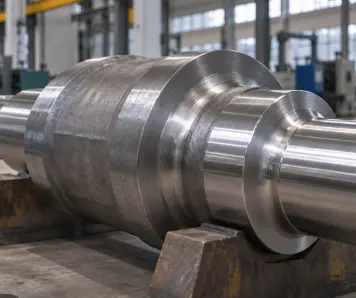
Quenching and Tempering a Forged Step Shaft: How Are Strength and Toughness Balanced?
Selecting the Quenchant and Cooling Rate
The choice of oil, water-based polymer or other quenchant sets how quickly the shaft cools and therefore how much hardness it gains. For a stepped geometry in power tongs oil and gas equipment, the heat-treater matches the cooling rate to the largest section so the entire shaft transforms evenly and reaches its planned strength with a smooth, even transformation.
Tempering to the Target Property Range
Tempering reheats the hardened shaft to a chosen temperature, relieving internal stress and trading a little hardness for a great deal of toughness. Adjusting that temperature lets manufacturers tune a power tongs oil and gas shaft to the exact balance of strength, ductility and impact resistance that the design requires, whether the priority is fatigue life or impact resistance.
Alloy Steels That Respond Well
Medium-carbon alloy steels containing chromium and molybdenum are popular for step shafts because they harden deeply and temper predictably. Their reliable response makes them a natural fit for power tongs oil and gas drive components, where large sections must reach uniform properties from the surface to the center of the shaft, even in large diameters.
Why Does Heat Treatment Distortion Affect Forged Step Shaft Straightness and Concentricity?
Where Distortion Comes From
Every forged step shaft has sections of different thickness, and these sections heat and cool at slightly different rates. Understanding this behavior lets engineers plan the process effectively. This is especially important for slender forged step shafts used in power tongs oil and gas assemblies, where straightness and concentricity directly influence bearing life and smooth torque delivery over many thousands of working cycles.
Fixturing and Vertical Hanging
Hanging a long shaft vertically in the furnace and quench tank lets gravity and uniform fluid flow work in the shaft's favor. Many heat-treaters supporting power tongs oil and gas manufacturers use custom fixtures that hold the part evenly, producing shafts that stay straight and require minimal correction afterward, which saves valuable time in the finishing shop.
Machining Allowance and Final Grinding
Leaving a sensible allowance on each diameter before heat treatment gives the machinist room to restore perfect geometry afterward. For power tongs oil and gas components, final grinding of journals and seats brings concentricity to the required tolerance and gives the finished shaft a precise, polished fit within the assembly, ready for bearings, seals and gears.
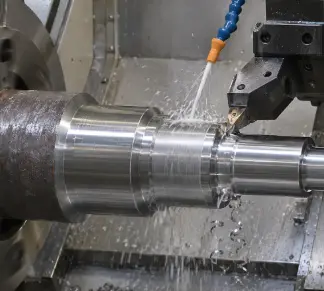
How Can Hardness and Tensile Testing Verify Forged Step Shaft Heat Treatment Quality?
Hardness Testing Across the Shaft
Brinell or Rockwell hardness checks at several positions confirm that the heat treatment reached its target across the whole step shaft. Quality teams supplying power tongs oil and gas customers record the readings for each batch, creating a simple, convincing record that the shafts are ready for service, and it gives inspectors a clear reference at every stage.
Tensile and Impact Verification
Test bars cut from the forging or an attached extension are pulled to measure yield strength, tensile strength and elongation, and Charpy bars confirm toughness. These results give buyers of power tongs oil and gas equipment objective proof that the shaft meets its mechanical requirements before it ever leaves the factory, which builds lasting confidence with every customer.
Documentation and Quality Systems
Complete test records, heat numbers and process logs build trust between supplier and customer. A manufacturer that works within an ISO 9001:2015 certified quality system keeps these records in order for every shaft, so buyers of power tongs oil and gas equipment can trace each part back to its heat treatment cycle and test results whenever a question arises.
Conclusion
Careful heat treatment turns a forged step shaft into a strong, accurate and durable component. Normalizing refines the grain, quenching and tempering balance strength with toughness, distortion control keeps the geometry true, and thorough testing confirms the result. For shafts used in power tongs oil and gas equipment, this complete approach delivers reliable torque transmission and long service life. Partnering with a certified supplier that controls every stage of production gives operators confidence that each shaft will perform as designed under demanding conditions, project after project. Consistent heat treatment is the quiet foundation of reliable machinery.
FAQ
Q: Why is normalizing used before hardening a forged step shaft?
A: It refines the coarse grain left by forging and creates a uniform structure, so the shaft machines cleanly and responds evenly to quenching.
Q: How is distortion controlled during heat treatment?
A: Manufacturers hang shafts vertically, use proper fixtures, leave a machining allowance and perform final grinding to restore straightness and concentricity.
Q: How is the heat treatment quality of a step shaft verified?
A: Hardness, tensile and impact tests, together with process records, confirm that the shaft meets its specified mechanical properties.
Source Precision Shafts and Oilfield Parts from WELONG
Founded in 2001, China Welong is a professional international integrated supply chain service provider specializing in oilfield products and customized solutions. Our ISO 9001:2015 and API 7-1 certifications and strict quality control mean every forged component we supply is built for lasting performance. If you need a forged step shaft, heat-treated step shafts, or parts for power tongs oil and gas equipment, our team is ready to help. Email us at [email protected] and let WELONG bring the finest supply chain from China to your next order. We look forward to supporting your team and building a lasting partnership with you.
References
1. ASM International. (1991). ASM Handbook, Volume 4: Heat Treating. Materials Park, OH: ASM International.
2. Krauss, G. (2015). Steels: Processing, Structure, and Performance (2nd ed.). Materials Park, OH: ASM International.
3. Totten, G. E. (Ed.). (2006). Steel Heat Treatment: Metallurgy and Technologies (2nd ed.). Boca Raton, FL: CRC Press.
4. Bhadeshia, H. K. D. H., & Honeycombe, R. W. K. (2017). Steels: Microstructure and Properties (4th ed.). Oxford: Butterworth-Heinemann.
5. Callister, W. D., & Rethwisch, D. G. (2018). Materials Science and Engineering: An Introduction (10th ed.). Hoboken, NJ: Wiley.
6. ASTM International. (2022). ASTM A370: Standard Test Methods and Definitions for Mechanical Testing of Steel Products. West Conshohocken, PA: ASTM International.
Share your inquiry, get the quotation accordingly!
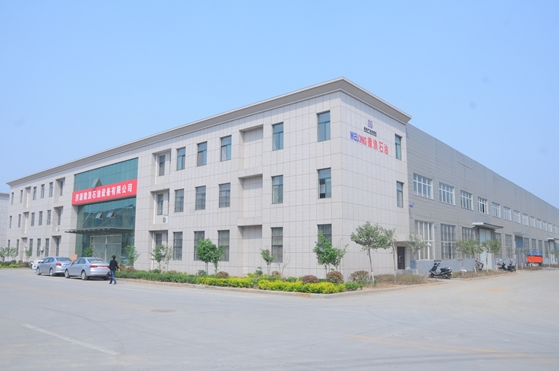
CHINA WELONG - 20+ years manufactuer in oilfield tools