Hole Opener in Oil and Gas: Applications and Advantages
In the oil and gas industry, the first hole is seldom the last. Operators often drill a smaller pilot hole and widen the hole to the size required for the conductor pipe, surface casing, or a solid cement sheath to improve accuracy. The hole opener performs this expansion. It is a robust downhole tool with cutters set around a hefty steel body and it transforms a guided pilot hole into a full gauge wellbore. This article discusses how a hole opener works, where it is utilised in oil and gas operations, how it enhances casing and cementing outcomes, how it operates in diverse formations and why so many drilling programs depend on it for wellbore preparation.
How Does a Hole Opener Enlarge the Wellbore in Oil and Gas Drilling?
The Basic Working Principle
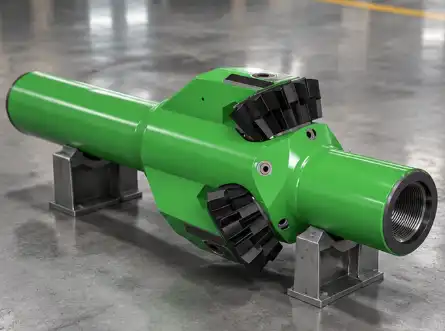
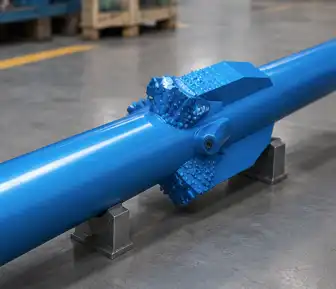
A hole opener is built up in the drill string above a pilot bit or bull nose. As the string spins, the pilot component follows the existing hole and the cutters on the tool body remove the ring of rock between the pilot diameter and the target diameter. The pilot handles direction already, so the hole opener gets to focus on cutting. This splitting of the operation affords greater precision than drilling a very big hole in one go.
Key Parts of the Tool
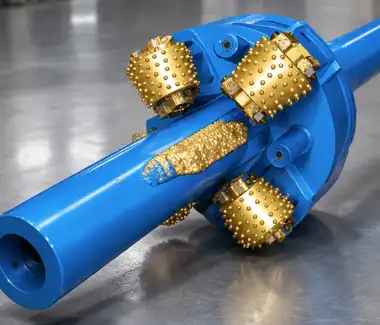
The usual hole opener is made of forged alloy steel and features three or more cutter arms or pockets with interchangeable cutters and jet nozzles pointed at each cutter. It is connected to the BHA by threaded connectors at the top and bottom. The body is commonly manufactured from AISI 4145H/4145H MOD or AISI 4330V and heat treated to withstand the high torque, bending and impact stresses seen when big amounts of rock are removed.
Hydraulics and Cuttings Removal
The drilling fluid goes down the string, through the tool, and out the nozzles . Jets cool the cutters, wipe their cheeks and wash the cuttings from the bottom of the hole so the rock is not re-ground. A well-designed hole opener offers equal hydraulic force to each cutter. This maintains rates of penetration and helps keep the larger area clean as cuttings migrate up the annulus.
Hole Opener Applications in Conductor Installation and Large-Diameter Well Drilling
Conductor and Structural Casing Holes
The first and heaviest string of pipe in most wells is the conductor. The hole for the conductor is frequently 26 in. to 36 in. or larger. Drilling that size straight may be slow and difficult. Thus, many operators will drill a tiny pilot hole and then run a hole opener to get the entire diameter. This offers you a vertical, sturdy base to drill the wellhead and all the casing strings that follow.
Surface Casing Sections
Surface casing must be drilled to an exact, in-gage hole. Surface casing protects freshwater zones and supports the blowout preventer. A hole opener helps teams achieve the desired size through shallow sediments, gravel, and sometimes hard layers. Running it after the pilot section also enables operators to record or inspect the pilot hole before enlarging it, when they are satisfied the trajectory is accurate.
Offshore and Deepwater Top-Hole Drilling
Offshore wells often start with massive top-hole portions drilled without a riser, with the returns flowing to the seabed. Under these circumstances, a hole opener used with a pilot bit enables the rig to drill and ream in one trip, saving important rig time. Its rugged body and interchangeable cutters are also suited to the soft unconsolidated seabed deposits typical of deepwater fields.
Enlarging Existing Wellbores
You utilise a hole opener not just while you’re drilling in the first time. Operators also use it to create a hole for an additional contingency casing string, widen undergauge portions or to prepare a section for a bigger completion. In such circumstances, the hole opener gives a technique to alter the hole size without redrilling the whole interval.
How Can a Hole Opener Improve Casing Clearance and Cement Placement?
Creating Proper Annular Clearance
The casing should have adequate room to run properly and have a uniform cement sheath. If the hole is too narrow, casing might hang up on ledges or tight areas. The hole is then reamed using a hole opener to the anticipated diameter to provide the clearance indicated in the casing program. This helps the case reach bottom with minimum drag and reaming runs.
Improving Cement Sheath Quality
A homogeneous cement sheath surrounding the casing is the key to good zonal isolation. If the annulus is thin on one side, mud might become trapped there and form channels in the cement. The hole opener produces a full gauge, round hole for improved casing centralisation and more thorough mud ejection. This results in a more durable cement bond and better isolation between forms.
Reducing Ledges and Washouts
Uneven formations may create ledges and doglegs that impede with casing and cementing. The hole opener is stabilised to even out the imperfections as it enlarges the hole. A smoother wellbore wall also helps calliper logs provide more accurate hole volume data, which engineers use to determine the cement volume required for the work.
Hole Opener Performance in Hard Rock, Soft Formations, and Interbedded Strata
Hard Rock Formations
Strong cutters and constant parameters are needed for hard sandstone, limestone and crystalline rock. The hard-formation hole opener has short, blunt tungsten carbide inserts and sealed bearings to crush rock with increased weight on bit and lower RPM. These cutters won’t chip or wear, so you can run for a long time before they fail, saving you trips that you’d have to make with weaker cutters.
Soft Formations
Aggressive cutters are required in clay, shale and unconsolidated sand that bite deep and release cuttings fast. Soft to medium formation cutters feature larger teeth and broader spacing, thus a hole opener may achieve excellent penetration rates with minimal weight. Strong hydraulics are particularly needed here, since soft sticky forms may ball up cutters unless the nozzles maintain them clean.
Interbedded and Mixed Strata
Many oil and gas wells run through alternations of hard and soft strata. Medium-hard formation cutters are a good compromise for these intervals. Such a cutter allows hole openers to travel across layers without severe impact damage. Good stabilisation above the tool also lowers vibration as it crosses from a soft rock to a tougher stringer.
Material Durability Downhole
Formation fluids may include CO 2, H 2 S or salty water that can harm steel in long runs. The hole opening body is made of robust, heat treated alloy steel for dependable performance under these circumstances. When considering material selection, engineers wishing to examine the behaviour of various steels in certain conditions might access corrosion data from the National Science Data Center for Corrosion and Protection of Materials.
What Are the Advantages of Using a Hole Opener for Wellbore Preparation?
Better Directional Control
Crews drill a tiny pilot initially to regulate and test the well course with more precision. Then the hole opener follows that route to make the hole bigger. This two-step process maintains big diameter sections straighter than drilling them straight out, and that is of enormous importance for conductor and surface casing, where verticality influences everything that happens later.
Lower Torque and Rig Load
The rock is broken down in stages and the cutting burden is dispersed across multiple runs or passes. A hole opener is often used at lower torque, and less stress is placed on the rig, drill string and connections than when drilling a large hole in one pass. This allows the drilling of huge holes on rigs that otherwise would be challenged by the power needed.
Flexibility and Cost Efficiency
Replaceable cutters enable one hole opening body to be adapted to hard, medium-to-hard or soft formations. Operators may change their geology without purchasing a new tool for every well. This flexibility, together with fewer trips, better casing runs, and higher cement quality, reduces overall well building cost.
Reliable Long-Term Performance
A properly-designed tool of AISI 4145H/4145H MOD or AISI 4330V, thoroughly machined and inspected, may be refubished and reused in several wells. Picking a quality hole opener from a recognised source means reliable results from project to project, constant performance and predictable maintenance.
Conclusion
The hole opener is an important instrument for oil and gas wellbore preparation. It enlarges pilot holes to precise, full-gauge sections for conductor and surface casing, offshore top-hole drilling and contingency enlargement. It provides good annular clearance, permits stronger cement sheaths and is suitable for hard, soft and interbedded formations by using interchangeable cutters. A quality hole opener enables operators to drill safer, more efficient wells at a lower total cost via improved directional control, less torque and reusable designs.
FAQ
Q1: Why not drill a large-diameter hole directly instead of using a hole opener?
First, greater directional control is achieved by drilling a pilot. Second, reduced torque and rig load is required by the hole opener to grow the hole resulting in a straighter and more accurate huge hole.
Q2: Can a hole opener be used offshore?
Yes. Commonly used to riserless top-hole sections. Often it is operated with a pilot bit to drill and ream in a single trip.
Q3: Which cutter type is best for interbedded formations?
The finest compromise between cutting speed and durability comes from medium to hard formation cutters when cutting alternating hard and soft layers.
Upgrade Your Wellbore Preparation with WELONG – Contact Us Today
WELONG - Upgrade Your Wellbore Preparation Get In Touch China Welong has over 20 years of expertise in oilfield manufacture and produces hole opener tools made of AISI 4145H/4145H MOD and AISI 4330V, with cutters for hard, medium-hard and soft-medium formations. We are certified to ISO 9001:2015 and API 7-1 and provide in process and final inspection. 3rd party inspection is available with SGS or DNV. We provide bespoke sizes and connections, on-time manufacture, and transportation by sea, air or train under FOB, CIF, DDP or DDU conditions. Get professional guidance and a competitive estimate by emailing [email protected] immediately.
References
1. American Petroleum Institute. API Specification 7-1: Specification for Rotary Drill Stem Elements. Washington, DC: API.
2. Bourgoyne, A. T., Millheim, K. K., Chenevert, M. E., & Young, F. S. Applied Drilling Engineering. SPE Textbook Series, Vol. 2. Richardson, TX: Society of Petroleum Engineers, 1986.
3. Nelson, E. B., & Guillot, D. (Eds.). Well Cementing, 2nd ed. Sugar Land, TX: Schlumberger, 2006.
4. Mitchell, R. F., & Miska, S. Z. (Eds.). Fundamentals of Drilling Engineering. SPE Textbook Series, Vol. 12. Richardson, TX: Society of Petroleum Engineers, 2011.
5. Rabia, H. Well Engineering & Construction. London: Entrac Consulting, 2002.
6. Devereux, S. Drilling Technology in Nontechnical Language, 2nd ed. Tulsa, OK: PennWell, 2012.
Share your inquiry, get the quotation accordingly!

CHINA WELONG - 20+ years manufactuer in oilfield tools