How to Work With Casing Slips Safely
Every time a casing string is hung in the rotating table, hundreds of tonnes of steel are kept in place by little more than tapered wedges; the crew is putting its faith in the casing slip to perform its job perfectly. For pipe 6-5/8" to 30" OD, these segmented grasping tools are one of the most handled pieces of equipment on the rig floor. Safe, skilful handling of them protects workers and pipe. Disciplined slip management will help the whole process go smoother, whether your personnel is running surface casing on a shallow development well or landing a heavy production string. This article explains how casing slips function, the techniques that maintain them dependable, and the tests every crew should do before the next joint goes in the hole.
What Are Casing Slips and How Do They Support Casing Operations?
The Wedge-Type Gripping Principle
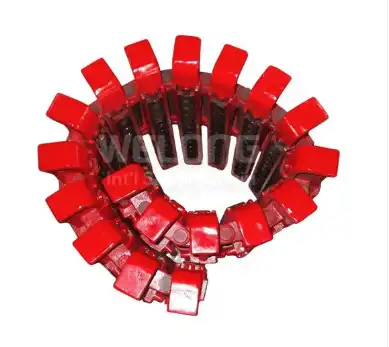
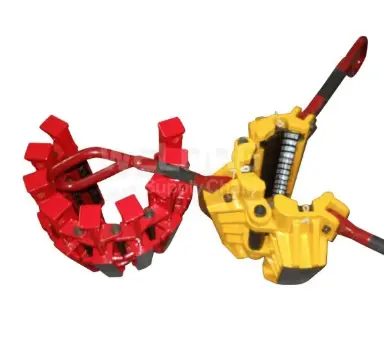
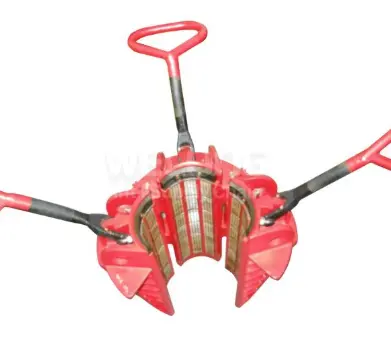
A casing slip works on a simple mechanical principle: tapered segments fit inside the master bushing bowl, and as the string's weight pulls downward, the wedges seat deeper and convert that axial load into radial gripping force. Hardened dies on each segment bite the pipe surface, multiplying the hold as weight increases. This self-energizing action means the casing slip grips hardest exactly when the load is greatest, giving crews a tool whose holding power scales automatically with the string it suspends.
Supporting the String Between Connections
During casing running operations, the casing slip serves as the string's temporary foundation while each new joint is stabbed, made up, and torqued. It transfers the entire hanging weight safely into the rotary table, freeing the elevators to fetch the next length from the catwalk. This cycle repeats for every joint in the string—sometimes hundreds of times per section—making dependable slip performance central to both the pace and the safety of the whole casing installation.
Part of a Complete Slip Family
Casing slips belong to a broader family of pipe-handling wedges that includes rotary slips for drill pipe in short, medium, and extra-long gripping lengths, drill collar slips, and pneumatic slips for smaller sizes. Safety clamps in Type MP, WA-T, and WA-C configurations complement them when handling flush-joint pipe. Understanding where the casing slip fits within this family helps crews select the right gripping tool for each tubular rather than improvising with equipment designed for different diameters and loads.
How Do Casing Slips Work to Hold and Position Casing Pipes During Rig Operations?
Setting and Releasing in the Master Bushing
Correct operation begins with placement: the casing slip is lowered around the pipe and into the bushing bowl in one smooth motion, then the string is eased down until the wedges seat and take the load. Crews should confirm full seating before releasing elevator tension completely. Reversing the process—lifting the string slightly, then raising the slip clear by its handles—releases the grip instantly. Smooth, deliberate movements at both stages protect the dies, the bowl, and everyone working nearby.
Even Load Distribution Around the Pipe
Because a casing slip grips through multiple independent segments arranged around the circumference, clamping force spreads evenly instead of concentrating at one point. This distribution is what allows slips to suspend heavy strings without deforming the pipe body, an especially important behavior when handling large-diameter or thinner-wall casing. Longer gripping lengths extend this benefit further, engaging more pipe surface area and reducing localized stress at any single point along the string's circumference.
Coordinating With Elevators and Tongs
Safe casing work is a choreography of three tools, and the casing slip is the anchor. While slips hold the string, casing tongs make up the connection above and elevators deliver the next joint. Clear communication between the driller and floor crew ensures weight transfers between elevator and slip happen only on command, never accidentally. Crews that rehearse this handoff develop a rhythm that keeps hands away from pinch points and the string securely held at every moment of the cycle.
Key Handling Practices for Improving Casing Slip Performance and Reliability
Lifting by Handles With Proper Teamwork
Large casing slip assemblies are heavy, awkward loads, and disciplined lifting technique prevents most handling injuries. Always use the built-in handles, keep fingers clear of segment gaps and the bowl contact area, and assign two crew members to the larger sizes. Setting the slip down flat—never balancing it against pipe or equipment—keeps the tool stable between cycles. These habits take seconds and protect the people working closest to the string throughout the entire running operation.
Keeping Dies Clean and Sharp
Grip quality lives in the die teeth, so a casing slip deserves regular housekeeping. Wire-brush the dies free of mud, dope, and scale between jobs, and inspect the teeth for rounding or chipping that signals replacement time. Equally important is cleaning the bushing bowl, since debris trapped under the segments prevents full seating and creates uneven grip. A few minutes of attention after each casing job keeps the slip holding at its rated capacity for years.
Controlled Setting, Never Dropping
Throwing or dropping a casing slip onto the pipe is a habit worth eliminating from every rig floor. Impact loads chip die teeth, distort segment alignment, and can mark the pipe surface that the slips are meant to protect. Controlled placement also gives the crew a final moment to verify the slip is level and fully around the pipe before the string weight arrives. Smooth setting preserves the tool's precision geometry and the dependable grip that geometry provides.
What Factors Should Operators Check Before Using Casing Slips on a Rig?
Size Match Between Slip and Pipe
The first check before any casing job is dimensional: the casing slip must match the pipe's outside diameter exactly within its design range, covering sizes from 6-5/8" to 30". Using an undersized slip risks the assembly jamming or gripping unevenly, while an oversized one may seat too shallow to hold rated loads. Verifying size markings against the casing tally takes a moment and eliminates one of the most common causes of gripping trouble on location.
Inspecting Components Before Each Use
A pre-job inspection turns up problems while they are still cheap to fix. Examine the casing slip for cracked or worn dies, bent handles, damaged hinge pins, and any distortion of the segment bodies, and confirm all parts move freely. Corrosion deserves particular attention on stored equipment—material performance resources such as the National Science Data Center for Corrosion and Protection of Materials offer useful background on how environmental exposure degrades steel components over time.
Verifying Bowl Fit and Bushing Condition
Even a perfect casing slip cannot grip properly in a worn master bushing. Check that the slip's taper matches the bowl angle and that the bushing shows no scoring, elongation, or deformation from previous jobs. A mismatched or damaged bowl lets segments sit unevenly, concentrating load on fewer dies and reducing holding capacity silently. Inspecting both halves of this wedge system together—slip and bowl as one matched pair—ensures the rated load path remains intact for every string.
How Does Proper Casing Slip Operation Improve Drilling Efficiency and Well Installation?
Faster, Smoother Casing Running
Efficiency in casing operations comes from rhythm, and a well-maintained casing slip sets the tempo. Slips that engage instantly and release cleanly let the crew cycle through joints without hesitation, trimming minutes from every connection across a full section. Multiply that saving by hundreds of joints, and disciplined slip practice measurably shortens casing time—recovering rig hours that would otherwise be lost to fumbling, re-seating, and working around equipment that fights the crew instead of helping.
Protecting Casing From Handling Damage
Correct slip practice also protects the string itself. A properly sized casing slip with sharp, clean dies grips securely with minimal penetration, avoiding the deep die marks and ovality that careless handling can leave on the pipe body. For premium casing destined for corrosive or high-pressure service, preserving surface condition preserves the string's pressure integrity and fatigue life. Gentle, controlled handling at the surface pays dividends for decades downhole.
Reliable Suspension for Cementing and Wellhead Work
The casing slip's final job in each section is holding the string at exactly the right elevation while the hanger is landed, the wellhead is nippled up, and cementing operations proceed. Stable, unwavering suspension during these critical steps lets crews work confidently around the wellhead and ensures the string lands where the design intends. Dependable grip at this stage is not merely convenient—it is the foundation on which the entire well's surface completion is built.
Sourcing Certified Slips for Long-Term Value
Safe operation begins with well-made tools, so procurement deserves the same discipline as handling. Choose casing slip suppliers certified to ISO 9001:2015 and API 7-1, whose forged components, hardened dies, and documented heat treatment deliver consistent grip across the full size range. WELONG, with over 20 years of oilfield manufacturing experience, applies strict in-process and final inspection to every slip and offers SGS or DNV third-party verification—assurance that the tools reaching your rig floor were proven before they shipped.
Conclusion
Working safely with casing slips comes down to understanding their wedge principle, respecting their handling discipline, and verifying their condition before every job. From correct size selection and die inspection to smooth setting and crew coordination, each practice reinforces the grip that holds your entire casing string. Crews that master these habits run casing faster, protect their pipe, and eliminate the avoidable incidents that disrupt operations. Pair skilled handling with certified, well-inspected equipment, and the humble casing slip becomes exactly what it should be: the most dependable pair of hands on your rig floor, holding firm joint after joint.
FAQ
Q1: What size range do casing slips cover?
Standard casing slips handle pipe from 6-5/8" up to 30" outside diameter (168.3–762 mm), covering everything from intermediate strings to large surface and conductor casing. Each slip is built for a specific pipe size, so always verify the slip's size marking against the casing tally before running. Matching slip to pipe diameter precisely ensures full segment engagement and rated holding capacity.
Q2: How often should casing slip dies be inspected and replaced?
Inspect dies visually before every casing job, looking for rounded, chipped, or missing teeth, and clean them of mud and dope between uses. Replace dies whenever gripping edges show visible wear or when the slip no longer seats crisply on the pipe. Die replacement is quick and inexpensive, making it the simplest way to restore a casing slip to full holding performance.
Q3: What is the difference between a casing slip and a safety clamp?
A casing slip wedges into the master bushing to suspend the string's full weight in the rotary table. A safety clamp—available in Type MP, WA-T, and WA-C designs—bolts around flush-joint pipe or drill collars above the table surface, acting as a handling aid and backup grip for smooth tubulars that slips cannot engage conventionally. The two tools complement rather than replace each other.
Equip Your Rig Floor With WELONG Casing Slips
Looking for casing slips and pipe-handling tools built for safe, dependable service? Founded in 2001, China WELONG is a professional international supply chain service provider specializing in oilfield products and customized solutions, certified to ISO 9001:2015 and API 7-1. Our range covers casing slips from 6-5/8" to 30", rotary slips in SDS, SDML, and SDXL lengths, drill pipe and drill collar slips, pneumatic slips, and safety clamps—all manufactured under strict quality control, with SGS and DNV third-party inspection available. With sea, air, and railway transport and terms from FOB to DDP, we deliver on schedule, worldwide. Contact us today at [email protected] for a tailored quotation and expert support.
References
1. American Petroleum Institute. API Specification 7K: Drilling and Well Servicing Equipment, 6th Edition. API Publishing, 2015.
2. American Petroleum Institute. API Recommended Practice 54: Occupational Safety and Health for Oil and Gas Well Drilling and Servicing Operations, 4th Edition. API Publishing, 2019.
3. American Petroleum Institute. API Recommended Practice 7G-2: Recommended Practice for Inspection and Classification of Used Drill Stem Elements, 1st Edition. API Publishing, 2009.
4. International Association of Drilling Contractors. IADC Drilling Manual, 12th Edition. IADC, 2015.
5. Bommer, Paul M. A Primer of Oilwell Drilling: A Basic Text of Oil and Gas Drilling, 7th Edition. University of Texas at Austin Petroleum Extension Service, 2008.
6. Lyons, William C., and Gary J. Plisga. Standard Handbook of Petroleum and Natural Gas Engineering, 2nd Edition. Gulf Professional Publishing, 2005.
Share your inquiry, get the quotation accordingly!

CHINA WELONG - 20+ years manufactuer in oilfield tools