Top Oil Christmas Tree Uses in Modern Wellhead Operations
The oil Christmas tree got its festive moniker from field operators who perceived something familiar in the form of its branching arrangement of valves, gauges and fittings—but there is nothing attractive about the task of a Christmas tree. This assembly sits on top of the tube head and is the last control point between the reservoir and the surface facilities. It controls flow, shuts in the well, and allows access for anything from regular monitoring to acid fracturing and water injection. Modern designs manage operating pressures from 2,000 to 20,000 psi and temperatures from -46°C to 121°C, and media from sweet oil to H2S and CO2-rich gas. In this post, we will investigate the operating principles, main functions, and top applications of the oil Christmas tree in wellhead operations today.
What Is the Working Principle of an Oil Christmas Tree in Well Production?
Valve Arrangement and Flow Paths
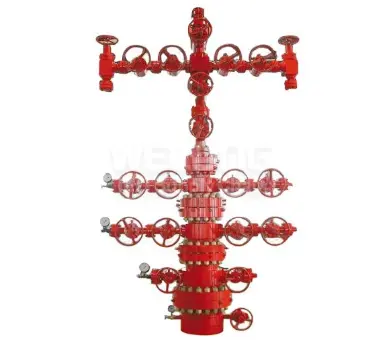
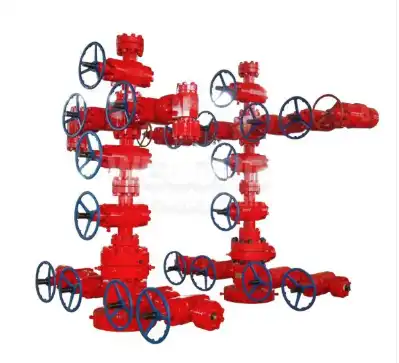
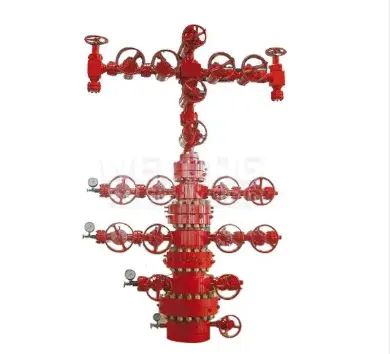
An oil Christmas tree works through a deliberate hierarchy of valves. The lower master valve sits directly above the tubing head as the primary shut-in point, with an upper master valve providing backup. Flow then passes through the wing valve toward the flowline, while the swab valve at the top gives vertical access for wireline tools. This layered arrangement means every flow path has at least two barriers, allowing operators to isolate sections for maintenance while keeping the well secure and under complete control at all times.
Pressure Control Through the Choke
The adjustable choke is where an oil Christmas tree actively manages production rather than simply opening or closing it. By varying the choke's orifice size, operators throttle flow rates, control bottomhole flowing pressure, and protect the reservoir from damaging drawdown. Positive chokes with interchangeable beans suit steady-state production, while adjustable designs let engineers respond to changing well conditions in real time. This throttling capability transforms the tree from a passive valve stack into a genuine reservoir management instrument.
Integration With the Tubing Head
Every oil Christmas tree depends on its foundation. Bolted to the tubing head's top flange through a pressure-rated, metal-sealed connection, the tree inherits the well's full pressure containment duty. Matching flange sizes, pressure ratings, and material classes between tree and tubing head is essential—a mismatch creates a weak point exactly where the well is most vulnerable. Properly integrated, the combined assembly suspends the tubing, seals the annulus, and channels production safely into surface piping.
Key Functions of Oil Christmas Tree in Controlling Oil and Gas Flow
Directing Production Into Flowlines
The most visible daily job of an oil Christmas tree is routing produced fluids where they need to go. Through the flow wing and its valve, oil, gas, or multiphase streams pass into gathering lines, separators, or production manifolds. Trees can be configured with single or dual wings depending on facility requirements, and their outlets accommodate flanged or threaded pipeline connections. Reliable running, simple operation, and convenient repair make this continuous duty sustainable across years of uninterrupted production.
Shutting In the Well When Required
Whether for planned maintenance, facility upsets, or emergencies, an oil Christmas tree must shut in production quickly and positively. Master valves provide the primary closure, rated to the tree's full working pressure, and many trees can be equipped with pneumatic or hydraulic safety valves that close automatically when control pressure is lost. This fail-safe capability is especially valuable on unmanned locations and offshore platforms, where immediate human response cannot be guaranteed, and consequences escalate rapidly.
Adapting to Changing Well Conditions
Wells rarely produce at one rate forever. An oil Christmas tree accommodates decline curves, water breakthrough, and gas coning through its choke and valve settings, letting production engineers tune each well without hardware changes. With specification levels from PSL1 to PSL4 and performance ratings PR1 to PR2, trees can be selected for everything from straightforward land wells to the most demanding high-pressure gas service, ensuring the same fundamental design serves the field's entire life cycle.
How Does an Oil Christmas Tree Support Different Well Completion Operations?
Acid Fracturing and Stimulation
Stimulation treatments pump aggressive fluids at high rates and pressures, and the oil Christmas tree serves as the surface gateway for these operations. Valves and flow paths rated to 20,000 psi, built from material classes AA through HH, withstand the pressure and chemistry of acidizing jobs while giving crews positive control over injection and flowback. After treatment, the same tree manages cleanup flows and returns the well to normal production without requiring equipment changes at the wellhead.
Water Injection and Enhanced Recovery
Many trees spend part of their life moving fluids down rather than up. An oil Christmas tree configured for injection service controls water, gas, or chemical injection for pressure maintenance and enhanced recovery, regulating rates through the choke and wing valve just as it does during production. This bidirectional flexibility lets operators convert producers to injectors as flood patterns mature, extending field life without replacing wellhead equipment and keeping redevelopment costs firmly under control.
Well Testing and Evaluation Services
Before a well enters routine production—and periodically afterward—it must be tested. The oil Christmas tree provides the controlled flow path and instrument connections that make testing possible, routing produced fluids to test separators while gauges record pressure and temperature responses. Swab valve access allows pressure bombs and gauges to be run into the tubing. These testing capabilities give reservoir engineers the data they need to optimize completion designs and forecast long-term performance accurately.
Common Applications of Oil Christmas Tree in Onshore and Offshore Oilfields
Onshore Production Fields
Land-based fields, from single wells to thousand-well developments, rely on the oil Christmas tree as their standard production interface. Simplicity matters here: trees with straightforward valve layouts, easy maintenance access, and working pressures from 2,000 to 5,000 psi cover most conventional reservoirs economically. Temperature class LU equipment maintains toughness down to -46°C, serving cold-region fields where winter conditions punish lesser materials, while standardized designs simplify spare parts stocking across large, dispersed operations.
Offshore Platform and Satellite Wells
Offshore, space is scarce, and intervention is expensive, so the oil Christmas tree must be compact, reliable, and automation-ready. Platform trees often integrate hydraulic safety valves and instrumented chokes connected to the facility's control system, allowing remote operation from the central control room. Corrosion-resistant materials protect against the marine atmosphere, and configurations accommodate the dense wellbay layouts typical of fixed platforms and jack-up-supported satellite developments in shallow and medium water depths.
Sour Service and High-Pressure Gas Wells
Wells producing H₂S or CO₂ place extraordinary demands on metallurgy, and the oil christmas tree answers with material classes DD, EE, FF, and HH manufactured to NACE MR0175 requirements. High-pressure gas developments push ratings to 15,000 or 20,000 psi with PSL3G documentation and PR2 verification. In these environments, the tree is not merely flow control equipment—it is a carefully engineered pressure vessel whose integrity underpins the safety of the entire production facility.
How Does an Oil Christmas Tree Improve Well Management and Production Efficiency?
Real-Time Monitoring at the Wellhead
Every gauge, sensor, and sampling point on an oil Christmas tree contributes to production intelligence. Tubing pressure, casing pressure, and temperature readings taken at the tree reveal well health, detect hydrate formation, and flag declining performance before it becomes lost production. Modern trees accept electronic transmitters that feed data directly to supervisory systems, turning a traditionally manual checkpoint into a continuously reporting node within the field's digital monitoring network.
Safety Systems That Protect the Asset
Automated safety features multiply the value of an oil Christmas tree. Surface safety valves close the well within seconds of detecting abnormal pressure, fire, or facility shutdown signals, protecting personnel and infrastructure without waiting for human intervention. Because these systems act on the tree's master or wing valves, they form the last automated barrier in the production system. Specifying safety valve capability at purchase time is far easier than retrofitting it later.
Certified Quality for Long-Term Reliability
An oil Christmas tree may serve for thirty years, so manufacturing quality decides its true cost. Buyers should insist on API 6A compliance, complete material traceability, and pressure test documentation, backed by a manufacturer whose quality system carries ISO 9001:2015 certification. Suppliers like WELONG, certified to both ISO 9001:2015 and API 7-1, combine in-process and final inspection with optional SGS or DNV third-party verification—assurance that the tree arriving at location will perform as rated for decades.
Flexible Configurations for Evolving Needs
Field development plans change, and a well-specified oil Christmas tree changes with them. Spare flanged outlets accommodate future monitoring or chemical injection, adjustable chokes handle shifting production rates, and modular valve arrangements allow repair or upgrade without full replacement. This adaptability, combined with working media capability spanning oil, gas, and mud, including sour fluids, means one tree can follow a well from initial production through stimulation campaigns and late-life injection duty.
Conclusion
The oil Christmas tree is the nerve centre of the production phase, controlling flow, regulating rates, shutting in wells and opening the door to stimulation, injection and testing activities. Its usage includes all environments from inexpensive onshore fields to high-pressure offshore gas projects and sour service applications requiring superior metallurgy. Operators that choose the correct pressure rating, material class and safety features and purchase from recognised manufacturers with thorough inspection processes will have decades of reliable control. In today’s wellhead operations, a quality tree is where a productive operation really starts.
FAQ
Q1: What are the main valves on an oil Christmas tree?
A typical oil Christmas tree includes lower and upper master valves for primary shut-in, a wing valve controlling flow to the production line, an adjustable or positive choke for rate control, and a swab valve providing vertical access for wireline tools. Many trees also incorporate hydraulic or pneumatic surface safety valves for automatic emergency closure.
Q2: What pressure ratings are available for an oil christmas tree?
Standard working pressures range from 2,000 psi up to 20,000 psi, covering conventional oil wells through high-pressure gas developments. Buyers should select a rating comfortably above maximum anticipated wellhead pressure and ensure the tree's rating matches the tubing head below it, with specification levels from PSL1 to PSL4 according to application criticality.
Q3: Can an oil Christmas tree handle sour service with H₂S and CO₂?
Yes. Trees manufactured in material classes DD through HH, compliant with NACE MR0175/ISO 15156, are designed for sour service containing H₂S and CO₂. Corrosion-resistant alloys protect wetted surfaces and seal areas, ensuring long-term integrity. Buyers should provide fluid composition data so the manufacturer can match metallurgy precisely to the service environment.
Equip Your Wells With WELONG Oil Christmas Trees
Looking for an oil Christmas tree engineered for your exact well conditions? Founded in 2001, China WELONG is a professional international supply chain service provider specializing in oilfield products and customized solutions, certified to ISO 9001:2015 and API 7-1. Our trees cover 2,000–20,000 psi working pressures, material classes AA through HH, and temperature class LU service, with optional hydraulic safety valves—all manufactured under strict quality control, with SGS and DNV third-party inspection available. With flexible sea, air, and railway transport and terms from FOB to DDP, we deliver on schedule worldwide. Contact our team today at [email protected] for a tailored quotation and expert support.
References
1. American Petroleum Institute. API Specification 6A: Specification for Wellhead and Tree Equipment, 21st Edition. API Publishing, 2018.
2. International Organization for Standardization. ISO 10423: Petroleum and Natural Gas Industries — Drilling and Production Equipment — Wellhead and Tree Equipment. ISO, 2009.
3. Devold, Håvard. Oil and Gas Production Handbook: An Introduction to Oil and Gas Production, 3rd Edition. ABB, 2013.
4. Economides, Michael J., A. Daniel Hill, and Christine Ehlig-Economides. Petroleum Production Systems, 2nd Edition. Prentice Hall, 2013.
5. Wan, Renpu. Advanced Well Completion Engineering, 3rd Edition. Gulf Professional Publishing, 2011.
6. Guo, Boyun, William C. Lyons, and Ali Ghalambor. Petroleum Production Engineering: A Computer-Assisted Approach. Gulf Professional Publishing, 2007.
Share your inquiry, get the quotation accordingly!
CHINA WELONG - 20+ years manufactuer in oilfield tools