The Bucking Unit Features for Oilfield Drilling Operations
Behind every leak-free tubing string, every correctly torqued connection is a piece of equipment that never gets the spotlight: the bucking unit. This unique machine grabs one side of a threaded connection and turns the opposite side, assembling and disassembling couplings, accessories, and tubulars with a degree of torque accuracy that just cannot be achieved manually. Modern units meet API tubing thread connection requirements by combining a never-stick gripping mechanism with computer-monitored torque control, and are available in manual, semi-automatic and fully automatic configurations to suit everything from high-volume coupling shops to remote field service locations. This article discusses the characteristics that make a good bucking unit, and the performance criteria operators should consider before putting a bucking unit to action.
What Is a Bucking Unit and How Does It Work in Oilfield Operations?
A Machine Built Around Threaded Connections
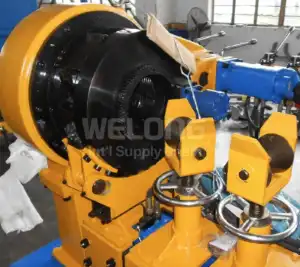
At its core, a bucking unit exists to do one thing exceptionally well: screw and unscrew threaded connections under complete control. One clamping system holds the pipe or coupling body stationary while a powered rotating head turns the mating component to a specified torque. This arrangement replaces the unpredictable leverage of manual tongs with measured, repeatable force, which is exactly what API thread connections demand. Whether assembling premium couplings or breaking out used accessories, the bucking unit delivers consistency that protects both the threads and the integrity of the final string.
Gripping and Rotating: The Two-System Design
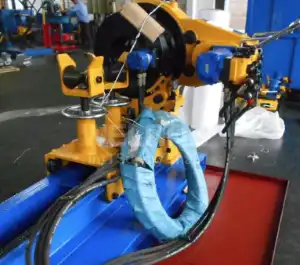
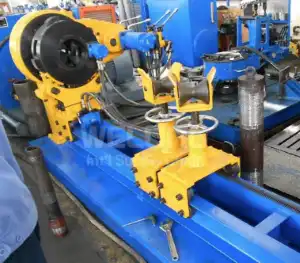
The working architecture of a bucking unit pairs a fixed backup jaw with a rotating power jaw. The backup grips the stationary component across a broad surface area to resist reaction torque, while the rotating head—driven hydraulically or electrically—applies smooth, controlled rotation through the make-up cycle. Because both clamping systems adjust across a wide diameter range, one machine handles many tubular sizes with simple jaw or die changes. This two-system design is what allows the unit to generate high torque without slipping, marking, or distorting the components in its grip.
From Coupling Shops to Field Locations
Although the bucking unit earned its reputation in threading shops and coupling manufacturing plants, its usefulness extends well beyond the factory floor. Oilfield service companies deploy units at pipe yards, supply bases, and even rig locations to assemble downhole tools, install pup joints, and prepare accessories before delivery. The same precision that suits factory production proves equally valuable in the field, where a correctly torqued connection made on location eliminates the risk of shipping pre-assembled components that might loosen or suffer damage in transit.
Key Features of Bucking Unit for Tubular Connection and Make-Up Applications
Never-Stick Gripping Mechanism
Gripping is where lesser machines fail, and the never-stick gripping mechanism is the standout feature of a well-engineered bucking unit. Its jaw geometry distributes clamping force evenly around the component, achieving a firm hold at lower radial pressures and releasing cleanly the moment the cycle completes. This behavior prevents jaw adhesion and surface marking that plague conventional clamping designs, protecting coupling surfaces and keeping production moving without interruptions. Awarded a national invention patent, this mechanism demonstrates how thoughtful engineering converts a routine operation into a reliable, damage-free process repeated thousands of times.
Automation Levels: Manual, Semi-Automatic, and Fully Automatic
Different operations need different degrees of control, and the bucking unit meets them with three automation levels. Manual configurations suit low-volume workshops and field service where flexibility matters most. Semi-automatic models handle the clamping and rotation sequence at the push of a button while the operator manages loading and verification. Fully automatic systems integrate loading, positioning, make-up, and torque recording into a continuous cycle, maximizing throughput for high-volume coupling production. This tiered availability lets buyers match capital investment precisely to their actual production requirements.
API Thread Compliance and Coupling Versatility
A bucking unit must respect the connection designs it works on, and quality machines follow API tubing thread connection requirements throughout their torque and rotation behavior. They accommodate the screwing of many kinds of couplings—tubing, casing, and specialty threaded accessories alike—across a large diameter range. Versatility matters because modern inventories mix standard API connections with proprietary premium threads, each with its own make-up specification. A unit that adapts quickly between connection types keeps one machine productive across an entire product line rather than serving a single thread family.
Built for Range, Torque, and Long Service Life
The headline specifications of a bucking unit tell a story of industrial durability: large handling range, high torque output, long service life, and safe, reliable operation. Generous torque capacity covers the make-up requirements of heavy casing connections, while the broad size range minimizes changeover time between products. Robust frames, hardened wear components, and protected drive systems sustain accuracy over years of daily cycling. For operators, this combination means one capital purchase that serves multiple product lines and remains productive long enough to deliver genuine return on investment.
How Does a Bucking Unit Improve Torque Control During Drilling Operations?
Precision Torque Application on Every Cycle
Threaded connections perform as designed only within a specified torque window, and the bucking unit's precise torque-control system holds every make-up inside it. Calibrated sensors measure applied torque continuously through the cycle, stopping rotation at the exact target value regardless of thread friction variations between connections. This repeatability removes the human variability inherent in manual methods, where operator fatigue and judgment introduce scatter across hundreds of connections. The result is uniform make-up quality from the first coupling of the shift to the last.
Whole-Process Computer Monitoring
Modern units add a supervisory layer through computer monitoring of the entire screwing process. The system displays torque buildup in real time, flags connections that deviate from expected behavior, and stores the data for each cycle. Operators see immediately if a connection galling, cross-threading, or made up short of specification—problems that visual inspection alone would miss. This transparency transforms the bucking unit from a simple power tool into a quality assurance station that inspects every connection as it is made.
Torque Records as Quality Documentation
Every monitored cycle generates a record, and those records carry real commercial value. Torque-turn documentation proves to customers and auditors that each connection met its specification, supporting API compliance claims and simplifying dispute resolution if downhole issues arise later. For manufacturers supplying premium connections, this traceability increasingly represents a contractual requirement rather than a courtesy. A bucking unit with integrated data capture therefore protects not just the threads it assembles but the business relationships built on their performance.
Bucking Unit Applications in Casing, Tubing, and Drill Pipe Handling
Coupling Make-Up in Manufacturing
The highest-volume application for a bucking unit is coupling manufacture, where machines run continuously threading couplings onto tubing and casing pin ends. Fully automatic systems excel here, cycling through thousands of make-ups per shift with computer-verified torque on each one. Consistency at this scale directly determines product reputation—strings assembled in the field trust every factory-applied coupling to hold pressure and transmit load. Manufacturers who invest in monitored, repeatable make-up protect that trust systematically rather than statistically.
Field Service and Accessory Installation
Service companies rely on the bucking unit for assembling the countless threaded accessories that completion strings require: crossover subs, pup joints, blast joints, flow couplings, and packer components. Making these up in a controlled yard environment with verified torque beats improvising with rig-floor tongs, where torque accuracy is difficult to achieve and document. Pre-assembled, tested assemblies then arrive at the wellsite ready to run, shortening completion time and eliminating a common source of connection-related delays during critical operations.
Break-Out, Inspection, and Repair Work
The same machine that makes up connections also takes them apart, and break-out capability proves invaluable during inspection and repair programs. Used tubulars and accessories return from the field with connections that must be separated for thread inspection, cleaning, and reconditioning. A bucking unit breaks these connections smoothly and safely, without the shock loading that damages reusable threads. This reversible functionality effectively doubles the machine's value, supporting the full lifecycle of tubular goods from initial assembly through multiple service and repair cycles.
What Performance Factors Should Operators Consider When Using a Bucking Unit?
Matching Torque Capacity to Your Connections
Selection begins with an honest inventory of the connections you handle. List the largest casing coupling and the smallest tubing accessory in your program, then choose a bucking unit whose torque capacity exceeds your heaviest make-up requirement with comfortable margin and whose size range spans everything in between. Undersized machines strain at their limits and wear prematurely, while properly matched equipment operates in the middle of its envelope—where accuracy, speed, and component life are all at their best.
Jaw Condition and Changeover Discipline
Daily performance depends on the condition of the components touching the pipe. Inspect jaws and dies regularly for wear, keep gripping surfaces clean, and replace consumables before they compromise grip quality. Establish a documented changeover procedure so operators switching between sizes verify jaw settings and torque parameters against the connection specification every time. These simple disciplines preserve the never-stick mechanism's advantages and keep the machine producing damage-free connections across its full range of products and thread types.
Calibration and Quality System Verification
Torque accuracy drifts without attention, so scheduled calibration belongs in every operating plan. Verify the machine's torque measurement against certified references at defined intervals, and maintain calibration records alongside production data. Buyers should also examine the manufacturer's own quality foundations—operations certified to ISO 9001:2015 and API 7-1 demonstrate audited processes behind the equipment itself. A precisely built, well-calibrated bucking unit sustains the measurement integrity that your entire connection quality program depends upon.
Supplier Support, Inspection, and Delivery
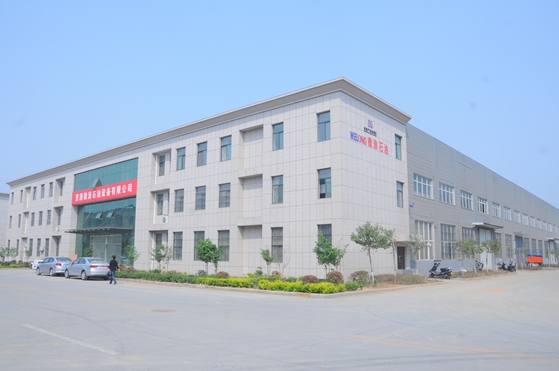
A bucking unit is a long-term manufacturing asset; therefore, assess the provider as thoroughly as you do the equipment. Seek manufacturers that provide documented in-process and final inspection, with third-party verification such as SGS or DNV for key orders. With over 20 years in oilfield manufacture, WELONG combines this inspection discipline with flexible logistics – sea, air, or train shipment on terms from FOB to DDP – to ensure equipment arrives on time wherever your operation runs. Reliable after-sales assistance and part availability complete the ownership picture.
Conclusion
The bucking unit has found its niche in coupling shops, pipe yards and field service operations by doing one duty with an unparalleled level of accuracy: creating and breaking threaded connections under total documented control. Its never-stick gripping mechanism, computer-monitored torque system, and configurable automation levels provide the consistency required for API connections, and its broad range and rugged build will provide years of productive service. Operators who match capacity with their connection inventory, and who maintain calibration discipline and procure from authorised manufacturers, win more than a machine; they acquire a quality system. Looking to improve your threading operations? It begins with the correct bucking unit.
FAQ
Q1: What is the difference between manual, semi-automatic, and fully automatic bucking units?
Manual units require the operator to control clamping and rotation directly, suiting low-volume or field service work. Semi-automatic models execute the make-up cycle at the push of a button while the operator loads components. Fully automatic systems integrate loading, positioning, make-up, and torque recording into a continuous cycle, maximizing throughput for high-volume coupling production with minimal operator involvement.
Q2: Can one bucking unit handle different tubular sizes and coupling types?
Yes. Quality bucking units offer a large handling range, accommodating multiple kinds of couplings across tubing and casing sizes through adjustable jaws and die changes. Their torque-control systems store or accept different make-up specifications for each connection type, allowing quick changeovers between API and premium thread families within a single production shift.
Q3: How does computer monitoring improve connection quality?
Computer monitoring displays torque buildup in real time throughout each make-up cycle, automatically stopping at the specified target and flagging abnormal behavior such as galling or cross-threading. Every cycle is recorded, creating torque-turn documentation that verifies each connection met its specification—traceable quality evidence for customers, auditors, and API compliance programs.
Upgrade Your Threading Operations With WELONG
Looking for a bucking unit that combines precision torque control with proven durability? Founded in 2001, China WELONG is a professional international supply chain service provider specializing in oilfield products and customized solutions, certified to ISO 9001:2015 and API 7-1. Our bucking units feature the patented never-stick gripping mechanism, computer-monitored torque control, and manual, semi-automatic, and fully automatic configurations—built for large range, high torque, and long service life, with SGS and DNV third-party inspection available. With sea, air, and railway transport and terms from FOB to DDP, we deliver on schedule, worldwide. Contact us today at [email protected] for a tailored quotation and expert technical support.
References
1. American Petroleum Institute. API Specification 5CT: Specification for Casing and Tubing, 10th Edition. API Publishing, 2018.
2. American Petroleum Institute. API Recommended Practice 5C1: Recommended Practice for Care and Use of Casing and Tubing, 18th Edition. API Publishing, 1999.
3. American Petroleum Institute. API Specification 7-1: Specification for Rotary Drill Stem Elements, 1st Edition. API Publishing, 2006.
4. Lyons, William C., and Gary J. Plisga. Standard Handbook of Petroleum and Natural Gas Engineering, 2nd Edition. Gulf Professional Publishing, 2005.
5. Wan, Renpu. Advanced Well Completion Engineering, 3rd Edition. Gulf Professional Publishing, 2011.
6. Economides, Michael J., A. Daniel Hill, and Christine Ehlig-Economides. Petroleum Production Systems, 2nd Edition. Prentice Hall, 2013.
Share your inquiry, get the quotation accordingly!
CHINA WELONG - 20+ years manufactuer in oilfield tools