The Wellhead Equipment Uses in Onshore and Offshore Wells
From a solitary land rig in the desert to a busy offshore platform in the North Sea, wellhead equipment serves the same core mission: to keep the well together. This assembly is suspended at the border of the reservoir surface, holds the formation pressure, and provides the connection points via which every drilling, completion, and production operation occurs. Nevertheless, the use of wellhead equipment changes greatly between onshore and offshore locations in terms of design, rating and operating priority. This essay will examine those uses across the whole life cycle of a well, from spudding the first string of casing to decades of production, and what operators in both contexts might anticipate from a properly constructed system.
How Is Wellhead Equipment Used During Oil and Gas Well Drilling?
Suspending Casing Strings Through Each Drilling Phase
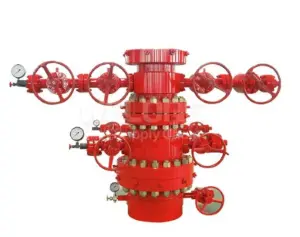
Drilling proceeds in stages, and wellhead equipment grows with the well. After the surface casing is cemented, the casing head is installed to support the string's weight and seal the annulus. As intermediate and production casing strings are run, casing spools are stacked above, each suspending its string and isolating its annular space. Onshore, this stacking happens quickly between drilling intervals; offshore, the same process takes place on a platform deck or jack-up floor, where compact, precisely machined housings save valuable space and rig time during critical path operations.
Anchoring the Blowout Preventer Stack
Before each new hole section is drilled, a blowout preventer stack bolts directly onto the top flange of the wellhead equipment. This connection must handle both the BOP's considerable weight and the dynamic loads of drilling operations. Standard flange sizes from 11" to 21-1/4", with pressure ratings up to 15,000 psi, allow the wellhead to accept a wide range of BOP configurations. Whether on a land rig or an offshore installation, this flanged interface is what makes safe, controlled drilling through pressured formations possible at every stage.
Providing Annular Access During Cementing and Circulation
Side outlets on casing heads and spools give crews controlled access to each annulus while drilling progresses. Through these ports—typically 2-1/16" to 3-1/8" bore—operators monitor cement returns, bleed trapped gas, and verify annular pressure. Offshore wells, where annular pressure management is closely regulated, rely heavily on these connections for continuous monitoring. Onshore operations use the same outlets for routine integrity checks, making this small but vital feature of wellhead equipment essential in both environments from the very first day of drilling.
The Role of Wellhead Equipment in Well Completion and Production Operations
Suspending and Sealing the Production Tubing
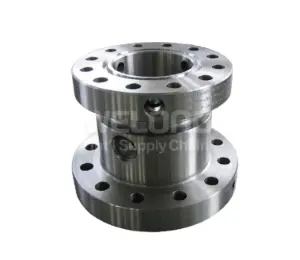
When drilling ends, the tubing head takes center stage. Installed on the casing head flange, this spool suspends the entire production tubing string through a tubing hanger and seals the annulus between tubing and casing. Wellhead equipment at this stage must accommodate hangers with penetrations for downhole safety valve control lines, gauges, and chemical injection. Flange sizes from 7-1/16" to 13-5/8" match the tree installed above, ensuring the completed well transitions smoothly from drilling configuration to production configuration without rework.
Interfacing with the Christmas Tree
The Christmas tree bolts onto the tubing head's top flange, and together they form the well's production control point. Wellhead equipment provides the pressure-rated foundation on which master valves, wing valves, and chokes operate. Flow is directed through the tree to gathering lines onshore, or to manifolds and separators offshore. Because the tree depends entirely on the tubing head's integrity, buyers should confirm matching pressure ratings and material classes across both assemblies—a 5,000 psi tree mounted on a 3,000 psi head is a serious and avoidable mismatch.
Enabling Artificial Lift and Downhole Monitoring
Producing wells rarely stay static, and wellhead equipment supports that evolution. Gas-lift wells inject through annular outlets; wells with electric submersible pumps route power cable penetrations through specialized hangers; intelligent completions pass hydraulic and electric lines through the tubing hanger to downhole sensors. Each function depends on connection points engineered into the wellhead from the start. Offshore platforms, where intervention access is limited, especially benefit from monitoring-enabled configurations that deliver real-time pressure and temperature data without mobilizing a rig.
Why Is Wellhead Equipment Essential for Onshore and Offshore Well Control?
The Primary Pressure Barrier at the Surface
Every well control philosophy ultimately rests on the surface pressure barrier, and that barrier is the wellhead equipment itself. Reservoir fluids reaching the surface at thousands of psi must be contained by housings, seals, and flanges with verified ratings. Equipment built and tested to API Spec 6A—with documented hydrostatic and, where specified, gas testing—provides that verification. Onshore wells and offshore wells face the same physics; the difference is consequence, which is why offshore operators typically specify higher PSL levels and PR1 performance verification.
Emergency Shut-In and Kill Operations
When well control is challenged, wellhead equipment becomes the front line. Annular outlets connect to kill and choke manifolds, allowing heavy mud to be circulated into the well to regain hydrostatic control. Studded and flanged connections must hold rated pressure throughout these dynamic operations. Offshore, where response time is critical and evacuation difficult, the reliability of these connection points is non-negotiable. Onshore operations benefit equally, particularly in populated or environmentally sensitive areas where any surface release carries serious consequences.
Meeting Regulatory and Environmental Requirements
Both onshore and offshore regulators treat wellhead integrity as a licensing requirement. Documented pressure testing after installation, material traceability, and compliance with recognized standards are mandatory in most jurisdictions. Material selection guided by resources such as ASTM International standards supports defensible engineering decisions for pressure-containing parts. Operators who procure wellhead equipment with complete certification packages find permitting, audits, and inspections considerably smoother—an advantage that compounds across multi-well development programs in either environment.
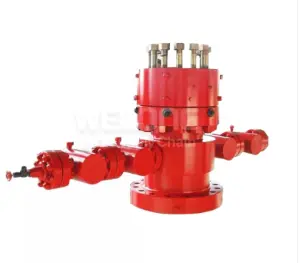
Wellhead Equipment Applications in High-Pressure and Complex Well Environments
High-Pressure, High-Temperature Gas Wells
Deep gas developments—onshore tight gas plays and offshore high-pressure reservoirs alike—push wellhead equipment to its limits. Ratings of 10,000 to 15,000 psi, PSL3 or PSL3G specification levels, and PR1-verified seals become standard requirements. Forged bodies machined to strict tolerances maintain seal integrity through thermal cycling as wells are brought on and off production. In these applications, every component in the stack, from the casing head to the top adapter, must carry the full rating without weak links.
Sour Service and Corrosive Fluids
Wells producing H₂S, CO₂, or chloride-rich brines demand wellhead equipment in material classes DD, EE, or FF, manufactured to NACE MR0175/ISO 15156 for sour service. Corrosion-resistant alloys protect ring grooves, seal pockets, and wetted surfaces where attack concentrates. Offshore wells, where a single corrosion-related failure can shut in an entire platform, justify premium metallurgy most easily—but onshore sour fields in the Middle East, Central Asia, and North America rely on the same material discipline to keep wells producing safely for decades.
Space-Constrained Offshore Platforms
Platform wells cluster dozens of wellheads within a compact deck area, and wellhead equipment must fit accordingly. Slim-profile spools, standardized flange connections, and configurations that allow adjacent wells to be worked over simultaneously are prized offshore. Temperature class LU equipment also serves cold-region offshore and Arctic operations, maintaining toughness at sub-zero ambient conditions. These application-specific adaptations illustrate why experienced suppliers offer customization rather than a single fixed catalog configuration for every environment.
How Does Wellhead Equipment Improve Long-Term Well Performance?
Sustaining Annular Integrity Over Decades
A well may produce for twenty or thirty years, and wellhead equipment must hold its seals the entire time. Quality hanger packoffs, metal-to-metal seals, and correctly rated bodies keep each annulus isolated, protecting freshwater zones and preventing sustained casing pressure—a common regulatory concern onshore and offshore alike. Periodic testing through built-in test ports verifies seal performance without disassembly, allowing operators to document integrity continuously throughout the well's producing life rather than discovering problems after they escalate.
Supporting Workovers and Interventions
Few wells produce without intervention. Wireline jobs, coiled tubing operations, pump changes, and recompletions all pass through or connect to the wellhead equipment. Standardized top connections accept intervention pressure-control stacks quickly, while robust flange designs tolerate repeated make-up and breakout cycles. Offshore, where every rig hour carries premium cost, a wellhead that accepts intervention tooling without modification saves substantial money; onshore, the same flexibility keeps workover programs on schedule across large field developments.
Corrosion-Resistant Materials That Minimize Maintenance
Long-term performance is largely a materials story. Wellhead equipment manufactured from high-strength, corrosion-resistant alloys—with strict quality control throughout forging, machining, and testing—delivers decades of service with minimal intervention. Suppliers certified to ISO 9001:2015 and API 7-1, such as WELONG, build these requirements into audited processes rather than treating them as optional extras. For operators, the practical result is predictable maintenance budgets, fewer unplanned shutdowns, and wellhead assets that outlast the production forecasts they were originally purchased to serve.
Flexibility for Future Production Upgrades
Reservoir strategies change: waterfloods begin, gas lift is added, or wells are converted to injection duty late in field life. Wellhead equipment specified with adequate outlets, spare connection points, and adaptable top configurations accommodates these changes without wholesale replacement. This forward-looking flexibility is valuable everywhere, but especially offshore, where modifying surface infrastructure is most expensive. Choosing a configurable system at purchase time is one of the simplest ways to protect the long-term value of the entire well.
Conclusion
Wellhead equipment is involved in all stages in the life of a well: hanging casing during drilling, attaching the BOP, sealing the tubing string, managing production flow and standing guard as the major pressure barrier. While onshore and offshore applications may vary in design, rating and priority, the essentials remain the same: proven pressure containment, robust materials and standards compliance. Operators who use wellhead equipment suited to their particular environment can benefit from safer operations, easier interventions and decades of consistent performance. The first step in long-term well success is the correct wellhead system, whether your next project is an onshore development or an offshore platform.
FAQ
Q1: Is the same wellhead equipment used for onshore and offshore wells?
The core components—casing heads, spools, tubing heads, and tree connections—are the same in both settings. Offshore applications typically demand higher PSL levels, more compact configurations, and premium materials due to space constraints and higher consequence of failure, but the fundamental wellhead equipment design principles apply equally to both environments.
Q2: What pressure ratings are available for wellhead equipment?
Standard working pressures range from 2,000 psi to 15,000 psi across casing heads and tubing heads, covering everything from shallow conventional wells to deep HPHT gas developments. Every component in the stack should share the same rating, and buyers should select a level comfortably above the maximum anticipated wellhead pressure with a documented safety margin.
Q3: How often should wellhead equipment be tested during its service life?
Wellhead equipment should be pressure-tested after initial installation, after any component change or intervention, and at regular intervals defined by the operator's integrity management program and local regulations. Built-in test ports allow seal verification without disassembly, making routine integrity confirmation straightforward throughout decades of production.
CTA: Partner with WELONG for Your Next Well Project
Whether your wells are onshore, offshore, or somewhere in between, WELONG delivers wellhead equipment engineered for your exact conditions. Founded in 2001, China WELONG is a professional international supply chain provider specializing in oilfield products and customized solutions, certified to ISO 9001:2015 and API 7-1. Our API 6A-compliant wellhead systems—rated from 2,000 to 15,000 psi with material classes AA through FF—combine precision engineering, corrosion-resistant materials, and stringent quality control for long-term reliability. Ready to discuss your project? Contact our team today at [email protected] for a tailored quotation and expert technical support.
References
1. American Petroleum Institute. API Specification 6A: Specification for Wellhead and Tree Equipment, 21st Edition. API Publishing, 2018.
2. International Organization for Standardization. ISO 10423: Petroleum and Natural Gas Industries — Drilling and Production Equipment — Wellhead and Tree Equipment. ISO, 2009.
3. Lyons, William C., and Gary J. Plisga. Standard Handbook of Petroleum and Natural Gas Engineering, 2nd Edition. Gulf Professional Publishing, 2005.
4. Wan, Renpu. Advanced Well Completion Engineering, 3rd Edition. Gulf Professional Publishing, 2011.
5. Chakrabarti, S. K. Handbook of Offshore Engineering. Elsevier Science, 2005.
6. Azar, J. J., and G. Robello Samuel. Drilling Engineering. PennWell Publishing, 2007.
Share your inquiry, get the quotation accordingly!
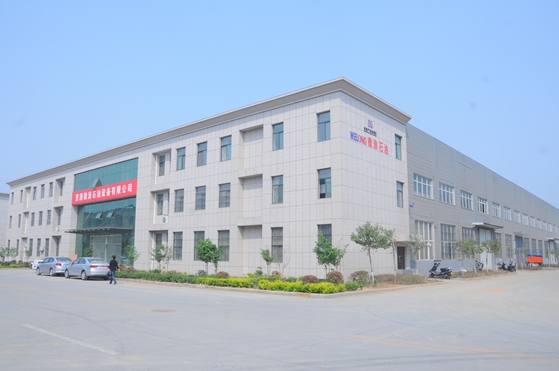
CHINA WELONG - 20+ years manufactuer in oilfield tools