The Ultimate Engineering Guide to Oilfield Cementing Heads
When it comes to building oil and gas wells, the Cement Head is one of the most important pieces of equipment. The Cement Head is at the very top of the casing string and is in charge of main sealing, which is one of the most important parts of finishing a well. A successful cement job protects underground rocks, separates zones, and keeps the well intact over time. The cement head is a key part of making this process happen. This comprehensive engineering guide takes a close examination of the Cement Head, examining its construction, purpose, ability to control pressure, and ability to work with equipment on the surface. This guide will help you understand why the Cement Head is so important in today's oilfields, whether you work as an operator, a drilling engineer, or a buying specialist.
What Is a Cementing Head and Why Is It Essential in Well Cementing Operations?
Defining the Cementing Head and Its Functional Role
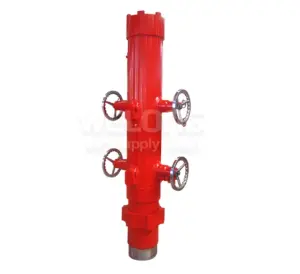
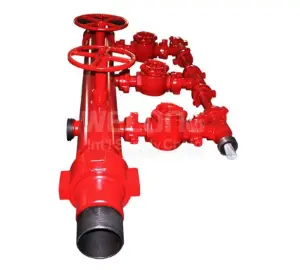
A cement head, also called a grouting head or plug container, is a wellhead device that is put on top of the casing string before cement slurry is pumped downhole. The sealing plugs are inside, and the surface pumping system is linked to the case by this device. The Cement Head drops plugs at exact times during the job to separate fluids and make sure that the cement slurry goes exactly where it needs to go across the rim of the wellbore.
Why the Cement Head Is Critical for Well Integrity
It would be very hard to get effective radial separation without a Cement Head that works right. Operators can control when the plugs are released, see how far the movement has gone, and keep the pressure stable throughout the job with the Cement Head. If the Cement Head is strong, there is less chance of cement pollution, channeling, and partial displacement. These problems can damage the well's structure, require expensive repairs, or cause long-term safety and environmental issues.
Internal Structure and Dual-Plug System Design of Oilfield Cementing Heads
Anatomy of a Double-Plug Cement Head
A double-plug cement head has a long body that can hold both an upper and a lower grouting plug at the same time. The lower plug is let go before the cement slurry to clean the drilling mud off the wall of the casing. The upper plug then follows the slurry to separate it from the displacement fluid. The AISI 4145H alloy steel used to make WELONG's Cement Head gives it the strength and longevity needed for many high-pressure runs.
Plug Release and Indicator Mechanisms
An important part of modern cement heads is their lever-type signaling system, which shows visually if each plug has gone through the Cement Head and into the casing. This simple but useful sign lets the sealing crew know what's going on in real time, which cuts down on confusion during key parts of the job. The dual-plug Cement Head design means that operations don't have to stop to add a second plug. This saves time and lowers the risk of well control problems.
How Cementing Heads Enable Controlled Cement Slurry Delivery into the Wellbore
Precise Sequencing of Fluids and Plugs
For the most part, cementing is a fluid displacement process, and the Cement Head carefully coordinates that procedure. Each of the spacer fluids, lead slurry, tail slurry, and displacement fluids need to go through the Cement Head in the right order. The Cement Head makes sure that the fluids don't mix by releasing the bottom plug before the slurry and the top plug after it. This keeps the final cement sheath from becoming too weak.
Flow Path Design for Smooth Slurry Movement
A good Cement Head is designed to have the least amount of turbulence and pressure loss possible in its internal flow shape. Smooth changes between bores and inlet holes that are the right size let the cement slurry move easily into the case without too much stress, which could hurt the rheology of the slurry. The WELONG Cement Head comes in sizes ranging from 5-1/2" to 13-3/8", and it works with a lot of different case programs while keeping the quality of the slurry the same from the top to the bottom of the hole.
Key Engineering Features That Ensure Reliable Pressure Management During Cementing
High-Pressure Rating and Material Strength
Cementing operations frequently encounter pressures that test the limits of surface equipment. WELONG's Cement Head is rated for a maximum working pressure of 10,000 PSI, making it suitable for both conventional and high-pressure well environments. The use of AISI 4145H alloy steel, combined with stringent heat treatment and machining tolerances, gives the Cement Head the structural integrity needed to withstand repeated pressure cycles without fatigue or deformation.
In addition to API 5CT specifications, material selection and mechanical performance requirements are often cross-validated against broader engineering benchmarks defined by ASTM International, ensuring consistency in steel grading, mechanical strength testing, and long-term durability under cyclic loading conditions.
Sealing Systems and Manifold Flexibility
Effective pressure management depends on reliable sealing throughout the Cement Head assembly. High-quality elastomeric seals, threaded connections compliant with API 5CT specifications, and flexible manifold configurations all contribute to leak-free operation. The Cement Head supports multiple inlet arrangements, allowing connection to various pump trucks and circulation lines. This flexibility makes the Cement Head adaptable to diverse rig layouts and job-specific pressure requirements.
Role of Cementing Head in Coordinating Surface Equipment During Cementing Jobs
Integration With Pump Trucks and Circulation Lines
The Cement Head serves as the central interface between the wellbore and the entire surface cementing spread. It connects to cement pump trucks, batch mixers, displacement units, and pressure monitoring equipment through its manifold inlets. This central role means that a well-designed Cement Head simplifies rig-up, reduces hose routing complexity, and ensures all pumping equipment can work together seamlessly throughout the cementing operation.
Supporting Real-Time Job Monitoring and Control
Modern cementing jobs rely on real-time data to verify plug release, displacement volume, and pressure response. The Cement Head's lever indicator, combined with pressure gauges and flow sensors connected at its manifold, provides the cementing engineer with immediate confirmation that each operational step has occurred as planned. This coordination minimizes human error, helps prevent over-displacement, and ensures the Cement Head delivers consistent, predictable performance on every job.

Conclusion
The Cement Head is a cornerstone of safe, efficient, and successful well cementing operations. From its dual-plug architecture and pressure-rated construction to its role in coordinating surface equipment, every feature of a quality Cement Head contributes directly to well integrity and operational success. Investing in a properly engineered, API-compliant Cement Head from a trusted manufacturer like WELONG ensures repeatable performance across diverse well conditions, helping operators achieve reliable zonal isolation, reduce nonproductive time, and protect long-term asset value throughout the life of the well.
FAQ
Q1: What casing sizes does the WELONG Cement Head support?
A: WELONG makes Cement Heads in sizes from 5-1/2" to 13-3/8", which are large enough to fit most production and intermediate case plans. Custom sizes can also be set up based on the needs of the job.
Q2: What is the maximum working pressure of the WELONG Cement Head?
A: The WELONG Cement Head can handle up to 10,000 PSI of pressure, so it can be used for both normal and high-pressure sealing tasks in a lot of different well settings.
Q3: How does the dual-plug Cement Head improve cementing efficiency?
A: The dual-plug Cement Head lets you add both the top and lower plugs at the same time, so there is no wait time between starts. The lever-type sign lets workers know when the plug is released, so they can focus on the job at hand.
Partner With WELONG for Premium Cement Head Solutions
Looking for a reliable, high-pressure Cement Head built to meet the toughest cementing challenges? With over 20 years of oilfield manufacturing expertise, ISO 9001:2015 and API 7-1 certifications, and a global supply network supporting flexible shipping and trade terms, WELONG is your trusted partner for premium cementing equipment. Our Cement Heads are engineered from AISI 4145H alloy steel, rated to 10,000 PSI, and built to API 5CT specifications for uncompromising performance. Contact our team today at oiltools@welongpost.com to request a quote, discuss customization options, or learn more about our complete range of oilfield cementing tools.
References
1. Nelson, E. B., & Guillot, D. Well Cementing. Second Edition, Schlumberger Educational Services, Sugar Land, Texas.
2. Smith, D. K. Cementing. SPE Monograph Series, Society of Petroleum Engineers, Richardson, Texas.
3. American Petroleum Institute. API Specification 10A: Specification for Cements and Materials for Well Cementing. API Publications, Washington, D.C.
4. Bourgoyne, A. T., Millheim, K. K., Chenevert, M. E., & Young, F. S. Applied Drilling Engineering. SPE Textbook Series, Society of Petroleum Engineers.
5. Lyons, W. C., & Plisga, G. J. Standard Handbook of Petroleum and Natural Gas Engineering. Gulf Professional Publishing, Elsevier.
6. Economides, M. J., Watters, L. T., & Dunn-Norman, S. Petroleum Well Construction. John Wiley & Sons, Chichester, United Kingdom.
Share your inquiry, get the quotation accordingly!

CHINA WELONG - 20+ years manufactuer in oilfield tools