Why Choose Manual Tong for Your Industrial Needs?
It’s a reasonable question, especially in an age with hydraulic power tongs and automated pipe handling. The manual tong is still earning its place on rig floors and servicing sites throughout the globe. That is what this basic, tough tool offers: total independence from power sources, instant readiness, cheap acquisition cost, and mechanical durability that has been demonstrated through generations of drilling and workover operations. The manual tong is the workhorse of pipe handling, from hefty Type DB and SDD tongs handling drill pipe to massive 13 3/8-36" casing tongs and small well servicing variants. This essay will cover how it works, where it thrives, and how to pick the ideal one for your company.
What Is a Manual Tong and How Does It Work in Industrial Operations?
Lever-and-Jaw Mechanical Design
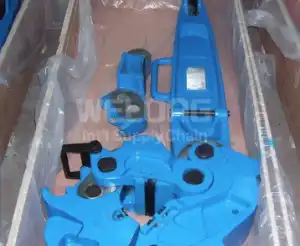
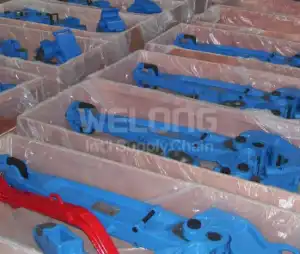
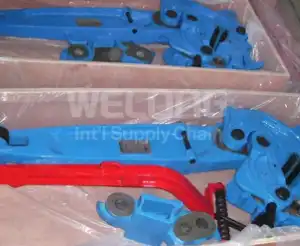
A manual tong is essentially a precision lever system built around a hinged jaw assembly. The tong latches around the pipe body or coupling, and pulling force applied to the long handle—by crew members or a tugger line—rotates the connection. The geometry converts human effort into substantial torque at the connection, with the handle length determining mechanical advantage. Because there are no hydraulics, hoses, or power units involved, a manual tong works anywhere the moment it is lifted onto the pipe, making it the most straightforward torquing tool in the industry.
Lug Jaws and Interchangeable Components
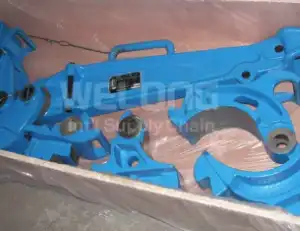
One manual tong frame can serve several pipe sizes thanks to interchangeable lug jaws and hinge pins. Each jaw set matches a specific diameter range, and swapping between them takes only minutes with basic hand tools. This modularity is why a single Type C or Type B tong can cover a spread of tubing and drill pipe sizes across a workover program. Buyers should confirm the full jaw range available for their chosen model, since that range ultimately defines how many pipe sizes one tool investment will handle.
Latching and Self-Tightening Action
The latch mechanism is what makes a manual tong quick and secure in use. Once the tong is thrown around the pipe, the latch closes with a positive click, and the jaw geometry self-tightens as pulling force increases—the harder the pull, the firmer the grip. Releasing is equally fast: slack the line, open the latch, and swing the tong clear. This rapid engage-and-release cycle, repeated hundreds of times per trip, is fundamental to the tool's enduring productivity on busy rig floors.
Key Applications of Manual Tong in Oilfield Drilling and Pipe Handling
Drill Pipe and Drill Collar Connections
Heavy-duty models such as the Type DB and Type SDD manual tong are purpose-built for drill string work, gripping drill pipe tool joints, drill collars, and heavy-weight components during trips and connections. Their extended handles generate the high torque needed for properly made-up rotary connections, and their reinforced hinges withstand the shock loads of daily drilling service. On rigs where power tongs handle routine work, these manual units remain essential backup equipment—ready instantly whenever hydraulic systems are offline for maintenance.
Casing Running Operations
Running surface, intermediate, and production casing calls for large-diameter gripping capability, and dedicated casing tongs in 13 3/8" and 13 3/8-36" configurations answer that need. A casing manual tong wraps around the coupling with wide, multi-point jaws that distribute clamping force without marking the pipe, while long handles allow the pulling crew to achieve specified make-up torque on buttress and round-thread connections. Casing crews value the predictable, controlled feel these tongs provide when landing each joint to the correct torque.
Well Service and Workover Tasks
Workover rigs and well service units rely on lighter, faster tools, and models like the Well Service Tong, Type SB, Type B, and Type C manual tong fit that role perfectly. They handle tubing, sucker rods, couplings, and small-diameter pipe during pulling and running operations, where connection counts are high and speed matters. Their compact frames suit the smaller floors of service rigs, and their independence from rig hydraulics means they keep working even when the power unit is repositioned or under repair.
How Does Manual Tong Provide Reliable Grip and Torque Control?
Hardened Dies and Multi-Point Contact
Grip quality begins at the dies. A well-made manual tong uses heat-treated, hardened steel dies with precisely cut teeth that bite into the pipe surface at multiple contact points around the circumference. This distributes clamping force evenly, preventing slip under load while minimizing surface marking on the pipe. Worn dies are the enemy of grip, so reputable designs make die replacement a simple, inexpensive task—ensuring the tong can be restored to full holding power throughout its long service life.
Mechanical Advantage for Controlled Make-Up
Torque control with a manual tong comes from understanding the lever equation: applied force multiplied by handle length equals delivered torque. Crews using torque-indicating pull lines or calibrated load cells on the tong handle can achieve specified make-up values with surprising accuracy. Because the force builds smoothly and continuously, experienced operators develop a reliable feel for connection tightness, making the manual tong a genuinely controllable precision instrument in skilled hands rather than merely a brute-force tool.
Paired Operation With Backup Tongs
Breaking out or making up any threaded connection requires gripping both sides of the joint, and the manual tong handles both roles. One tong acts as the backup, clamping the lower pipe against rotation, while the lead tong turns the upper connection. Matching backup jaw inserts keep the reaction forces stable and centered. This paired arrangement—two tools, one crew, no power source—remains the simplest complete torquing system available, which is why it persists as the standard fallback on rigs of every size.
What Features Should Buyers Consider When Selecting a Manual Tong?
Size Range and Model Selection
The first buying decision is matching tool to pipe. Confirm the outside diameters you handle most, then select a manual tong model—SDD, DB, SB, B, C, well service, or casing type—whose jaw range covers them with room to spare. Check the rated torque capacity against your connection requirements, and verify that replacement jaws and dies for your full size range are readily available from the supplier. A tong that fits your program exactly will always outperform a compromise choice.
Material Quality and Forging Standards
A manual tong lives a hard life of shock loads, weather, and rough handling, so material quality decides its lifespan. Look for forged alloy steel bodies and handles, with heat treatment documented against recognized benchmarks such as ASTM International standardsfor steel products. Quality forgings resist cracking at hinge points and jaw roots—the classic failure locations in cheaply made tools. Asking suppliers about their steel grades and heat treatment processes reveals quickly who manufactures seriously and who merely trades.
Certification, Inspection, and Traceability
Industrial buyers should expect the same documentation for a manual tong as for any pressure-adjacent wellsite tool. Manufacturers certified to ISO 9001:2015 and API 7-1 operate audited quality systems covering material traceability, in-process inspection, and final testing. WELONG, with over 20 years of oilfield manufacturing experience, applies exactly this discipline and offers updated inspection services adding third-party verification through SGS or DNV. Such documentation simplifies your own procurement audits and provides defensible quality evidence for HSE reviews.
Logistics and Commercial Flexibility
Even a modest tool purchase benefits from professional logistics. A capable supplier should offer sea, air, and railway transport, cooperate on terms from FOB and CIF to DDP and DDU, and commit to realistic lead times backed by an organized production team. For fleet purchases—equipping multiple rigs with matched manual tong sets—delivery coordination matters as much as price. Evaluate suppliers on their ability to consolidate jaws, dies, and spares into one shipment that arrives before your program begins.
How Can Manual Tong Improve Efficiency in Tubing and Casing Operations?
Rapid Engagement and Cycle Speed
Efficiency on the floor is measured in seconds per connection, and a well-balanced manual tong is remarkably fast. The latch closes in one motion, the pull takes seconds, and the release is instant—no waiting for hydraulic pressure to build or jaws to cycle. Over the hundreds of connections in a tubing run or casing job, this brisk rhythm keeps the critical path moving. Crews also appreciate that every tong on location is always ready, with no warm-up, no hoses to route, and no power checks.
Instant Backup for Power Tong Operations
The smartest efficiency strategy pairs technologies. While a power tong carries routine loads, a manual tong staged at the floor provides instant continuity when hydraulics fail, hoses burst, or power units need service—events that otherwise stop a trip entirely. Because manual tools require zero setup, the crew transitions in moments and keeps the string moving. Operators who budget for quality manual backup tongs protect themselves against some of the most common and most avoidable sources of non-productive time.
Durability With Minimal Maintenance Demands
Few industrial tools offer a better ownership proposition than a manual tong. With no seals, pumps, or motors, maintenance reduces to periodic die replacement, hinge pin lubrication, and visual inspection for cracks—work any rig mechanic handles in minutes. Quality forged tongs serve for years or decades under this simple regime, delivering an extremely low cost per connection across their life. For procurement teams managing tool budgets across multiple rigs, that durability makes the manual tong one of the easiest capital decisions to justify.
Conclusion
The manual tong endures because it solves pipe handling's core challenge with elegant simplicity: reliable grip, controllable torque, and total independence from power sources. From heavy Type DB units on drill pipe to casing tongs wrapping 36-inch couplings, these tools support drilling, casing running, and well service operations with unmatched readiness and minimal upkeep. Buyers who match models to their pipe sizes, insist on forged quality and certified manufacturing, and partner with experienced suppliers gain tools that serve faithfully for decades. For dependable pipe handling anywhere, the manual tong remains a choice that never goes out of date.
FAQ
Q1: What sizes of pipe can a manual tong handle?
Different models cover different ranges: Type C, B, and SB tongs typically handle tubing and smaller drill pipe; Type DB and SDD models suit drill pipe, collars, and heavier connections; and dedicated casing tongs cover 13 3/8" up to 36" couplings. Interchangeable lug jaws let one manual tong frame serve multiple diameters within its rated range.
Q2: How do I know what torque a manual tong is applying?
Torque equals the pulling force multiplied by the effective handle length. Crews commonly attach a torque-indicating load cell or calibrated pull gauge to the tong handle, which displays the force applied and converts directly to connection torque. Following the connection manufacturer's specified torque value with this method ensures proper make-up every time.
Q3: Why keep manual tongs on rigs that already have power tongs?
Power tongs depend on hydraulics, and any hose, pump, or power unit failure stops connections entirely. A manual tong requires no power and engages instantly, allowing the crew to continue tripping or running pipe without delay. This zero-setup backup capability makes manual tongs an inexpensive insurance policy against non-productive time on every rig.
Order Reliable Manual Tongs From WELONG Today
Looking for manual tongs built to handle your toughest pipe work? Founded in 2001, China WELONG is a professional international supply chain service provider specializing in oilfield products and customized solutions, certified to ISO 9001:2015 and API 7-1. Our full manual tong range—including Type SDD, DB, SB, B, C, well service, and 13 3/8-36" casing tongs—is manufactured under strict quality control, with SGS and DNV third-party inspection available on request. With flexible sea, air, and railway transport and terms from FOB to DDP, we deliver on time, worldwide. Contact our team today at [email protected] for a tailored quotation and expert support.
References
1. American Petroleum Institute. API Specification 7K: Drilling and Well Servicing Equipment, 6th Edition. API Publishing, 2015.
2. International Association of Drilling Contractors. IADC Drilling Manual, 12th Edition. IADC, 2015.
3. Bommer, Paul M. A Primer of Oilwell Drilling: A Basic Text of Oil and Gas Drilling, 7th Edition. University of Texas at Austin Petroleum Extension Service, 2008.
4. Lyons, William C., and Gary J. Plisga. Standard Handbook of Petroleum and Natural Gas Engineering, 2nd Edition. Gulf Professional Publishing, 2005.
5. Azar, J. J., and G. Robello Samuel. Drilling Engineering. PennWell Publishing, 2007.
6. Lyons, William C., Tom Carter, and Norton J. Lapeyrouse. Formulas and Calculations for Drilling, Production, and Workover, 3rd Edition. Gulf Professional Publishing, 2011.
Share your inquiry, get the quotation accordingly!

CHINA WELONG - 20+ years manufactuer in oilfield tools