Tricone Drill Bit Design: Maximizing Longevity and Durability
A tricone drill bit is designed to maximize rock-breaking efficiency, load distribution, fluid circulation, and wear resistance in challenging oilfield environments. The three spinning cones work together to crush, scrape, and chip formations, while bearings, seals, cutting structure, hydraulics, and gage protection provide for reliable drilling. Matching each design feature to the formation and operational settings allows drilling contractors to extend bit life, maintain hole quality, and achieve more predictable overall performance.
How Does Tricone Drill Bit Cone Geometry Control Rock-Breaking Performance?
Three-Cones Create a Balanced Cutting Pattern
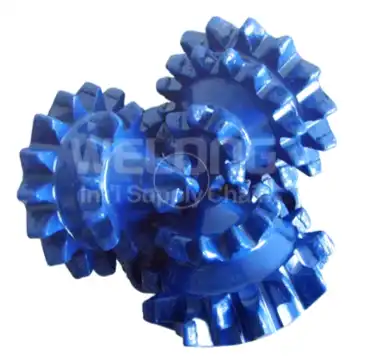
A tricone drill bit has a three-cone configuration that distributes the contact on the bottom of the hole and does not apply all the force on a single cutting structure. As the cones spin, teeth or inserts on the cones contact the formation at various places and angles. This synchronized action leads to a constant rock failure and enables the bit to keep rotating under different weight-on-bit and torque circumstances. Thus, the main factor in drilling efficiency and longevity is cone geometry.
Cone Angles Influence Formation Interaction
Aggressiveness of a tricone drill bit’s contact with the formation is determined by cone angle, journal angle, and the connection between cone centers. A softer-rock design may be more susceptible to scraping and gouging, whereas a harder-formation design often focuses on controlled crushing and insert impact. Proper shape also aids in distribution of axial and radial stresses across the bit body, thereby decreasing concentrated loading and promoting more uniform penetration throughout the drilling interval.
Row Arrangement Supports Load Sharing
Tricone drill bit bottomhole contact is a function of inner, middle, and outer row placement. The distance between rows must be wide enough so that the cutters may cut new rock and still have sufficient clearance for the cuttings. It also avoids needless interaction between neighboring rows. WELONG can supply the milling teeth and tungsten carbide insert designs, and the cutting pattern may be set according to formation hardness, abrasiveness, drilling speed, and the predicted operating load.
Tricone Drill Bit Tooth and Insert Design for Formation-Specific Wear Resistance
Milled-Tooth Profiles for Softer Formations
A machined-tooth tricone drill bit has steel teeth milled directly into the cone material. These teeth may be designed for penetration in soft to medium strata where forceful scraping and gouging assist in effectively removing rock. The tooth surfaces are hardfaced with a premium tungsten carbide for greater resistance against abrasive wear. This provides a cutting structure which can maintain tooth height and cutting action for a longer amount of time, provided drill conditions are appropriately matched.
Tungsten Carbide Inserts for Hard Rock
A tungsten carbide insert tricone drill bit is best suited for formations needing more impact resistance and better wear prevention. Inserts are pushed or fixed into correctly made holes in the cones, and their form, spacing, exposure, and grade impact the drilling behavior. New carbide compositions and production methods may increase the durability of inserts. You may pick button, conical, and chisel-type inserts for a combination of crushing strength, penetration, and formation response.
Matching Cutter Design to Rock Properties
The choice of tricone drill bits depends on the compressive strength of the formation, its abrasiveness, plasticity, interbedding, and fracture behavior. In a softer formation, longer, more aggressive teeth may be an advantage. A harsh abrasive period often calls for strong carbide inserts and regulated exposure. The right design is not down to one element alone. Tooth profile, cone shape, hydraulic flow, bearing capacity, and gage protection must all work together to provide dependable footage and usable bit life.
How Do Tricone Drill Bit Bearing and Seal Systems Extend Operating Life?
Roller Bearings Carry Repeated Drilling Loads
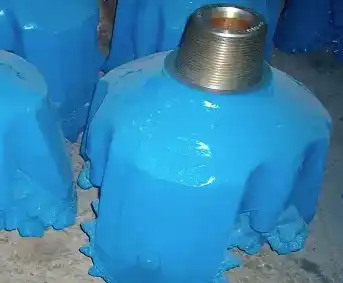
The bearing system transmits the radial and axial loads between the spinning cones and the bit body. In a tricone drill bit, a high-precision roller bearing can take repeated weight-on-bit and rotating stresses, while enabling the cone to rotate smoothly. The WELONG design has two thrust faces, and the roller arrangement may increase the bearing surface of the leg so that it is appropriate for greater loading and demanding rotational speeds.
Thrust Faces Improve Contact Reliability
The bit is pressed on the formation, and the thrust faces take high axial force. These surfaces in a tricone drill bit must hold the cones in the precise place and withstand wear, heat, and seizure. The alloy hardfacing on thrust faces may be wear-resistant to increase the abrasion resistance and assist in steady operation. A ball-locking system also aids in retaining the cone on the leg, therefore maintaining the cutting structure in proper alignment during drilling.
Seals Protect the Internal Bearing Area
If a sealed-bearing arrangement is provided, the seal is designed to retain lubrication and minimize the ingress of drilling fluid, solids, and formation debris. The protection enables the tricone drill bit bearing system to function with more uniform lubrication along the run. Service performance depends on seal material, contact pressure, temperature capabilities, and manufacturing precision. The seal has to be an integral part of the bearing design and not a separate component.
Tricone Drill Bit Hydraulic Design for Better Cooling and Cuttings Removal
Fluid Jets Clean the Cutting Structure
Hydraulic design controls the delivery of the drilling fluid to the bottom of the hole and around the revolving cones. Nozzles, located at the proper positions in a tricone drill bit, send high-velocity fluid to the cutting structure to assist in removing the loosened rock and to minimize the build-up of cuttings between the teeth or inserts. Good cleaning results in cutters being exposed to new formation and helps to maintain a more constant rate of penetration.
Circulation Helps Manage Heat
During rock breaking, heat is generated at the cutter, cone, and bearing surfaces. The drilling fluid running through a tricone drill bit removes heat from the cutting zone and carries debris to the annulus. Hydraulic design should include flow rate, mud characteristics, nozzle size, pump pressure, hole diameter, and formation reaction. If these factors are controlled well, the fluid system may support both cutting efficiency and component life.
Nozzle Selection Supports Drilling Objectives
Nozzle size and arrangement influence bottomhole velocity, pressure distribution, and energy available for cleaning. Depending on the size of the hole and the projected rotating speed, the hydraulic arrangements for a tricone drill bit may have to be different for a big hole or heavy solids environment than for a smaller hole. The choice should be based on the overall drilling program, the mud density and viscosity, the projected rate of penetration, bit size, and the available pump capacity.
How Does Tricone Drill Bit Gauge Protection Preserve Hole Size and Bit Durability?
Gauge Inserts Control Hole Diameter
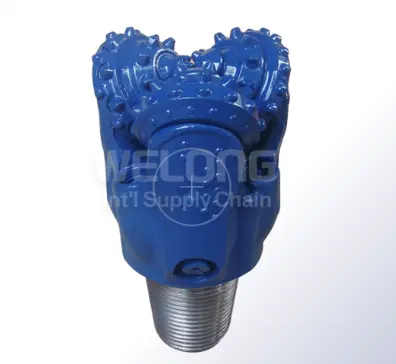
The gauge section contacts the borehole wall and helps the tricone drill bit maintain its planned diameter. Gauge inserts placed on the cone gauge surface resist abrasive contact as the bit rotates and moves through the formation. By limiting gauge wear, these inserts help preserve hole size and reduce the possibility of an undersized interval that could complicate casing, logging, completion, or subsequent drilling operations.
Heel and Shirttail Protection Reduce Wear
The heel and shirttail areas experience contact with cuttings and the formation wall, particularly in abrasive or deviated drilling conditions. WELONG’s design uses gauge trimmers on the heel, together with tungsten carbide inserts and hardfacing on the gauge surface and shirttail. This multiple-protection approach helps a tricone drill bit retain its gauge structure while protecting the leg and bearing area from excessive external wear.
Manufacturing Control Supports Consistent Gauge Performance
Gauge protection is most effective when insert placement, hardfacing quality, cone alignment, and body dimensions are consistently controlled. WELONG has more than 20 years of oilfield manufacturing experience and follows structured in-process and final inspection procedures. Its products are available from 4 3/4 inches to 36 inches, with quality management supported by ISO 9001:2015 and API 7-1 certification. Material and testing plans may also be reviewed against applicable ASTM International standards.
Conclusion
A durable tricone drill bit depends on the interaction of cone geometry, tooth or insert design, bearing and seal protection, hydraulic performance, and gauge reinforcement. Each feature should be selected according to formation properties, drilling parameters, and expected wear mechanisms. WELONG supplies milled-tooth and tungsten carbide insert bits from 4 3/4 inches to 36 inches, supported by controlled manufacturing, inspection, customization, and global logistics. This integrated approach helps drilling contractors improve bit life, preserve hole quality, and achieve dependable performance across varied oilfield applications.
FAQ
1: What sizes of tricone drill bit does WELONG supply?
WELONG supplies tricone drill bit sizes from 4 3/4 inches up to 36 inches. The available designs include milled-tooth and tungsten carbide insert types. Selection should consider formation hardness, abrasiveness, hole size, weight-on-bit, rotary speed, hydraulic capacity, and the required gauge protection level for the drilling program.
2: How do I choose between a milled-tooth and insert tricone drill bit?
A milled-tooth tricone drill bit is commonly selected for softer to medium formations where aggressive scraping and gouging are beneficial. A tungsten carbide insert bit is generally preferred for harder or more abrasive formations because its inserts provide strong impact and wear resistance. WELONG can help evaluate formation data and operating conditions before recommending a suitable structure.
3: What inspection services are available for WELONG tricone drill bits?
WELONG normally provides in-process inspection and final inspection during production. Customers may also request third-party inspection, with experience coordinating services through SGS and DNV. The company can arrange sea, air, or railway transportation and support FOB, CIF, DDP, and DDU terms according to the customer’s procurement and delivery requirements.
Request Your Tricone Drill Bit Quote Today
WELONG can help you select a tricone drill bit according to formation conditions, bit size, cutter type, bearing requirements, hydraulic design, and gauge protection needs. With more than two decades of oilfield manufacturing experience, ISO 9001:2015 and API 7-1 certification, customized production, inspection support, and flexible delivery options, we provide practical assistance from specification to shipment. Contact our team at [email protected] to request technical details, a quotation, or a tailored drilling-bit solution for your next project.
References
1. American Petroleum Institute. API Specification 7-1: Rotary Drill Stem Elements.
2. Bourgoyne, Adam T., et al. Applied Drilling Engineering. Society of Petroleum Engineers, 1986.
3. Mitchell, Robert F., and Stefan Miska. Fundamentals of Drilling Engineering. Society of Petroleum Engineers, 2011.
4. Rabia, H. Oilwell Drilling Engineering: Principles and Practice. Graham & Trotman, 1985.
5. Azar, J. J., and G. Robello Samuel. Drilling Engineering. PennWell Corporation, 2007.
6. Aadnøy, Bernt S. Modern Well Design. CRC Press, 2010.
Share your inquiry, get the quotation accordingly!

CHINA WELONG - 20+ years manufactuer in oilfield tools