Where to Buy a Kill Manifold: Import and Quality Checklist
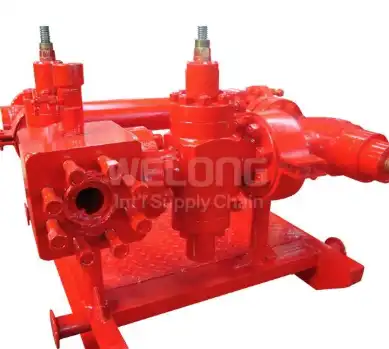
The capabilities of the provider, equipment specifications, pressure ratings, and quality assurance methods must be carefully evaluated to select a kill manifold for drilling operations. The kill manifold is an important part of the well-control system that allows operators to push heavy drilling fluid into the wellbore to compensate for pressure spikes and avoid well kicks and blowouts. Attention to technical compatibility, material specifications, inspection standards, and regulatory requirements is required in the importation of such safety-critical equipment. This guide will assist overseas buyers in negotiating the sourcing process, locating dependable suppliers, and setting up quality checks to import a kill manifold that fulfills drilling system specifications.
What Should Buyers Know Before Importing a Kill Manifold?
Understand Pressure Rating and Bore Size Requirements
Prior to the import of a kill manifold, the customer must explicitly specify the pressure rating and bore size necessary for their drilling activities. Kill manifolds come in pressure ranges from 2000 PSI to 20000 PSI and nominal bore diameters from 2 1/16 inches to 4 1/16 inches. It is determined by the predicted well control situations, the density of the drilling fluid, the estimated wellbore pressure, and the pumping equipment capacity. Wells with an incorrect pressure rating might be ineffective for well control or result in expensive equipment upgrades. Buyers should provide the supplier with full details of the drilling program to verify that the intended kill manifold is correctly sized for the project.
Confirm API Specification Compliance and Material Standards
API Spec 16C covers the drilling spool and adapter specs, and a kill manifold must be developed and built to API Spec 16C. The equipment should also conform to relevant pressure vessel norms, material standards, and local requirements. Buyers should ask for evidence showing the planned kill manifold fulfills API 16C criteria, and specifies the material class (EE or FF) suitable for the drilling environment. Material traceability is particularly critical if the kill manifold will be exposed to corrosive drilling fluids or will be working in sour service conditions. Material certifications and pressure-test documents are regular offerings from professional vendors.
Evaluate Supplier Experience With Well-Control Equipment
When you choose a kill manifold from a vendor that has oilfield expertise, you are more certain that they know what they are doing and that they will provide quality. China Welong has been specializing in oilfield goods for over twenty years, offering tailored solutions and systematic quality control procedures. Buyers should evaluate the prior expertise of the provider on kill manifold projects, manufacturing capacity, and ability to handle international logistics. Our long-term expertise in the production of well-control equipment has given us knowledge of safety-critical requirements, regulatory expectations, and field performance factors that are crucial to this kind of equipment.
How to Identify a Reliable Kill Manifold Supplier for Oilfield Applications?
Verify Certifications and Quality Management Commitment
A good kill manifold provider will possess quality management certifications, which are a testament to their well-structured system for controlling manufacturing and their dedication to ongoing process improvement. ISO 9001:2015 and API 7-1 certified, China Welong shows its dedication to quality management concepts and adherence to standards for oilfield equipment. These certifications show the supplier has written processes for material acquisition, production planning, in-process quality checks, final inspection, and documentation control. Review the supplier’s quality documents to check certifications and understand how they relate, especially to kill manifold fabrication.
Assess Manufacturing Facilities and Technical Capability
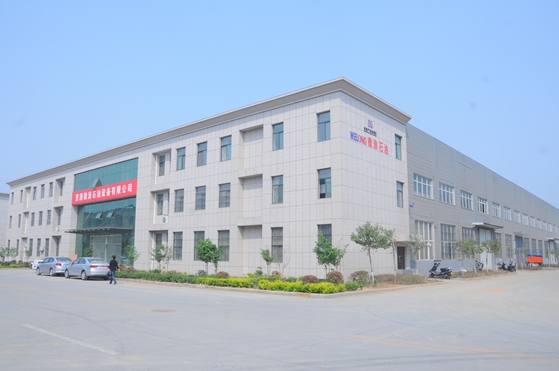
The manufacturing competence of a kill manifold provider is closely related to the quality and dependability of delivery of the equipment. Buyers should question the provider about his manufacturing facilities, machining capability, welding methods, assembly techniques, and testing equipment. A competent manufacturer should have the appropriate equipment to machine valve bodies, assemble pressure-containing parts, hydrostatically test, and visually and dimensionally examine. Site inspections or thorough facility descriptions may assist customers in verifying that the provider has the technological infrastructure to build a strong kill manifold.
Evaluate Communication and Technical Responsiveness
How a kill manifold provider answers technical questions during the quote process says a lot about their involvement and preparedness. Professional suppliers will ask very specific questions on drilling program parameters, wellbore geology, expected fluid characteristics, expected well-control scenarios, connection standards, and project timing. They should provide a detailed technical explanation of how the suggested kill manifold layout would meet the requirements of the drilling operation. If the provider replies with competent, technical communication, it is a good sign that they will be there throughout manufacturing and delivery.
Essential Quality Factors to Check When Purchasing Kill Manifold Equipment
Pressure Testing and Leak Detection Procedures
Before delivery, a kill manifold must pass comprehensive pressure testing to ensure that all pressure-containing components are sound and that sealing surfaces are effective. Typical testing includes hydrostatic pressure testing at pressures exceeding the rated working pressure to verify structural integrity and material quality. Buyers should request detailed descriptions of the testing procedure, testing pressure, hold time, acceptance criteria, and documentation of test results. China Welong applies both in-process and final inspection procedures, with the capability to arrange third-party inspection through organizations such as SGS or DNV when required.
Valve Function and Component Integration Verification
The kill manifold incorporates check valves and gate valves that must function reliably under pressure and temperature extremes. Check valves must prevent backflow, while gate valves must provide reliable shut-off capability. Buyers should ask the supplier about valve testing procedures, pressure drop verification, sealing capability checks, and functional operation confirmation. The supplier should provide documentation of valve performance testing and evidence that all integrated components have been verified for compatibility and correct operation before assembly into the complete kill manifold unit.
Material Traceability and Corrosion Resistance Documentation
The materials used in a kill manifold directly affect its resistance to corrosion, erosion, and chemical attack from drilling fluids and wellbore conditions. Buyers should request material certificates identifying the grade, source, and test results for all pressure-containing components. When the kill manifold is intended for sour service or exposure to corrosive drilling fluids, special material grades may be required. Professional suppliers maintain full material traceability and can provide documentation confirming that selected materials meet the specified requirements and applicable standards such as ISO 9001:2015 certifications.
Visual Inspection and Surface Condition Documentation
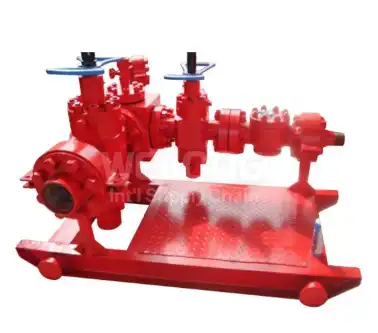
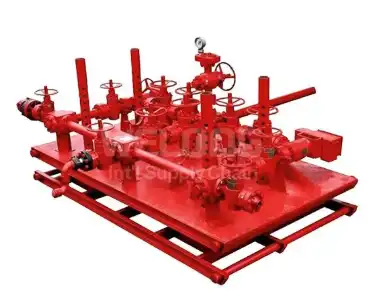
The external condition of a kill manifold affects its appearance, ease of installation, and field safety. Buyers should specify requirements for surface finish, paint or coating application, nameplate information, and lifting lug design. Professional manufacturers should provide photographs of the finished kill manifold before packing, confirming that the equipment meets visual quality standards and that any surface defects have been corrected. Clear documentation of surface condition prevents receiving disputes and ensures that the delivered equipment is ready for installation without requiring field remediation.
What Questions Should Importers Ask Kill Manifold Manufacturers Before Ordering?
What Is the Complete Supply Scope and Accessory List?
Importers should obtain a complete bill of materials for the kill manifold order, indicating each part included in the delivery. The list must specify the manifold body, any included valves, line pipes, pressure gauges, plugs, caps, test ports, lifting lugs, paint or protective coating, and any accessories. Clarity of scope of supply avoids misunderstandings and enables the customer to evaluate the bids of various suppliers on an equal footing. The seller should also state if replacement parts, operating manuals, test certificates, or installation tools are included in the delivery or might be supplied optionally.
What Testing and Certification Documentation Will Be Provided?
Buyers should clarify what inspection and test paperwork will be supplied with the kill manifold prior to placing an order. Standard paperwork should contain material certifications, dimensional inspection reports, pressure test records, hydrostatic test findings, visual inspection pictures, and final acceptance certificates. Buyers should also inquire whether a third-party inspection can be undertaken and what will be included in the inspection report. A clear agreement on the extent of documentation ensures that the supplied package of equipment has all the essential proofs of quality verification and regulatory compliance.
What Are the Production Timeline and Delivery Options?
Importers should have reasonable expectations of the manufacturing lead time and be aware of the possible delivery alternatives for the kill manifold. Manufacturing time varies on the kill manifold arrangement, material availability, and current manufacturing workload. Request estimated production schedules, including material procurement, manufacture, inspection, paperwork preparation, and packaging. They should also check the various shipping methods – sea, air, or rail freight – and delivery terms (FOB, CIF, DDP, DDU) that meet their logistical needs and project timetable.
Can the Kill Manifold Be Customized for Specific Drilling Applications?
Different drilling projects may need different kill manifold layouts incorporating non-standard bore diameters, bespoke valve arrangements, custom pressure ratings, or extra instrumentation connections. Buyers should inquire about the supplier's ability to modify conventional designs and the extent of technical assistance provided for customisation. A bespoke oilfield solution provider may tailor the kill manifold to individual well-control requirements, system integration, or area regulation. Understanding the provider’s customisation capacity and its lead-time implications best allows customers to match their technical needs to a supplier.
How to Select the Right Kill Manifold for Specific Drilling System Requirements?
Match Pressure Rating to Anticipated Well-Control Scenarios
Choosing the right pressure rating for a kill manifold is based on a realistic evaluation of the well control situations that may arise during drilling. The rating should be based on the highest expected wellhead pressure from a well kick or other pressure event. Things like the depth of drilling, formation pressure gradients, the projected amplitude of the kick, and the density of the drilling fluid affect the pressure rating. Buyers should supply the supplier with geological information and well-control analysis to verify that the planned kill manifold pressure rating offers an acceptable safety margin. Over-specification will add to expense needlessly, and under-specification will undermine well-control capacity.
Consider Bore Size and Flow Capacity for Drilling Program
Flow capacity and pumping efficiency during well-control operations are determined by the bore size of a kill manifold. Larger bore diameters allow for greater fluid flow rates and thereby reduce the pumping time during well-control operations. But bigger manifolds may need various connection sizes and cost more. The selection must be compatible with the available pumping equipment to be used in the drilling program and the amount of fluid to be pumped into the wellbore for pressure control. The purchase of an appropriate bore size of the kill manifold is dependent upon the pumping capability of the driller and the expected well-control fluid needs of the drilling program and should be discussed with the provider.
Verify Component Integration With Existing Drilling Equipment
The kill manifold must be compatible with the current well control system, pump equipment, blowout preventer stack and accumulator systems. Buyers are advised to advise the provider of connection sizes, pressure rating, and equipment configuration to ensure compatibility. The supplier should ensure that the kill manifold connection ports, pressure ratings, and valve configurations are compatible for use with the specified drilling equipment. Early checks for compatibility eliminate the need to modify fields and delays resulting from detecting integration problems after delivery of the equipment.
Conclusion
Factors to consider when choosing a death manifold provider include technical competence, production standards, certifications and customisation options. Buyers are advised to check pressure ratings, bore diameters, material specifications, and API 16C compliance before placing orders. As a trustworthy supplier in China, Welong offers tailored solutions, organized quality control, third-party inspection coordination, and timely logistical assistance. Importers may choose kill manifold equipment that is properly integrated with drilling systems and supports safe, dependable well-control operations via a careful supplier selection process and open technical discussions.
FAQ
1. What pressure ratings and bore sizes are available for kill manifolds?
A kill manifold is manufactured in pressure ranges from 2000 PSI to 20000 PSI with nominal bore sizes from 2 1/16 inches to 4 1/16 inches. The correct selection depends on anticipated well-control requirements, drilling fluid properties, wellhead pressure, and pumping system capacity for the specific drilling program.
2. Can a kill manifold be customized for sour service or corrosive drilling conditions?
Yes. A kill manifold can be equipped with special material grades (such as higher-specification EE or FF classes) and corrosion-resistant components when designed for sour service or exposure to corrosive drilling fluids. The buyer should specify the expected chemical composition and corrosive conditions so appropriate materials can be selected during design and manufacturing.
3. What inspection procedures are performed on a kill manifold before shipment?
A professional supplier performs in-process inspection, final visual inspection, dimensional verification, hydrostatic pressure testing, and functional valve checks before packing the kill manifold. Third-party inspection through organizations such as SGS or DNV can be arranged when required. Buyers should receive certified inspection reports confirming successful completion of all quality checkpoints.
Secure Reliable Kill Manifold Equipment From WELONG
Protect your drilling operations with a dependable kill manifold from China Welong. As a specialized oilfield equipment supplier with over twenty years of industry experience, WELONG manufactures robust well-control equipment that meets API 16C specifications and stringent quality standards. Our ISO 9001:2015 and API 7-1 certified production processes ensure consistent quality, while our in-process and final inspection procedures provide comprehensive verification. We can support customized kill manifold configurations, coordinate third-party inspection, and arrange flexible global delivery by sea, air, or rail using FOB, CIF, DDP, or DDU terms. Contact WELONG today at [email protected] to discuss your drilling program requirements, request technical specifications, or receive a customized kill manifold quotation.
References
1. American Petroleum Institute. Specification for Drilling Spool and Adapter Connections, API Specification 16C.
2. American Petroleum Institute. Recommended Practice for Control of Wellbore Pressure, API Recommended Practice 53.
3. Bourgoyne, A. T., Millheim, K. K., Chenevert, M. E., and Young, F. S. Applied Drilling Engineering.
4. Grace, R. D. Blowout and Well Control Handbook.
5. Rehm, B., Williams, H. B., McClendon, R. T., and Greene, B. K. Managed Pressure Drilling.
6. International Organization for Standardization. ISO 13533: Petroleum and Natural Gas Industries—Drilling and Production Equipment—Drill-through Equipment.
Share your inquiry, get the quotation accordingly!
CHINA WELONG - 20+ years manufactuer in oilfield tools