What is a Drill Collar? Importance, and Applications Explained
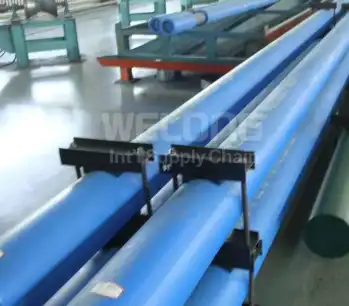
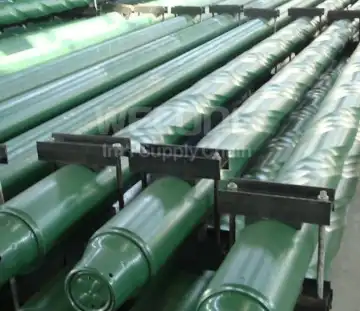
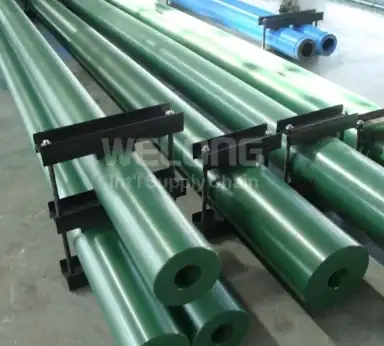
Thousands of feet below the rig floor, deep in every drill string, there is one component that is so essential that drilling could not proceed without it: the drill collar. Above the bit, immediately, are hefty, thick-walled steel tubes that provide the downward weight needed to smash rock and the rigidity needed to keep the hole going straight. Manufactured in slick, spiral, and non-magnetic forms of AISI 4145H and 4145H MOD steel, the drill collar is available in outer diameters from 3-1/8” to 11”. The drill collar is much more than a basic weight; it represents the structural backbone of the bottom hole assembly. This tutorial is all about the drill collar. We’ll explain what it is, why it’s important, how it works, and how to choose the appropriate one.
Why Is Drill Collar an Essential Component in Oil and Gas Drilling?
Supplying the Weight That Drives the Bit
A drill bit only cuts when it is pressed into the formation with sufficient force, and that force comes almost entirely from the drill collar stack. Each collar's massive wall—essentially a steel bar with a small bore—delivers far more weight per foot than any other string component. By lowering this weight onto the bit while the rig holds the upper string in tension, the driller controls penetration precisely, matching bit load to formation hardness throughout every foot of the hole section being drilled.
Protecting the Drill Pipe Above
Standard drill pipe excels in tension but fails rapidly under compression, buckling and fatiguing when pushed rather than pulled. The drill collar solves this structural conflict by absorbing all compressive loading at the bottom of the string, keeping the neutral point—the boundary between tension and compression—safely below the drill pipe. This protective arrangement allows thousands of feet of relatively lightweight pipe to hang undamaged above, dramatically extending its service life across many wells and drilling campaigns.
Providing a Platform for Downhole Tools
Beyond weight, the drill collar serves as the structural chassis of the bottom hole assembly. Stabilizers, jars, shock subs, and measurement-while-drilling tools all integrate around the collar stack, relying on its strength and standardized connections. Non-magnetic drill collar sections create the magnetically quiet zone that MWD instruments require for accurate surveys. Without this robust, adaptable platform, the sophisticated downhole technology that defines modern drilling would have no reliable foundation to work from.
How Does Drill Collar Improve Wellbore Stability and Drilling Control?
Stiffness That Keeps the Bit on Course
Deviation control depends on rigidity, and the drill collar provides it in abundance. Its resistance to bending keeps the bit aligned with the existing wellbore, discouraging the hole from wandering into unwanted angles. In crooked-hole country, engineers exploit this property deliberately, running stiff collar assemblies or pendulum arrangements that push the trajectory back toward vertical. The result is a smoother, straighter wellbore that accepts casing easily, reduces torque and drag, and reaches its geological target as planned.
Spiral Design for Sticking Prevention
In permeable formations drilled with heavy mud, pressure differential can press a stationary string against the filter cake and lock it in place—an expensive problem called differential sticking. The spiral drill collar addresses this risk through machined grooves that reduce wall contact area dramatically, leaving far less surface for the pressure differential to grip. Wells drilled through depleted zones or with high overbalance benefit most, gaining insurance against stuck pipe while sacrificing only a small fraction of the collar's weight.
Reducing Vibration for Smoother Drilling
A rotating string vibrates in complex patterns, and uncontrolled vibration damages bits, tools, and connections alike. The drill collar's mass and stiffness dampen these oscillations, providing an inertial anchor that steadies the bit's cutting action. Smoother rotation means more uniform loading on bit cutters, slower wear, and fewer premature failures downhole. Combined with proper rotary speed and weight selection, a well-designed collar stack turns a chaotic mechanical environment into a controlled, predictable cutting process.
The Working Mechanism of Drill Collar in Downhole Drilling Systems
Compression Below, Tension Above
The mechanical genius of the drill collar lies in its position within the string's stress architecture. Everything above the neutral point hangs in tension; everything below works in compression. The collar occupies the compression zone by design, its thick wall thriving under loads that would destroy thinner pipe. Drilling engineers calculate how many collars a given bit weight requires, ensuring the neutral point remains within the collar or heavy-weight section even as mud density and bit loading change.
Connection Engineering: Stress Relief and Bore Back
Fatigue failures cluster at threaded connections, where stress concentrates at the last engaged thread. Quality drill collar design fights back with two proven features: the stress relief groove on the pin and the bore-back box, both of which redistribute stress away from critical thread roots. These machined details, specified in API recommended practices, dramatically extend connection fatigue life under cyclic bending. Pressed steel thread protectors then shield the finished connections during transport and handling, preserving them until make-up.
Material Science Behind the Strength
A drill collar's performance begins in the steel mill. AISI 4145H and 4145H MOD chromium-molybdenum alloys provide the combination of hardness, toughness, and fatigue resistance that downhole service demands, delivered through quenching and tempering heat treatment performed to API standards. This processing develops uniform mechanical properties through the collar's full wall thickness, ensuring the heavy section performs consistently from surface to connection. Material traceability and mechanical testing documentation give buyers confidence that every collar meets its specified grade.
Drill Collar Applications in Vertical, Directional, and Deep Well Drilling
Vertical Wells: Weight and Deviation Control
The classic drill collar application remains the vertical well, where tall collar stacks generate bit weight efficiently while their stiffness resists the formation's natural tendency to push the hole off vertical. Slick collars maximize both weight and wall support in these applications. Whether drilling soft surface formations or hard basement rock, the fundamental formula stays constant: enough collars to load the bit properly, positioned to keep compression where it belongs, drilled straight to target.
Directional and Horizontal Wells
Steerable drilling places new demands on the drill collar. Non-magnetic sections house MWD tools, isolating their sensors from magnetic interference so surveys remain accurate through every build and turn. Collar count and placement shift as engineers balance weight delivery against torque and drag in high-angle sections. In horizontal laterals, collars may even be positioned partway up the string—an inverted arrangement that still relies on the same fundamental principles of weight, stiffness, and fatigue-resistant construction.
Deep and HPHT Wells
Deep wells amplify every challenge: higher loads, longer strings, elevated temperatures, and unforgiving formations. The drill collar answers with larger outer diameters—up to 11 inches—for greater weight and stiffness, backed by heat-treated 4145H MOD steel that retains its properties under sustained downhole stress. Deep drilling programs consume collars through sheer accumulated fatigue, making material quality and connection engineering decisive factors in how long each joint survives before inspection forces retirement from the active string.
How to Choose the Right Drill Collar for Different Drilling Requirements?
Matching Size and Weight to the Program
Selection starts with arithmetic: the bit weight your program requires determines the collar weight needed below the neutral point, with a safety margin of roughly ten to fifteen percent. Outer diameters from 3-1/8" to 11" cover everything from slim-hole work to large surface sections, and the collar's bore affects both weight and fishing considerations. Your drilling engineer should verify that the chosen drill collar size pairs correctly with the hole diameter, stabilizer gauge, and connection types already in the string.
Slick vs Spiral: Reading the Formation
Sticking danger leads to the slick-versus-spiral choice. High permeability formations, large overbalance, or depleted pressures are major proponents of the spiral drill collar and its limited wall contact. Slick collars may also optimise weight and ease of handling with competent, low-risk formations. Drilling contractors often use spiral designs for exploratory wells in unknown circumstances and slick collars for development projects when pressure regimes are well known, and mud weights have proved effective.
Non-Magnetic Options for Survey Accuracy
Any well using magnetic MWD surveys needs non-magnetic drill collar sections—typically one to three depending on tool specifications and wellbore geometry. These specialized alloys cost more than standard steel, so buyers should size the requirement carefully rather than over-ordering. Confirm that the non-magnetic collars carry the same mechanical property documentation and inspection records as the rest of the string, since they bear identical downhole loads while protecting survey integrity.
Verifying Quality Through Certification and Inspection
A drill collar is only as trustworthy as the mill and machine shop behind it. Look for manufacturers certified to ISO 9001:2015 and API 7-1, whose audited quality systems govern everything from steel sourcing to final thread gauging. WELONG, with over 20 years of oilfield manufacturing experience, applies strict in-process and final inspection to every collar and offers third-party verification through SGS or DNV for projects requiring independent confirmation—documentation that protects your operation long after delivery.
Conclusion
The drill collar deserves its position at the center of every drill string by virtue of an incomparable mix of weight, rigidity and structural dependability. It carries the bit, protects the drill pipe from compression, stabilises the wellbore and houses the measuring equipment that steers today’s wells to their goals. From vertical holes to deep HPHT possibilities, it’s all about selecting the proper size, type and material and sourcing from recognised manufacturers with inspection standards that meet the needs of the downhole environment. Choose carefully, and the drill collar will be the reliable backbone of every well you drill.
FAQ
Q1: What sizes and materials are drill collars available in?
Standard drill collar outer diameters range from 3-1/8" to 11", covering slim-hole through large-diameter applications. Most are manufactured from AISI 4145H or 4145H MOD chromium-molybdenum steel, quenched and tempered to API standards. Non-magnetic versions are produced from specialized alloys for MWD survey applications, maintaining comparable mechanical properties while eliminating magnetic interference with downhole instruments.
Q2: What is the difference between slick and spiral drill collars?
A slick drill collar has a smooth, full-diameter body that maximizes weight per foot and suits formations with low sticking risk. A spiral drill collar features machined grooves along its body that reduce wall contact area, significantly lowering the risk of differential sticking in permeable formations and high-overbalance conditions, at the cost of a small reduction in weight.
Q3: Why do drill collar connections have stress relief grooves and bore-back features?
Cyclic bending concentrates stress at the last engaged thread of each connection, the classic starting point for fatigue cracks. The stress relief groove on the pin and the bore-back feature on the box redistribute this stress away from critical thread roots, substantially extending connection fatigue life. These API-recommended features are essential for collars working in deviated wells or high-cycle drilling environments.
Source High-Quality Drill Collars From WELONG
Ready to strengthen your drill string with dependable drill collars? Founded in 2001, China WELONG is a professional international supply chain service provider specializing in oilfield products and customized solutions, certified to ISO 9001:2015 and API 7-1. Our drill collars—available in 3-1/8" to 11" OD, slick and spiral designs, AISI 4145H/4145H MOD and non-magnetic materials, with stress relief grooves, bore-back features, and pressed steel thread protectors—are manufactured under strict quality control, with SGS and DNV third-party inspection available. With sea, air, and railway transport and terms from FOB to DDP, we deliver on schedule, worldwide. Contact us today at [email protected] for a tailored quotation and expert support.
References
1. American Petroleum Institute. API Specification 7-1: Specification for Rotary Drill Stem Elements, 1st Edition. API Publishing, 2006.
2. American Petroleum Institute. API Recommended Practice 7G-2: Recommended Practice for Inspection and Classification of Used Drill Stem Elements, 1st Edition. API Publishing, 2009.
3. Bourgoyne, Adam T., Keith K. Millheim, Martin E. Chenevert, and F. S. Young. Applied Drilling Engineering. Society of Petroleum Engineers, 1986.
4. Mitchell, Robert F., and Stefan Z. Miska. Fundamentals of Drilling Engineering. Society of Petroleum Engineers, 2011.
5. Samuel, G. Robello, and Xiushan Liu. Advanced Drilling Engineering: Principles and Designs. Gulf Publishing Company, 2009.
6. International Association of Drilling Contractors. IADC Drilling Manual, 12th Edition. IADC, 2015.
Share your inquiry, get the quotation accordingly!

CHINA WELONG - 20+ years manufactuer in oilfield tools