What Is a Ram Blowout Preventer? Uses and Benefits
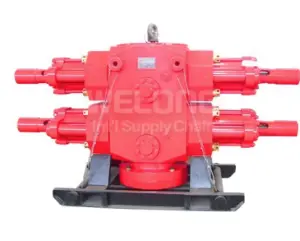
On a drilling site, few instruments bear as much responsibility in a single instant as the ram blowout preventer. Mounted atop the wellhead, it is a key part of the well control system, the equipment that lies between a controlled kick and an uncontrolled blowout, able to close in the well by closing around the drill string, sealing up an open hole, or even shearing pipe to stop the well entirely. Modern designs like the BL ‘U’ type BOP show that compact engineering and ultimate durability can go hand in hand, offering a lightweight, reduced profile body with hydraulic bonnets for rapid ram change-out. This handbook describes the function of a ram blowout preventer, its applications and the advantages associated with using it in drilling operations.
What Are the Main Components of a Ram Blowout Preventer and How Do They Work?
BOP Body and Ram Cavities
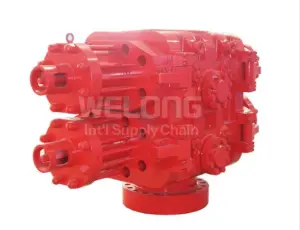
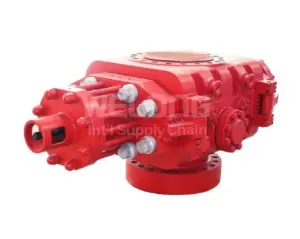
The body of a ram blowout preventer is typically square-shaped, with a vertical bore through which drill pipe, casing, and tools pass during normal operations. Horizontal ram cavities extend from this bore on opposite sides, housing the ram blocks that slide inward to close around—or across—the wellbore. This compact geometry gives the BOP its characteristic low profile while maintaining the strength needed to contain full well pressure, and the precision-machined cavities ensure rams travel smoothly and seat correctly every time they are activated.
Hydraulic Bonnets and Actuation System
Hydraulic pressure drives everything in a ram blowout preventer. Pistons inside the bonnet assemblies push the rams closed and retract them open on command from the rig's accumulator unit. On well-engineered designs such as the BL 'U' type, hydraulic pressure also opens and closes the bonnets themselves, allowing crews to change rams quickly and safely without heavy manual handling. This feature matters during drilling programs that switch between pipe sizes, because fast ram change-out keeps the operation moving while maintaining full well control capability.
Connection Types and API 16A Compliance
A ram blowout preventer must integrate seamlessly with the wellhead below and the rest of the BOP stack above. Manufacturers offer studded, flanged, and hubbed top and bottom connections to suit different stack configurations, with flange sizes, bolts, clamps, and ring grooves all conforming to API 16A. This standardization guarantees interchangeability between stack components, simplifies procurement for multi-rig fleets, and ensures every pressure-containing connection meets verified dimensional and testing requirements recognized across the global drilling industry.
Ram Blocks and Sealing Elements
The rams themselves are the working heart of the assembly. Each ram block carries elastomeric sealing elements—packers and semi-rings—that compress to form a pressure-tight seal around pipe or across the open bore. In a ram blowout preventer with double-faced rams, both faces are symmetrical, so adapting to a different pipe size requires only replacing the rubber seal semi-ring and ram briquetting while the remaining parts stay interchangeable. This modularity reduces spare inventory and simplifies maintenance planning considerably.
How Does a Ram Blowout Preventer Control Well Pressure During Drilling Operations?
Closing Around the Drill String
When a kick is detected, pipe rams are the first mechanical barrier deployed. The ram blowout preventer closes its blocks around the drill pipe body, sealing the annulus between the string and the wellbore while leaving the pipe's inner bore accessible for circulation. Crews can then pump kill-weight mud through the drill string and out the choke line, regaining hydrostatic control in a managed way. Correctly sized pipe rams, matched to the string in use, make this response fast and dependable.
Sealing an Open Hole
If the drill string is out of the hole when formation pressure threatens, blind rams take over. These solid-faced blocks close directly across the wellbore, and their packers compress against each other to seal the open hole completely. A ram blowout preventer equipped with blind rams therefore protects the well during trips, logging, and cementing—phases when no pipe is present to close around. Regular function testing verifies that this capability remains ready throughout every stage of the drilling program.
Shearing and Sealing in Emergencies
For the rare situations where nothing else will suffice, shear rams provide the ultimate response. These hardened blocks cut through drill pipe, tubing, or other tools in the hole and then fully seal the wellhead in a single motion. A ram blowout preventer fitted with shear rams gives operators a last-resort barrier that works even when pipe cannot be moved or dropped. Modern designs deliver the required shearing force through generous hydraulic piston areas while preserving a compact, lower-profile body.
Key Applications of Ram Blowout Preventer in Onshore and Offshore Drilling
Land Drilling and Workover Rigs
Onshore, the ram blowout preventer sits at the center of the well control stack on everything from shallow workover rigs to deep gas exploration units. Land operations value the lightweight, lower-profile design because it simplifies transport between locations and reduces rig-up height. Quick hydraulic ram change-out is equally appreciated on workover programs, where pipe sizes change frequently between wells and every hour of rig time carries direct cost for the operator and service company alike.
Offshore Platforms and Jack-Up Operations
Offshore, stack space and deck load come at a premium, making the compact footprint of a modern ram blowout preventer especially valuable. Platform and jack-up drilling rely on ram BOPs rated to the well's maximum anticipated pressure, with materials selected for the marine environment and sour service where required. The ability to swap rams rapidly through hydraulic bonnets minimizes the time the stack is opened for maintenance—an important operational advantage when weather windows and vessel schedules drive the program.
High-Pressure Exploration Wells
Deep exploration wells, where formation pressures are uncertain and kicks can develop violently, demand the highest-specification equipment. A ram blowout preventer for these applications combines high working pressure ratings with shear ram capability, variable rams for tapered strings, and full API 16A traceability. Operators typically stack multiple ram cavities—pipe, blind, and shear—so that several independent barriers are available at once, providing layered protection through the most demanding hole sections of the well.
What Types of Ram Blowout Preventer Are Used for Different Well Conditions?
Double-Faced and Single-Faced Rams
Double-faced rams offer outstanding flexibility: both faces are symmetrical, so converting the ram blowout preventer to a different pipe size requires only new rubber seal semi-rings and ram briquetting, with all other parts interchangeable. Single-faced rams, by contrast, are not reversible and are built for one dedicated size. Drilling contractors handling varied programs often favor double-faced designs to reduce spare parts inventory, while single-faced rams remain a straightforward choice for long campaigns using one consistent string size.
Variable Rams for Multiple Pipe Sizes
Where drill strings include several pipe diameters—or where wireline and annular tubing must be sealed—a variable ram blowout preventer provides the answer. Variable rams seal effectively across a defined range of tool sizes using specially designed packer geometry, eliminating the need to change ram blocks every time the string configuration changes. This capability is particularly useful during completions and interventions, when different tools pass through the BOP and continuous well control must be maintained throughout the operation.
Shear and Blind Rams for Full-Bore Closure
Complete well closure requires dedicated ram types. Shear rams cut through the drilling tools in the hole and fully seal the wellhead in one stroke, serving as the emergency barrier of last resort. Blind rams seal the open wellbore when no pipe is present. Many operators specify combination shear-blind designs in their ram blowout preventer stack, gaining both functions in a single cavity. Choosing among these types depends on the well plan, the tools in the string, and the operator's barrier policy.
How Does a Ram Blowout Preventer Improve Drilling Safety and Operational Reliability?
Redundant Barriers in the Stack
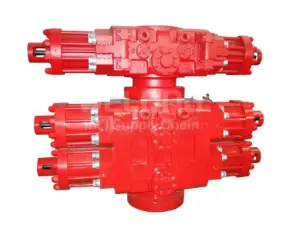
Well control philosophy relies on layered protection, and the ram blowout preventer delivers it directly. A typical stack combines several ram cavities—pipe rams sized for the string, a blind or shear ram above—so that if one barrier is unavailable, others remain ready. Each cavity operates independently from the rig's accumulator, giving crews multiple verified options for closing in the well. This redundancy is what turns a potential crisis into a routine, controlled well kill operation.
Material Integrity for Demanding Service
BOP bodies and rams work under extreme cyclic loads and, in sour wells, constant exposure to H₂S. Manufacturers select high-strength, heat-treated steels with verified toughness, guided by material performance data from resources such as the National Science Data Center for Corrosion and Protection of Materials. A ram blowout preventer built from properly specified alloys resists sulfide stress cracking and wear through years of service, protecting both the crew and the substantial investment the equipment represents.
Certified Manufacturing and Independent Inspection
Reliability is proven, not promised. Buyers should look for ram blowout preventer suppliers certified to ISO 9001:2015 and API 7-1, with documented in-process and final inspection on every unit. WELONG, drawing on more than 20 years of oilfield manufacturing experience, applies strict quality control throughout production and offers updated inspection services that add third-party verification through SGS or DNV. This layered assurance gives drilling contractors confidence that the BOP on their stack will perform exactly as designed when it matters most.
Conclusion
The ram blowout preventer remains the backbone of well control, closing around pipe, sealing open holes and shearing through equipment in the case of an emergency. The small square body, hydraulic bonnets, API 16A connections and modular ram designs all provide rapid response and simple maintenance on land rigs, offshore platforms and high-pressure exploration wells. The proper mix of pipe, variable, blind and shear rams, manufactured by a qualified producer and inspected to the highest standards, provides multilayer protection for all drilling programs. When well control is not an option, a quality ram BOP is the barrier you can count on.
FAQ
Q1: What is the difference between pipe rams, blind rams, and shear rams?
Pipe rams seal around a specific drill pipe size, closing the annulus while leaving the pipe bore open for circulation. Blind rams seal the entire wellbore when no pipe is in the hole. Shear rams cut through the tools in the well and then fully seal the wellhead, serving as the emergency barrier of last resort in a ram blowout preventer stack.
Q2: What does API 16A compliance mean for a ram blowout preventer?
API 16A is the international standard governing the design, manufacture, and testing of drill-through equipment. Compliance ensures that flange sizes, bolts, clamps, and ring grooves are standardized and interchangeable, that pressure ratings are verified through documented testing, and that the ram blowout preventer integrates safely with other certified stack components.
Q3: How do double-faced rams reduce operating costs?
Double-faced rams are symmetrical on both faces, so adapting the ram blowout preventer to a different pipe size requires only replacing the rubber seal semi-ring and ram briquetting—all other parts remain interchangeable. This modularity cuts spare parts inventory, simplifies logistics for multi-well programs, and speeds up ram conversions between hole sections.
Secure Your Well Control System With WELONG
Looking for a dependable ram blowout preventer built for real-world drilling demands? Founded in 2001, China WELONG is a professional international supply chain service provider specializing in oilfield products and customized solutions, certified to ISO 9001:2015 and API 7-1. Our BL 'U' type BOPs feature a lightweight, lower-profile design with hydraulic bonnets for quick ram change-out, API 16A-compliant connections, and double-faced, shear, and variable ram options—all manufactured under strict quality control with SGS and DNV third-party inspection available. With flexible sea, air, and railway transport and terms from FOB to DDP, we deliver on schedule worldwide. Contact us today at oiltools@welongpost.com for a tailored quotation and expert technical support.
References
1. American Petroleum Institute. API Specification 16A: Specification for Drill-through Equipment, 4th Edition. API Publishing, 2017.
2. International Organization for Standardization. ISO 13533: Petroleum and Natural Gas Industries — Drilling and Production Equipment — Drill-through Equipment. ISO, 2001.
3. Grace, Robert D. Blowout and Well Control Handbook, 2nd Edition. Gulf Professional Publishing, 2017.
4. Watson, David, Terry Brittenham, and Preston L. Moore. Advanced Well Control. Society of Petroleum Engineers, 2003.
5. International Association of Drilling Contractors. IADC Deepwater Well Control Guidelines, 2nd Edition. IADC, 2015.
6. Lyons, William C., and Gary J. Plisga. Standard Handbook of Petroleum and Natural Gas Engineering, 2nd Edition. Gulf Professional Publishing, 2005.
Share your inquiry, get the quotation accordingly!

CHINA WELONG - 20+ years manufactuer in oilfield tools