What Is Wellhead Equipment? A Buyer’s Guide for Oil & Gas
At the surface of every oil and gas well sits an assembly that quietly carries enormous responsibility: wellhead equipment. It anchors casing strings, contains reservoir pressure, and provides the interface through which a well is drilled, completed, and produced. For buyers, engineers, and procurement teams, understanding how this equipment works—and how to specify it correctly—can mean the difference between a smooth project and costly downtime. This guide walks through the components, core functions, selection criteria, and condition-specific choices involved in purchasing wellhead equipment, so you can approach your next sourcing decision with genuine confidence.
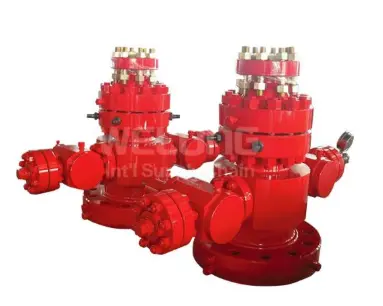
What Components Make Up a Complete Wellhead Equipment System?
Casing Head: The Foundation of the Assembly
The casing head forms the base of the entire wellhead equipment system. Welded or threaded onto the surface casing, it suspends the weight of intermediate and production casing strings while sealing the annular space between them. Modern casing heads are available in working pressures from 2,000 to 15,000 psi and flange sizes from 11" to 21-1/4", giving buyers flexibility across well designs. Side outlets provide access to the annulus for monitoring, cementing returns, or gas bleeding during drilling operations, making this component the structural and functional starting point of the stack.
Tubing Head and Tubing Hanger
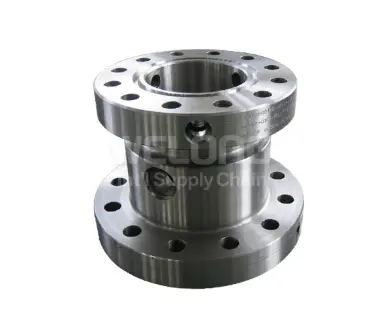
Sitting on top of the casing head, the tubing head is a spool with top and bottom flanges that suspends the production tubing string and seals the annulus between tubing and casing. Within any wellhead equipment package, this component directly supports the completion phase, accommodating tubing hangers with penetrations for downhole gauges, chemical injection lines, or gas-lift valves. Typical flange sizes range from 7-1/16" to 13-5/8", with outlet bores of 2-1/16" or 2-9/16", allowing straightforward matching to the Christmas tree installed above it.
Christmas Tree and Flow Control
Once the tubing hanger is landed, the Christmas tree bolts onto the tubing head to direct and regulate production flow. Although sometimes supplied separately, the tree is functionally part of the wellhead equipment stack, incorporating master valves, wing valves, and a choke for throttling. Buyers should confirm that tree connections match the tubing head top flange in both size and pressure rating, since a mismatch here can delay an entire completion program and compromise the integrity of the primary pressure barrier at the worst possible moment.
Spools, Adapters, and Sealing Elements
Casing spools, crossover adapters, flanges, studs, and gaskets tie the whole assembly together. These seemingly minor pieces of wellhead equipment determine how easily the system accommodates blowout preventers during drilling and how reliably it seals over decades of service. Metal-to-metal seals, elastomeric packoffs, and test ports all contribute to verifiable integrity. When evaluating quotations, buyers should check that every spool and adapter carries the same pressure rating and material class as the primary housings, rather than treating them as afterthoughts.
How Does Wellhead Equipment Support Safe and Efficient Well Operations?
Reliable Pressure Containment
First and foremost, wellhead equipment is a pressure barrier. Reservoir fluids may come to the surface at thousands of psi. Every housing, seal, and flange in the stack must hold that energy without leaking. For operators, a proven envelope of safety is provided with equipment rated for operating pressures of 2,000 to 15,000 psi and tested to API Spec 6A criteria. Routine pressure tests after installation guarantee that each barrier functions precisely as designed prior to the well being placed on production, providing protection to people and the surrounding environment.
Structural Support for Heavy Loads
In addition to the pressure, the wellhead equipment is exposed to substantial mechanical stresses. It supports the combined weight of casing strings which may weigh hundreds of tonnes, holds the blowout preventer stack during drilling and anchors the production tree afterwards. These loads are securely transferred into the surface casing by high-strength forged bodies and strengthened flanged connectors. A properly designed load route avoids casing deformation and maintains the alignment of all components downstream and is critical for the long-term integrity of the well, seamless intervention work, and reliable performance over the producing life of the well.
Operational Flexibility Across the Well Lifecycle
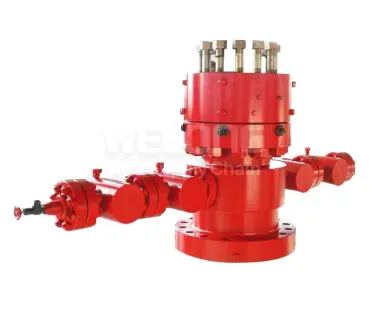
Wellhead equipment is a properly built stack that lets the operator transition from drilling, to completion, to production, to workover modes without changing the base assembly. Side outputs are provided for kill and choke lines, test ports to monitor seal performance, and adapter flanges for alternative BOP or tree designs. This flexibility translates immediately into time savings, as crews may run tools, circulate fluids or shut in the well rapidly, minimising non-productive time and retaining complete control of the well at all stages of its operating life.
Key Functions of Wellhead Equipment in Oil and Gas Production
Sealing the Annular Spaces
An annulus exists between each concentric string of casing (and between the tubing and production casing) that must be sealed off. Hanger packoffs and seal assemblies rated for the well pressure and fluid conditions do the job in the wellhead equipment. The primary purpose of an effective annular seal is to limit gas migration, safeguard freshwater zones, and provide operators with controlled access points for monitoring annulus pressure, a critical indication of well integrity during the producing life of the asset, and to assist regulatory compliance.
Suspending Production Tubing and Controlling Flow
The tubing head contains the tubing hanger, which supports the entire production string and transmits the weight into the wellhead equipment and eventually into the surface casing. After that, the valves and chokes in the tree control flow rates, provide well shut-in, and allow access for wireline or coiled tubing operations. It is this combination of suspension and flow control that converts a bored hole into a controllable, revenue-producing production system that can be changed as reservoir conditions change throughout the months and years of operation.
Connection Points for Monitoring and Injection
Modern wellhead equipment is supplied with a number of flanged outputs and threaded ports. They interact with pressure gauges, temperature sensors, sample sites, chemical injection lines, and gas lift connections. These access ports are used by production engineers to monitor in real-time, inject corrosion inhibitors, and test the well without disrupting flow. Buyers should define a system with all anticipated monitoring and injection functions mapped out in advance, so that the provided configuration has enough outlets and the proper connection types from day one.
What Factors Should Buyers Consider When Selecting Wellhead Equipment?
Pressure Rating, Temperature Class, and PSL
Selection of wellhead equipment is based on the highest expected pressure and temperature at the surface of the well, with a comfortable safety margin. The normal ratings are from 2,000 psi to 15,000 psi. Temperature classes such as PU (-29°C to 121°C) and LU (-46°C to 82°C) cover most conditions. The PSL levels from PSL1 to PSL3G specify increasing degrees of testing and documentation. Higher PSLs are highly recommended for critical or high-pressure applications where the verification requirements are most demanding.
Material Class and Corrosion Resistance
Material classes AA through FF define the metallurgy of pressure-containing parts, from general service to highly sour service. Choosing the right class protects wellhead equipment from sulfide stress cracking, CO₂ corrosion, and erosion over years of exposure. Buyers can consult material performance data from resources such as the National Science Data Center for Corrosion and Protection of Materials when comparing alloys for specific fluid compositions. High-strength, corrosion-resistant materials cost more upfront but dramatically extend service life and reduce intervention frequency.
Standards Compliance and Certifications
API Spec 6A is the industry standard for wellhead equipment design, fabrication and testing. All orders should be accompanied by test certifications, material traceability records and PR1 performance verification paperwork. Equally crucial is the manufacturer’s quality system. Suppliers certified to ISO 9001:2015 and API 7-1 have repeatable procedures behind every product they ship. These credentials substantially mitigate procurement risk and facilitate regulatory clearance, especially in the case of multinational projects where paperwork requirements vary widely from country to jurisdiction.
Supplier Capability and Customization
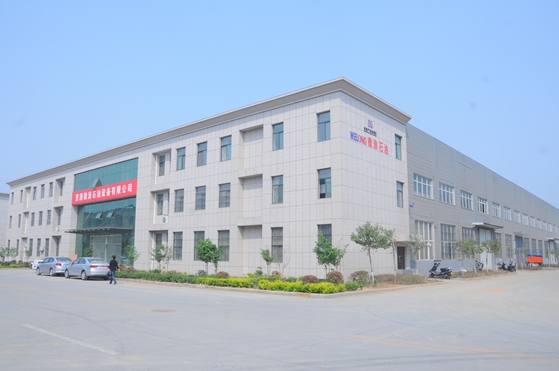
Finally, examine the source, not the goods. Wellhead equipment typically needs customisation – odd flange combinations, specific outlet layouts, or interaction with existing BOP stacks and trees. A supplier with in-house engineering, rigorous quality control, and expertise with both onshore and offshore projects can swiftly change designs and provide durable items in a timely manner. For example, WELONG leverages more than 20 years of oilfield supply chain knowledge, along with custom manufacturing, to allow purchasers to match equipment exactly to their well plans, rather than settling for off-the-shelf compromises.
How to Choose the Right Wellhead Equipment for Different Well Conditions?
Conventional Onshore Oil Wells
For normal land wells with mild pressures, a 2000-5000 psi wellhead equipment set in material class AA or BB at PSL2 is generally adequate. These wells are designed for cost efficiency and quick delivery, so conventional designs with popular flange sizes – such as 11" casing heads and 7-1/16" tubing heads – keep lead times low. However, buyers should still check temperature class against local climatic circumstances. Cold-region activities may need LU-rated equipment to ensure toughness and dependable sealing in hard winter situations.
High-Pressure, High-Temperature Gas Wells
Deep gas wells with HPHT prospects need wellhead equipment rated at 10,000–15,000 psi with PSL3 or PSL3G specification levels and PR1 performance certification. Bodies forged and heat-treated and quality metal-seal technology are the essentials, not the options. Buyers should demand documented hydrostatic and gas testing prior to shipping and complete traceability of all pressure-containing parts. In many circumstances, the added expense of higher specification equipment is insignificant relative to the operational and financial ramifications of a pressure containment failure.
Sour Service and Corrosive Media
Wells producing H₂S, CO₂, or high-chloride brines need wellhead equipment in material classes DD, EE, or FF produced to NACE MR0175/ISO 15156 for sour service. Corrosion-resistant alloy cladding in the ring grooves and seal pockets gives an additional layer of protection where it is most needed. Buyers should supply suppliers with thorough fluid studies so that metallurgy may be matched exactly to the service environment, assuring long-term integrity without over-specifying costly alloys where they are not really required.
Conclusion
Wellhead equipment is much more than a stack of flanges at the surface – it’s the structural anchor, pressure barrier and control center for every well you run. By comprehending the components, safety functions and the selection variables described in this book, purchasers may specify systems that exactly and confidently meet their well conditions. Verify pressure ratings, material classifications, API 6A, and vendors capable of providing established quality systems. A wellhead system selected properly pays for itself many times over in decades of safe, efficient, and adaptable output. Want to specify your own? Start the discussion now.
FAQ
Q1: What is the difference between a casing head and a tubing head?
The casing head supports and seals the casing strings, while the tubing head—installed on top of the casing head—suspends the production tubing string and seals the annulus between tubing and casing. Both are core parts of wellhead equipment and must share compatible flange sizes, pressure ratings, and material classes.
Q2: What pressure rating should I choose for my wellhead equipment?
Select a rating comfortably above your maximum anticipated wellhead pressure—typically 2,000–5,000 psi for conventional wells and 10,000–15,000 psi for HPHT applications. Always include a safety margin, and make sure every component, including spools, adapters, and tree connections, matches the same rating.
Q3: Which standards should wellhead equipment comply with?
API Spec 6A is the primary international standard covering design, materials, testing, and documentation. Look for PR1 performance verification, PSL2–PSL3G specification levels for critical wells, and NACE MR0175 compliance for sour service. Manufacturer certifications such as ISO 9001:2015 provide additional quality assurance.
CTA: Get Your Customized Wellhead Solution from WELONG
Looking for reliable wellhead equipment backed by certified quality? Founded in 2001, China WELONG is a professional international supply chain service provider specializing in oilfield products and tailored solutions. With ISO 9001:2015 and API 7-1 certifications, stringent quality control, and API 6A-compliant manufacturing, we deliver durable wellhead systems engineered for your exact well conditions—from conventional land wells to 15,000 psi HPHT service. Contact our team today at oiltools@welongpost.com to discuss your project requirements and receive a customized quotation. Let WELONG empower your operations with the finest supply chain in China.
References
1. American Petroleum Institute. API Specification 6A: Specification for Wellhead and Tree Equipment, 21st Edition. API Publishing, 2018.
2. International Organization for Standardization. ISO 10423: Petroleum and Natural Gas Industries — Drilling and Production Equipment — Wellhead and Tree Equipment. ISO, 2009.
3. Wan, Renpu. Advanced Well Completion Engineering, 3rd Edition. Gulf Professional Publishing, 2011.
4. Lyons, William C., and Gary J. Plisga. Standard Handbook of Petroleum and Natural Gas Engineering, 2nd Edition. Gulf Professional Publishing, 2005.
5. Guo, Boyun, William C. Lyons, and Ali Ghalambor. Petroleum Production Engineering: A Computer-Assisted Approach. Gulf Professional Publishing, 2007.
6. Azar, J. J., and G. Robello Samuel. Drilling Engineering. PennWell Publishing, 2007.
Share your inquiry, get the quotation accordingly!
CHINA WELONG - 20+ years manufactuer in oilfield tools